







Losing an important document can feel like an absolute nightmare, especially when a deadline is looming. Whether your computer crashed, you accidentally emptied the Recycle Bin, or a sudden power outage corrupted your data, you need to know how to restore deleted word file structures quickly and efficiently.
Fortunately, data loss is rarely permanent. With the right approach, you can recover your progress and save hours of rewriting. While Windows has built-in safety nets, specialized recovery tools provide the highest success rate. In this comprehensive guide, we will introduce PandaOffice Drecov data recovery software as the ultimate, reliable solution to get your missing documents back safely.
Understanding the Basics of How to Restore Deleted Word File
When you delete a file on your computer, the operating system does not immediately erase its contents from your hard drive. Instead, it marks the space occupied by that file as “available” for new data.
Why Files Become Unreadable or “Lost”
- File System Pointer Removal: Deletion simply destroys the path pointer, leaving the actual raw data intact until overwritten.
- Accidental Formatting: Formatting a drive wipes the partition table but leaves the underlying data clusters recoverable.
- Software Crashes: Microsoft Word might close unexpectedly, leaving temporary or AutoRecover files stranded in hidden directories.
Common Data Recovery Challenges
The biggest hurdle in learning how can we restore deleted files is data overwriting. If you continue using your computer, downloading apps, or saving new documents, you risk writing new data directly over your lost Word document. Consequently, you must minimize disk activity immediately after realizing a file is missing.
Meet Your Solution: PandaOffice Drecov
To maximize your chances of success, you need a professional tool designed to handle complex partition states. PandaOffice Drecov data recovery software scans your drive’s raw sectors to rebuild lost file headers, making it incredibly easy to recover-deleted-word-document formats seamlessly.
Whether your document was lost due to an unexpected Shift+Delete command, a malware attack, or an unbootable system crash, this utility acts as a deep-scanning safety net for your digital workplace.
⚠ Warning: Install it on a drive different from the one where your data was lost to prevent overwriting.
Step-by-Step Solutions to Recover Your Word Documents
Depending on how your file was lost, different technical approaches are required. Below are three distinct methods ranging from beginner-friendly steps to advanced system searches.
Method 1: Checking Default Backups
Before downloading any software, always check the basic storage areas where Microsoft Word automatically saves temporary copies.
Step 1: Search the Recycle Bin
Open your Recycle Bin by double-clicking its desktop icon. Use the search bar in the top-right corner to type the name of your document. If found, right-click the file and select Restore. For a broader look at managing this storage, read this guide on how to restore deleted files from recycle bin.

Step 2: Utilize Word’s AutoRecover Feature
Launch Microsoft Word. Go to File > Info > Manage Document and click on Recover Unsaved Documents. Alternatively, navigate directly to the default AutoRecover file path using the File Explorer paste command:
%AppData%\Microsoft\Word\
Method 2: The Recommended Solution PandaOffice Drecov
If the built-in Windows options yield no results, it is time to leverage the deep-scanning capabilities of professional software. This method provides the highest recovery success rate for permanently deleted items.
⚠ Warning: Install it on a drive different from the one where your data was lost to prevent overwriting.
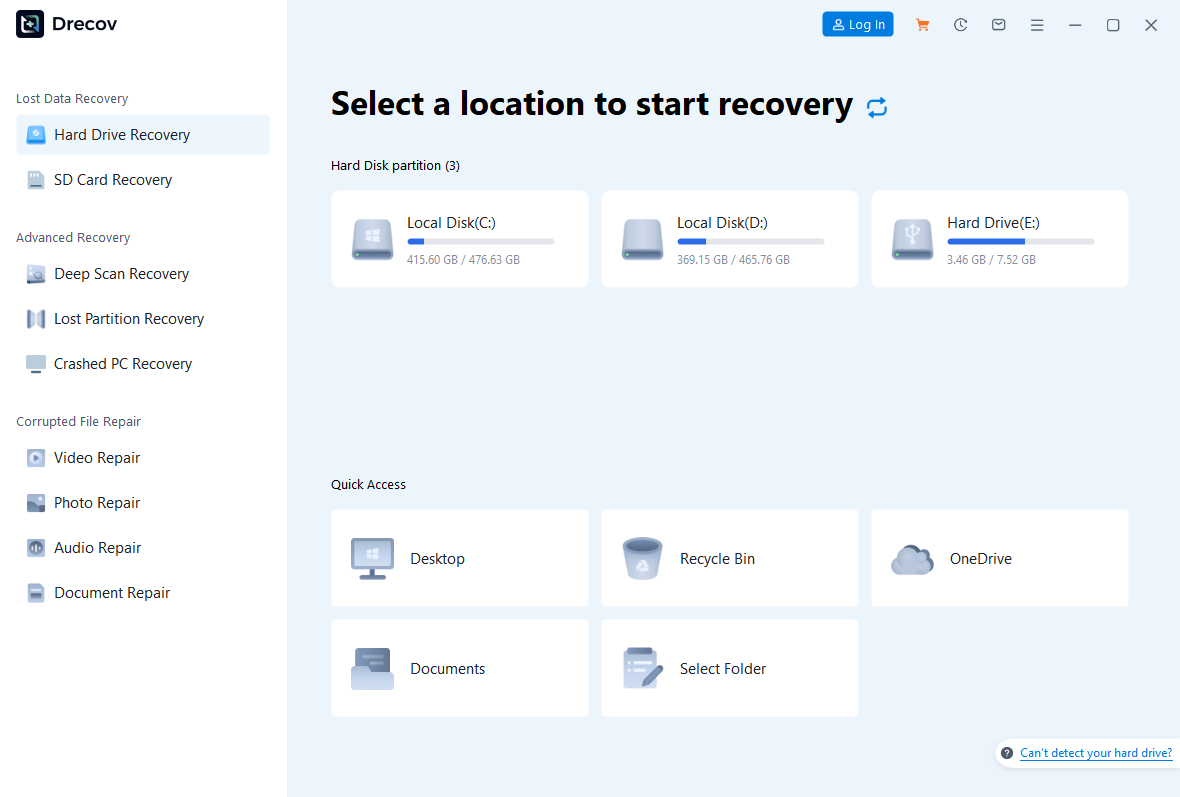
Step 1: Select the Target Location
Launch the application. From the main dashboard, select the specific drive, folder, or external storage device where your document was last saved.
Step 2: Run the Scan
Click the Scan button. The software will initiate a Quick Scan followed automatically by a Deep Scan to piece together fragmented file sectors.

Step 3: Filter and Preview
Once the scan finishes, use the built-in file type filters to isolate .docx or .doc files. Double-click your file to preview its contents and verify data integrity.

Step 4: Save and Recover
Select your missing document and click Recover. Choose a secure, external destination drive to save the restored file to prevent corruption. If you are also missing media files from your projects, check out this quick guide on how to get recently deleted photos back.
Method 3: Registry & Shadow Copies
For complex scenarios where files disappeared due to system updates or registry glitches, you can check the Volume Shadow Copy service.
Step 1: Check File History / Previous Versions
Navigate to the folder where your Word file used to reside. Right-click the folder, select Properties, and click on the Previous Versions tab. If a system restore point or backup exists, select a timestamp prior to the deletion and click Restore.
Step 2: Verify the Windows Registry Path
Sometimes, temporary files are hidden by system bugs. Open the Run dialog by pressing Win + R, type regedit, and hit Enter. Navigate carefully to:
HKEY_CURRENT_USER\Software\Microsoft\Office\16.0\Word\Options
Ensure your default paths are pointing to the correct active directories.
Warning: Modifying the Windows Registry incorrectly can cause severe system instability. Do not delete or alter keys outside of standard path verifications.
Alternative and Complementary Methods
While automated software offers the fastest resolution, manual system configurations can complement your recovery strategy.
| Recovery Method | Pros | Cons | Technical Level |
| PandaOffice Drecov | High success rate, previews files, recovers raw data | Requires an installation step | Beginner to Intermediate |
| Windows File Recovery | Free Microsoft command-line tool | No user interface, requires exact syntax knowledge | Advanced |
| Cloud Version History | Instant cloud rollback, accessible anywhere | Only works if cloud sync was active before deletion | Beginner |
If you rely on automated cloud sync tools, remember that deleting files from your local synchronized folders can sometimes purge them online as well. For instance, managing cloud cloud cleanups requires caution, as outlined in this tutorial explaining how to delete all photos from Google photos. Always verify your cloud trash bins before assuming a file is completely gone.
Tips & Best Practices to Protect Your Data
Understanding how to restore deleted word document files is highly valuable, but preventing data loss entirely is even better. Implement these habits to safeguard your hard work:
- Activate AutoSave: If you are using Microsoft 365, toggle the AutoSave switch in the top-left corner of your workspace to sync changes in real time.
- Adjust AutoRecover Frequency: Go to File > Options > Save in Word. Reduce the AutoRecover saving interval from the default 10 minutes down to 2 minutes.
- Follow the 3-2-1 Backup Rule: Keep three separate copies of your data, stored on two different types of media, with at least one copy kept offsite or in cloud storage.
- Avoid Disk Fragmentation: Do not run disk defragmentation utilities immediately after losing a file, as this process will permanently overwrite the sectors containing your deleted document.
How to restore deleted word file FAQs
Can I recover a Word document after a computer crash?
Yes. When your computer crashes, Microsoft Word usually saves a temporary state file. Upon reopening Word, an Document Recovery task pane should appear on the left side of your screen, allowing you to save your progress.
How can we restore deleted files if the Recycle Bin was emptied?
Once the Recycle Bin is emptied, the operating system removes the file’s directory pathing. To recover these files, you must use PandaOffice Drecov data recovery software to scan the storage drive’s raw sectors before new data takes over those blocks.
What is the difference between a Quick Scan and a Deep Scan?
A Quick Scan searches your drive’s file allocation table for recently deleted paths. Conversely, a Deep Scan thoroughly reads the raw storage sectors to locate missing file headers, which is ideal to recover-deleted-word-document items lost long ago.
Is it safe to recover files back to the same drive?
No. You should always save recovered documents to an external flash drive or a different internal partition. Saving them back to the same drive risks overwriting other fragments of the file you are trying to rescue.
For more technical background on how file storage systems operate during deletion events, you can consult the Microsoft Support Documentation.
Conclusion
Mastering how to restore deleted word file structures ensures that an accidental keystroke or a sudden system crash won’t ruin days of hard work. While Windows provides built-in tools like AutoRecover and File History, they are often limited when dealing with permanent file deletions or drive corruption.
For a stress-free experience, downloading PandaOffice Drecov data recovery software gives you a powerful tool to scan, preview, and restore your files safely. Take control of your digital workspace today by activating frequent backups and keeping a reliable data recovery tool ready for emergencies.






