What is a recovery disc? In Windows use, it is bootable media that starts a recovery environment when the installed system cannot start normally. A traditional system repair disc is usually an optical CD or DVD containing diagnostic and recovery tools. It is not automatically a copy of personal files, and it may not contain a complete Windows image. Recovery drives, installation USB media, OEM factory media, and file backups serve related but different purposes.
Which “recovery disk” do you actually have?
| Media | Main purpose | What it normally does not contain |
|---|---|---|
| System repair disc | Boot Windows recovery tools such as Startup Repair and System Restore | A current copy of all personal files |
| Windows Recovery Drive | Boot recovery tools from USB; optionally include system files for reinstalling Windows | Your documents unless separately backed up |
| Windows installation media | Install or reinstall Windows and provide a Repair your computer entry | OEM apps and a personal file backup |
| OEM factory recovery media | Return a supported model toward its factory software state | Files created after purchase unless the vendor explicitly included a backup workflow |
| System image | Restore captured partitions, Windows, apps, settings, and files from the image date | Changes made after the image |
| File backup | Restore selected personal folders or versions | A bootable repair environment unless designed as part of a broader backup system |
Look at the label, capacity, creation tool, and instructions rather than trusting the word “recovery.” A Windows DVD from another PC may boot but lack the right architecture, edition, drivers, or OEM process. A USB Recovery Drive is often called a recovery disk in conversation even though no optical disc is involved.
If you need to create ordinary bootable installation media rather than understand repair-media roles, the existing guide to creating a Windows boot disk covers that separate task.
What can Windows recovery media do?
Booting appropriate media can open Windows Recovery Environment when the internal recovery entry is damaged or unreachable. Depending on Windows version and media, Advanced options may offer Startup Repair, Startup Settings, Command Prompt, System Restore, uninstalling updates, System Image Recovery, or other tools. Each tool has a narrower purpose.
Startup Repair addresses common boot problems. System Restore returns selected system files, drivers, registry settings, and installed-program state to a restore point; it is not a personal-file backup. System Image Recovery restores a previously created image and can replace current disk contents with the captured state. Command Prompt exposes powerful manual tools, but its drive letters may differ from normal Windows.
A Recovery Drive that includes system files can reinstall Windows on the supported PC. That operation may remove apps, settings, and files depending on the selected path. Read every summary screen. The Microsoft Recovery Drive documentation explains creation and use for current supported Windows systems.
What can a recovery disc not do?
It cannot repair a failed power supply, dead SSD controller, broken display, or drive absent from firmware. It cannot recover a BitLocker-encrypted volume without the required key.
Recovery media does not make every command safe. Formatting, deleting partitions, DiskPart clean, resetting, factory restoration, and a clean installation can destroy the logical structures that describe existing files. Booting the disc is usually non-destructive; the tool you choose afterward determines the risk.
A message that says no boot disk is detected is a storage-detection problem until proven otherwise. Use the no-boot-disk diagnosis before reinstalling. If Windows asks for installation or recovery media during an existing repair, the installation-or-recovery-media guide explains why that prompt appears.
How do you create and test recovery media?
For a Recovery Drive, sign in to a working Windows PC, search for Recovery Drive, open the system tool, and accept the User Account Control prompt. Choose whether to include system files when the option is available. Connect a USB drive that can be erased, select it by capacity, and read the warning carefully. Creation formats that USB; move its existing files elsewhere first.
For an optical system repair disc on a Windows version that still exposes the feature, open the legacy Backup and Restore control-panel area and select Create a system repair disc. Choose the correct optical drive and use blank writable media. Availability varies by Windows version and hardware; many current PCs have no optical drive, making USB recovery media more practical.
Label the media with the PC, Windows version, architecture, creation date, and whether system files were included. Store the BitLocker recovery key separately. Test that the computer’s one-time boot menu can see the media, then exit without launching a reset or restore. A disc that was created successfully but cannot be read by the target optical drive is not useful in an emergency.
How do you boot it without starting the wrong operation?
Connect the media with the computer off. Use the manufacturer’s one-time boot-menu key rather than permanently rearranging every firmware entry. Select the UEFI entry for current Windows installations when appropriate. If the media does not appear, confirm it is readable and was created for booting; do not toggle UEFI, Legacy, Secure Boot, or storage-controller modes by trial.
When Windows Setup appears from installation media, choose language and keyboard settings, then select Repair your computer to reach recovery tools. Do not choose Install if the current objective is diagnosis. In WinRE, identify the Windows installation carefully because drive letters can change. Unlock BitLocker only with the legitimate key.
Start with the least destructive tool that matches the evidence. Startup Repair is reasonable for common boot failures. System Restore requires a suitable restore point. System Image Recovery is appropriate only when you deliberately want to replace current state with that known image. Record failures and log locations before moving to manual commands.
Where does Drecov fit when recovery media cannot protect the files?
Drecov is Windows data recovery software, not a boot-repair disc or Windows installer. It can retrieve files from stable, detectable Windows storage before a reset, factory restore, repartition, or clean installation. Because the affected PC may not boot, Drecov needs a functioning Windows environment with access to the source—often by connecting the stable drive to another compatible computer or using an appropriately supported recovery arrangement. It cannot scan a drive absent from hardware detection, fix physical failure, or unlock encryption without its key.
⚠ Warning: Install it on a drive different from the one where your data was lost to prevent overwriting.
Step 1: Open Drecov and select the original data location
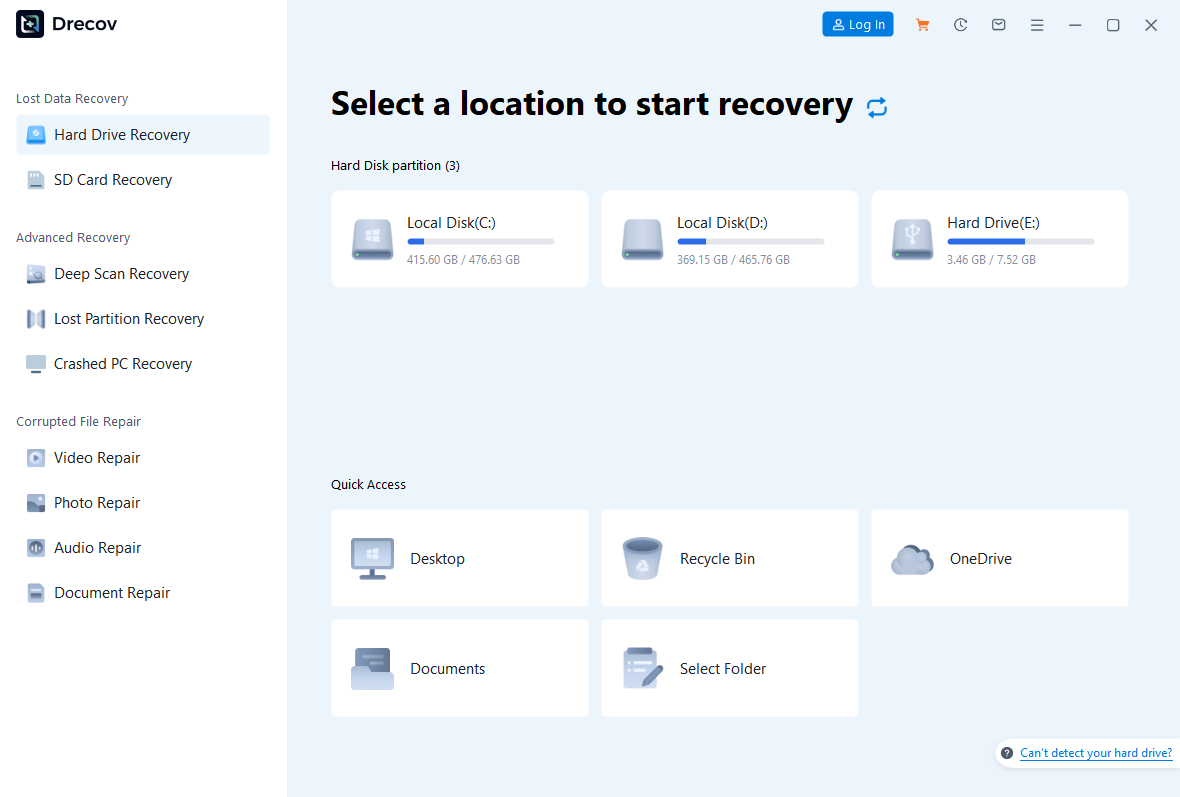
Prepare another healthy storage device for the output. Do not install Drecov on the affected volume or recover files back to it. Open Drecov from the functioning Windows environment and select the former Windows or data partition by disk, capacity, and layout. If the partition has disappeared while the physical disk remains stable, use Lost Partition Recovery rather than creating a new volume.
Step 2: Run Quick Scan, then Deep Scan if the disk remains stable
Start Quick Scan and inspect the former user profile, Desktop, Documents, Pictures, Videos, Downloads, browser profiles, and project folders. If required files are missing and the device remains responsive, continue with Deep Scan. Stop if the disk clicks, disconnects, changes capacity, freezes reads, or develops repeated I/O errors.
Step 3: Locate and preview priority files
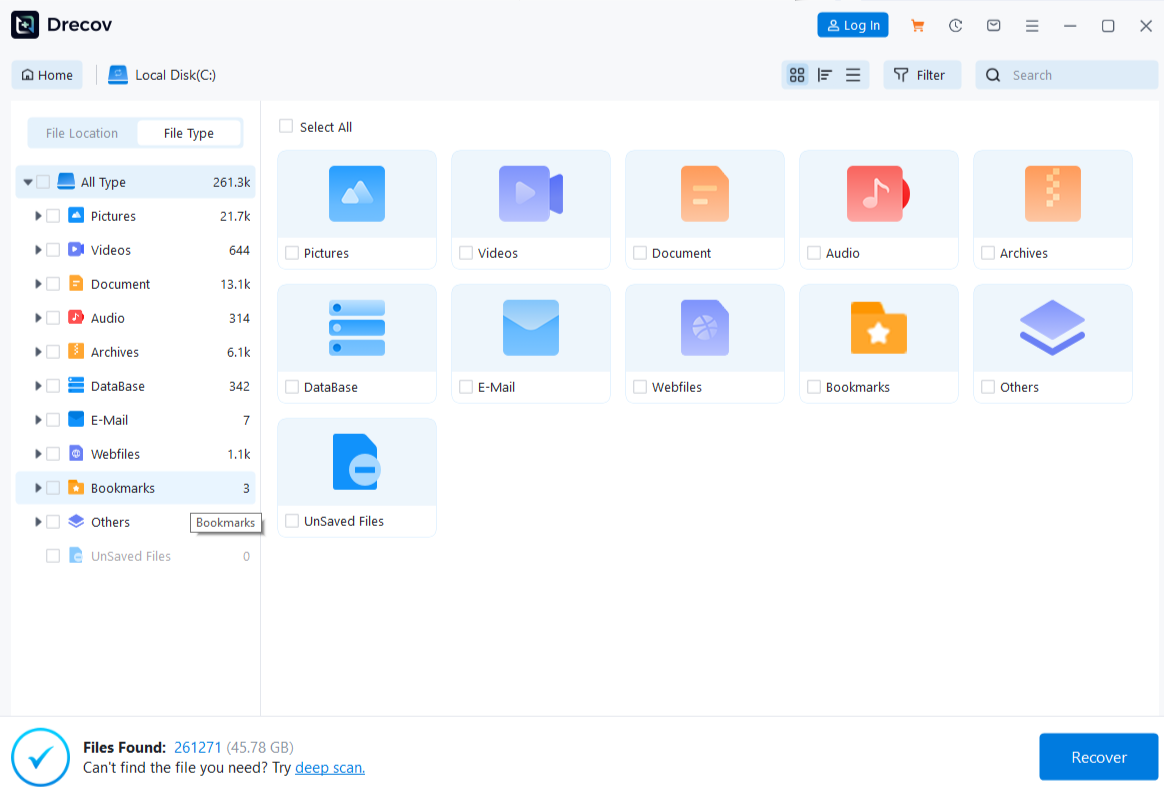
Filter by former path, name, date, or file type. Preview several supported items from each important group. A preview proves only that the displayed sample can be decoded; it does not certify every archive member, workbook sheet, video frame, database record, or project dependency.
Step 4: Recover to the healthy device and verify
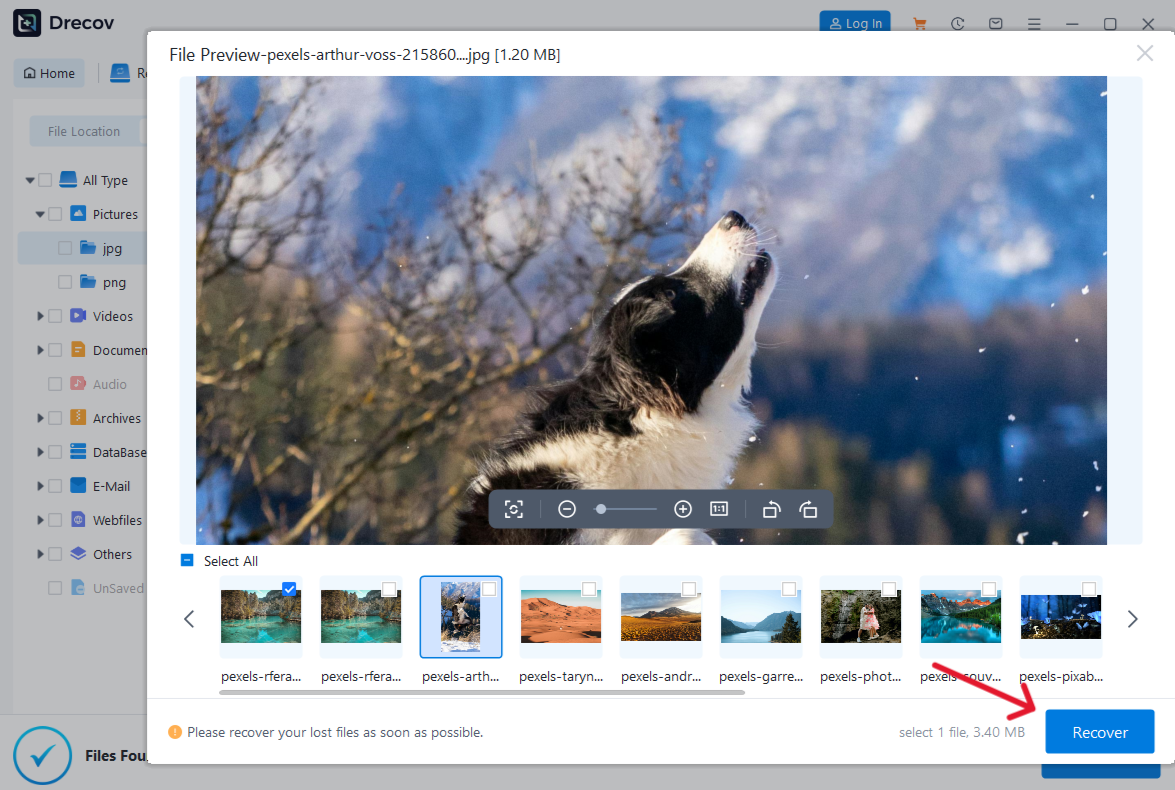
Save selected files to the separate healthy device. Never choose the source drive as the destination. If expected output is not visible, look inside the destination’s Drecov Folder or Recovery Folder. Open representative files, extract archives, check media duration, and preserve complete project folders. Disconnect the verified copy before reset, image restoration, partition work, or reinstallation.
⚠ Warning: Install it on a drive different from the one where your data was lost to prevent overwriting.
Which media should you prepare now?
Create a current Recovery Drive when you want Windows recovery tools and, where offered, reinstallable system files for that PC. Keep official installation media when you maintain several systems or need a clean supported installer. Use OEM media when factory software and drivers are specifically required. Maintain versioned file backups independently, because none of those boot tools is a substitute for current personal-data copies.
A recovery plan should include the media, boot-menu instructions, encryption keys, backup location, and a list of applications or licenses needed after reinstallation. Review it after major hardware or Windows changes. Replace unreadable optical media and recreate outdated USB media rather than assuming it will work years later.
Questions about Windows recovery discs
Is a recovery disc tied to one computer?
A system repair disc may boot compatible Windows systems, but architecture, boot mode, version, drivers, and OEM tools affect usefulness. A Recovery Drive with system files is intended for the PC used to create it. Follow Microsoft’s and the manufacturer’s stated scope.
Does a recovery disc contain my photos and documents?
Not by default. Recovery tools and system files are different from a personal file backup. A system image may include files that existed when the image was captured, but later changes require separate backups.
Can I make a recovery disc after Windows stops booting?
You normally create it on a working compatible Windows system. Official installation media can still provide a Repair your computer entry. Verify compatibility and protect files before using reset or installation paths.
Will Startup Repair erase files?
Startup Repair is designed to address startup problems rather than erase user files, but storage failure and mistaken follow-up actions remain risks. Back up or recover important data first when access and value justify it.
Can Drecov replace a recovery disc?
No. Drecov recovers data from stable accessible storage; recovery media boots diagnostic, repair, reset, or installation environments. They solve different problems and may be used in sequence when files must be protected before system repair.
A recovery disc is best understood as a way into repair tools, not as proof that personal data is backed up. Identify the media you have, test that it boots safely, keep encryption keys and file backups separately, and recover unprotected files before choosing destructive system recovery.
⚠ Warning: Install it on a drive different from the one where your data was lost to prevent overwriting.