An ext4 file system in Windows can look like a broken drive even when the data is intact. Windows may detect the physical disk but not open its Linux partition in File Explorer. Do not click Format or Initialize to make the disk appear. First decide whether you need only to read and copy its files, whether the drive is physically stable, and whether a Linux computer or Windows Subsystem for Linux is available. The access method matters more than a repair tool at this stage.
Why Windows sees the disk but not its files
ext4 is a Linux file system. It stores folders and file information in a layout that Windows does not normally mount as a standard drive letter. Disk Management may show the disk and its partitions, but File Explorer may not show usable files. That mismatch alone does not prove corruption. A format prompt is Windows offering to create a file system it understands, not a safe way to inspect the ext4 files already there.
Check the disk’s size in Disk Management. Match it to the external drive’s label or expected capacity. Do not use Initialize, New Simple Volume, Delete Volume, or Format. Each changes information on the source. If the drive reports the wrong capacity, disconnects, becomes hot, or produces unusual mechanical sounds, stop normal access attempts. A hardware problem is possible and may need imaging or professional work before logical file access.
If the disk was used as a Linux system drive, it may contain several partitions rather than one. A small boot partition, swap space, and the large ext4 data partition can coexist. Do not delete the partitions you do not recognize. If the device was an external drive used for documents, you still need to distinguish its current ext4 structure from a lost partition. The lost-partition explanation addresses a partition that has actually disappeared, not one Windows simply cannot mount.
How to tell unsupported from damaged
If Windows merely offers to format a disk and Disk Management still shows a partition of the expected size, do not treat that prompt as a diagnosis. Try the drive in the Linux computer that last used it. If folders open there and files copy normally, Windows compatibility is the likely issue. If Linux also reports read errors, missing folders, or sudden disconnects, treat the device as a possible data-loss case. Make a separate copy of whatever remains readable before attempting a file-system repair.
A disk that is visible at the correct capacity but shows an unfamiliar partition is not necessarily RAW or unallocated. Those labels describe different states. RAW means Windows cannot identify a usable file system for that volume; unallocated means partition information is absent for that space. Neither label tells you that ext4 files are gone. If an earlier Linux partition has genuinely disappeared, preserve the disk and investigate that loss separately. Do not create a new volume to test whether the old one returns.
Choose an access route that suits your confidence
The simplest option is often a working Linux computer. Connect the stable drive there, mount it without writing when you can, and copy the important folders to a different healthy drive. Open a sample of documents, photos, and videos from the copy. If you do not have Linux experience, ask someone who does to help. A mistaken mount or copy destination can be more damaging than waiting for a careful transfer.
Windows Subsystem for Linux 2 offers another route on supported Windows systems. Microsoft’s WSL disk-mount documentation explains the requirements and limits. It can attach an ext4 disk to a Linux environment, after which Windows can reach the mounted files through that environment. This is an advanced workflow: identify the physical disk exactly, read the current Microsoft instructions for your Windows and WSL version, and do not paste a disk-number command copied from another computer.
If this is your only copy of valuable data, use a read-only approach or a verified image before making changes. WSL mounting attaches the disk to Linux rather than turning ext4 into NTFS. It cannot mount the disk that Windows itself is currently using as its installation drive. If the drive is unstable, neither WSL nor another mounting app should be your first experiment.
Copy first, then decide whether to change format
Once you can read the ext4 folders, create a destination folder on a separate healthy disk. Copy the files you need. Leave the ext4 source intact until you have opened samples from the new copy and checked important folder counts. Large archives and videos deserve more than a thumbnail check: extract a copy of an archive and play different parts of a video. File names alone are not a backup.
Choose the destination format for the devices that will use it. NTFS usually suits a Windows-only working drive. exFAT is often chosen for exchanging files among different modern systems, but compatibility depends on the actual devices. The exFAT overview helps with that choice. Converting an ext4 drive for ordinary Windows use generally means formatting it, which removes the old file-system structure. Do that only after the copied files have been verified elsewhere.
If the disk belongs to a Linux installation, think twice before changing its format at all. Linux may require ext4 for its system or application data. A Windows-friendly storage format can be useful for a separate sharing drive, but it is not a replacement for every Linux partition. Keep the original disk untouched if it may need to boot its former system again.
Never select a disk by number from an online example. Disk numbers can change when you attach another USB device. If you later format a spare drive, disconnect the source first and recheck the target’s capacity and label. If you are not certain which disk is which, stop. A safe access decision is more valuable than a rushed formatting tutorial.
When a file is truly missing
An ext4 partition that Windows cannot open is not the same as a deleted file. First use Linux or a backup to determine whether the expected file is present. If the file was deleted on the Linux ext4 source, use an appropriate Linux recovery or imaging specialist; do not assume a Windows recovery program can interpret ext4. Drecov’s verified Windows data-recovery features do not establish ext4 file-system support, so this article does not promise that it will recover deleted ext4 data.
Drecov becomes relevant if you previously copied the file to a Windows-readable PC disk, USB device, or memory card and that local Windows copy later went missing. It offers read-only recovery, Quick Scan, Deep Scan, filters, preview, and recovery to another healthy location. It can also search a lost partition in a supported situation; it is not an ext4 mounting tool, Linux file-system repair utility, or cure for physical drive failure. Keep the roles separate so you scan the location where the loss actually happened.
⚠ Warning: Install it on a drive different from the one where your data was lost to prevent overwriting.
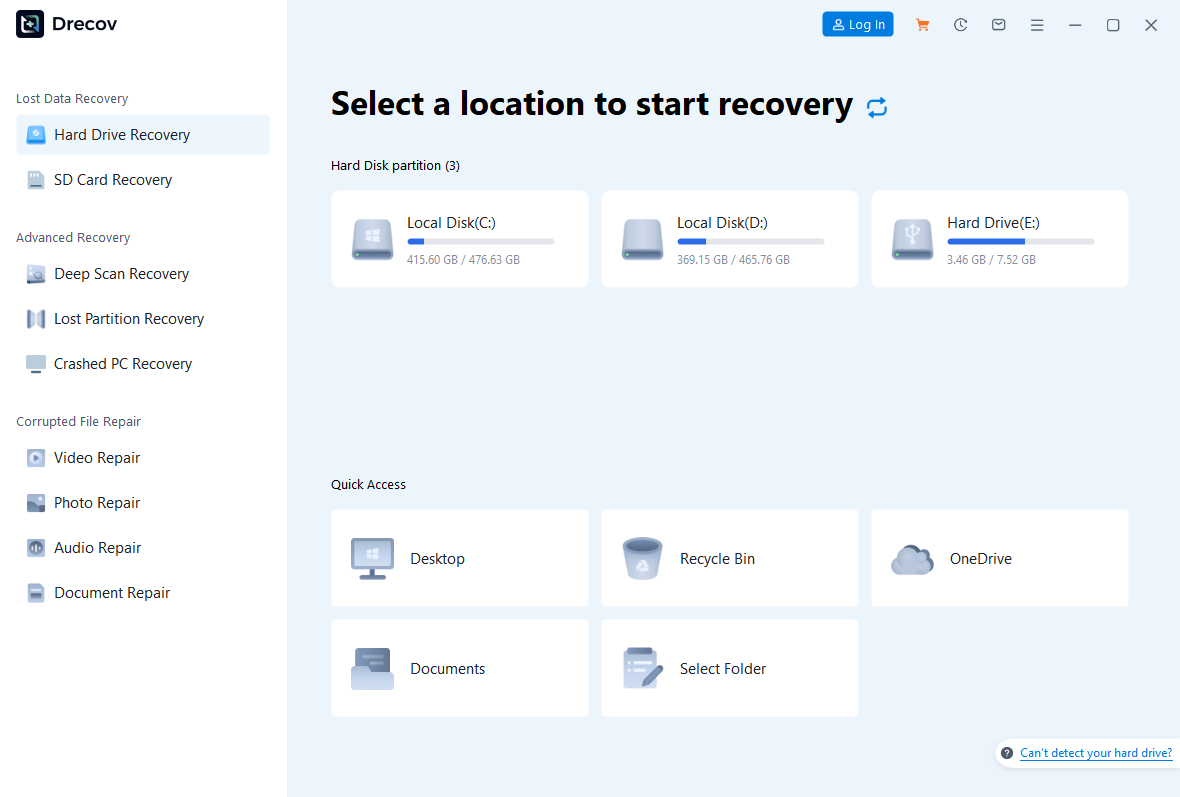
Step 1: Open Drecov and select the lost Windows copy’s drive
Stop writing to that Windows source. Prepare a second healthy drive and launch Drecov from a different location. Select the Windows drive where the copied files last existed, not the ext4 original. Match the drive by size and label. If it disconnects or reports serious read errors, stop software scanning and seek imaging or expert help.
Step 2: Start Quick Scan
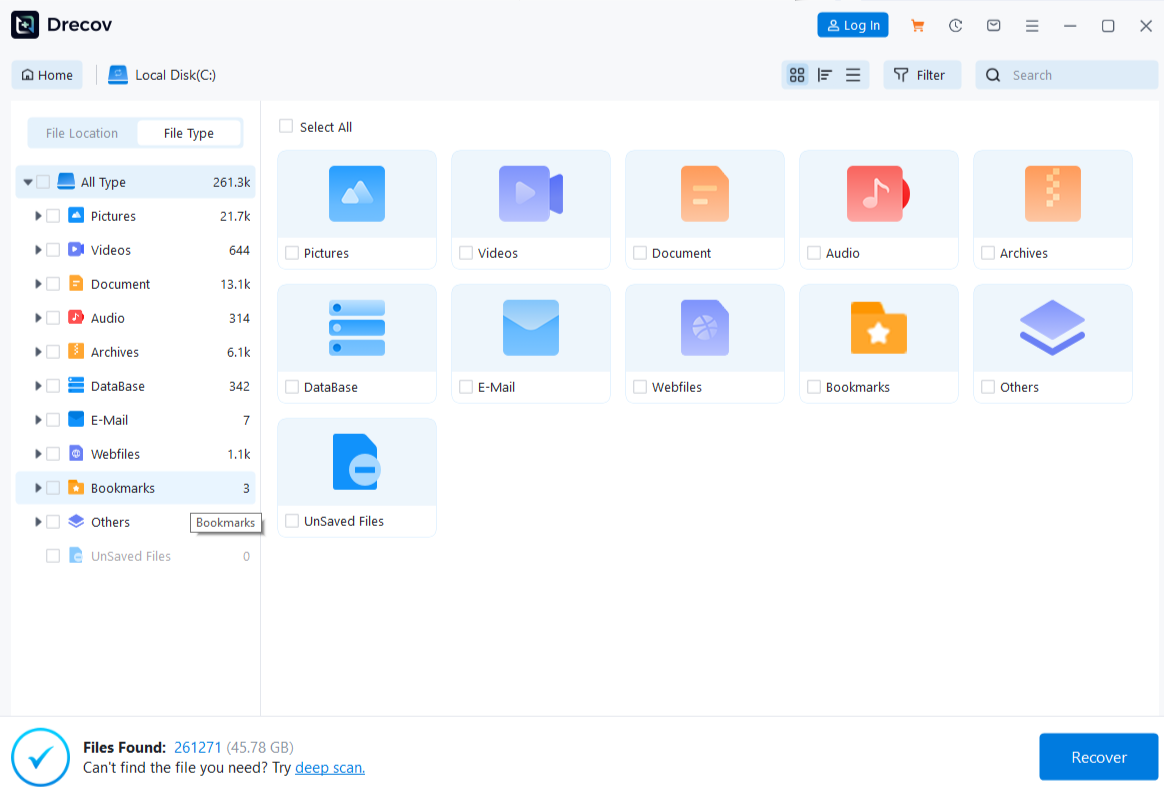
Run Quick Scan and browse the folder where you placed the Linux-to-Windows copy. Look for the expected document, photo, or archive names. If the folder still exists but only one file is missing, narrow the search to that file instead of recovering unrelated folders.
Step 3: Use Deep Scan only when the source is stable
If Quick Scan does not locate the lost Windows copy, run Deep Scan while the drive remains consistently detected. Stop if it begins to disconnect, stall with severe read errors, or make abnormal noises. A broader search can lose original folder names, so compare the likely file types and sizes with your records.
Step 4: Filter and preview candidate files
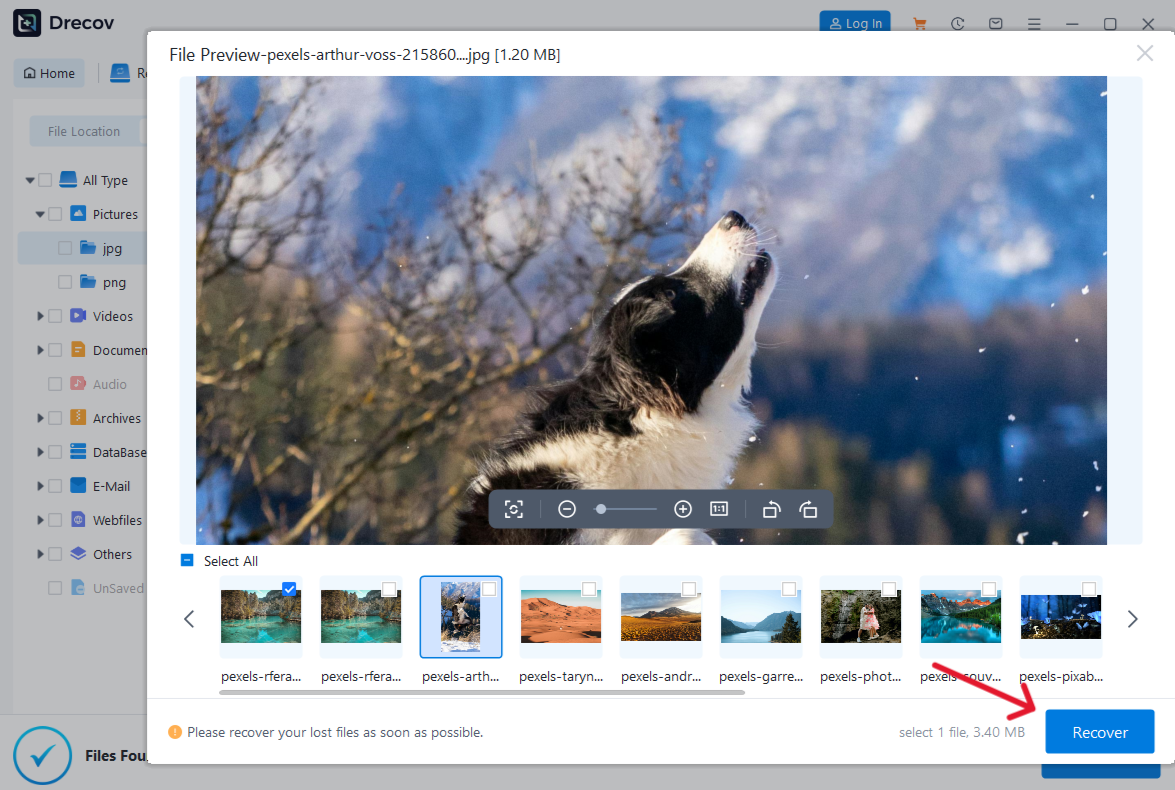
Filter by file type, former folder, name, or date where available. Preview representative files rather than selecting every result. A document preview may show its first pages while a later page remains damaged. An archive needs an extraction test after recovery. These checks help you choose a useful copy instead of assuming every matching name is intact.
Step 5: Recover to another drive and verify
Save the selected files to the prepared healthy destination, not back onto the Windows source. If the output is not in the expected place, check the Drecov Folder or Recovery Folder. Open the restored copies and compare them with the ext4 original if it remains accessible. Only after that should you clean up a damaged Windows partition or reuse the destination drive.
⚠ Warning: Install it on a drive different from the one where your data was lost to prevent overwriting.
For readers planning to build a new Linux drive after preserving the old one, the Linux formatting explanation covers the separate creation task. It should not be used as a shortcut for opening an existing ext4 disk. Keep the original isolated until the needed files are confirmed on another device.
Conclusion
An ext4 disk appearing unreadable in Windows usually needs a suitable Linux access path, not immediate formatting. Confirm the hardware is stable, copy and test the files, then decide whether a separate Windows-friendly drive is useful. If a copied file later disappears from a Windows-readable disk, Drecov can search that Windows source and save recoverable results elsewhere. It should not be presented as a way to mount or repair ext4 itself.
⚠ Warning: Install it on a drive different from the one where your data was lost to prevent overwriting.