
When Steam is stuck on reserving space, it has not necessarily started downloading the game. First identify the library drive chosen for this install. Check its available space in File Explorer, then watch whether the drive is responding normally. A brief pause can be ordinary on a large install; a progress bar that never changes needs a different check. Keep game folders and local saves intact while you find the cause. If the drive clicks, disappears, or repeatedly disconnects, stop installation attempts and protect the files before further testing.
What Steam is waiting for at this stage
The reserving-space message appears before the download proceeds. It means Steam is preparing space on the selected library drive. This is not the same as a slow internet connection. If the displayed download rate is zero because the task has not reached downloading, changing a network setting may accomplish nothing. Watch the status and disk activity for a few minutes, especially with a large game or an older hard drive. A short delay that advances on its own does not need a repair.
Confirm the exact destination before freeing space. In Steam, open the Downloads view and inspect the item that is paused. Look at the selected installation drive in the install prompt or Steam storage settings. Windows may have ample space on C: while the chosen library on D: is almost full. Also check whether the game already has an update waiting; an update may need temporary working room beyond the final change in size.
If Steam eventually displays a disk-write or disk-read error, that is a new clue. Our Steam disk-read troubleshooting follows that later-stage failure. Do not repeatedly restart an install when the target drive is vanishing from File Explorer. A missing drive is a storage-access problem, not a cache setting.
Check the destination drive before changing Steam
Space available on the actual library
Open File Explorer, select This PC, and read the free-space figure for the drive where Steam plans to install the game. Compare it with the space Steam requests. Leave additional headroom for updates and Windows tasks rather than trying to use the final available gigabyte. If the drive is full, move your own videos or other personal files to a different healthy drive. Open a few copied files before removing originals. Emptying the Recycle Bin is permanent for those entries, so inspect it first.
Do not delete random folders inside steamapps, AppData, or a game directory to make the number look better. Some folders contain save files, mods, or partially downloaded data. Removing a folder without knowing its role can turn an install delay into an avoidable loss. If the PC also freezes during installs, the shutdown and stability guide helps separate a system failure from a Steam-only pause. Avoid testing a computer that powers off during disk activity.
Drive behavior, not just its capacity
Try opening an existing file from the same drive. Does File Explorer respond promptly, or does it hang? For an external library, check that the USB cable is secure and the drive has stable power. A portable drive that repeatedly drops out may pause the reservation even when it reports plenty of free space. Test one known-good cable or port while the drive is idle; do not keep copying and reinstalling across a failing connection.
Listen for repeated clicking and watch whether the drive letter disappears. These are stop signs. Do not run repeated game installs, format the drive, or launch a full scan of unstable hardware. A specialist can image or evaluate the device. Software recovery is a better fit when the drive remains consistently detected and the problem is logical file loss rather than physical failure.
Use one reversible Steam check at a time
If the destination is healthy and has room, pause the item in Downloads, close Steam completely, reopen it, and resume once. Check whether the reservation moves beyond the same point. This simple test separates a stalled client session from a persistent drive condition. Avoid cycling the client ten times; repeated writes do not improve an unreliable disk.
Next, inspect Steam’s storage settings for the library you intended to use. Make sure the selected drive is still connected and that Steam can see the library folder. If the destination changed after an external drive was unplugged or a drive letter changed, select the correct existing library rather than creating duplicate folders blindly. A library folder is not necessarily where a game’s personal saves live; Steam’s save-location explanation helps you check before moving anything.
Steam’s official download-cache instructions describe a client-side reset for download trouble. Use it only after the drive checks. Open Steam Settings, go to Downloads, and choose Clear Download Cache. Confirm the prompt and be ready to sign in again. The purpose is to clear cached download state, not to fix a disappearing drive or recover files. After signing in, retry the affected download once and note whether it leaves the reservation stage.
If the cache reset does not help, stop and compare with another small install only if the same drive is stable and has enough room. A small item that reserves space normally suggests the original download or its size may be involved. If all installs stall on one library but work on another healthy drive, focus on that library drive or folder. If every drive stalls, examine Steam and Windows conditions before blaming one disk. Do not use this test on a drive already showing physical warning signs.
Keep game progress separate from install files
Before reinstalling a game or moving an entire library, check where that title keeps its saves. Some games use Steam Cloud, some save locally, and some use both. A successful cloud sync is not proof that every recent local change made it online. Open the game’s cloud status in Steam, then copy its known local save folder to another healthy location. Include the entire folder when you are unsure which file is current.
Keep a note of the Windows account, game profile, and save dates. If a cloud conflict appears later, these details help you choose the right version. Do not accept an older cloud version simply because Steam offered it first. Nor should you overwrite the only local candidate while testing. Move or rename copies only after you know which one the game can read.
Installation files are usually replaceable through Steam; personal saves and custom content may not be. That distinction changes the safest response to a full drive. Moving a verified movie file or an old archive can make room. Deleting an unfamiliar game folder may remove progress that is not in the cloud. For broad recovery options if files were actually deleted, start with the Drecov home page after checking backup and cloud copies.
⚠ Warning: Install it on a drive different from the one where your data was lost to prevent overwriting.
If local saves really went missing
Drecov is Windows data-recovery software for deleted or inaccessible files on a stable, recognized source drive. In this Steam scenario, its job is to look for a missing local save folder or user-created game files; it does not make Steam reserve space, repair a USB controller, or rebuild a faulty drive. Drecov offers Quick Scan, Deep Scan when needed, file filtering or locating, preview for supported results, and recovery to another healthy location. Its Lost Partition Recovery is relevant when a partition has disappeared, but that is a separate diagnosis from a stalled game download.
First check the Recycle Bin, any game-specific backup, and the appropriate cloud account. If the save folder is truly gone from a healthy local drive, stop installing or updating onto that drive. New writes can overwrite recoverable data, and SSD TRIM can make some deleted files unrecoverable. Prepare a different healthy disk for the recovered copies and, where possible, run recovery software from a different drive. Never install the recovery tool onto the partition holding the missing saves.
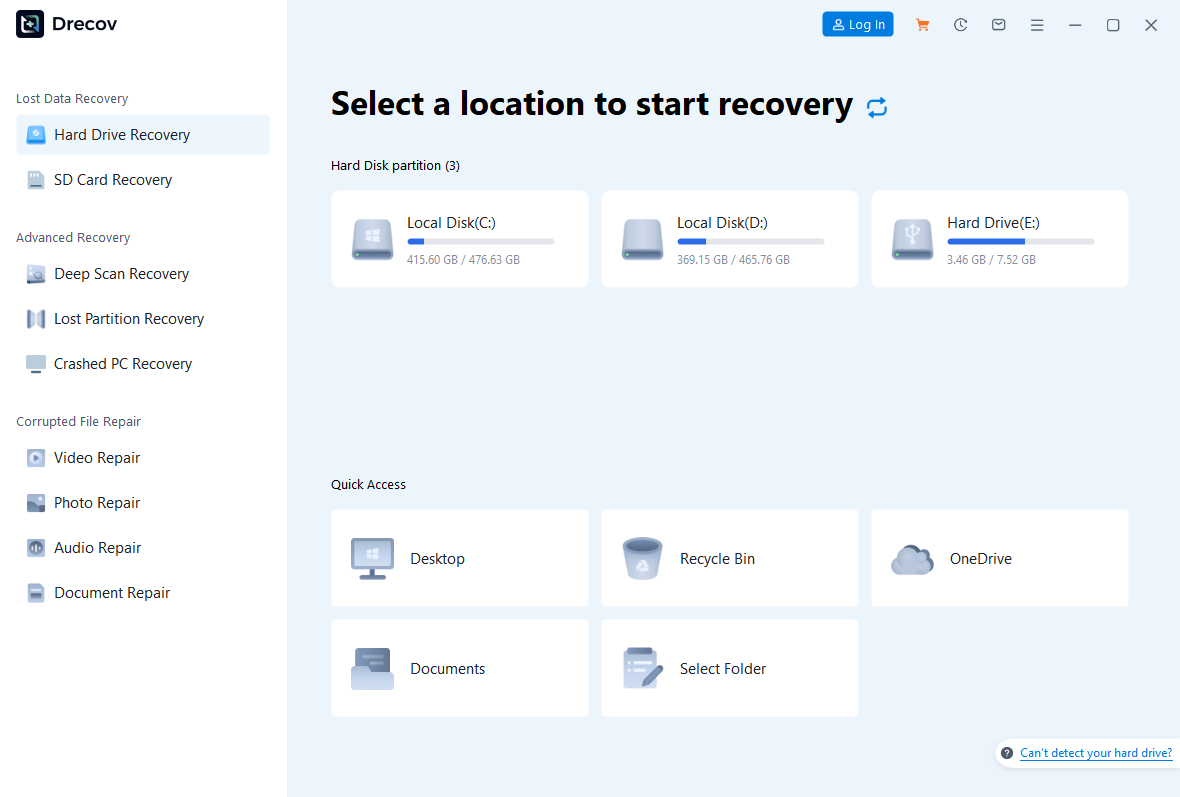
Step 1: Open Drecov and choose the original save location
Open Drecov on a working Windows PC. Select the drive or partition that originally contained the missing local save folder, not the new download destination unless they are the same source. If a drive cannot stay connected or makes unusual mechanical sounds, stop here and consider a professional image or recovery service. Repeated software scans on unstable hardware can worsen access.
Step 2: Run Quick Scan, then Deep Scan only if needed
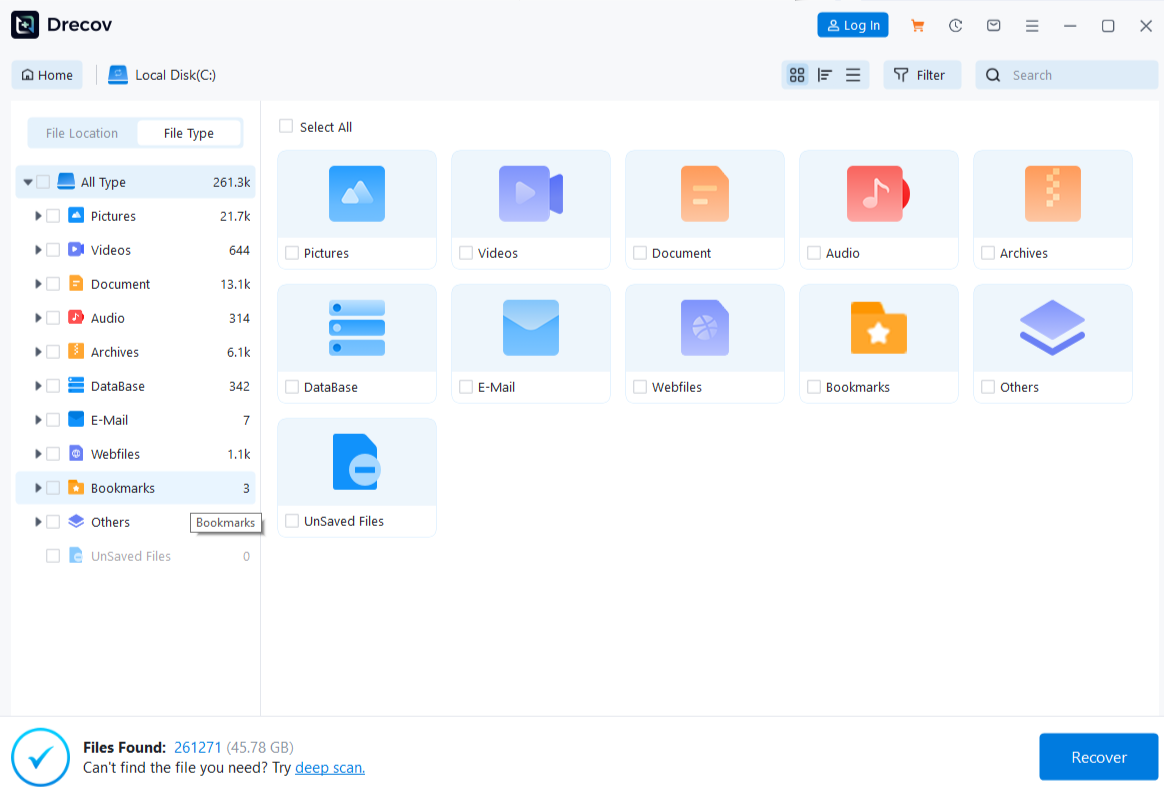
Run Quick Scan on that original location. Check likely game-save folders and file names first. If the desired files are absent and the drive remains stable, try Deep Scan. A deeper search is not a guarantee of usable game progress. It may find older, duplicate, or incomplete candidates, especially when a game rewrites the same save slot.
Step 3: Filter, locate, and preview candidates
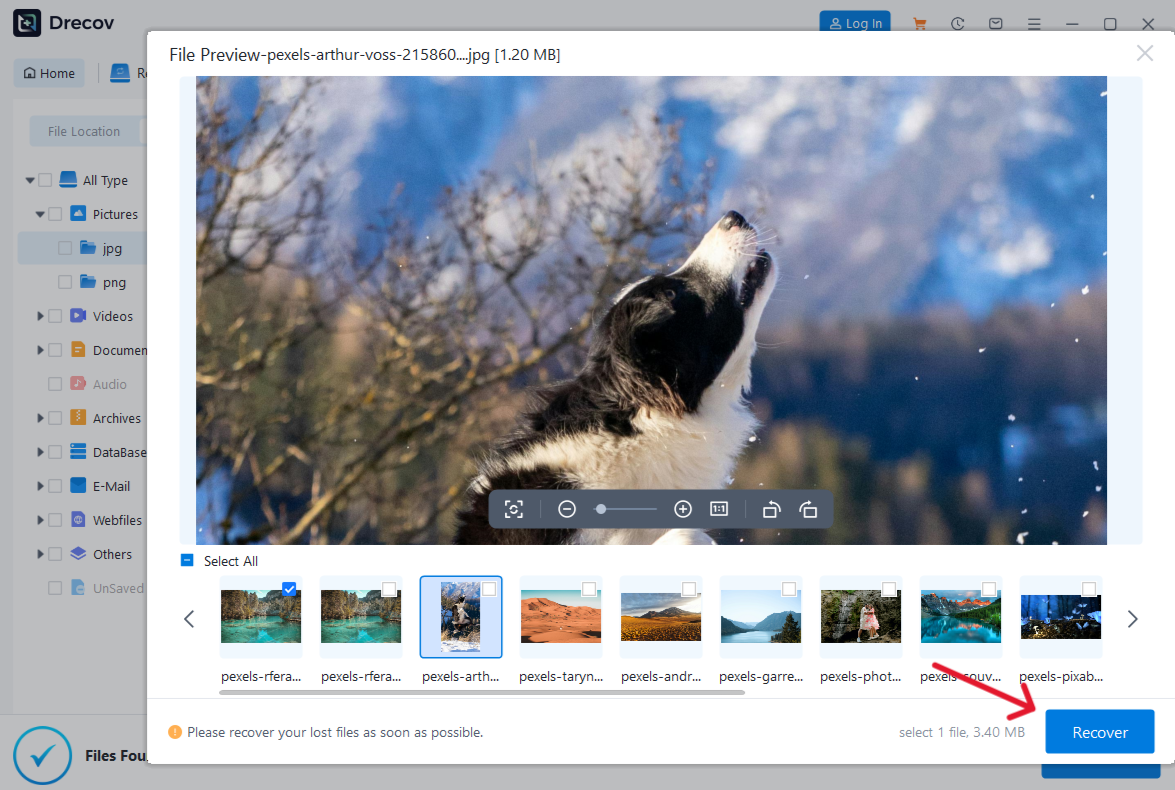
Use path, name, date, or file type where available to narrow the results. Compare candidates with the missing game’s expected extension and folder structure. Preview a supported file if the option is available; a preview may show readable content but cannot prove the game will accept a complete save set. Keep related files together rather than selecting one random file from a profile folder.
Step 4: Recover elsewhere and test a copy
Recover the candidates to the separate healthy disk, never back to the source partition. If the output is not where you expected, check Drecov Folder or Recovery Folder on the chosen destination. Open representative recovered files where possible. Then test a copied save in the game only after preserving the existing live save folder. Check that the correct profile loads and recent progress appears. Repair or reinstall the game only after the files you need have been verified.
⚠ Warning: Install it on a drive different from the one where your data was lost to prevent overwriting.
When the reservation still does not finish
Record what the next attempt shows: chosen drive, available space, how long the status remains unchanged, and whether the drive stays visible in File Explorer. A screenshot of the Downloads page and any error text is more useful than saying only that Steam is frozen. If the drive is healthy and every library behaves the same way, Steam Support can use those details to investigate the client or account. If one external drive alone fails, focus on its connection and health instead.
Do not treat a completed reservation as proof that everything is fine. Let the download and installation finish, launch the game, and confirm that your saved progress is present. If the game downloads but then reports a read error, switch to that specific diagnosis. If the PC itself freezes during installs, check overall system stability before another large download. Different symptoms call for different fixes.
For a drive that repeatedly disappears, clicks, or causes File Explorer to stall, stop DIY scanning and avoid writing further data. A failed cable may be simple, but an unstable disk may need imaging or professional work. Clearing a download cache is a low-risk client action; it is not a reason to keep testing a device that is physically unreliable.
Conclusion
When Steam is stuck on reserving space, start with the selected library drive, not the internet connection. Confirm room and stable access, then try a controlled Steam restart and the official cache reset if the drive is sound. Preserve local saves before moving libraries or reinstalling games. Drecov can help search a stable Windows drive for saves that are actually missing, but it cannot resolve the reservation process or repair failing hardware. Verify both the finished install and your game progress before calling the problem solved.
⚠ Warning: Install it on a drive different from the one where your data was lost to prevent overwriting.