







Understanding RAW Video Files and Recovery Possibilities
What Makes RAW Video Files Different
RAW video files are widely used by professional filmmakers, content creators, and videographers because they preserve significantly more image data than standard compressed video formats. Unlike MP4 or MOV files that apply compression during recording, RAW footage retains extensive color, brightness, and sensor information that can be adjusted during post-production.
Popular cameras from brands such as Canon, Sony, RED, Blackmagic Design, and Nikon often generate large RAW video files. Because these files are extremely large, they are frequently stored on SSDs, memory cards, external drives, or NAS devices.
Many users searching for content such as blacked raw full videos, black raw full videos, or other large video collections often store substantial amounts of footage across multiple storage devices. Unfortunately, large file sizes increase the risk of accidental deletion, formatting mistakes, and storage corruption.
The good news is that deleting a RAW video does not always mean permanent loss. In many situations, the operating system removes the file reference while the actual video data remains on the storage device until it is overwritten. This creates an opportunity for successful recovery if the proper steps are taken quickly.
Understanding how RAW video data is stored is the first step toward maximizing recovery success.
Why RAW Video Recovery Is Often Possible
Many people assume that deleted video files disappear immediately. In reality, most operating systems simply mark the occupied storage space as available for future use.
When a RAW video is deleted:
- The file entry is removed from the file system.
- The actual video sectors remain intact temporarily.
- New data has not yet replaced the original footage.
This is why recovery software can often locate deleted files even after they no longer appear in File Explorer or Finder.
The recovery potential depends on several factors:
- Storage device type
- Amount of new data written
- Time elapsed since deletion
- File system condition
- Drive health status
Users managing extensive video libraries, including archived projects, camera footage, and downloaded video collections, should act immediately when data loss occurs.
⚠️ Warning: Continuing to use the affected drive may overwrite deleted RAW footage and dramatically reduce recovery success rates.
The sooner recovery begins, the better the chance of restoring valuable video files.
Accidental Deletion of Video Files
Accidental deletion remains one of the most common causes of RAW video loss.
Video editors frequently organize projects by moving, renaming, copying, and deleting files. During these processes, important footage can be removed unintentionally. Because RAW video projects often contain hundreds of files, mistakes are easy to make.
Common scenarios include:
- Emptying the Recycle Bin
- Deleting the wrong folder
- Removing project archives
- Cleaning storage devices
- Organizing external drives
Large video libraries containing material such as blacked raw videos, archived footage, or production assets are especially vulnerable because users often manage thousands of gigabytes of content at once.
In many cases, deleted files remain recoverable as long as the storage sectors have not been reused.
Checking the Recycle Bin or Trash should always be the first recovery step. If the files are no longer there, more advanced recovery methods may be required.
Formatting Memory Cards and Storage Drives
Formatting is another major cause of RAW video loss.
Photographers and videographers frequently format:
- SD cards
- CFexpress cards
- SSDs
- Portable drives
- External HDDs
Sometimes formatting occurs intentionally before users realize important footage still exists on the device. Other times, cameras may request formatting after detecting storage errors.
Quick formatting usually removes file system records while leaving much of the underlying data intact. Because of this, recovery may still be possible if the device is not heavily used afterward.
Video creators storing large projects, including blacked raw full video archives or production footage, should avoid writing new data to the formatted device until recovery attempts are completed.
⚠️ Warning: Never save recovered files back to the same formatted drive. Doing so can overwrite additional recoverable data.
File System Corruption and Device Errors
Storage devices can become corrupted without warning.
Common causes include:
- Sudden power loss
- Unsafe device removal
- Firmware issues
- System crashes
- Bad sectors
- Hardware aging
When corruption occurs, RAW videos may disappear even though they still physically exist on the device.
Typical symptoms include:
- Missing folders
- Unreadable drives
- Error messages
- Files showing zero size
- Requests to format the device
Users managing extensive footage libraries often encounter these problems after years of continuous storage use.
Fortunately, corruption does not always destroy the underlying video data. Recovery tools and repair techniques can often retrieve footage before complete failure occurs.
Taking immediate action greatly improves the likelihood of successful restoration.
How to Recover Deleted RAW Video Files
Method 1: Check Backup Locations and Cloud Storage
Before using recovery software, verify whether copies of the missing RAW videos already exist in backup locations. Many users focus immediately on recovery tools and overlook existing backups that can restore files within minutes.
Test Environment
- Windows 11 Pro
- Samsung T7 External SSD
- Sony FX3 RAW footage
- OneDrive backup enabled
Steps
- Open your cloud storage account.
- Check the recycle or deleted files section.
- Search for the missing video name.
- Examine external backup drives.
- Review NAS backup folders.
- Restore the latest available version.
Common backup locations include:
- OneDrive
- Google Drive
- Dropbox
- NAS systems
- External HDDs
- Portable SSDs
Professional creators often maintain duplicate copies of large video libraries, including project footage, archived recordings, and collections such as blacked raw full videos. Even if files were deleted locally, cloud synchronization may still contain recoverable copies.
This method is the safest recovery option because it avoids direct interaction with the affected storage device and eliminates the risk of overwriting deleted data.
Method 2: Restore RAW Videos from Previous Versions
Windows and some backup applications automatically create restore points and file history versions. If enabled before data loss occurred, previous versions may contain recoverable RAW footage.
Test Environment
- Windows 10
- File History Enabled
- WD Black SSD
- Deleted RED Camera Footage
Steps
- Navigate to the folder where videos were stored.
- Right-click the folder.
- Select Properties.
- Open the Previous Versions tab.
- Review available backups.
- Restore the desired version.
- Verify recovered video integrity.
Previous Versions can restore:
- Individual files
- Entire folders
- Project directories
- Edited footage
This technique works particularly well when files were deleted recently and Windows File History was configured properly.
Creators who manage large libraries of black raw full videos often discover that older folder versions contain complete project archives that can be restored without requiring specialized recovery software.
If no previous versions are available, proceed to a dedicated recovery solution.
Method 3: Recover RAW Videos Using PandaOffice Drecov
When backups are unavailable and the files have been permanently deleted, recovery software may be necessary.
Test Environment
- Windows 11
- 2TB NVMe SSD
- Deleted Blackmagic RAW Files
- Formatted CFexpress Card
Steps
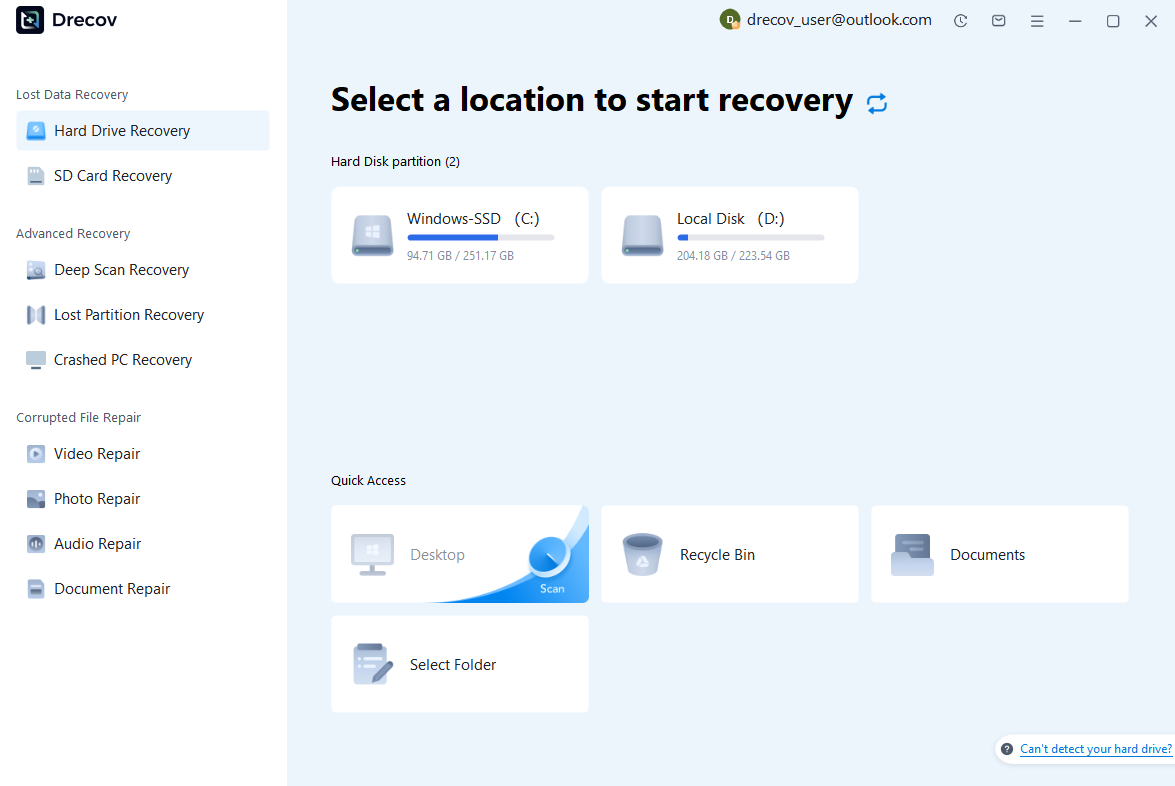
Step 1: Connect the Drive / USB)
Connect your device (SD card, HDD/SSD, or USB drive) to your computer and launch PandaOffice Drecov. Select the target device and start the scan. The software will perform a quick scan and deep scan to detect lost or deleted data.
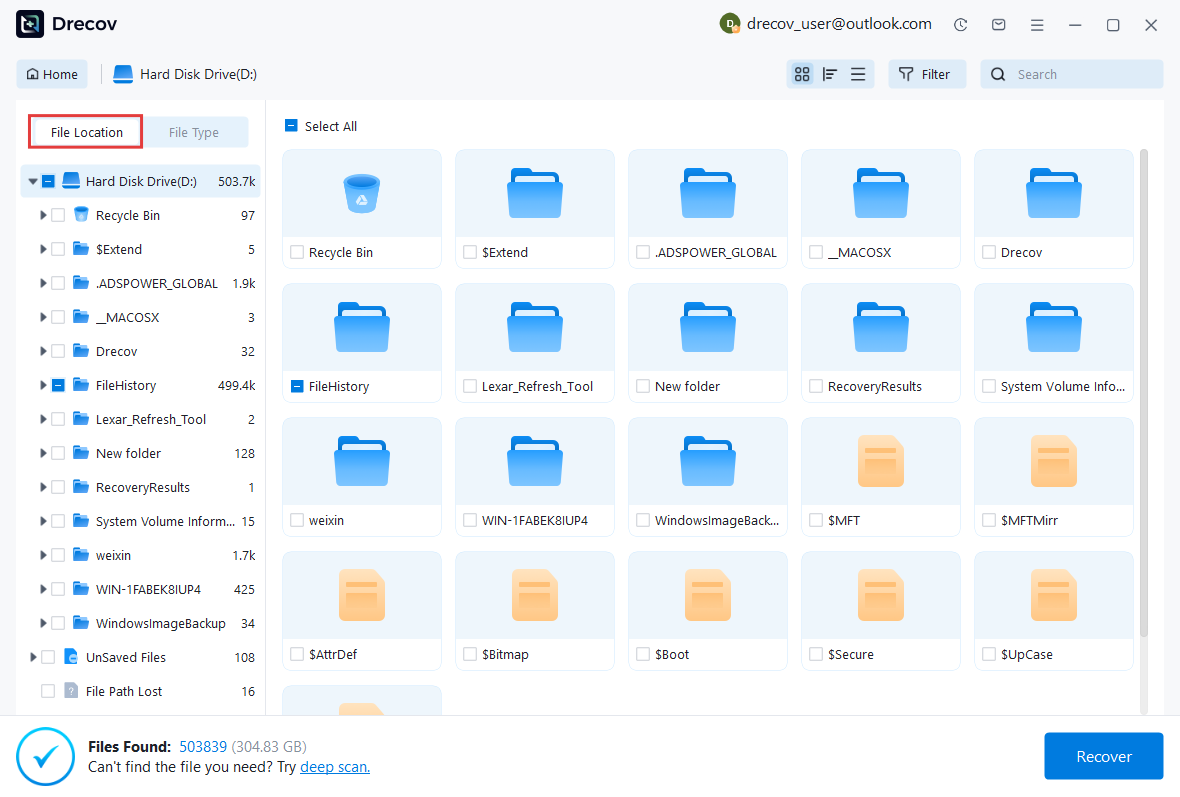
Step 2: Locate and Preview Lost Files
After scanning, browse the detected files and use the preview feature to check recoverable data. You can preview documents (Word, Excel, PDF), photos, and videos to ensure file integrity before recovery.
Step 3: Recover and Save to a New Location
Select the files you want to restore and click recover. Save all recovered data to a different drive or location (not the original device) to avoid overwriting lost data.

Why Choose PandaOffice Drecov Recovery Software?
PandaOffice Drecov offers a fast, secure, and user-friendly solution for recovering lost files across multiple scenarios. Whether you need email recovery, ZIP File Recovery, format data recovery, or help to recover deleted drafts Outlook, the software provides reliable recovery performance for both personal and business users.
PandaOffice Drecov supports recovery from formatted hard drives, SSDs, USB drives, SD cards, and external storage devices. Its advanced scanning engine can locate deleted archives, damaged ZIP files, lost Outlook drafts, and accidentally removed documents with high accuracy. For users searching for how to find deleted messages in Teams, PandaOffice Drecov can also help recover exported chat files, attachments, and related local cache data when available.
After recovery, test the file again. If the audio stream was damaged because of storage issues, a recovered version may play normally.
This method is particularly useful when only a few files exhibit audio problems while VLC works correctly with all other media.
This method can help users recover files from floppy disk storage after accidental deletion, formatting, or logical corruption.
If valuable files are stored on a problematic drive, tools such as PandaOffice Drecov can help recover documents, photos, videos, and other data before proceeding with more aggressive troubleshooting steps.
This approach minimizes risk and ensures that important information remains protected throughout the repair process.
⚠️ Warning: Always recover files to a different drive. Saving recovered data to the original device may overwrite additional recoverable sectors.
Advanced RAW Video Recovery Techniques
Recovering RAW Footage from Corrupted Storage Devices
Storage corruption is one of the most challenging video recovery scenarios. Unlike accidental deletion, corruption can affect both file system structures and file metadata.
Test Environment
- Corrupted SDXC Card
- Windows 11 Workstation
- Canon RAW Video Files
- Card Not Accessible in File Explorer
Recovery Process
- Stop using the device immediately.
- Create a disk image if possible.
- Scan the storage media.
- Search for recoverable video signatures.
- Recover files to another device.
- Verify file playback.
Many cameras record RAW footage continuously across multiple storage blocks. Even if directory information becomes damaged, portions of the original video may remain recoverable.
Users storing collections such as blacked raw full video archives should prioritize creating a complete image of the damaged device before attempting repairs. This minimizes the risk of further corruption.
Recovery success depends heavily on the severity of the underlying storage damage.
Repairing Damaged RAW Video Files
Sometimes a recovered RAW file exists but refuses to play properly. This usually indicates file corruption rather than complete data loss.
Test Environment
- Recovered BRAW File
- Windows 11
- DaVinci Resolve Installed
- Partial File Corruption
Common Symptoms
- Black screen during playback
- Missing frames
- Audio synchronization issues
- Playback crashes
- Unsupported file errors
Repair Procedure
- Create a backup copy of the damaged file.
- Attempt playback in multiple editors.
- Import the file into professional editing software.
- Export the recoverable portion.
- Verify playback functionality.
RAW video formats often contain redundant metadata structures that may allow partial recovery even when portions of the file become damaged.
For professional projects, recovering even a percentage of the original footage can be significantly better than complete loss.
Recovering Videos After Formatting
Formatted drives remain one of the most recoverable data-loss situations when handled correctly.
Test Environment
- Quick-Formatted NVMe SSD
- Windows 11
- Multiple Deleted RAW Video Projects
- No New Data Written
Steps
- Disconnect the formatted drive.
- Avoid installing software on it.
- Connect it to another computer if possible.
- Run a deep recovery scan.
- Locate RAW video files.
- Recover them to another device.
- Verify playback after restoration.
Quick formatting generally removes file allocation information while leaving much of the actual video content intact.
However, recovery becomes increasingly difficult if:
- New footage is recorded.
- Large files are copied.
- Games are installed.
- Operating systems are reinstalled.
Users maintaining extensive libraries of blacked raw videos should always begin recovery immediately after discovering a formatting mistake.
⚠️ Warning: Delayed recovery attempts significantly reduce the chances of restoring large RAW video files intact.
Frequently Asked Questions About RAW Video Recovery
Can permanently deleted RAW videos be recovered?
Yes. In many cases, permanently deleted RAW videos remain recoverable until new data overwrites the original storage sectors.
Recovery success depends on:
- Device type
- Time elapsed
- Amount of new data written
- Overall drive condition
Immediate action offers the highest success rate.
Why are RAW video files harder to recover than standard videos?
RAW files are significantly larger than compressed formats such as MP4 or MOV.
Because of their size:
- They occupy more storage sectors.
- Fragmentation is more common.
- Partial overwriting occurs more frequently.
As a result, recovering complete RAW footage can sometimes be more challenging than recovering compressed video files.
How long do deleted RAW videos remain recoverable?
There is no fixed timeframe.
Deleted files remain recoverable until new data overwrites their storage sectors. Some files may remain recoverable for months, while others may be overwritten within hours depending on device usage.
The safest approach is to stop using the affected device immediately after discovering data loss.
Can formatted memory cards still be recovered?
In many situations, yes.
Quick-formatted memory cards often retain the original video data. Recovery software can frequently locate and restore deleted footage if the card has not been reused extensively.
Full formatting and subsequent recording sessions may reduce recovery potential significantly.
Final Thoughts
RAW video files contain valuable image information that is essential for professional editing, color grading, and post-production workflows. Unfortunately, accidental deletion, formatting, corruption, and storage failures can place that footage at risk.
The recovery process should begin with the simplest solutions, including checking backups, cloud storage services, and previous versions. If those methods fail, advanced recovery approaches may help restore deleted footage from memory cards, SSDs, external drives, and other storage devices.
For severe data-loss situations involving permanently deleted files, formatted drives, or damaged file systems, PandaOffice Drecov can assist in locating recoverable RAW video data and restoring important projects.
By acting quickly, avoiding unnecessary drive activity, and following the recovery techniques outlined in this guide, users can maximize their chances of successfully restoring valuable RAW footage and preventing permanent data loss in the future.





