







Understanding Why Google Drive Is Not Syncing Properly
What Happens When Google Drive Does Not Sync Files
Google Drive is designed to keep files synchronized between your cloud storage and local devices. However, users occasionally encounter situations where Google Drive not syncing prevents newly added or modified files from appearing across devices. In some cases, uploads stop midway, folders remain outdated, or files fail to appear in the cloud altogether.
Synchronization issues can affect both personal and business users. If changes made on one device do not appear elsewhere, productivity may suffer and important data may become difficult to access. The issue can occur on Windows, macOS, or even within shared workspace environments.
When Google Drive does not sync, the problem may stem from software settings, network instability, account authentication errors, storage limitations, or local file conflicts. Understanding how synchronization works is the first step toward identifying the root cause and restoring normal operation.
Common Symptoms of Google Drive Sync Problems
Sync failures often present clear warning signs. Recognizing these symptoms helps users diagnose issues more efficiently.
Common indicators include:
- Files remain stuck in a pending upload state.
- Recently edited documents do not update online.
- Shared folders stop receiving new content.
- The application displays synchronization errors.
- Google Drive is not syncing with desktop folders.
- Cloud files appear unavailable offline.
Some users notice that specific file types fail to sync while others transfer normally. Others encounter messages indicating that files are waiting for synchronization despite an active internet connection.
⚠️ Warning: Avoid deleting local files immediately after a failed upload. Confirm that the files exist in Google Drive before removing any copies.
How Google Drive for Desktop Handles File Synchronization
The desktop application continuously monitors selected folders and communicates with Google’s servers. Whenever files are added, edited, renamed, or deleted, the software compares local and cloud versions before synchronizing changes.
The process generally includes:
- Detecting file modifications.
- Validating account permissions.
- Checking network availability.
- Uploading or downloading changes.
- Confirming synchronization status.
When Google Drive for desktop not syncing occurs, any interruption within these stages may prevent files from updating correctly. Understanding this workflow makes troubleshooting easier because each stage can be tested individually.
Why Google Drive Is Not Syncing on Your Computer
Internet Connection and Network Restrictions
A stable internet connection is essential for synchronization. Slow, unstable, or restricted networks frequently cause upload and download failures.
Corporate firewalls, VPN configurations, proxy servers, and security applications may interfere with communication between the desktop client and Google servers. Even temporary interruptions can prevent synchronization from completing successfully.
Users experiencing Google Drive not synchronizing should first verify:
- Internet connectivity
- DNS functionality
- Firewall permissions
- VPN settings
- Router stability
Testing synchronization on a different network can quickly determine whether connectivity is contributing to the issue.
Insufficient Storage Space in Google Drive
Google Drive accounts have storage limits. When available cloud space becomes exhausted, uploads stop even though the application continues running normally.
Signs of storage-related issues include:
- Uploads remain pending indefinitely.
- New files fail to appear online.
- Synchronization errors reference quota limitations.
Checking storage usage within the Google Drive account dashboard can confirm whether capacity is preventing new uploads.
Users managing large media collections should regularly review storage consumption to avoid unexpected synchronization interruptions.
Corrupted Cache and Temporary Sync Data
Google Drive relies on local cache files to improve synchronization efficiency. If these temporary files become damaged, the application may struggle to track changes correctly.
Corrupted cache data can lead to:
- Missing files
- Duplicate files
- Delayed synchronization
- Endless syncing loops
Resetting cached data often resolves persistent synchronization issues that cannot be explained by network or account problems.
Outdated Google Drive for Desktop Application
Older software versions may contain bugs or compatibility issues that interfere with synchronization.
Developers regularly release updates that address:
- Security vulnerabilities
- Sync engine improvements
- Operating system compatibility
- Performance enhancements
If desktop Google Drive not syncing becomes a recurring issue, checking for updates should be one of the first troubleshooting steps.
Account Permission and Login Issues
Google Drive requires active authentication. If login credentials expire or account permissions change, synchronization may stop unexpectedly.
Potential causes include:
- Password changes
- Multi-factor authentication issues
- Organization policy restrictions
- Account suspension
Re-authenticating the account often restores normal synchronization behavior.
When the Google Drive Synced Folder Is Missing
Some users discover that the local synchronized folder has disappeared completely. When a Google Drive synced folder is missing, synchronization naturally stops because the application can no longer monitor the expected directory.
Possible causes include:
- Accidental folder deletion
- Drive letter changes
- Configuration corruption
- Application updates
Fortunately, the folder can usually be recreated through Drive settings without affecting cloud-stored files.
How to Fix Google Drive Not Syncing Step by Step
Method 1. Recover Missing Local Files with PandaOffice Drecov Before Troubleshooting
Test Environment
- Windows 11 Pro
- Google Drive for Desktop Installed
- Missing or Deleted Local Sync Files
- Stable Internet Connection
Before attempting major repairs, verify that important local files remain available. Some users accidentally delete files while troubleshooting synchronization issues.
PandaOffice Drecov can help recover deleted or lost documents, photos, videos, and other files stored on local drives before you modify synchronization settings.
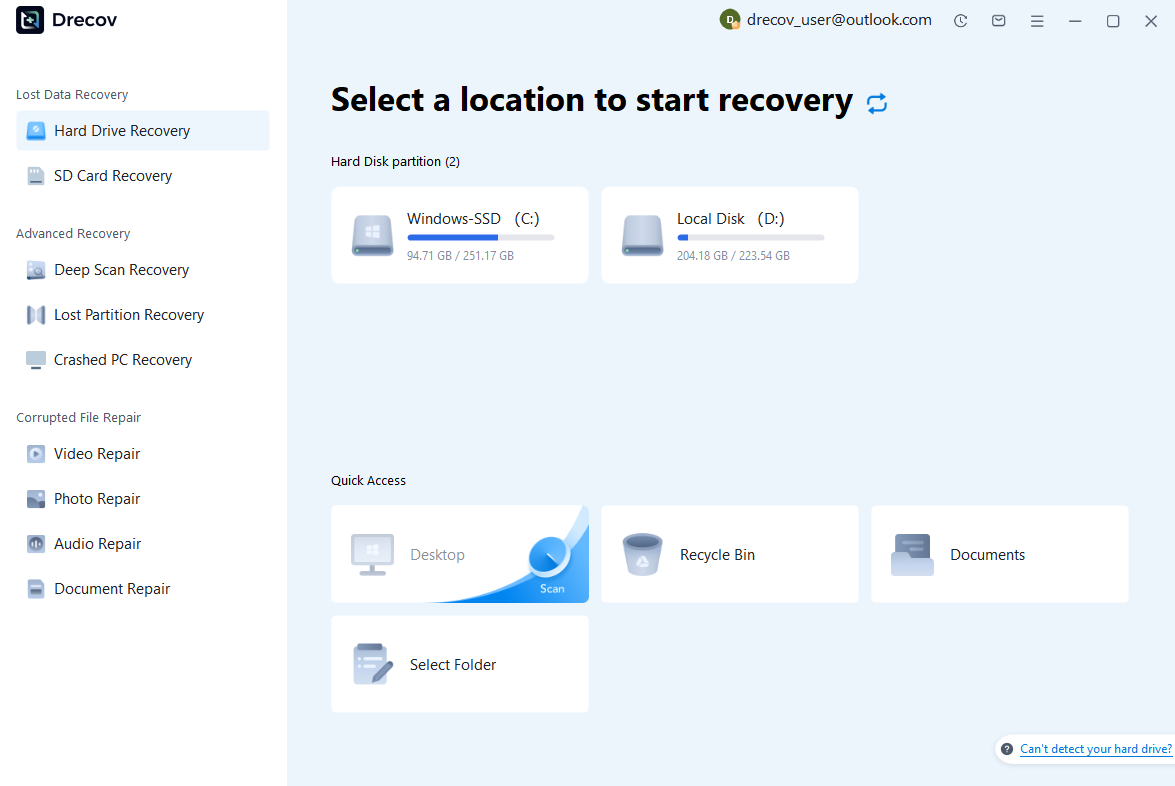
Step 1: Scan the Storage Device (SD Card / Hard Drive / USB)
Connect your device (SD card, HDD/SSD, or USB drive) to your computer and launch PandaOffice Drecov. Select the target device and start the scan. The software will perform a quick scan and deep scan to detect lost or deleted data.
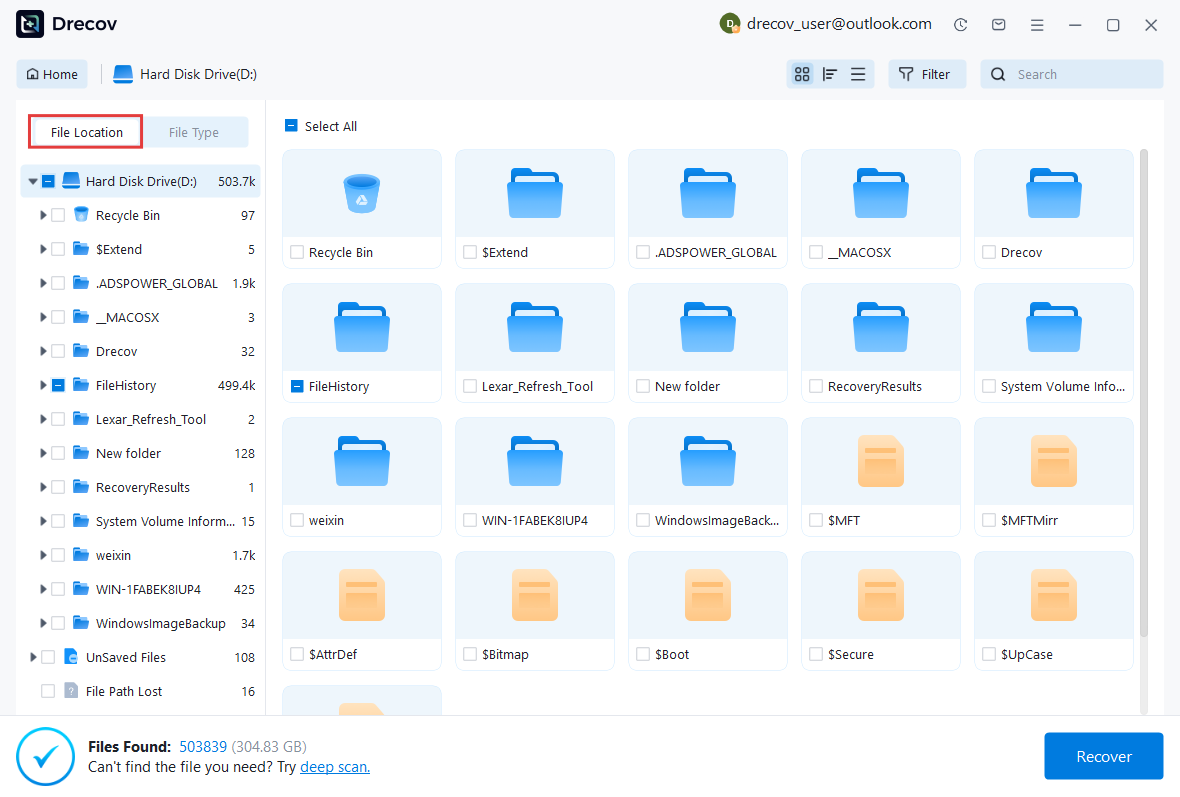
Step 2: Locate and Preview Lost Files
After scanning, browse the detected files and use the preview feature to check recoverable data. You can preview documents (Word, Excel, PDF), photos, and videos to ensure file integrity before recovery.
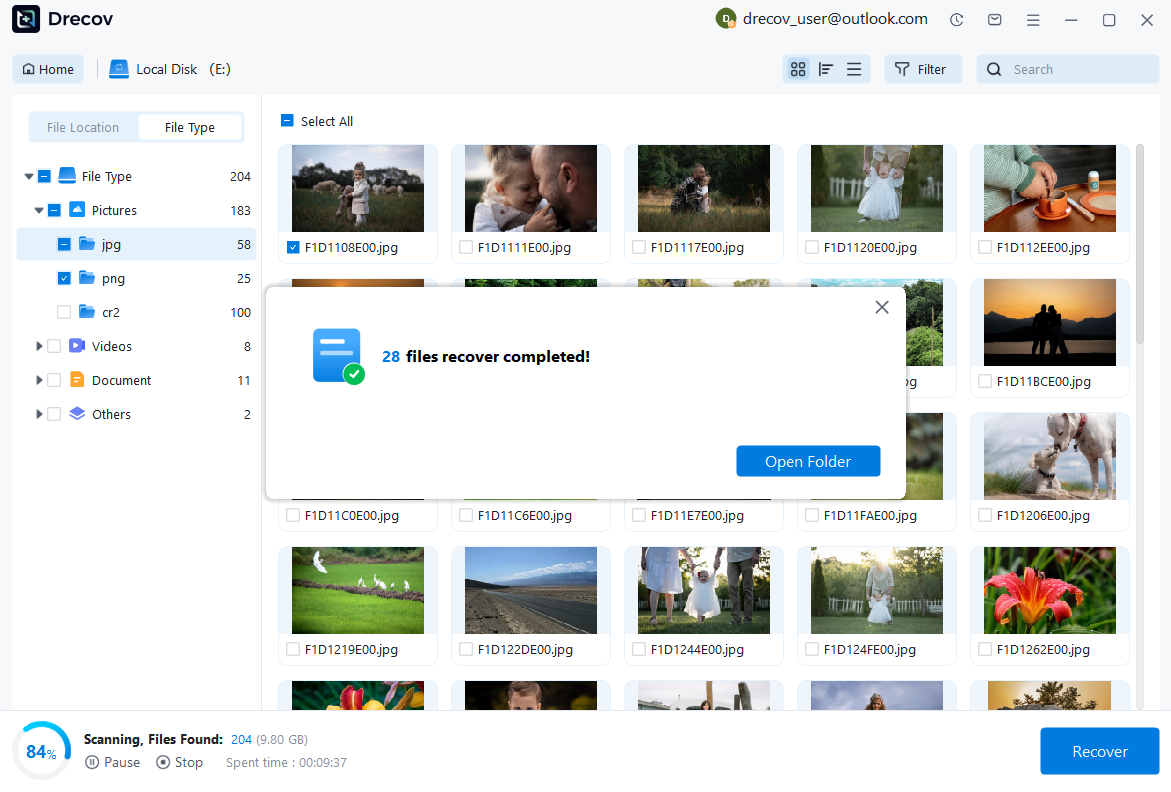
Step 3: Recover and Save to a New Location
Select the files you want to restore and click recover. Save all recovered data to a different drive or location (not the original device) to avoid overwriting lost data.
Why Choose PandaOffice Drecov Recovery Software?
PandaOffice Drecov offers a fast, secure, and user-friendly solution for recovering lost files across multiple scenarios. Whether you need email recovery, ZIP File Recovery, format data recovery, or help to recover deleted drafts Outlook, the software provides reliable recovery performance for both personal and business users.
PandaOffice Drecov supports recovery from formatted hard drives, SSDs, USB drives, SD cards, and external storage devices. Its advanced scanning engine can locate deleted archives, damaged ZIP files, lost Outlook drafts, and accidentally removed documents with high accuracy. For users searching for how to find deleted messages in Teams, PandaOffice Drecov can also help recover exported chat files, attachments, and related local cache data when available.
Key advantages include:
- Deep scan technology for complex data loss situations
- Support for emails, archives, videos, photos, and office documents
- Recovery from accidental deletion, formatting, corruption, and system crashes
- Easy preview before restoring files
- Compatible with Windows and multiple storage devices
Unlike complicated enterprise recovery tools, PandaOffice Drecov keeps the recovery process simple. Users can scan, preview, and restore files in just a few steps without technical expertise.
Whether you are dealing with lost Outlook drafts, corrupted ZIP archives, formatted drives, or missing communication data, PandaOffice Drecov provides an efficient and practical recovery experience designed to minimize downtime and protect important files.
Disk imaging ensures that even partially corrupted drives can be preserved. This is often the safest approach before attempting any aggressive repair operations for fix bad sectors on hard drive situations.
⚠️ Warning: Recover important files before reinstalling software or modifying synchronization folders.
Method 2. Verify That Google Drive for Desktop Is Running
Test Environment
- Windows 10/11 or macOS
- Google Drive Installed
- User Account Logged In
One common cause of sync failures is that the application has stopped running.
To verify:
Step 1. Open the system tray or menu bar.
Step 2. Locate the Google Drive icon.
Step 3. Confirm that the application is active.
Step 4. Launch the program if it is not running.
Step 5. Review synchronization status.
Many users encountering the message Google Drive needs to be running to sync these files simply discover that the desktop application was closed or failed to start automatically.
Method 3. Restart Google Drive Sync Services
Test Environment
- Windows 11
- Active Internet Connection
- Google Drive Desktop Client Installed
Restarting the synchronization engine can resolve temporary software glitches.
Step 1. Click the Google Drive icon.
Step 2. Open Settings.
Step 3. Exit the application completely.
Step 4. Wait several seconds.
Step 5. Relaunch Google Drive.
The restart process forces the application to rebuild active connections and re-evaluate pending tasks.
Method 4. Check Internet Connectivity and Firewall Settings
Test Environment
- Broadband Connection
- Windows Defender Firewall Enabled
- Google Drive Active
Network restrictions are among the most common causes of synchronization failures.
Step 1. Open a web browser.
Step 2. Confirm internet access.
Step 3. Temporarily disable VPN services.
Step 4. Review firewall permissions.
Step 5. Ensure Google Drive traffic is not blocked.
If synchronization resumes after adjusting network settings, the issue likely involves connectivity restrictions.
Method 5. Pause and Resume Synchronization
Test Environment
- Google Drive Desktop Client
- Active Google Account
- Pending Sync Tasks
A simple pause-and-resume cycle often resolves stalled synchronization jobs.
Step 1. Open Google Drive.
Step 2. Pause synchronization.
Step 3. Wait one minute.
Step 4. Resume syncing.
Step 5. Monitor file transfer progress.
This method refreshes active tasks and can clear temporary communication issues between the local client and cloud servers.
Many users find that Google Drive is not syncing only temporarily and resumes normal operation after synchronization is restarted.
Method 6. Reconnect Your Google Account
Test Environment
- Windows 10/11 or macOS
- Google Drive for Desktop Installed
- Google Account Previously Connected
- Stable Internet Connection
If authentication data becomes outdated or corrupted, synchronization may stop even though the application appears to be running normally. Reconnecting your account can establish a fresh connection with Google’s servers.
Step 1. Open Google Drive for Desktop.
Step 2. Click the Settings icon.
Step 3. Navigate to Preferences or Account Settings.
Step 4. Disconnect the current Google account.
Step 5. Sign in again using your Google credentials.
After reconnecting, Google Drive will verify account permissions and rebuild synchronization relationships. This method is especially useful when Google Drive does not sync after a password change, security update, or account migration.
Users managing multiple Google accounts should also confirm that the correct account is connected to the desktop application.
Method 7. Clear Google Drive Cache Files
Test Environment
- Windows 11 Pro
- Google Drive for Desktop Version Current
- Local SSD or HDD Storage
- Administrative Access
Cache files help improve synchronization speed, but damaged temporary data can prevent files from syncing correctly.
To clear cached data:
Step 1. Exit Google Drive completely.
Step 2. Locate the local cache directory.
Step 3. Remove temporary synchronization files.
Step 4. Restart the application.
Step 5. Allow Drive to rebuild the cache automatically.
A cache reset often resolves situations where Google Drive not synchronizing persists despite a stable internet connection and sufficient cloud storage.
⚠️ Warning: Do not manually delete active cloud files. Only remove temporary cache data associated with the application.
Method 8. Update Google Drive for Desktop to the Latest Version
Test Environment
- Windows or macOS
- Internet Access Available
- Existing Google Drive Installation
Running outdated software can create compatibility issues with operating system updates and server-side changes.
To update Google Drive:
Step 1. Open the application menu.
Step 2. Check the current software version.
Step 3. Search for available updates.
Step 4. Download and install the latest release.
Step 5. Restart your computer if prompted.
Updates frequently include bug fixes, synchronization improvements, and security enhancements. Users reporting Google Drive for desktop not syncing often find that updating the application resolves previously unexplained errors.
Keeping software current also reduces the likelihood of future synchronization disruptions.
Method 9. Recreate the Sync Folder Configuration
Test Environment
- Google Drive Installed
- Local Storage Accessible
- User Has Administrative Permissions
Sometimes synchronization settings become corrupted, causing Drive to lose track of local folders.
To rebuild the configuration:
Step 1. Open Google Drive Preferences.
Step 2. Remove the affected sync folder.
Step 3. Save the updated settings.
Step 4. Add the folder again manually.
Step 5. Start synchronization.
This process is particularly helpful when a Google Drive synced folder is missing or when Drive continuously reports synchronization conflicts.
Recreating folder mappings allows the application to establish a clean monitoring relationship between local files and cloud storage.
Users should verify that the selected folder contains the intended files before restarting synchronization.
Method 10. Reinstall Google Drive for Desktop
Test Environment
- Windows 10/11 or macOS
- Administrative Access
- Backup of Important Files Completed
If none of the previous methods resolve the problem, a complete reinstallation may be necessary.
Step 1. Uninstall Google Drive for Desktop.
Step 2. Restart the system.
Step 3. Download the latest installer.
Step 4. Install the application again.
Step 5. Sign in and configure synchronization preferences.
A clean installation removes corrupted program files, damaged configurations, and incomplete updates that may be preventing synchronization.
Many cases involving Google Drive is not syncing with desktop are resolved after reinstalling the software because the process restores default settings and rebuilds synchronization databases.
How to Prevent Future Google Drive Synchronization Problems
Maintain Stable Network Connections
Reliable connectivity plays a critical role in successful file synchronization. Even brief interruptions can delay uploads and downloads.
To reduce future problems:
- Use a stable broadband connection.
- Avoid switching networks during large transfers.
- Restart networking equipment periodically.
- Configure firewall rules correctly.
- Minimize unnecessary VPN usage.
Organizations that rely heavily on cloud storage should monitor network performance and bandwidth availability. Preventing connectivity issues before they occur can significantly reduce synchronization failures.
Users experiencing recurring Google Drive not syncing errors often discover that network instability is a contributing factor.
Monitor Available Cloud Storage Capacity
Synchronization stops when cloud storage limits are reached. Unfortunately, many users overlook available capacity until uploads begin failing.
Good storage management practices include:
- Reviewing storage usage monthly.
- Removing unnecessary files.
- Emptying trash folders regularly.
- Archiving old projects.
- Upgrading storage plans when necessary.
Monitoring storage consumption ensures that synchronization remains uninterrupted and helps prevent unexpected upload failures.
For users managing large photo collections or business files, proactive storage management is especially important.
Keep Google Drive Updated Automatically
Software updates provide more than new features. They also address bugs, compatibility issues, and security vulnerabilities.
Enable automatic updates whenever possible. This approach helps ensure that the latest synchronization improvements are always available.
Benefits include:
- Improved reliability
- Better performance
- Reduced software conflicts
- Enhanced security
Users who consistently maintain current software versions are less likely to encounter persistent synchronization errors.
Organize Sync Folders to Reduce Conflicts
Complex folder structures can create synchronization challenges. Excessive nesting, unsupported file names, and duplicate files may contribute to conflicts.
Best practices include:
- Using clear folder names.
- Avoiding special characters when possible.
- Removing duplicate files.
- Keeping folder structures organized.
- Limiting unnecessary synchronization locations.
A well-organized environment helps Google Drive process changes more efficiently and reduces the likelihood of synchronization failures.
⚠️ Warning: Avoid frequently moving large synchronized folders while active uploads are in progress.
Frequently Asked Questions About Google Drive Sync Errors
Why Does Google Drive Need to Be Running to Sync These Files?
The desktop application performs all synchronization activities between local storage and Google servers. If the software is closed, synchronization cannot occur.
When users encounter the message Google Drive needs to be running to sync these files, it generally indicates that:
- The application is closed.
- Startup services are disabled.
- The process crashed unexpectedly.
- User permissions prevent execution.
Launching the application usually restores synchronization functionality.
Why Is Desktop Google Drive Not Syncing Certain Files?
Several factors can prevent specific files from synchronizing.
Examples include:
- Unsupported file names
- Storage quota limitations
- File permission conflicts
- Network interruptions
- Corrupted local cache
If desktop Google Drive not syncing affects only certain files, reviewing file properties and synchronization logs can help identify the cause.
How Do I Fix Google Drive Is Not Syncing With Desktop?
Start with basic troubleshooting:
- Verify internet connectivity.
- Confirm Google Drive is running.
- Check available storage space.
- Restart synchronization services.
- Reconnect your account.
- Update the application.
If Google Drive is not syncing with desktop after completing these steps, reinstalling the application may be necessary.
What Should I Do If Google Drive Synced Folder Is Missing?
When a Google Drive synced folder is missing, first check whether the folder was accidentally moved or deleted.
Next:
- Review synchronization settings.
- Recreate the folder mapping.
- Restart Google Drive.
- Verify local storage accessibility.
In most cases, cloud-stored files remain safe even if the local synchronized folder disappears.
Can Google Drive Recover Files That Failed to Sync?
Google Drive may retain previous file versions and cloud copies if uploads were completed successfully.
However, files deleted locally before synchronization finishes may not always be recoverable through Google Drive alone.
In situations involving local file loss, dedicated recovery software such as PandaOffice Drecov may help recover files from the storage device before they are permanently overwritten.
Final Thoughts on Resolving Google Drive Sync Issues
Key Steps to Restore Reliable File Synchronization
Synchronization issues can be frustrating, but most problems have straightforward solutions. Whether Google Drive is not syncing, uploads remain pending, or folders disappear unexpectedly, systematic troubleshooting typically restores normal functionality.
Start with the basics:
- Verify internet connectivity.
- Confirm Google Drive is running.
- Review storage availability.
- Check account authentication.
- Update software when necessary.
Addressing these common causes resolves many synchronization failures without requiring advanced technical knowledge.
When to Consider Reinstalling Google Drive Completely
Reinstallation should generally be viewed as a final troubleshooting step rather than the first option.
A clean installation is recommended when:
- Multiple repair methods fail.
- Configuration files become corrupted.
- Updates install incorrectly.
- Persistent synchronization errors continue.
By rebuilding application files and settings from scratch, reinstallation often eliminates issues that are difficult to diagnose individually.
Best Practices for Long-Term Google Drive Stability
Long-term reliability depends on consistent maintenance and proactive monitoring.
To minimize future synchronization problems:
- Maintain stable internet access.
- Monitor storage capacity regularly.
- Keep software updated.
- Organize synchronized folders carefully.
- Back up important files independently.
Following these practices can significantly reduce the likelihood of encountering Google Drive not syncing issues in the future while ensuring that important data remains accessible across all connected devices.





