







Overview of orange screen of death in Windows systems
The orange screen of death is an uncommon but serious system crash that occurs on Windows computers, often during startup, gaming, or graphics-intensive tasks. When it happens, the screen suddenly turns orange or amber and the system becomes unresponsive or restarts without warning. This issue is closely related to graphics processing failures and is sometimes referred to as the windows orange screen of death in user reports.
Unlike the more familiar blue screen errors, the Orange Screen of Death in Windows 10 is more commonly linked to GPU rendering issues rather than general system crashes. It usually indicates that the display subsystem has encountered a critical failure and cannot continue normal operation. In many cases, users report the error appearing during high-performance workloads such as gaming, video editing, or 3D rendering.
Although the appearance of the orange screen looks alarming, it does not always mean permanent hardware damage. In many situations, the issue is caused by driver conflicts, temporary system corruption, or unstable GPU behavior. Because of this, most cases can be fixed without replacing hardware.
The error can also appear after Windows updates or driver changes, which may introduce compatibility issues between the operating system and graphics hardware. Once these conflicts occur, the system may fail at the display level and trigger the windows orange screen of death instead of loading normally.
Main causes behind Orange Screen of Death in Windows 10
GPU driver instability and graphics conflicts
One of the most common triggers of the windows orange screen of death is a problem with the GPU driver. Graphics drivers act as the communication layer between Windows and the graphics card. If these drivers become outdated, corrupted, or incompatible, the system may fail during rendering tasks.
This issue often appears after installing new drivers without removing old versions properly, or when Windows automatically updates a driver that is not fully stable. In some cases, switching between integrated and dedicated GPUs can also create conflicts that lead to system crashes.
When the driver fails during a rendering process, the system may lose display output and immediately transition into the orange screen state.
⚠️ Warning: Installing multiple GPU driver versions without clean uninstallation may increase instability and trigger repeated crashes.
Windows updates causing system-level corruption
Another major cause of the Orange Screen of Death in Windows 10 is incomplete or corrupted Windows updates. Updates often modify core graphics components, system libraries, and DirectX modules. If an update is interrupted or fails during installation, important system files may become inconsistent.
This can create conflicts between Windows system services and GPU drivers, especially during high-performance tasks. As a result, the system may crash when attempting to initialize graphics rendering.
Common scenarios include:
- Forced shutdown during update installation
- Interrupted internet connection during patch download
- Failed cumulative updates affecting display components
Once corruption occurs, the system may repeatedly trigger the windows orange screen of death during startup or heavy usage.
In some cases, the issue is not software-related but caused by hardware instability. A failing or overheating GPU can trigger rendering errors that lead to system crashes. Similarly, unstable power delivery or defective VRAM may also cause the display pipeline to fail.
Hardware-related triggers often occur under heavy load, such as gaming sessions or video rendering tasks. If the GPU cannot maintain stable performance, the system may crash into the orange screen instead of recovering gracefully.
Overclocked systems are especially vulnerable because increased clock speeds can push hardware beyond stable operating limits.
Basic methods to fix orange screen of death issues
Booting into Safe Mode to isolate system conflicts
One of the first troubleshooting steps for the orange screen of death is entering Safe Mode. Safe Mode starts Windows with minimal drivers and services, allowing users to bypass problematic GPU drivers or conflicting software.
If the system works normally in Safe Mode, it strongly indicates that the issue is software-related rather than hardware failure. From here, users can uninstall problematic drivers, remove recent updates, or disable conflicting applications.
Safe Mode is particularly useful for diagnosing whether the windows orange screen of death is caused by drivers or deeper system corruption.
Updating or rolling back graphics drivers
Since GPU drivers are a major cause of this issue, reinstalling or rolling back drivers is often an effective solution. Users can download the latest stable driver from the GPU manufacturer or revert to a previous version if the issue began after an update.
A clean installation is recommended to remove leftover corrupted files from previous driver versions. This helps prevent repeated conflicts between Windows and the GPU.
After reinstalling, testing system stability under normal and high-load conditions helps confirm whether the issue is resolved.
Running system repair tools and Windows diagnostics
If driver fixes do not resolve the problem, Windows built-in repair tools can help restore system integrity. Tools such as System File Checker (SFC) and DISM scan and repair corrupted system files that may contribute to the Orange Screen of Death in Windows 10.
These tools check for missing or damaged components and automatically replace them with healthy versions from Windows system images. This is especially useful when system updates or crashes have damaged core display components.
Advanced troubleshooting methods for persistent orange screen failures
When basic solutions such as Safe Mode, driver rollback, and system repair tools fail to resolve the orange screen of death, the issue is usually deeper and involves system-level corruption or unstable hardware interaction. At this stage, more advanced recovery methods are required to restore stability and eliminate recurring crashes.
The windows orange screen of death often persists when multiple system layers are affected at the same time, such as GPU drivers, DirectX components, and Windows kernel display services. Because of this, advanced troubleshooting focuses on rebuilding system integrity and isolating hardware instability.
Using System Restore to revert stable system state
System Restore is one of the most effective recovery options when the issue started recently. If the Orange Screen of Death in Windows 10 appears after a driver update, Windows patch, or software installation, reverting to a previous restore point can quickly remove the conflicting changes.
This method restores system files, registry settings, and drivers to a previous working state without affecting personal files. It is especially useful when the issue is caused by faulty GPU driver updates or system configuration changes.
After restoration, the system should be tested under normal usage and GPU-heavy tasks to confirm whether the issue is resolved.
⚠️ Warning: System Restore only works if restore points were created before the failure occurred.
Repairing DirectX and display runtime components
The windows orange screen of death is often linked to DirectX or display runtime corruption. DirectX is responsible for handling graphics rendering between Windows and the GPU. If its components become damaged, rendering failures can occur during gaming or video processing.
Reinstalling DirectX and repairing Visual C++ runtime libraries can resolve hidden compatibility issues. These components are often updated automatically, but incomplete installations or corrupted updates may cause instability.
After repair, restarting the system allows Windows to rebuild missing graphics dependencies and stabilize rendering performance.
Checking GPU temperature, power, and hardware stability
If software fixes do not resolve the issue, hardware diagnostics become necessary. A failing GPU, overheating system, or unstable power supply can directly trigger the orange screen of death under load.
Common hardware warning signs include:
- Sudden crashes during gaming or rendering
- Screen artifacts before failure
- Loud or inconsistent GPU fan behavior
- System shutdown under high load
Monitoring GPU temperature and performance during stress testing can help identify instability. If crashes only occur under heavy load, hardware failure is highly likely.
⚠️ Warning: Running unstable hardware for long periods may permanently damage the GPU.
Clean Windows reinstallation (final software solution)
If all previous methods fail, performing a clean Windows reinstallation is often the most reliable way to eliminate persistent windows orange screen of death issues. This process removes corrupted system files, broken drivers, and misconfigured registry entries.
A fresh installation ensures that Windows starts with a clean driver environment and default system configuration. However, it should only be used after all recovery options have been exhausted.
Before reinstalling, important files should be backed up to avoid data loss.
Data recovery before system reset
Before performing a clean installation, it is critical to secure important files. In severe cases of orange screen of death, Windows may become partially inaccessible, making normal file backup difficult.
In such situations, connecting the drive to another computer or using a bootable recovery environment can help extract files safely. Tools like PandaOffice Drecov can scan non-booting drives and recover documents, images, and essential data before system reinstallation.
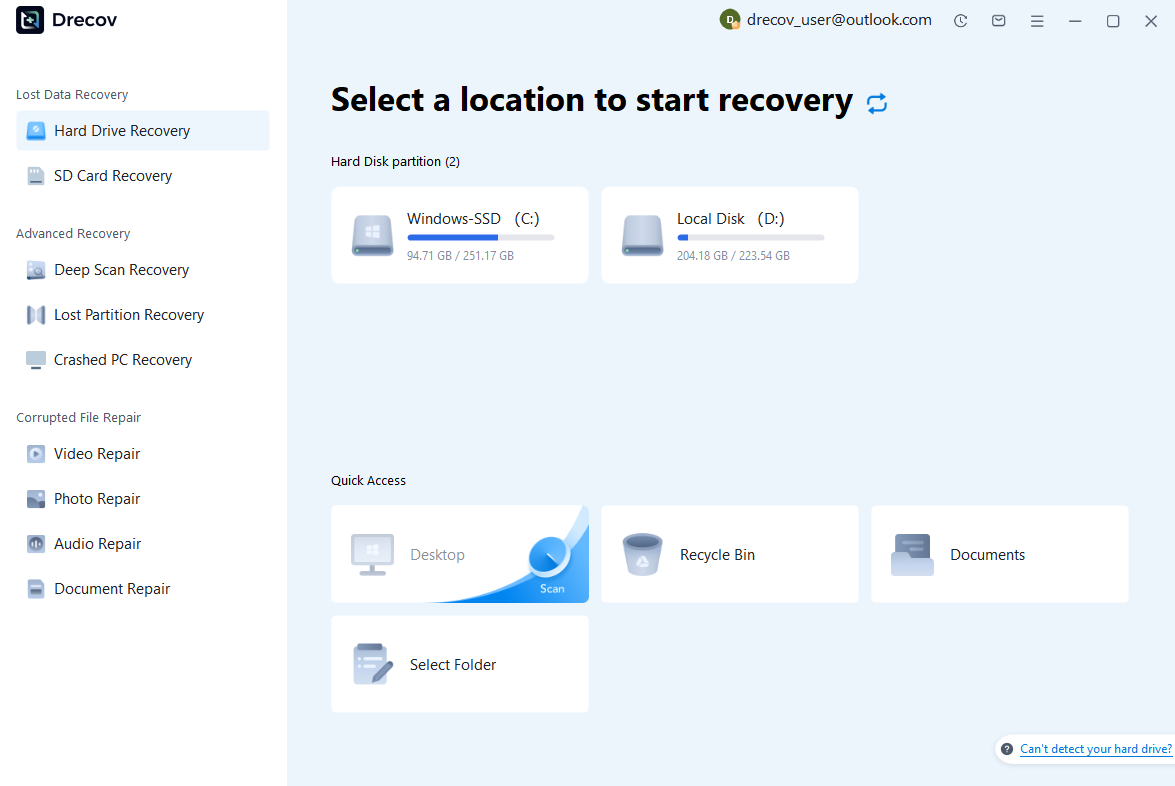
Step 1: Connect the Drive / USB)
Connect your device (SD card, HDD/SSD, or USB drive) to your computer and launch PandaOffice Drecov. Select the target device and start the scan. The software will perform a quick scan and deep scan to detect lost or deleted data.
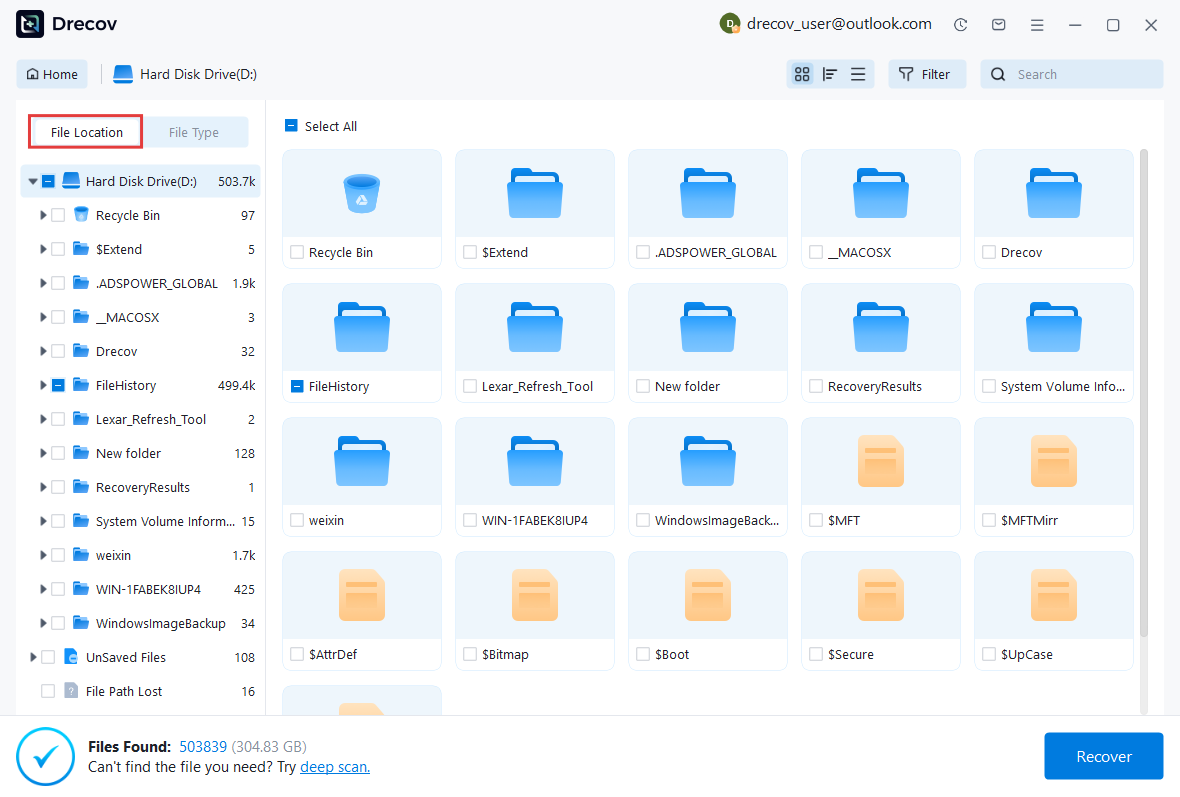
Step 2: Locate and Preview Lost Files
After scanning, browse the detected files and use the preview feature to check recoverable data. You can preview documents (Word, Excel, PDF), photos, and videos to ensure file integrity before recovery.
Step 3: Recover and Save to a New Location
Select the files you want to restore and click recover. Save all recovered data to a different drive or location (not the original device) to avoid overwriting lost data.

Why Choose PandaOffice Drecov Recovery Software?
PandaOffice Drecov offers a fast, secure, and user-friendly solution for recovering lost files across multiple scenarios. Whether you need email recovery, ZIP File Recovery, format data recovery, or help to recover deleted drafts Outlook, the software provides reliable recovery performance for both personal and business users.
PandaOffice Drecov supports recovery from formatted hard drives, SSDs, USB drives, SD cards, and external storage devices. Its advanced scanning engine can locate deleted archives, damaged ZIP files, lost Outlook drafts, and accidentally removed documents with high accuracy. For users searching for how to find deleted messages in Teams, PandaOffice Drecov can also help recover exported chat files, attachments, and related local cache data when available.
After recovery, test the file again. If the audio stream was damaged because of storage issues, a recovered version may play normally.
This method is particularly useful when only a few files exhibit audio problems while VLC works correctly with all other media.
This method can help users recover files from floppy disk storage after accidental deletion, formatting, or logical corruption.
This step ensures that important information is not lost during repair or formatting.
⚠️ Warning: Always recover or back up data before reinstalling Windows or formatting system partitions.
FAQ about orange screen of death in Windows systems
Is orange screen of death caused by hardware failure or software issues?
In most cases, it is caused by software issues such as GPU driver conflicts, corrupted system files, or Windows update errors. However, repeated crashes under heavy load may indicate hardware instability such as overheating or failing GPU components.
Can orange screen of death lead to permanent data loss?
The error itself does not directly delete data. However, sudden crashes or forced shutdowns may lead to file corruption or unsaved data loss if the system fails during active operations.
Why does the orange screen appear during gaming or heavy tasks?
Gaming and rendering place heavy load on the GPU. If the driver or hardware is unstable, the system may fail under pressure, triggering the windows orange screen of death during high-performance usage.
Prevention methods for long-term system stability
Preventing future occurrences of the orange screen of death requires maintaining both software and hardware stability. GPU drivers should be updated regularly, but always installed cleanly to avoid version conflicts.
Avoid excessive overclocking unless cooling and power systems are stable. Monitoring GPU temperature during heavy workloads can help detect early warning signs of instability.
Keeping Windows updated and avoiding interrupted installations also plays a key role in preventing system corruption. A stable power supply and proper cooling system are equally important for long-term reliability.
Final conclusion
The windows orange screen of death is primarily caused by GPU driver conflicts, system corruption, or hardware instability. While it may appear serious, most cases can be resolved using Safe Mode recovery, driver reinstallation, system restore, or DirectX repair.
In more severe cases, clean Windows installation or hardware diagnostics may be required. With proper maintenance and preventive practices, this issue can be significantly reduced or fully avoided.






