







Introduction to Computer File Recovery
What Is Computer File Recovery Software?
Losing files on a Windows computer can happen unexpectedly. Accidental deletions, system crashes, malware, or storage device failures may result in lost documents, photos, videos, or other critical files. Computer file recovery software is designed to locate and restore these lost or inaccessible files.
These programs scan storage devices for traces of deleted data. Even if files no longer appear in File Explorer, remnants often remain until overwritten by new data. Recovery software reconstructs files from these remnants.
Most modern software supports multiple file types: documents, spreadsheets, PDFs, photos, videos, and archives. They also work with HDDs, SSDs, USB drives, and memory cards.
Many users prefer computer file recovery software free for initial attempts at recovery. Free tools provide a cost-effective solution and allow evaluation of recoverable files before investing in professional services.
Why Free Computer File Recovery Software Matters
Professional recovery services can be expensive. Free tools allow users to try recovery first. They often support:
- Accidentally deleted files
- Emptied Recycle Bin
- Formatted partitions
- Virus-related file loss
Free software is especially useful for home users, students, or small businesses. Most have user-friendly interfaces that guide users through the recovery process.
Recovery success depends on acting quickly. The longer the drive is used after file loss, the higher the chance that recoverable data will be overwritten.
Common Causes of Data Loss in Windows 10
Accidental File Deletion
One of the most common causes of data loss is accidental deletion. Users may delete files unintentionally while cleaning up storage, organizing folders, or using keyboard shortcuts.
Files deleted normally are sent to the Recycle Bin and can often be restored quickly. However, files deleted with Shift + Delete bypass the Recycle Bin and require recovery software to restore.
Even after deletion, data often remains on the storage device until overwritten, making software-based recovery possible. Acting immediately increases the chance of successful restoration.
System Crashes and Blue Screen Errors
Windows system crashes can occur due to driver conflicts, software corruption, hardware failures, or updates gone wrong. Severe crashes may lead to a Blue Screen of Death (BSOD).
Data can be corrupted or lost during crashes, especially if files were being edited or transferred. Files may appear missing or inaccessible, but recovery software can often restore them if the drive is still intact.
⚠️ Warning: Avoid using the affected drive until recovery attempts are complete. Continued use may overwrite lost files.
Malware or Virus Attacks
Malware is a major cause of lost data. Viruses may delete, encrypt, or hide files. Ransomware can lock access to important files and demand payment to decrypt them.
Recovery software may restore data if the malware only removed references rather than permanently overwriting the files.
Prevent infections by:
- Keeping antivirus software updated
- Avoiding suspicious downloads
- Backing up important files regularly
Hardware Failures
Storage devices can fail due to age, mechanical issues (HDDs), or firmware corruption (SSDs). Warning signs include:
- Slow file access
- Clicking noises in HDDs
- System freezes
- Disk read errors
If hardware shows signs of failure, stop using the device immediately. Some recovery software can restore files from failing drives, but severe damage may require professional intervention.
Methods to Recover Lost Files on Windows 10
Method 1: Using PandaOffice Drecov for Computer File Recovery
When basic recovery methods fail, dedicated software like PandaOffice Drecov can scan drives deeply to locate lost files.
Test Environment
- OS: Windows 10 Pro
- Storage Device: 512GB SSD
- File Types: DOCX, JPG, MP4, PDF
- Loss Scenario: Accidental deletion, emptied Recycle Bin
Steps to Recover Files
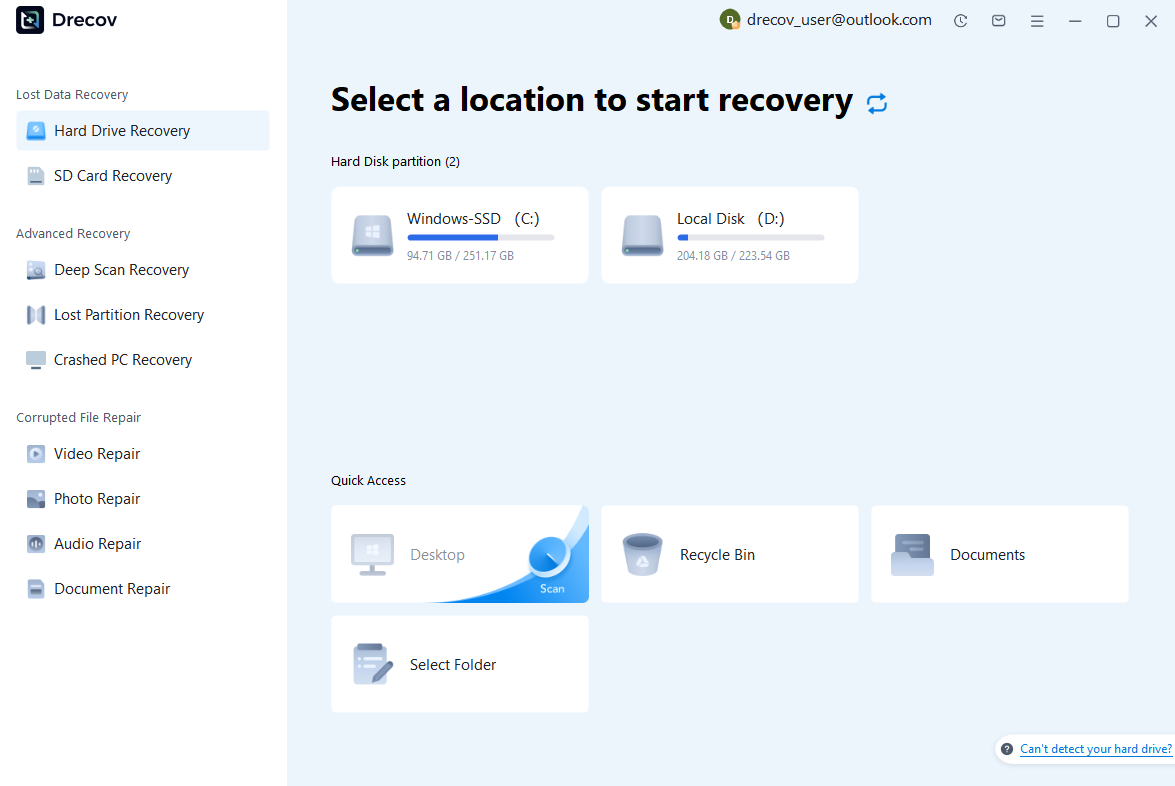
Step 1: Scan the Storage Device (SD Card / Hard Drive / USB)
Connect your device (SD card, HDD/SSD, or USB drive) to your computer and launch PandaOffice Drecov. Select the target device and start the scan. The software will perform a quick scan and deep scan to detect lost or deleted data.
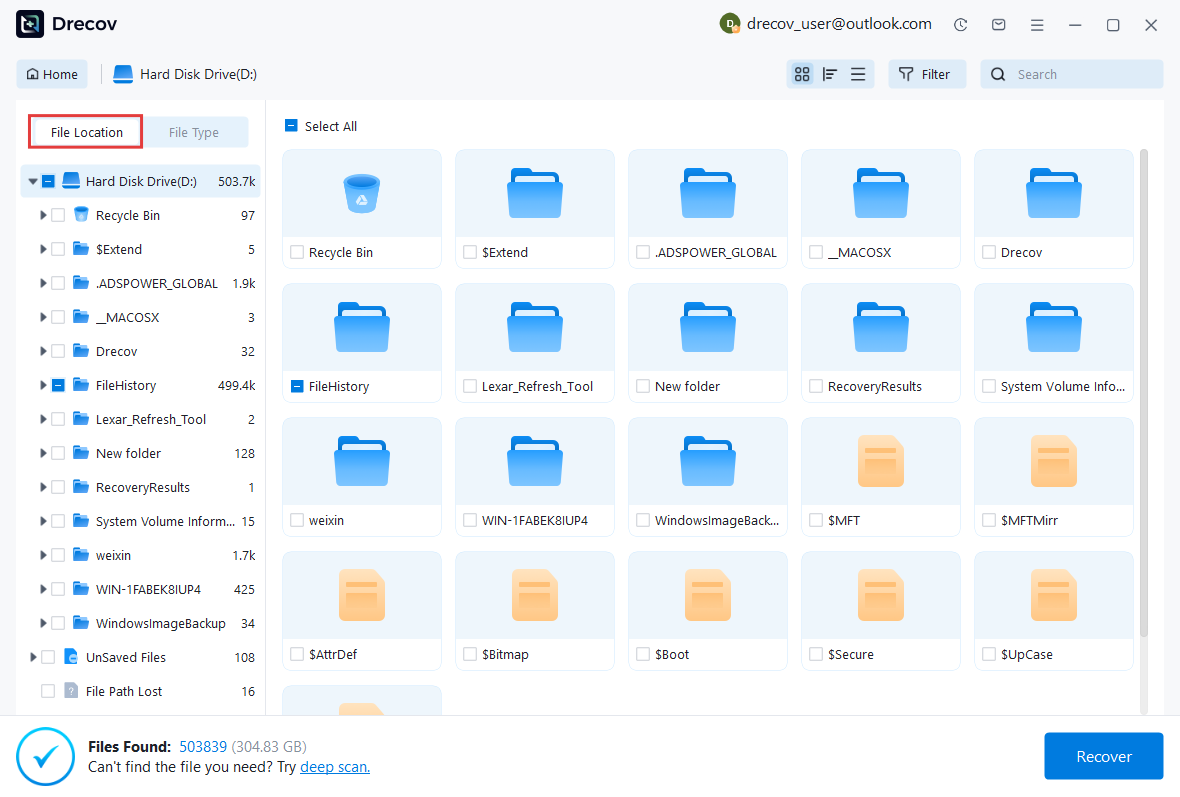
Step 2: Locate and Preview Lost Files
After scanning, browse the detected files and use the preview feature to check recoverable data. You can preview documents (Word, Excel, PDF), photos, and videos to ensure file integrity before recovery.
Step 3: Recover and Save to a New Location
Select the files you want to restore and click recover. Save all recovered data to a different drive or location (not the original device) to avoid overwriting lost data.

Why Choose PandaOffice Drecov Recovery Software?
PandaOffice Drecov offers a fast, secure, and user-friendly solution for recovering lost files across multiple scenarios. Whether you need email recovery, ZIP File Recovery, format data recovery, or help to recover deleted drafts Outlook, the software provides reliable recovery performance for both personal and business users.
PandaOffice Drecov supports recovery from formatted hard drives, SSDs, USB drives, SD cards, and external storage devices. Its advanced scanning engine can locate deleted archives, damaged ZIP files, lost Outlook drafts, and accidentally removed documents with high accuracy. For users searching for how to find deleted messages in Teams, PandaOffice Drecov can also help recover exported chat files, attachments, and related local cache data when available.
Key advantages include:
- Deep scan technology for complex data loss situations
- Support for emails, archives, videos, photos, and office documents
- Recovery from accidental deletion, formatting, corruption, and system crashes
- Easy preview before restoring files
- Compatible with Windows and multiple storage devices
Unlike complicated enterprise recovery tools, PandaOffice Drecov keeps the recovery process simple. Users can scan, preview, and restore files in just a few steps without technical expertise.
Whether you are dealing with lost Outlook drafts, corrupted ZIP archives, formatted drives, or missing communication data, PandaOffice Drecov provides an efficient and practical recovery experience designed to minimize downtime and protect important files.
⚠️ Warning: Never restore files to the original drive, as this may overwrite recoverable data.
Method 2: Recover Files Using Windows File History
File History automatically backs up files in selected folders. If enabled, it provides a simple recovery option.
Test Environment
- OS: Windows 10 Home
- Backup: File History
- File Types: DOCX, XLSX, TXT
- Loss Scenario: Folder deleted
Steps to Recover Files
- Open File Explorer and navigate to the original folder.
- Right-click and select Restore previous versions.
- Review available versions.
- Select a version and click Restore.
Effectiveness depends on whether File History was enabled before data loss occurred.
Method 3: Restore Deleted Files from the Recycle Bin
The Recycle Bin is the first line of defense for deleted files.
Test Environment
- OS: Windows 10 Pro
- Storage: Internal HDD
- File Types: Images, PDFs, Documents
- Loss Scenario: Standard deletion
Steps to Recover Files
- Open the Recycle Bin.
- Search for deleted files.
- Select files or folders.
- Right-click and choose Restore.
Limitations: Files deleted with Shift + Delete or emptied from the Recycle Bin require software recovery.
Method 4: Using Backup and Restore (Windows 7 Feature)
The legacy Backup and Restore utility is still included in Windows 10.
Test Environment
- OS: Windows 10 Enterprise
- Backup: Windows Backup and Restore
- File Types: Documents, Photos, Videos
- Loss Scenario: Missing files after system update
Steps to Recover Files
- Open Control Panel → Backup and Restore (Windows 7).
- Click Restore my files.
- Search for required files.
- Select files or folders.
- Choose a restore location.
- Complete recovery.
This method restores files from previously created backup copies, offering a high success rate for protected files.
Method 5: Recover Files from Cloud Backup
Many Windows 10 users enable cloud backup solutions, such as OneDrive or Google Drive. If data is lost locally, it may still exist online. Using cloud recovery allows restoration without specialized software in some cases.
Test Environment
- Operating System: Windows 10 Pro
- Cloud Service: OneDrive
- File Types: DOCX, XLSX, PDF, JPG
- Loss Scenario: Files accidentally deleted from local folders
Steps to Recover Files
- Open a web browser and log in to OneDrive.
- Navigate to the Recycle Bin or Deleted Files section.
- Select the files you want to restore.
- Click Restore to return files to their original location or download them locally.
⚠️ Warning: Ensure the restored files are saved to a different location than the original folder to prevent overwriting recoverable data.
Cloud backups often retain deleted files for 30 days for personal accounts and longer for business accounts. Regularly checking the Recycle Bin is essential for timely recovery.
Method 6: Using System Restore Points
System Restore can roll back your Windows environment to a previous state. While it primarily targets system files, it can restore some lost documents and folders, especially after software conflicts or updates.
Test Environment
- Operating System: Windows 10 Pro
- Feature: System Restore
- File Types: DOCX, XLSX, PPTX
- Loss Scenario: File loss due to system crash or failed software installation
Steps to Recover Files
- Press Windows + R, type
rstrui.exe, and press Enter. - Choose a restore point prior to the data loss.
- Follow the prompts to complete the restore.
- Check affected folders for recovered files.
⚠️ Warning: System Restore does not guarantee recovery of all personal files. Always maintain separate backups of important data.
Method 7: Advanced Recovery with Third-Party Software
When standard Windows recovery methods fail, advanced computer file recovery software can locate files deleted, formatted, or corrupted on the storage device.
Test Environment
- Operating System: Windows 10 Pro
- Storage Device: HDD 1TB and SSD 512GB
- File Types: Documents, Images, Audio, Video
- Loss Scenario: Accidental deletion and partial formatting
Steps to Recover Files
- Install a reliable third-party recovery program, such as PandaOffice Drecov.
- Launch the software and select the affected drive or partition.
- Run a quick scan for recently deleted files.
- If insufficient results appear, run a deep scan.
- Preview recoverable files to ensure integrity.
- Save files to a different storage device.
Advanced tools can handle:
- Corrupted file systems
- Overwritten partitions
- Partially formatted drives
- Encrypted or inaccessible drives
These tools also allow selective recovery, letting users restore only essential files, saving time and space.
Choosing the Right Computer File Recovery Software
Key Features to Consider
When selecting computer file recovery software free or paid, evaluate:
- Supported File Types: Documents, photos, videos, audio, and archives.
- Device Compatibility: HDD, SSD, USB drives, memory cards.
- Scan Options: Quick and deep scans for thorough recovery.
- Preview Functionality: Ability to preview recoverable files before restoration.
- Ease of Use: User-friendly interface for beginners and advanced users.
Free vs Paid Solutions
- Free tools are effective for minor losses, but may limit the size or number of recoverable files.
- Paid solutions offer deeper scanning, better success rates, and additional features like damaged drive recovery or encrypted file handling.
Selecting the right solution depends on your data loss scenario, storage media, and file types.
Best Practices for Data Recovery and Prevention
Immediate Steps After Data Loss
- Stop using the affected drive immediately.
- Avoid installing recovery software on the same drive.
- Run a quick scan first, then a deep scan if necessary.
- Store recovered files on a separate drive to prevent overwriting.
Backup Strategies
- File History: Enable in Windows 10 for automatic periodic backups.
- Cloud Storage: Use OneDrive, Google Drive, or Dropbox for remote backup.
- Full System Backups: Use Windows Backup and Restore or third-party software.
- Multiple Storage Devices: Store critical files across several devices for redundancy.
Handling Hardware Issues
- Monitor drive health using S.M.A.R.T. utilities.
- Replace aging drives proactively.
- Avoid shocks or extreme conditions for HDDs and SSDs.






