







Understanding RAM Speed and Why It Matters
What RAM Speed Means in Everyday Computing
Random Access Memory (RAM) is one of the most important components inside a computer. While most users focus on memory capacity such as 8GB, 16GB, or 32GB, memory speed is equally important. RAM speed refers to how quickly data can move between the memory modules and the processor.
Memory speed is commonly measured in MHz (megahertz) or MT/s (mega transfers per second). A higher number generally indicates faster data transfer rates, allowing applications to access information more efficiently.
Many users search for how to check RAM speed after upgrading memory, building a custom PC, or troubleshooting performance issues. Knowing your memory specifications helps verify that the installed RAM is operating as expected.
Modern operating systems provide several built-in tools that make it easy to perform a RAM speed check without opening the computer case. Whether you use Windows or macOS, there are multiple methods available for identifying memory performance details.
Understanding RAM speed can also help determine whether performance bottlenecks are caused by memory limitations or other hardware components such as the CPU or storage drive.
How Memory Speed Affects System Performance
RAM speed influences how quickly applications load and how efficiently the processor can retrieve information. Faster memory often results in smoother multitasking and improved responsiveness.
For everyday activities such as web browsing and document editing, differences in RAM speed may be difficult to notice. However, memory-intensive tasks often benefit from faster RAM.
Examples include:
- Video editing
- 3D rendering
- Virtual machines
- Scientific simulations
- Gaming
- Large spreadsheet calculations
When RAM operates below its rated speed, overall performance can suffer. This frequently occurs when XMP or EXPO profiles are disabled in BIOS settings.
For example, memory advertised as DDR5-6000 may actually run at a default speed of DDR5-4800 until the correct profile is enabled. As a result, many users perform a check RAM speed procedure immediately after installing new modules.
⚠️ Warning: Installing high-speed memory does not guarantee it will automatically operate at the advertised frequency.
Common Situations Where You Need a RAM Speed Check
There are many reasons why users want to view RAM speed information.
One common scenario is purchasing a used computer. The seller may claim a specific memory specification, but verifying the actual speed ensures the hardware matches the description.
Another situation occurs after a RAM upgrade. Users often want confirmation that the motherboard recognizes the new modules and that they are running correctly.
Gamers frequently check memory speed when optimizing performance. Certain games show measurable improvements when RAM frequencies increase.
System administrators and IT professionals also perform routine memory audits to document hardware configurations across multiple machines.
You may additionally need to verify RAM speed when:
- Upgrading memory capacity
- Diagnosing system instability
- Comparing hardware specifications
- Testing overclocking settings
- Confirming BIOS configuration changes
Fortunately, modern systems provide several easy ways to determine memory performance without specialized hardware tools.
Reasons to Check Your RAM Speed
Verifying Installed Hardware Specifications
Many computer owners assume their installed memory matches what was advertised. However, that is not always the case.
Manufacturing errors, incorrect installation, BIOS settings, and compatibility issues can all affect how memory operates. By learning how to know speed of RAM, users can verify that the hardware configuration is accurate.
For example, a laptop marketed with DDR4-3200 memory should report approximately that speed in system diagnostics. If significantly lower values appear, additional investigation may be required.
Checking specifications also helps identify mixed memory configurations. Some systems contain modules from different manufacturers running at varying speeds. In these situations, the motherboard often reduces performance to match the slowest module.
A quick verification process can save time before beginning troubleshooting or future upgrades.
Troubleshooting Slow Performance Issues
When a computer feels sluggish, memory performance may be part of the problem.
Applications that frequently access RAM can experience delays if memory speed is lower than expected. While RAM speed is rarely the sole cause of poor performance, it contributes to overall system responsiveness.
A proper RAM speed check helps determine whether the memory subsystem is operating correctly.
Signs that may justify checking RAM speed include:
- Slow application launches
- Stuttering during gaming
- Delays when switching between programs
- Reduced benchmark scores
- Unexpected system lag
By comparing actual operating speeds with manufacturer specifications, users can quickly identify configuration problems.
Confirming XMP or EXPO Profiles Are Active
Most high-performance memory modules support advanced profiles that automatically configure optimized settings.
Intel platforms typically use XMP (Extreme Memory Profile), while many AMD systems support EXPO (Extended Profiles for Overclocking).
Without these profiles enabled, RAM often operates at conservative default speeds.
For example:
| Advertised Speed | Default Speed |
|---|---|
| DDR4-3600 | DDR4-2133 |
| DDR5-6000 | DDR5-4800 |
| DDR5-6400 | DDR5-4800 |
This is one reason users frequently search how do I find out my RAM speed after installing new memory kits.
⚠️ Warning: Incorrect BIOS settings may reduce memory performance even when premium RAM modules are installed.
Checking Compatibility Before Upgrading Memory
Memory upgrades require compatibility between RAM modules, the motherboard, and the processor.
Before purchasing additional memory, users should determine current specifications, including:
- Speed
- Capacity
- Generation
- Timing configuration
Learning how to find RAM speed before upgrading helps avoid buying incompatible hardware.
For example, if an existing system uses DDR4-2666 memory, installing faster DDR4-4000 modules may not provide the expected benefits because the motherboard may automatically lower speeds.
Checking existing RAM specifications allows buyers to make informed purchasing decisions and maximize compatibility.
How to Check RAM Speed on Windows
Method 1. View RAM Speed Using Task Manager
Test Environment
- Windows 11 Pro 24H2
- Intel Core i7 Processor
- 32GB DDR5 Memory
Task Manager provides one of the simplest ways to view RAM speed without installing additional software.
Follow these steps:
- Press Ctrl + Shift + Esc.
- Open the Performance tab.
- Select Memory from the left panel.
- Locate the Speed field.
Windows immediately displays the current operating speed of installed memory modules.
This method is ideal for users who want a quick answer without navigating through advanced settings.
Additional information displayed includes:
- Total memory capacity
- Memory usage
- Number of slots used
- Form factor
- Available memory
Although Task Manager provides limited technical details, it is usually sufficient for a basic check RAM speeds procedure.
Method 2. Check RAM Speed with Command Prompt
Test Environment
- Windows 10 Pro
- AMD Ryzen Processor
- 16GB DDR4 Memory
Command Prompt offers a more technical approach for users who prefer built-in command-line tools.
Steps:
- Open Start Menu.
- Search for Command Prompt.
- Select Run as Administrator.
- Enter the following command:
wmic memorychip get speed- Press Enter.
The command returns the operating speed of each installed memory module.
If multiple RAM sticks are installed, each module may appear on a separate line.
This approach is useful when collecting hardware information remotely or documenting system specifications.
Many IT professionals use this method because it is fast, reliable, and available on most Windows systems without requiring third-party applications.
Method 3. Find Memory Speed Through Windows PowerShell
Test Environment
- Windows 11 Pro 24H2
- Intel Core i5 Processor
- 16GB DDR5 Memory
PowerShell provides a modern alternative to Command Prompt and offers access to detailed system information. If you want another reliable way to check RAM speed, PowerShell can retrieve memory specifications directly from Windows Management Instrumentation (WMI).
Follow these steps:
- Right-click the Start button.
- Select Windows PowerShell or Terminal.
- Run the following command:
Get-CimInstance Win32_PhysicalMemory | Select-Object Speed- Press Enter.
Windows will display the speed of each installed memory module.
If multiple RAM sticks are present, PowerShell may list several entries. This allows users to identify mismatched memory modules that could force the system to operate at a lower frequency.
PowerShell can also display additional information such as:
- Manufacturer
- Capacity
- Serial number
- Part number
- Configured clock speed
This method is especially useful for IT administrators managing large numbers of computers because scripts can automate hardware inventory collection.
For users wondering how to know RAM speed without installing extra software, PowerShell remains one of the most convenient built-in solutions.
Method 4. Check RAM Speed in BIOS or UEFI Settings
Test Environment
- Windows 11
- AMD Ryzen 7 Processor
- 32GB DDR5-6000 Memory
The BIOS or UEFI firmware often provides the most accurate information regarding memory configuration.
Unlike Windows utilities, BIOS reports hardware information directly from the motherboard. It can also reveal whether XMP or EXPO profiles are active.
To access BIOS:
- Restart the computer.
- Press the BIOS key during startup.
- Common keys include:
- Delete
- F2
- F10
- Esc
After entering BIOS:
- Locate the Memory section.
- Find DRAM Frequency or Memory Frequency.
- Review the reported speed.
Most modern motherboards display:
- Installed capacity
- Memory voltage
- Timing values
- Frequency settings
- XMP or EXPO status
For example, if your RAM kit is rated for DDR5-6000 but BIOS shows DDR5-4800, the memory profile may not be enabled.
Many users searching how do I find out my RAM speed discover configuration issues only after checking BIOS settings.
⚠️ Warning: Avoid changing memory voltage or timing settings unless you understand their impact. Incorrect values can cause system instability.
Method 5. Recover Important Data with PandaOffice Drecov
Test Environment
- Windows 11 Pro
- Intel Core i7 Processor
- 32GB DDR5 Memory
Steps:
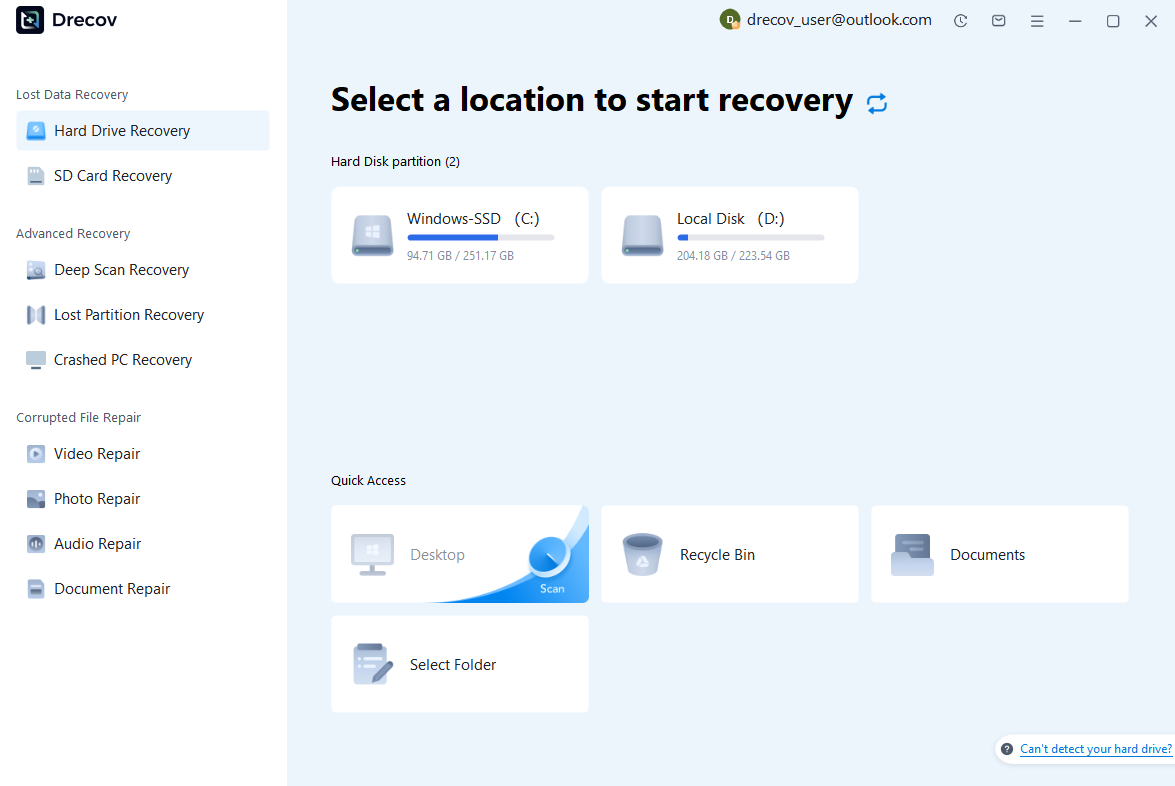
Step 1: Scan the Storage Device (SD Card / Hard Drive / USB)
Connect your device (SD card, HDD/SSD, or USB drive) to your computer and launch PandaOffice Drecov. Select the target device and start the scan. The software will perform a quick scan and deep scan to detect lost or deleted data.
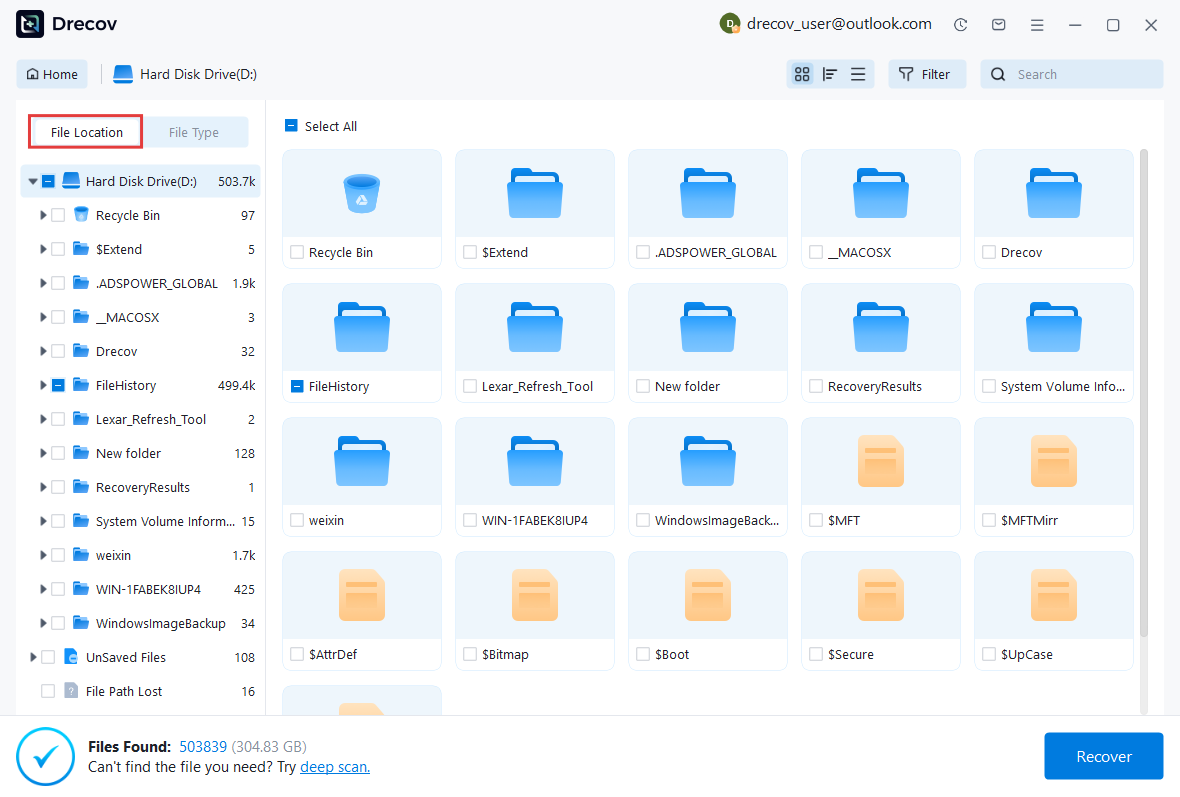
Step 2: Locate and Preview Lost Files
After scanning, browse the detected files and use the preview feature to check recoverable data. You can preview documents (Word, Excel, PDF), photos, and videos to ensure file integrity before recovery.
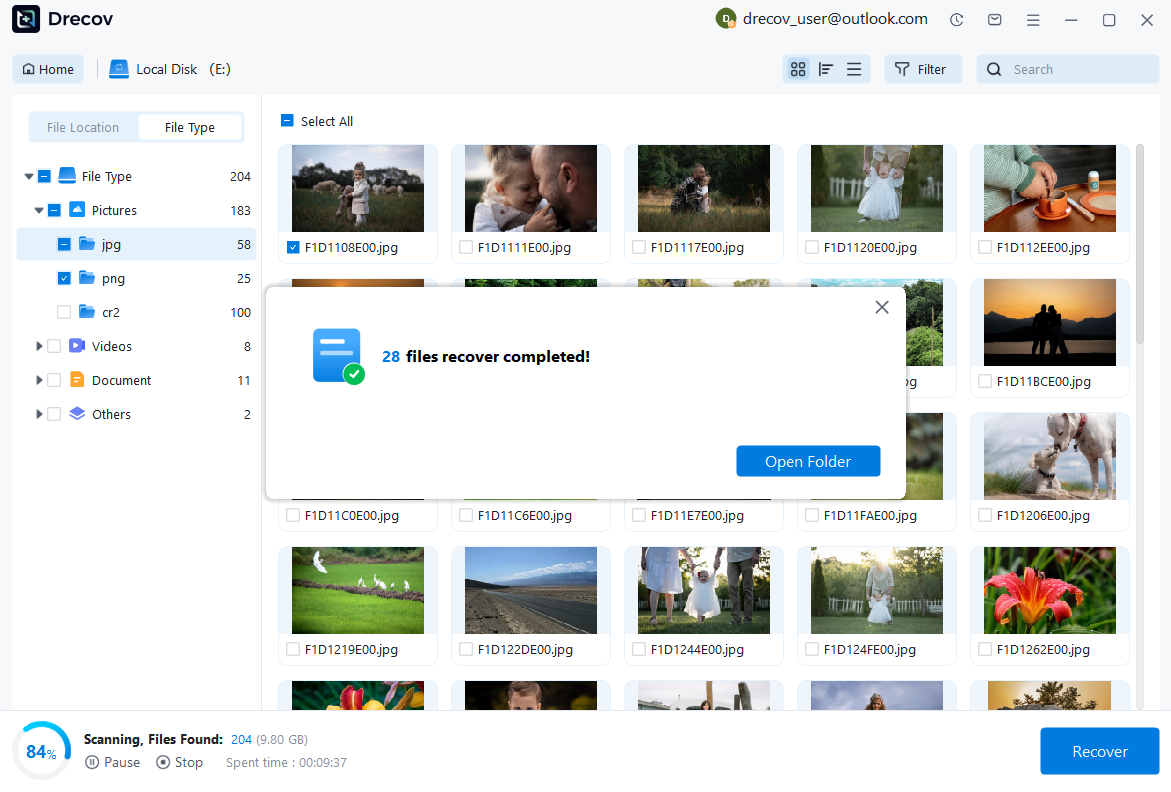
Step 3: Recover and Save to a New Location
Select the files you want to restore and click recover. Save all recovered data to a different drive or location (not the original device) to avoid overwriting lost data.
Why Choose PandaOffice Drecov Recovery Software?
PandaOffice Drecov offers a fast, secure, and user-friendly solution for recovering lost files across multiple scenarios. Whether you need email recovery, ZIP File Recovery, format data recovery, or help to recover deleted drafts Outlook, the software provides reliable recovery performance for both personal and business users.
PandaOffice Drecov supports recovery from formatted hard drives, SSDs, USB drives, SD cards, and external storage devices. Its advanced scanning engine can locate deleted archives, damaged ZIP files, lost Outlook drafts, and accidentally removed documents with high accuracy. For users searching for how to find deleted messages in Teams, PandaOffice Drecov can also help recover exported chat files, attachments, and related local cache data when available.
Key advantages include:
- Deep scan technology for complex data loss situations
- Support for emails, archives, videos, photos, and office documents
- Recovery from accidental deletion, formatting, corruption, and system crashes
- Easy preview before restoring files
- Compatible with Windows and multiple storage devices
Unlike complicated enterprise recovery tools, PandaOffice Drecov keeps the recovery process simple. Users can scan, preview, and restore files in just a few steps without technical expertise.
Whether you are dealing with lost Outlook drafts, corrupted ZIP archives, formatted drives, or missing communication data, PandaOffice Drecov provides an efficient and practical recovery experience designed to minimize downtime and protect important files.
How to Find RAM Speed on macOS
Method 1. View Memory Information Using About This Mac
Test Environment
- macOS Sequoia
- MacBook Pro
- Apple Silicon Processor
Mac users can easily perform a RAM speed check through built-in system information tools.
Follow these steps:
- Click the Apple menu.
- Select About This Mac.
- Open the Overview section.
- Review memory details.
Depending on the Mac model, Apple may display:
- Installed memory capacity
- Memory type
- Unified memory information
- Hardware specifications
Older Intel-based Macs often show more detailed RAM information than newer Apple Silicon systems.
Although this method may not reveal every technical specification, it provides a quick overview suitable for most users.
If you simply need to view RAM speed or verify installed memory, this is usually the fastest option available on macOS.
Method 2. Use System Information for Detailed Memory Specifications
Test Environment
- macOS Sequoia
- Mac Studio
- 32GB Unified Memory
System Information provides deeper hardware insights than the standard About This Mac window.
To access it:
- Hold the Option key.
- Click the Apple menu.
- Select System Information.
- Navigate to the Memory section.
Depending on your Mac model, you may see:
- Memory size
- Memory type
- Memory slots
- Manufacturer details
- Memory speed information
This tool is especially useful when diagnosing hardware upgrades on older Intel-based Macs that allow memory replacement.
Users frequently choose this method when researching how to find RAM speed on macOS because it offers more technical details than the Overview screen.
Common Problems When Checking RAM Speed
The Reported Speed Is Lower Than Advertised
One of the most common concerns occurs when users discover that the displayed RAM speed is lower than the value printed on the packaging.
This usually happens because:
- XMP is disabled
- EXPO is disabled
- BIOS defaults are active
- Motherboard limitations exist
- CPU memory controller restrictions apply
For example, DDR5-6000 memory may initially operate at DDR5-4800 until an optimized profile is enabled.
In most cases, this behavior is normal and does not indicate faulty hardware.
Always compare the operating speed against the motherboard’s supported memory specifications before assuming a problem exists.
Different RAM Modules Show Different Speeds
Many users install additional memory without matching specifications exactly.
When memory modules differ in:
- Frequency
- Timing
- Capacity
- Manufacturer
the motherboard typically synchronizes all modules to the slowest compatible speed.
For example:
| Module A | Module B | Result |
|---|---|---|
| DDR4-3200 | DDR4-2666 | DDR4-2666 |
| DDR5-6000 | DDR5-5200 | DDR5-5200 |
This behavior ensures stability but may reduce overall performance.
Before upgrading memory, verifying existing specifications helps avoid unexpected slowdowns.
Windows Displays Different Numbers Than BIOS
Some users notice discrepancies between Windows and BIOS memory readings.
This difference may occur because:
- BIOS reports actual clock frequency.
- Windows reports effective transfer rates.
- Firmware updates change reporting methods.
- Monitoring tools interpret data differently.
For DDR memory, the effective transfer rate is often double the base clock frequency.
As a result, seemingly different numbers may actually represent the same operating speed.
If uncertainty exists, consult the motherboard documentation to determine how memory frequencies are reported.
⚠️ Warning: Do not assume RAM is malfunctioning solely because two utilities display different values.
Frequently Asked Questions About RAM Speed
How Do I Find Out My RAM Speed Without Opening My Computer?
You can use built-in tools such as:
- Task Manager
- PowerShell
- Command Prompt
- BIOS
- System Information (Mac)
These methods allow you to determine memory specifications without physically inspecting the hardware.
Why Is My RAM Running Slower Than Advertised?
The most common reason is that XMP or EXPO profiles are disabled.
Other causes include:
- Motherboard limitations
- CPU restrictions
- Mixed memory modules
- BIOS configuration settings
Checking firmware settings often resolves the issue.
Can I Use RAM Modules with Different Speeds?
Yes, but performance may be reduced.
Most systems automatically operate at the speed of the slowest installed module to maintain compatibility and stability.
What Is a Good RAM Speed for Gaming?
The ideal speed depends on your platform.
Typical recommendations include:
- DDR4-3200 to DDR4-3600 for many DDR4 systems
- DDR5-5600 to DDR5-6400 for modern DDR5 systems
Faster memory may improve performance in some games, though results vary depending on the processor and graphics hardware.
Final Thoughts on Checking RAM Speed
Key Takeaways for Windows and Mac Users
Learning how to check RAM speed is useful for verifying hardware specifications, troubleshooting performance problems, and preparing for future upgrades.
Both Windows and macOS provide built-in tools that make the process straightforward. Users can perform a quick RAM speed check through Task Manager, PowerShell, Command Prompt, BIOS, or System Information without opening the computer.
Whether you want to check RAM speeds after an upgrade, view RAM speed before purchasing additional memory, or simply confirm that XMP or EXPO settings are active, understanding your memory configuration helps ensure your system performs as expected.
By periodically reviewing memory specifications, users can identify compatibility issues, optimize performance, and make informed hardware decisions with confidence.






