







BitLocker is one of the most widely used encryption features in Windows systems, designed to protect sensitive data from unauthorized access. Many users enable BitLocker with PIN protection to add an extra layer of security during system startup.
However, there are situations where users need to update or modify their authentication method. For example, you may want to perform a BitLocker change PIN operation after a security incident, system upgrade, or simply to improve password hygiene.
In this guide, we will explain how Windows BitLocker PIN works, why users need to update it, and how to safely perform a change BitLocker PIN process without risking data loss or system lockout.
Understanding BitLocker PIN Security in Windows Systems
What Is BitLocker PIN Protection?
A bitlocker pin is a numeric authentication method used during system startup. When enabled, users must enter the correct PIN before Windows loads the operating system.
This setup is commonly known as bitlocker with pin protection, and it is often used in enterprise environments or high-security personal systems.
The PIN works alongside Trusted Platform Module (TPM) hardware to verify system integrity before allowing access.
How BitLocker PIN Works During Startup
When a computer boots up with BitLocker enabled:
- The system checks TPM integrity.
- It prompts for the pin bitlocker input.
- The correct PIN unlocks the encryption key.
- Windows loads normally.
If the PIN is incorrect, access is denied and the drive remains encrypted.
This ensures that even if the hard drive is physically removed, data remains protected.
Why Users Change BitLocker PIN
There are several reasons users may need a bitlocker pin change:
- Security concerns after potential exposure
- Company policy updates
- Forgotten or compromised PIN
- System migration or hardware changes
- Routine security maintenance
Regularly updating your windows bitlocker pin improves overall system security and reduces the risk of unauthorized access.
⚠️ Warning: If you enter the wrong PIN multiple times, your system may require a recovery key to unlock the drive.
Importance of Changing BitLocker PIN Regularly
Enhancing System Security
Changing your BitLocker PIN periodically ensures that even if someone obtains your old credentials, they cannot access your encrypted system.
This is especially important for laptops used in:
- Corporate environments
- Remote work setups
- Shared computing spaces
- Sensitive data processing systems
A strong bitlocker pin change strategy helps reduce security risks significantly.
If a PIN has been exposed, even unintentionally, updating it immediately prevents unauthorized entry.
Without updating the PIN, attackers could potentially access:
- Personal files
- Business documents
- System configurations
- Saved credentials
This makes change bitlocker pin procedures essential for proactive security management.
Maintaining Compliance Requirements
Many organizations require employees to update security credentials regularly.
Compliance policies may include:
- Quarterly PIN updates
- Password rotation policies
- Encryption key management rules
In such cases, updating your bitlocker pin is not optional but mandatory.
Preparation Before Changing BitLocker PIN
Ensure You Have Recovery Key Access
Before modifying your PIN, always confirm that your BitLocker recovery key is available.
The recovery key may be stored in:
- Microsoft account
- USB drive
- Printed document
- Enterprise Active Directory
Without it, you may risk permanent lockout.
Verify System Status
Check that your system is:
- Fully updated
- Not undergoing encryption changes
- Properly connected to TPM hardware
- Free from disk errors
Stable system conditions reduce the risk of errors during PIN modification.
Backup Important Data
Although changing the PIN does not erase data, unexpected errors can still occur.
Recommended backups include:
- Documents
- Media files
- System settings
- Project data
⚠️ Warning: Always back up critical data before modifying encryption settings.
Methods to Change BitLocker PIN in Windows
Change BitLocker PIN Using Control Panel Settings
Test Environment
- Operating System: Windows 11 Pro
- Encryption Status: BitLocker enabled with TPM
- Storage Device: SSD system drive
- Security Mode: Startup PIN enabled
One of the simplest ways to perform a bitlocker pin change is through Windows Control Panel or BitLocker management interface.
This method is commonly used by home users and small office environments.
Steps to Change BitLocker PIN
- Open Control Panel.
- Go to System and Security.
- Select BitLocker Drive Encryption.
- Locate the system drive.
- Click “Change PIN.”
- Enter current PIN.
- Set a new PIN.
- Confirm changes.
Advantages
- Easy to use interface
- No command-line required
- Suitable for beginners
Limitations
- Requires current PIN
- May not be available in restricted environments
This method is the most common approach for users searching how to change BitLocker PIN safely and quickly.
Recover Locked Files Before BitLocker PIN Reset with PandaOffice Drecov
Test Environment
- Operating System: Windows 10 Pro
- Drive Status: BitLocker encrypted
- Access Condition: Locked due to PIN issues
- Recovery Scenario: Important files inaccessible
In some cases, users may forget their bitlocker pin or lose access due to repeated incorrect entries. Before attempting a full reset or recovery process, it is often important to ensure that files are safely backed up if possible.
PandaOffice Drecov can help scan accessible or partially unlocked storage environments and assist in recovering readable data before making further changes.
Recovery Steps Before PIN Modification
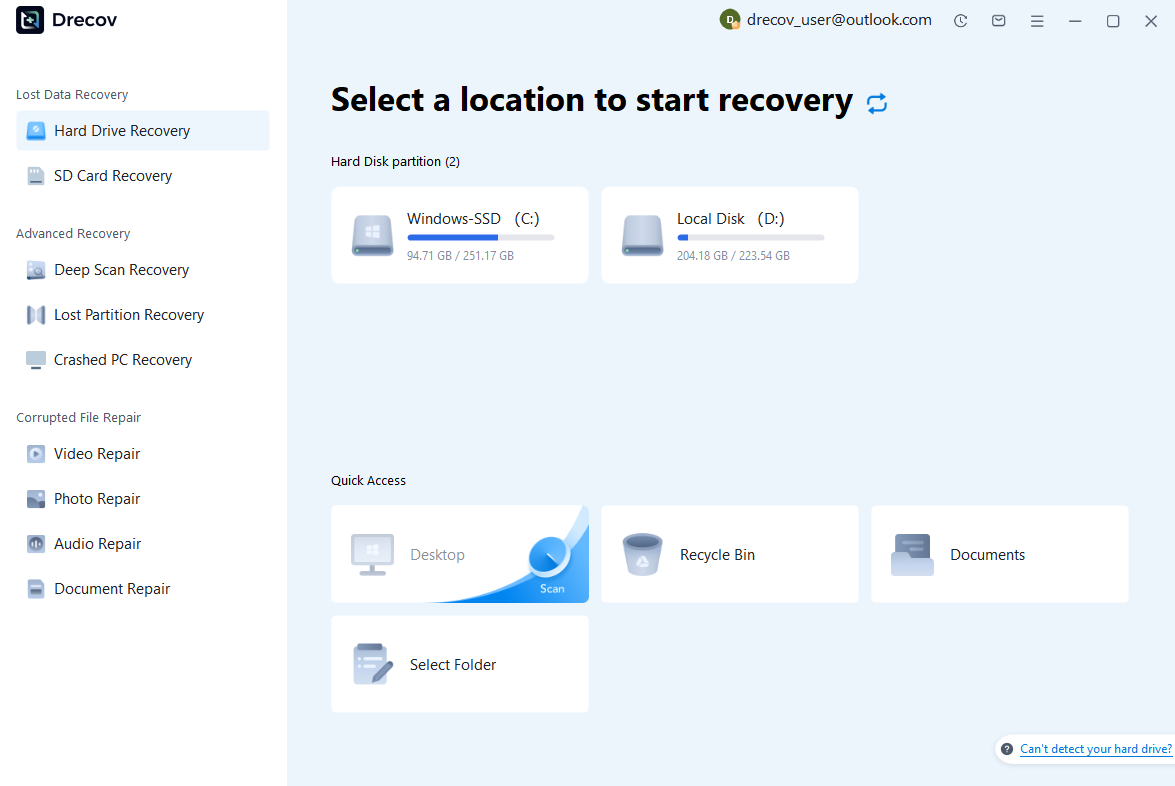
Step 1: Connect the Drive / USB)
Connect your device (SD card, HDD/SSD, or USB drive) to your computer and launch PandaOffice Drecov. Select the target device and start the scan. The software will perform a quick scan and deep scan to detect lost or deleted data.
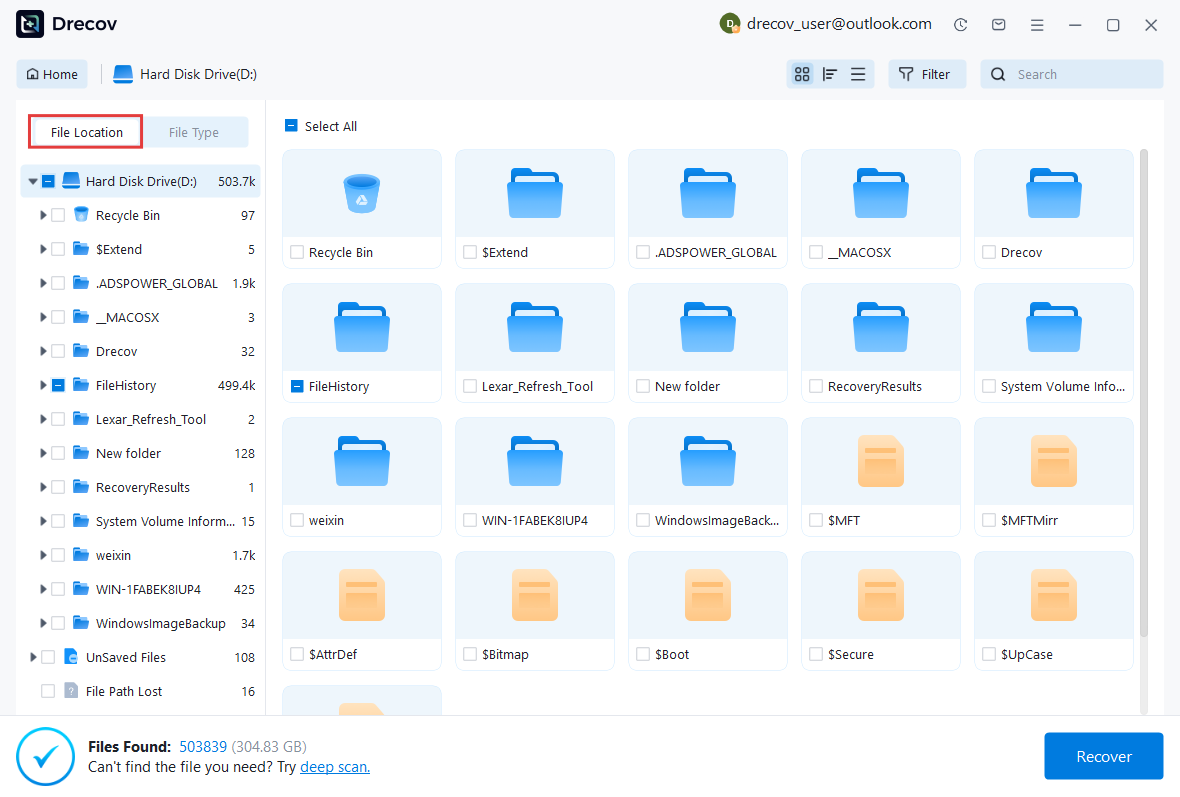
Step 2: Locate and Preview Lost Files
After scanning, browse the detected files and use the preview feature to check recoverable data. You can preview documents (Word, Excel, PDF), photos, and videos to ensure file integrity before recovery.
Step 3: Recover and Save to a New Location
Select the files you want to restore and click recover. Save all recovered data to a different drive or location (not the original device) to avoid overwriting lost data.

Why Choose PandaOffice Drecov Recovery Software?
PandaOffice Drecov offers a fast, secure, and user-friendly solution for recovering lost files across multiple scenarios. Whether you need email recovery, ZIP File Recovery, format data recovery, or help to recover deleted drafts Outlook, the software provides reliable recovery performance for both personal and business users.
PandaOffice Drecov supports recovery from formatted hard drives, SSDs, USB drives, SD cards, and external storage devices. Its advanced scanning engine can locate deleted archives, damaged ZIP files, lost Outlook drafts, and accidentally removed documents with high accuracy. For users searching for how to find deleted messages in Teams, PandaOffice Drecov can also help recover exported chat files, attachments, and related local cache data when available.
After recovery, test the file again. If the audio stream was damaged because of storage issues, a recovered version may play normally.
This method is particularly useful when only a few files exhibit audio problems while VLC works correctly with all other media.
This method can help users recover files from floppy disk storage after accidental deletion, formatting, or logical corruption.
Advantages
- Helps protect important files before changes
- Supports deep scan recovery
- Useful in partial access scenarios
Limitations
- Cannot bypass full encryption without authentication
- Requires readable disk sectors
⚠️ Warning: Never attempt recovery on the same drive where files will be saved.
Change BitLocker PIN Using Command Prompt (Advanced Users)
Test Environment
- Operating System: Windows 11 Enterprise
- Encryption Type: BitLocker with TPM + PIN
- User Role: Administrator access
- Drive Type: NVMe SSD
Advanced users or IT administrators often prefer command-line tools for performing a bitlocker pin change because they offer more control and automation.
Steps Using Command Prompt
- Open Command Prompt as Administrator.
- Enter the following command:
manage-bde -changepin C:
- Enter current PIN when prompted.
- Input new PIN.
- Confirm the change.
- Restart system.
Advantages
- Fast execution
- Suitable for IT environments
- Script automation possible
Limitations
- Requires administrator access
- No graphical interface
This method is often used in enterprise-level windows bitlocker pin management systems.
Reset BitLocker PIN via System Settings (If PIN Is Forgotten)
Test Environment
- Operating System: Windows 10 Pro
- Encryption Status: Locked due to incorrect PIN
- Recovery Method: BitLocker recovery key available
If users forget their bitlocker pin, they must use the recovery key to regain access before setting a new PIN.
Steps to Reset PIN
- Boot system.
- Enter recovery key.
- Unlock drive.
- Open BitLocker settings.
- Select “Reset PIN.”
- Create a new PIN.
- Confirm changes.
Advantages
- Restores access safely
- Allows new PIN setup
- Prevents data loss
Limitations
- Requires recovery key
- Cannot proceed without authentication
⚠️ Warning: Without a recovery key, resetting BitLocker PIN may not be possible.
Manage BitLocker PIN in BIOS and TPM Settings
Test Environment
- Operating System: Windows 11 Pro
- Hardware: TPM 2.0 enabled motherboard
- Encryption Mode: BitLocker with TPM + PIN
- Drive Type: NVMe SSD system disk
- Scenario: PIN authentication failure after BIOS update
Some users encounter windows bitlocker pin issues after BIOS or firmware updates. This is because TPM (Trusted Platform Module) and BIOS settings directly affect how BitLocker verifies system integrity during startup.
When TPM settings change unexpectedly, the system may repeatedly request a bitlocker pin or even prompt for the recovery key.
Key BIOS/TPM Adjustments Affecting BitLocker PIN
- TPM reset or firmware update
- Secure Boot enable/disable changes
- Boot order modification
- UEFI vs Legacy mode switching
- Hardware replacement (CPU/motherboard)
Each of these can trigger BitLocker protection mechanisms.
How to Stabilize BitLocker PIN Behavior
- Enter BIOS setup during boot.
- Check TPM status (must be enabled).
- Ensure Secure Boot remains consistent.
- Avoid unnecessary hardware changes.
- Save configuration and restart system.
After stabilization, users may proceed with a safe bitlocker pin change if needed.
Advantages
- Ensures system integrity
- Prevents unexpected lockouts
- Maintains encryption consistency
Limitations
- Requires BIOS access
- May confuse non-technical users
⚠️ Warning: Changing TPM or Secure Boot settings without understanding BitLocker implications may trigger recovery key requests.
Troubleshooting BitLocker PIN Errors and Lockouts
Fix Incorrect BitLocker PIN Repeated Attempts
Test Environment
- Operating System: Windows 10 Enterprise
- Security Policy: Multiple failed PIN attempts enabled
- Device Type: Business laptop
- Encryption Status: Locked temporarily
Repeated incorrect entry of a pin bitlocker may trigger temporary lockouts. This is a security feature designed to prevent brute-force attacks.
Steps to Resolve Temporary Lockouts
- Wait for lockout timer to expire.
- Restart the system.
- Enter correct PIN carefully.
- Use recovery key if needed.
Advantages
- Protects against unauthorized access
- Automatically enforces security delay
Limitations
- May delay user access
- Requires careful input
Resolve BitLocker PIN Not Working After Update
Test Environment
- Operating System: Windows 11 Pro
- Update Type: Feature update installed
- Encryption Status: BitLocker active
- Issue: PIN rejected after reboot
System updates can sometimes interfere with TPM validation, causing bitlocker pin change confusion or incorrect authentication prompts.
Recommended Fix Steps
- Boot into recovery mode.
- Enter BitLocker recovery key.
- Access Windows normally.
- Re-sync TPM via system security settings.
- Reset or update PIN.
Advantages
- Restores system access
- Fixes TPM synchronization issues
Limitations
- Requires recovery key
- May require administrative access
Fix Windows BitLocker PIN Reset Loop Issue
Test Environment
- Operating System: Windows 11 Enterprise
- Hardware: Corporate-managed laptop
- Security Policy: TPM + PIN enforced
- Issue: Continuous PIN prompt loop
Sometimes users experience repeated windows bitlocker pin prompts even after entering correct credentials.
Possible Causes
- Corrupted TPM state
- Boot configuration changes
- Firmware mismatch
- Security policy conflicts
Fix Procedure
- Boot into recovery environment.
- Unlock drive using recovery key.
- Suspend BitLocker protection temporarily.
- Restart system.
- Re-enable BitLocker protection.
- Perform change bitlocker pin again if required.
Advantages
- Fixes authentication loops
- Restores normal boot behavior
Limitations
- Requires administrative privileges
- Temporary suspension of encryption
Best Practices for Managing BitLocker PIN Security
Use Strong and Memorable PINs
A secure bitlocker pin should balance memorability and complexity.
Recommended practices include:
- Avoid simple sequences (1234, 0000)
- Avoid birthdates or personal info
- Use longer PINs where supported
- Avoid reuse across devices
Strong PINs reduce unauthorized access risks significantly.
Regularly Update BitLocker PIN for Security
Performing a periodic bitlocker pin change helps maintain security hygiene.
Recommended update intervals:
- Every 3–6 months (enterprise users)
- After suspected exposure
- After system reinstallation
- After device sharing
Regular updates reduce long-term exposure risks.
Secure Recovery Key Storage
The BitLocker recovery key is critical for system recovery.
Safe storage options:
- Microsoft account
- Secure USB drive
- Printed physical copy
- Enterprise Active Directory
⚠️ Warning: Losing both the bitlocker pin and recovery key may result in permanent data loss.
Avoid Frequent TPM or BIOS Changes
Frequent hardware or firmware changes may trigger BitLocker recovery mode.
To avoid issues:
- Do not reset TPM unnecessarily
- Avoid frequent BIOS switching
- Keep firmware stable
- Document system changes
Frequently Asked Questions About BitLocker PIN
What is a BitLocker PIN used for?
A bitlocker pin is used to authenticate the user during system startup before Windows loads, adding an extra security layer on top of encryption.
How do I change BitLocker PIN in Windows 10 or 11?
You can change it through Control Panel, Command Prompt, or BitLocker management settings after entering the current PIN.
What if I forget my BitLocker PIN?
You must use the BitLocker recovery key to unlock the drive before resetting or creating a new PIN.
Can I disable BitLocker PIN requirement?
Yes, but it reduces security. You can modify startup settings in BitLocker configuration to remove PIN authentication.
Why is BitLocker asking for PIN after BIOS update?
BIOS or TPM changes may trigger security validation, requiring PIN or recovery key verification.
Can I use BitLocker without a PIN?
Yes. BitLocker can operate using TPM-only mode, but it provides less protection than bitlocker with pin.
What is the difference between PIN and password in BitLocker?
A PIN is used at system startup, while a password may be used for file or account-level access depending on configuration.
Why does BitLocker PIN keep failing?
Possible reasons include incorrect entry, TPM issues, system updates, or corrupted security configuration.
Final Thoughts on Changing BitLocker PIN
Managing your bitlocker pin correctly is essential for maintaining both security and usability in Windows systems. Whether you are performing a routine bitlocker pin change, troubleshooting startup issues, or recovering from a lockout, understanding how BitLocker integrates with TPM and system settings is crucial.
By following proper procedures and keeping recovery keys secure, users can safely manage windows bitlocker pin settings without risking data loss or system lockout.
For both personal and enterprise environments, regularly updating your change bitlocker pin settings ensures stronger protection against unauthorized access while maintaining smooth system operation.






