







Micro SD cards are widely used in smartphones, cameras, tablets, drones, and gaming consoles. Despite their convenience, data stored on these cards is vulnerable to accidental deletion, formatting, corruption, or virus attacks. Whether it’s precious photos, videos, or documents, micro SD card file recovery becomes essential in such situations.
This guide will cover multiple methods to perform micro SD file recovery, including free and professional options, safe practices, and tips to maximize recovery success. We will also highlight how to use reliable micro SD file recovery software to restore lost data efficiently.
If you want to recover files from a corrupted, formatted, or damaged micro SD card, this step-by-step guide provides clear instructions and practical advice for both beginners and advanced users.
Hello everyone, I hope you’re all doing well! I recently encountered an issue with my SD card, which suddenly became unreadable. I had important photos and files stored on it that I desperately need to recover. I’ve tried plugging it into different devices, but nothing seems to work. I’m seeking guidance on the best methods or tools to recover data from my SD card.I’ve heard about various data recovery software options available online, but I’m unsure which one would be the most effective or user-friendly to recover data from SD Card. Are there any particular programs or services that you would recommend? Something straightforward is more welcomed, as I’m not very tech-savvy. Additionally, if anyone has tips on what to do or not do during the recovery process, I’d greatly appreciate it!—from Microsoft Store
Why You Might Need Micro SD Card File Recovery
Data loss on micro SD cards can occur unexpectedly. Common causes include accidental deletion, quick formatting, file system corruption, virus infection, and improper device removal.
Deleted files are not immediately erased. Instead, the storage space is marked as available, making recovery possible with micro SD card file recovery software.
Using a reliable recovery solution allows you to scan the card for recoverable files, reconstruct damaged directories, and restore media efficiently. Without professional tools, attempts to access a corrupted card may worsen the situation.
⚠️Warning: Stop using the micro SD card immediately after data loss. Continued use can overwrite recoverable files, reducing the success rate of micro SD file recovery.
Understanding the causes of data loss helps you choose the appropriate recovery method and ensures a higher success rate.
How Micro SD File Recovery Software Works
Micro SD file recovery software functions using two main scanning techniques: quick scan and deep scan.
- Quick Scan: Searches the file system’s allocation tables to locate recently deleted files. This method is fast and works best when files were deleted accidentally.
- Deep Scan: Analyzes the raw storage sectors to detect file signatures (JPEG, MP4, DOCX, RAW). Deep scan is essential for formatted, corrupted, or heavily damaged micro SD cards.
High-quality micro SD file recovery software can handle FAT16, FAT32, and exFAT file systems commonly used in mobile devices and cameras. It reconstructs fragmented files, ensuring even partially damaged data can be recovered.
⚠️Warning: Avoid installing recovery software directly on the affected micro SD card, as this can overwrite lost files.
By understanding how recovery software works, users can select the right tool and method based on the type of data loss and device environment.
Common Causes of Data Loss on Micro SD Cards
- Accidental Deletion: Files may be removed unintentionally or deleted during routine management.
- Formatting Errors: Users often format micro SD cards to fix errors or improve compatibility. Quick formatting does not erase underlying data, making recovery possible.
- File System Corruption: Improper ejection, power failures, or viruses can render micro SD cards unreadable.
- Physical Damage: Broken connectors or worn-out memory cells reduce recovery chances significantly.
- Software Errors: App or device crashes may prevent access to stored files.
⚠️Warning: Repeated attempts to write or format the card after data loss can permanently damage recoverable files.
Identifying the cause helps determine which micro SD file recovery method is most suitable.
Method 1: Recover Deleted Files Using Micro SD File Recovery Software
Test Environment: Windows 11 PC, 64GB micro SD card formatted in FAT32, containing photos and videos.
Deleted files are often recoverable as long as the storage space hasn’t been overwritten. Using professional micro SD file recovery software, users can perform a deep scan to restore lost files.
Steps:
- Insert the micro SD card into a card reader connected to the computer.
- Launch the recovery software.
- Select the micro SD card from the device list.
- Perform a deep scan to detect deleted files.
- Preview and restore files to a different drive for safety.
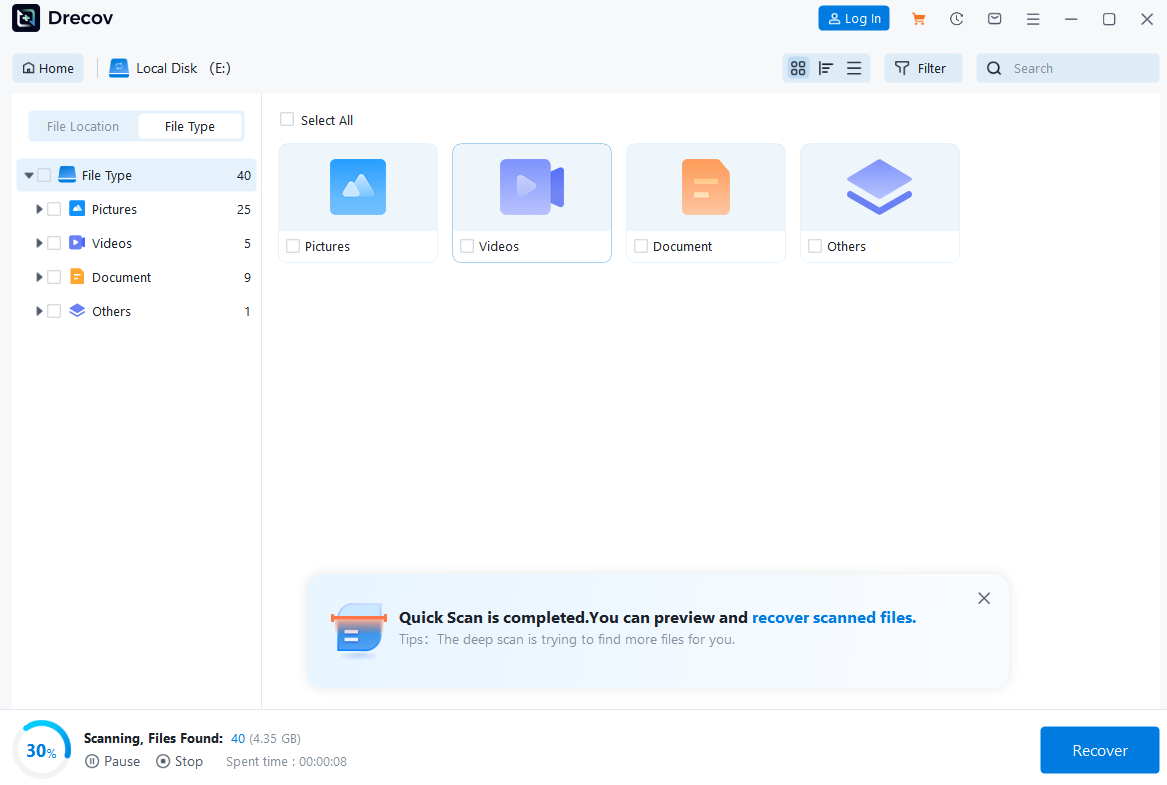
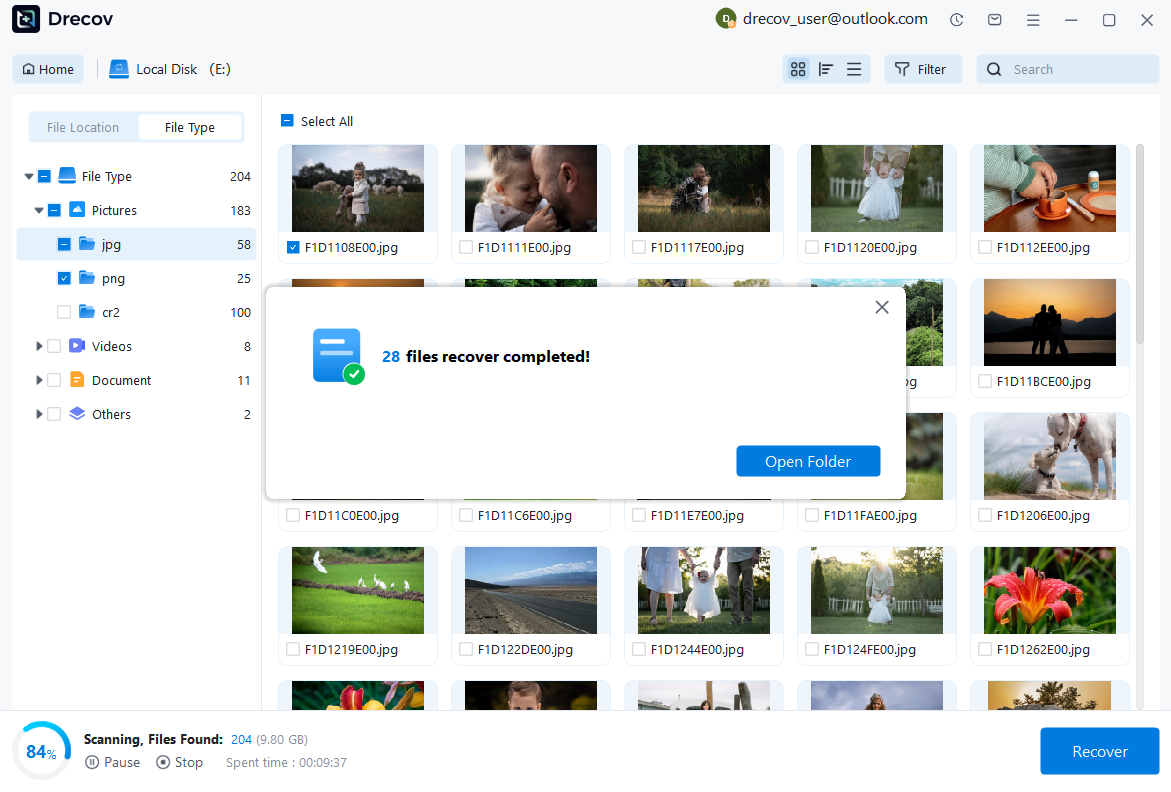
For this scenario, Pandaoffice Drecov is a recommended solution. It supports FAT16, FAT32, and exFAT systems, reconstructing fragmented files and ensuring high recovery accuracy. Unlike free tools, Drecov provides advanced algorithms capable of recovering media, documents, and RAW camera files.

Why Choose PandaOffice Drecov for File Data Recovery?
Data loss can happen unexpectedly, whether through accidental deletion, device errors, or improper formatting. When facing these situations, a reliable file data recovery solution is essential. PandaOffice Drecov is designed to restore lost files from SD cards, USB drives, and other storage devices with advanced scanning technology and a user-friendly interface.
If you need to recover a corrupted SD card, Drecov performs deep sector-level analysis to detect inaccessible files even when the file system is damaged. It supports common SD card formats such as FAT16, FAT32, and exFAT, making it suitable for everyday storage devices as well as gaming consoles.
Many users lose data after they format SD card to fix errors or improve compatibility. Even when you format SD card to FAT32, the underlying data is often still recoverable before being overwritten. Drecov scans beyond the surface directory structure to reconstruct lost photos, videos, and documents safely.
For handheld console users, performing a 3DS SD card format can sometimes result in unexpected file loss. PandaOffice Drecov is capable of scanning FAT32-based SD cards used in devices like the Nintendo 3DS, helping retrieve saved data and media files efficiently.
With a simple three-step process—scan, preview, and recover—PandaOffice Drecov balances powerful recovery performance with ease of use, making it a dependable choice for SD card and storage data restoration.
⚠️Warning: Never restore files back to the same micro SD card to avoid overwriting recoverable data.
Method 2: Recover Data from a Formatted Micro SD Card
Test Environment: 32GB micro SD card formatted to FAT32 after accidental file deletion.
When a card is formatted, the directory structure is rebuilt, but the original data remains until overwritten. Micro SD file recovery software can scan the raw storage sectors to locate lost files.
Steps:
- Connect the formatted micro SD card to a computer.
- Launch recovery software.
- Select the formatted card and choose a deep scan.
- Preview files before recovery.
- Save files to a separate drive.
This method is essential when users perform format SD card operations to fix compatibility issues or errors. Advanced software ensures that even after formatting, videos, photos, and documents can be retrieved safely.
Method 3: Restore Files from a Corrupted Micro SD Card
Test Environment: 64GB micro SD card showing RAW file system on Android phone.
Corruption may occur due to improper ejection, virus attacks, or device errors. Attempting to open the card may result in errors or prompts to format.
Steps:
- Connect the corrupted micro SD card to a computer.
- Launch micro SD file recovery software.
- Run a full deep scan to locate files.
- Preview and recover important data.
Deep scan technology allows even severely corrupted files to be reconstructed without altering the original card.
⚠️Warning: Do not format the card before recovery; formatting can permanently erase the data.
Method 4: Recover Data Using Free Micro SD File Recovery Software
Test Environment: 16GB micro SD card used in a smartphone, containing photos and short videos, no professional software installed.
For minor data loss, free tools provide a practical solution. Free micro SD file recovery software allows users to scan the card for recently deleted files and restore them without purchasing full software. While these tools often have recovery limits or fewer supported formats, they are effective for small-scale recovery.
Steps:
- Insert the micro SD card into a computer.
- Launch the free recovery tool.
- Select the micro SD card for scanning.
- Preview recoverable files.
- Export the files to a separate storage device.
Free software works best for recently deleted files or small media collections. However, larger recovery tasks or corrupted cards usually require professional tools to maximize recovery success.
⚠️Warning: Avoid saving recovered files on the same micro SD card to prevent overwriting.
Method 5: Recover Data from a RAW or Unreadable Micro SD Card
Test Environment: 32GB micro SD card appearing as RAW on Windows and Android devices, containing photos and documents.
RAW cards are usually caused by file system corruption. Accessing them directly may fail, but micro SD file recovery software can bypass the damaged file system and scan for file signatures.
Steps:
- Connect the RAW micro SD card to a computer.
- Launch recovery software.
- Choose a deep scan option.
- Preview files and select those to restore.
- Save recovered files to another drive.
This approach is ideal for severe corruption scenarios, virus-infected cards, or cards that display errors when accessed. Advanced scanning identifies files at the sector level, ensuring even fragmented files can be recovered safely.
⚠️Warning: Do not attempt formatting before recovery, as it may permanently erase recoverable data.
Method 6: Recover Data from Multiple Micro SD Cards and Devices
Test Environment: 64GB and 128GB micro SD cards used in cameras and gaming consoles.
Some users manage multiple SD cards for photography, mobile gaming, or drones. The best micro SD file recovery software should handle various devices and storage formats.
Steps:
- Connect the micro SD card to a computer.
- Launch recovery software.
- Select the target card and run a scan.
- Preview and restore files to a secure location.
High-quality recovery software supports FAT16, FAT32, and exFAT formats, ensuring compatibility across devices. Users can recover photos, videos, and documents efficiently, even from multiple SD cards at the same time.
Best Practices for Micro SD Card File Recovery
- Stop using the micro SD card immediately after data loss to prevent overwriting.
- Use professional recovery software for formatted or corrupted cards.
- Preview recoverable files before restoration to ensure data integrity.
- Save recovered data to a separate storage device.
- Maintain regular backups to reduce reliance on micro SD file recovery software.
Following these practices maximizes recovery success while minimizing the risk of permanent data loss.
Frequently Asked Questions (FAQs)
Q1: Can I recover deleted files from a formatted micro SD card?
Yes. Formatting only rebuilds the file system; sector-level scanning with micro SD file recovery software can still retrieve lost files.
Q2: Is free micro SD file recovery software effective?
It works for small-scale, recent deletions. For large or corrupted files, professional software ensures better success rates.
Q3: Can I recover files from a corrupted or RAW micro SD card?
Yes. Advanced tools detect file signatures and reconstruct lost data even from unreadable cards.
Q4: Does micro SD card size or device type affect recovery?
Recovery software that supports FAT16, FAT32, and exFAT works across most devices, including cameras, drones, smartphones, and gaming consoles.
Conclusion
Data loss on micro SD cards is common but often recoverable. Whether files are deleted, formatted, or corrupted, using reliable micro SD file recovery software ensures the highest success rate. For critical recovery, professional tools like Pandaoffice Drecov provide deep scanning, wide format compatibility, and user-friendly operation.
By following safe recovery methods and best practices, lost photos, videos, and documents can be restored efficiently, keeping your micro SD card data safe for future use.





