When Windows says “the requested resource is in use,” first note the action that failed: copying a file, moving a folder, opening a document, or accessing a connected phone or drive. The message often means another program still has that item open. It does not, by itself, mean the file is damaged. Save work in open apps, close the app most likely to be using the item, and retry once. If the source drive disconnects or files disappear, stop trying to force the operation and protect the data.
Start with the action that failed
“Resource” is a broad Windows term. It may refer to a document, folder, removable device, camera file, phone connection, or another item an app has opened. That is why one universal repair command is unlikely to help. Look at the window that displayed the message and write down the file name, location, and action. A failed move and a failed copy are different: a move can delete the original after transfer, while a copy should leave it in place.
If you were editing a Word document, spreadsheet, or photo, check whether it is still open in another window. If you were moving a folder, close any File Explorer window showing its contents. A media player, photo viewer, archive tool, or backup app can also keep a file open after its main window disappears. Give cloud sync a moment to finish, then retry the original action once. Do not delete temporary files or restart before saving unsaved work.
For a phone or camera connected by USB, keep the device awake and unlocked during transfer. Some devices temporarily hand control of a photo or video to their own software. Copy a single small file first. If that works but one large video fails, record its name and size rather than repeating the whole transfer. A different cable or direct USB port is worth testing when the device disconnects, but a cable change will not release a file still open in an app.
Release a file without closing the wrong process
Start with ordinary app controls. Close the file in the editor, exit the viewer, and wait for any export or upload to finish. An app that appears closed may still have a background process. Press Ctrl + Shift + Esc to open Task Manager and look for that app under Processes. If it is busy saving or syncing, let it complete. Ending it during a write can leave a partial file or unsaved changes.
If the app has frozen, first check whether another copy of the document exists in its recent files or cloud version history. Then select only the clearly identified unresponsive app in Task Manager and choose End task. Reopen the file and test a copy to a different folder. If the message returns, avoid ending random Windows services. A service may be protecting a backup, scanning a file, or handling a device connection.
When you cannot tell which program owns the file, Microsoft’s Process Explorer can identify open file handles. Download it from Microsoft, run it, and use Find > Find Handle or DLL to search a distinctive part of the file name or path. Read the process name shown in the result. Close that program normally before retrying. This is a diagnostic aid, not a reason to force a handle closed. Forcing one can interrupt an active save.
If File Explorer itself is frozen, wait briefly for it to respond. You can restart only Windows Explorer from Task Manager after preserving work in other apps. Then open a fresh Explorer window and test the same file once. For a broader Explorer problem, follow the separate File Explorer access checks.
When the message appears during a copy
Check the source and destination separately. Can you open the source file without modifying it? Can you create a new test file in the destination? If the source opens but the destination rejects a copy, the target folder may lack space or permission. Another app may be using a same-named file there. Copy to a new folder on a healthy drive to narrow the problem. Do not overwrite the only known-good version just to see whether the error changes.
For a removable drive, connect it directly to the computer and leave it still during the test. If it vanishes from File Explorer, changes drive letter unexpectedly, makes unusual noises, or repeatedly pauses Windows, stop copying. Those signs suggest a connection or media problem, not merely a busy app. A drive that freezes Explorer needs a stability check before further scans or repair commands. Repeated full-disk reads may worsen an unstable device.
Files in a shared folder add another possibility: a different computer may have them open. Ask the other user to close the file. Alternatively, copy a read-only version to your own workspace if permissions allow. Do not take ownership of a shared folder or disconnect users merely to make one copy succeed. If the problem follows the file to a different computer, preserve the original and investigate that file. If it follows the device, focus on the connection and storage.
Sometimes the error accompanies the related message “an unexpected error is keeping you from copying.” That broader copy failure has other causes, including path length and file-system issues. A separate copy-error diagnosis should cover those branches. Here, the strongest clue remains whether the item is actively held by a program or device.
What if the file is missing or no longer opens?
A busy-file message does not normally erase data. Yet a failed move, interrupted transfer, or forced app closure can leave the expected item missing or unusable. Search both the original and destination folders. Include any folder created by the app that was saving the file. Check the Recycle Bin if you deleted a local copy. Look at a cloud service’s version history or trash if the file was synchronized. Restore a copy to a separate folder so the current state remains available for comparison.
Before attempting recovery, stop new writes to the location that held the missing file. Do not install a tool on that same partition. If an external disk clicks, drops offline, reports changing capacity, or stalls on simple reads, stop DIY scans. A drive image or professional help may be safer. Software cannot repair a failed mechanism or make an unrecognized device stable. If the drive is consistently detected and the loss is logical, a file scan may be worthwhile.
Drecov is Windows data recovery software that can search a stable PC drive, external disk, USB drive, or memory card for missing local files. Its read-only recovery workflow lets you examine the source without using the scan as a repair operation. Quick Scan looks for available file records; Deep Scan broadens the search when the first pass misses the item. Filtering and preview help you check likely results before saving them to another healthy drive. Drecov does not release an app’s file lock, fix a USB cable, repair failing hardware, or bypass encryption. Use it when a file has genuinely disappeared or become inaccessible after the original access problem.
⚠ Warning: Install it on a drive different from the one where your data was lost to prevent overwriting.
Step 1: Open Drecov and choose the original location
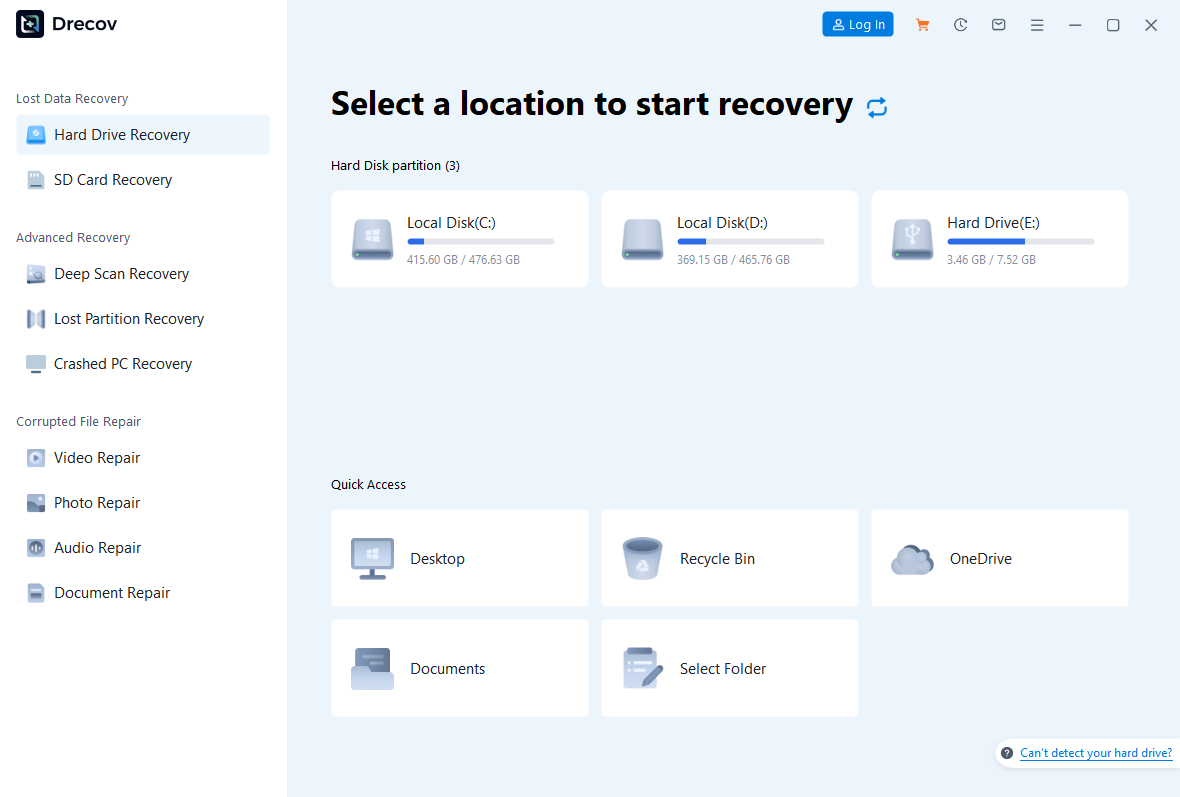
Prepare a second healthy drive with enough free space for the results. Run Drecov from a different partition or computer drive, then select the original drive or removable device where the file existed before the failed move. Match the device by size and label as well as letter. If the only copy was on a phone that exposes media through a phone-specific connection rather than a Windows drive, do not assume a PC-drive scan can access it.
Step 2: Run Quick Scan and check the expected folder
Start Quick Scan. Look first for the document, photo, video, or archive by its known name and former folder. A file saved under a new name may appear beside older versions. Keep the original device idle while scanning; launching other apps or copying new files onto it may use space that held the lost item.
Step 3: Use Deep Scan if the stable source needs a wider search
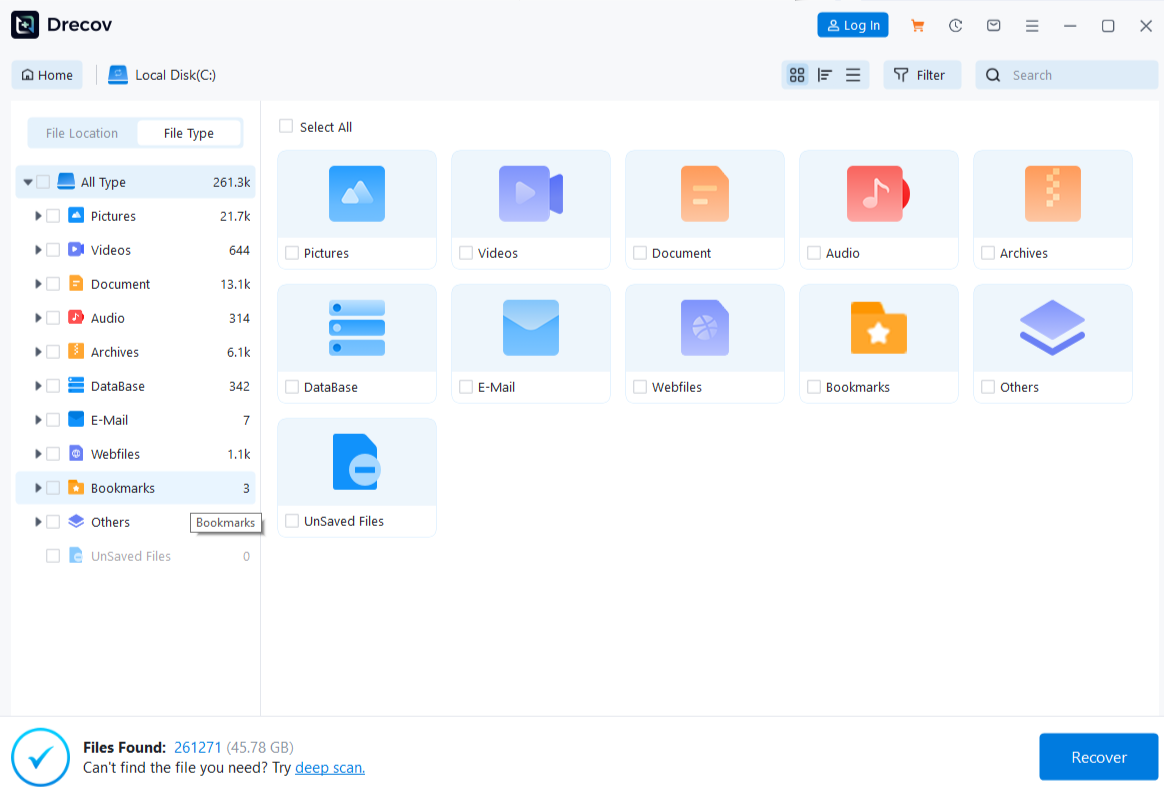
If Quick Scan does not find the right version and the device remains responsive, run Deep Scan. Stop if the device starts disconnecting, the scan repeatedly stalls on read errors, or it grows abnormally hot. An imaging specialist is safer for unstable media. Deep Scan may return files without their original names, so compare size, type, date, and content rather than relying on a name match alone.
Step 4: Filter and preview before selecting files
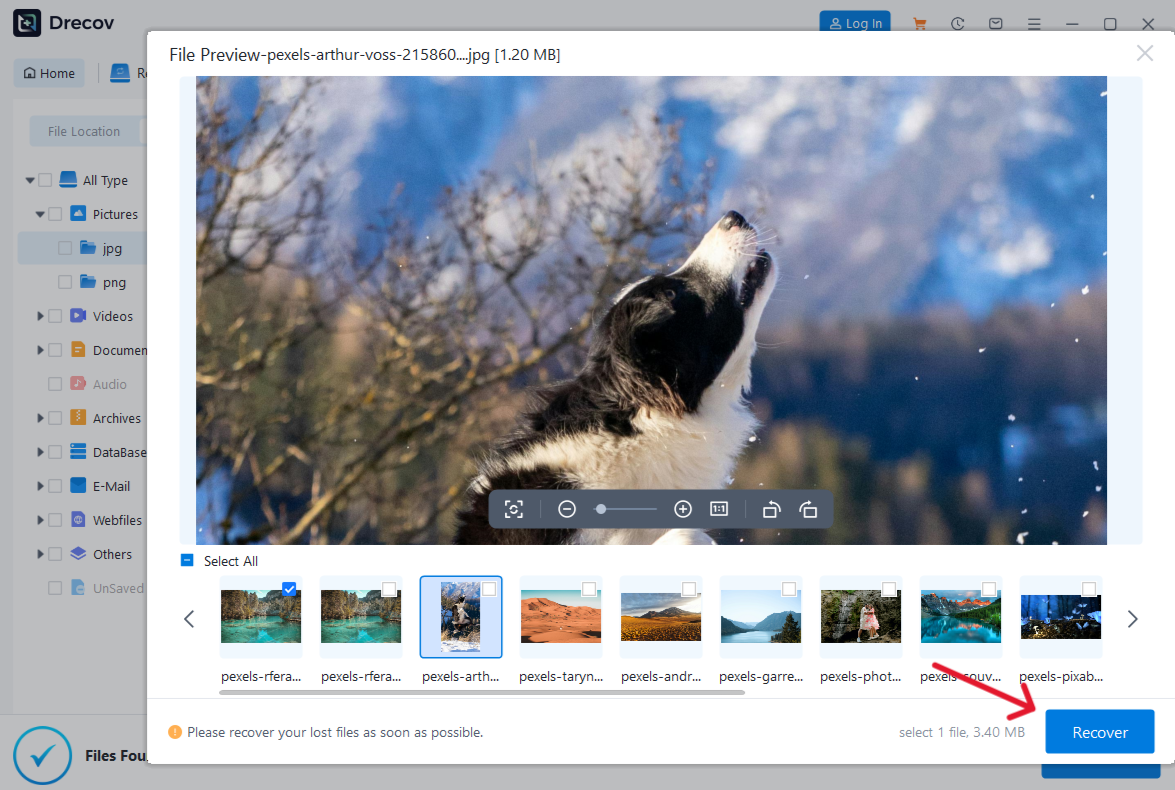
Filter results by type or former path, then preview several likely candidates. For a document, read more than its first page; for a video, test different points in the clip after recovery. Preview is useful evidence that a sample can be decoded, but it cannot guarantee every part of a large file is intact.
Step 5: Recover elsewhere and verify the copy
Save selected files to the separate healthy device, never back onto the source. If the output is not where you expected, check the Drecov Folder or Recovery Folder at the chosen destination. Open representative files in their usual apps, compare important versions, and keep an additional backup of the verified results. Only then consider repairing or resetting the original storage.
⚠ Warning: Install it on a drive different from the one where your data was lost to prevent overwriting.
Fix the cause after your files are safe
If closing one app resolved the error, reopen it and repeat the same small operation to confirm the lock has gone. If it recurs only while that app runs, inspect its save, sync, or export state before changing Windows. For a shared file, coordinate with the other editor and agree on one working copy. For a phone, try a stable cable, a direct port, and a small transfer while the phone remains unlocked.
If Windows reports the same failure across many unrelated files and applications, restart once after saving your work. Then test a small local file and a small file on the affected device. This comparison helps separate a system-wide problem from one file or drive. Do not run CHKDSK, format a disk, or reset permissions as a first reaction. Those actions change the source, and they do not tell you which app held the resource.
When the destination is an external drive and access is denied rather than busy, permissions and ownership require a different diagnosis. Use the external-drive permission guide for that situation. If a drive remains unstable after a cable and port check, stop trying larger transfers. The next decision is whether it can be imaged safely or needs professional examination.
Conclusion
“The requested resource is in use” is a clue to check what was open at the moment of failure. Save current work, close the responsible app normally, and retry a small copy before changing system settings. If the file is actually missing, use backups first; Drecov can search a stable Windows-readable source, preview likely files, and save recoverable copies to another healthy drive. Verify those copies before any repair that writes to the original device.
⚠ Warning: Install it on a drive different from the one where your data was lost to prevent overwriting.