If Windows says it can’t read from the source file or disk, do not keep dragging the same folder and hoping the next attempt succeeds. First check whether the source device stays connected and whether other files still open. A single bad file, a loose cable, a permission problem, and a failing drive need different responses. Copy readable files to another healthy location, but stop repeated reads if the device clicks, drops offline, or freezes the computer.
Find out whether the problem is one file
Start by noting the exact file name shown in the copy window. If Windows gives no name, copy a small file from the same folder. Then try a different folder on the same source. When most files open and one does not, the problem may be limited to that file or its part of the disk. When unrelated folders all fail, suspect the drive, connection, or file system before blaming a particular document.
Use Copy, not Cut. Moving files can remove the original after a successful transfer, which makes diagnosis harder. Choose an empty folder on another healthy drive as the destination. Check its free space before copying. Try opening the newly copied file there. A file that appears in the destination but will not open is not a verified backup.
If the source is a cloud folder or network share, first determine whether the file is actually stored locally. A cloud placeholder may show its name while the full contents still need to download. A network share can fail because its host has gone to sleep. Scanning a local disk will not recover a file that existed only in a remote account or on another computer. Check the service’s version history or the server backup before modifying the local machine.
Check the source without writing to it
For an external hard drive or USB stick, connect it directly to the computer. Avoid a hub. If it is a powered desktop drive, confirm that its original power supply is connected securely. Try a known-good cable or port once. Watch whether the drive keeps the same letter and reported capacity. Do not initialize it if Disk Management calls it unknown or unallocated, and do not accept a prompt to format it.
Listen and observe. Clicking, spin-up loops, repeated disconnects, sudden changes in capacity, and long freezes during simple folder browsing are stop signs. Continuing a full scan can consume the limited time that an unstable drive remains readable. If the files are important, ask a specialist about imaging the device before attempting logical recovery. Drecov cannot repair a broken USB bridge, controller, or disk mechanism.
If the drive remains stable, inspect the problem file without saving over it. A long path or unusual characters can sometimes confuse a particular app or transfer route. Copy the file to a shorter, plain folder path on a healthy destination, if Windows can read it. Do not rename or move the source file when the original storage is suspect. If access is denied, follow the separate permission diagnosis; a permission error and a read error are not interchangeable.
⚠ Warning: Install it on a drive different from the one where your data was lost to prevent overwriting.
Copy the files that still open
When a stable device contains a mix of readable and unreadable files, protect the readable ones first. Start with the most important folders, not the largest. Copy small groups to a second healthy drive and check a sample from each group. Keep a simple note of folders that succeeded and files that failed. This prevents the same troubled item from blocking every attempt and gives you a clearer inventory of what remains at risk.
Do not overwrite a partial copy with an older one unless you have compared them. A filename and size alone cannot prove that a photo, archive, or video is intact. Open documents and inspect their last pages. Play different sections of a video. Try extracting a copy of an archive to a new folder. If an application reports the file is corrupted, keep the original and failed copy for later analysis rather than repeatedly saving over either.
For a shared folder, ask the owner whether a server-side backup or snapshot exists. For a phone connected through USB, check the phone’s own gallery, Files app, and cloud backup. A Windows drive-recovery scan applies to a Windows-readable local device; it does not automatically reach an app’s private phone storage. If the error appears only with one cable, test a direct connection before assuming the file itself is damaged.
When copying fails with a wider Windows message, the general copy-error guide covers destination, path, and application causes. This page keeps the source in focus: what Windows can still read, what it cannot, and when further access risks the only copy.
Recover files when a stable drive has gaps
Before using software, check an existing backup, File History copy, or cloud version. Restoring from a known-good copy avoids extra reads from the problem device. If the file was deleted or a stable drive’s file system can no longer show its contents, stop writing new data to that drive. Prepare a separate healthy destination with enough space. Do not install recovery software on the partition that contained the missing files.
Drecov is Windows data recovery software for stable, detectable disks, USB devices, and memory cards. Here its job is to find files that normal copying cannot reach because the folder entry is missing or the volume no longer mounts logically. Quick Scan examines available file records; Deep Scan can search more broadly if needed. You can filter and preview candidates before saving them to another device. Its Lost Partition Recovery mode can search a lost partition’s files when the physical drive is still recognized. It does not fix damaged hardware, guarantee a damaged file will open, or rebuild a partition table.
⚠ Warning: Install it on a drive different from the one where your data was lost to prevent overwriting.
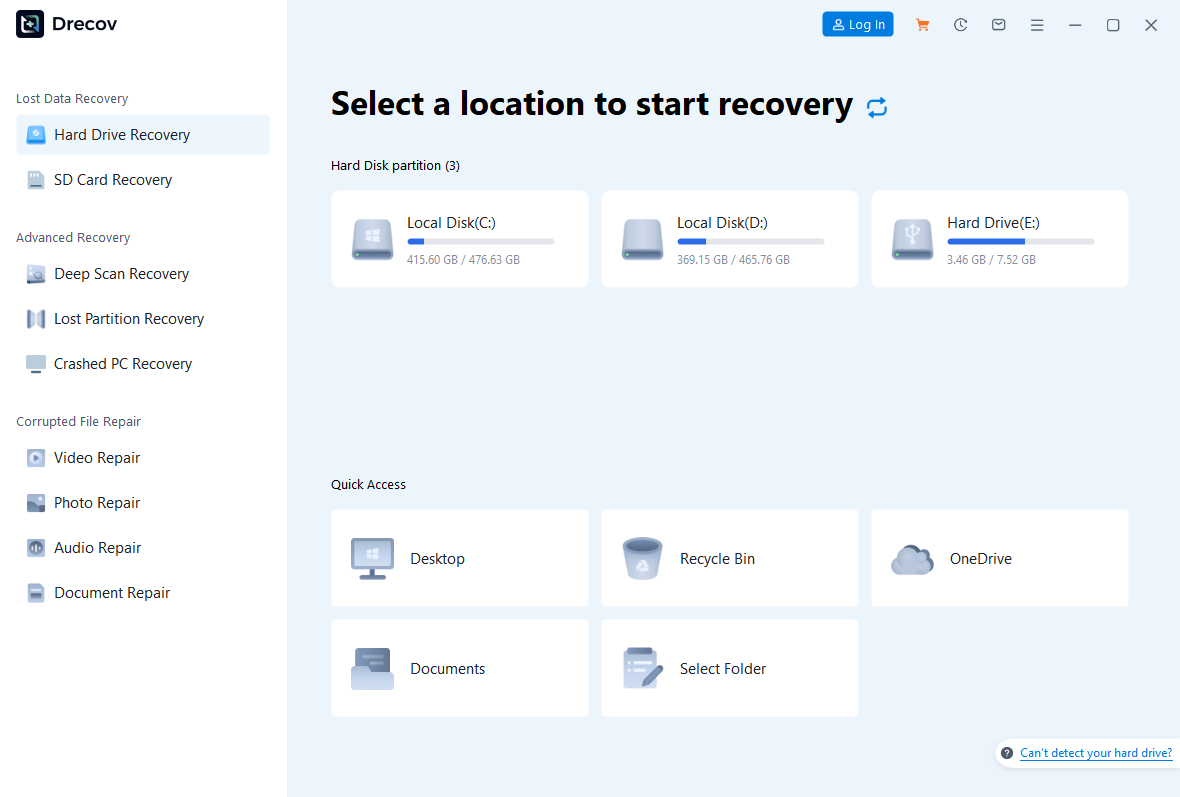
Step 1: Open Drecov and select the original source
Launch Drecov from a healthy Windows drive. Select the device where the files lived, not the drive holding your new backup. Match the source by capacity and device name as well as letter. If a former partition is missing from an otherwise stable detected disk, use the appropriate lost-partition mode. If Windows cannot keep the physical drive connected, stop and seek imaging or professional help instead of trying a direct scan.
Step 2: Run Quick Scan and inspect the likely folder
Start Quick Scan. Look for the former folder and file names. For a photo card, examine DCIM or the camera’s own folders; for a document drive, focus on the user’s working folders. Note that a scan result is a candidate, not proof that the complete file survived. A previously interrupted copy may contain only part of a large video or archive.
Step 3: Use Deep Scan only on stable media
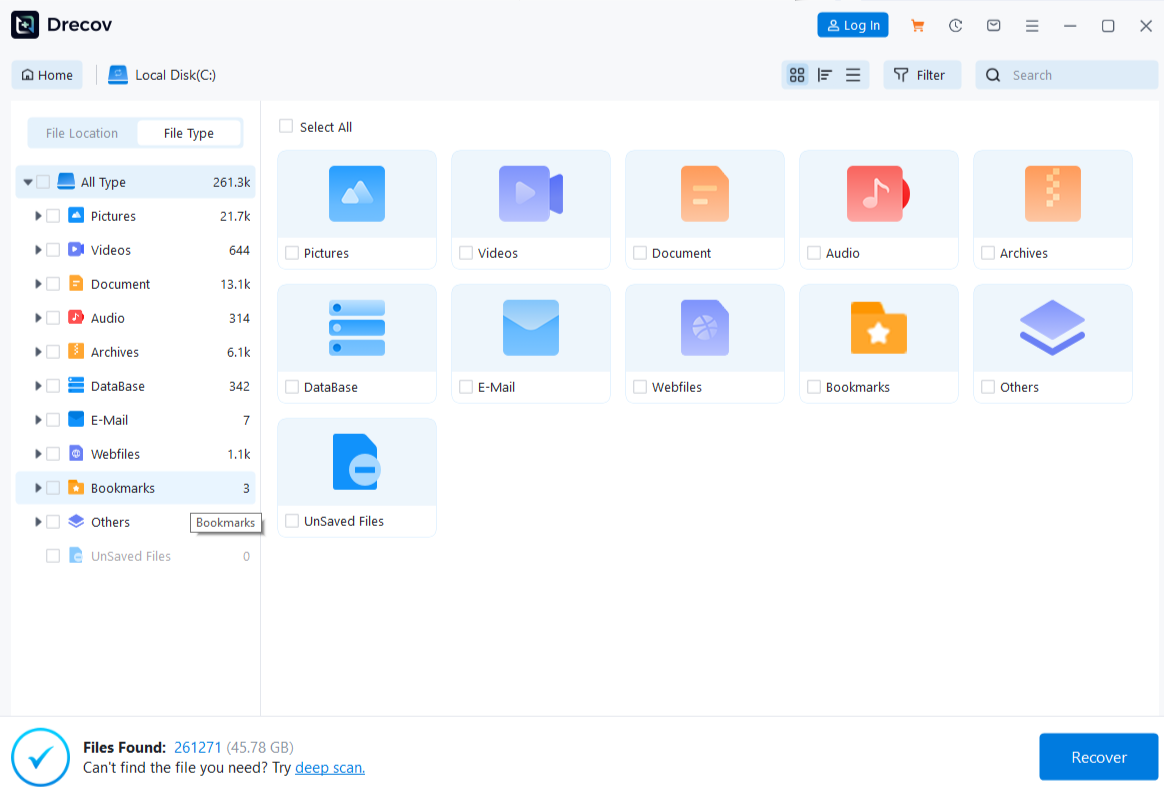
If Quick Scan does not locate the important files and the device remains steady, run Deep Scan. Stop if the source disconnects, heats unusually, or repeatedly reports serious read errors. A controlled image is preferable when every additional read may matter. Deep Scan results may lack original names, so compare type, size, date, and content.
Step 4: Filter and preview representative results
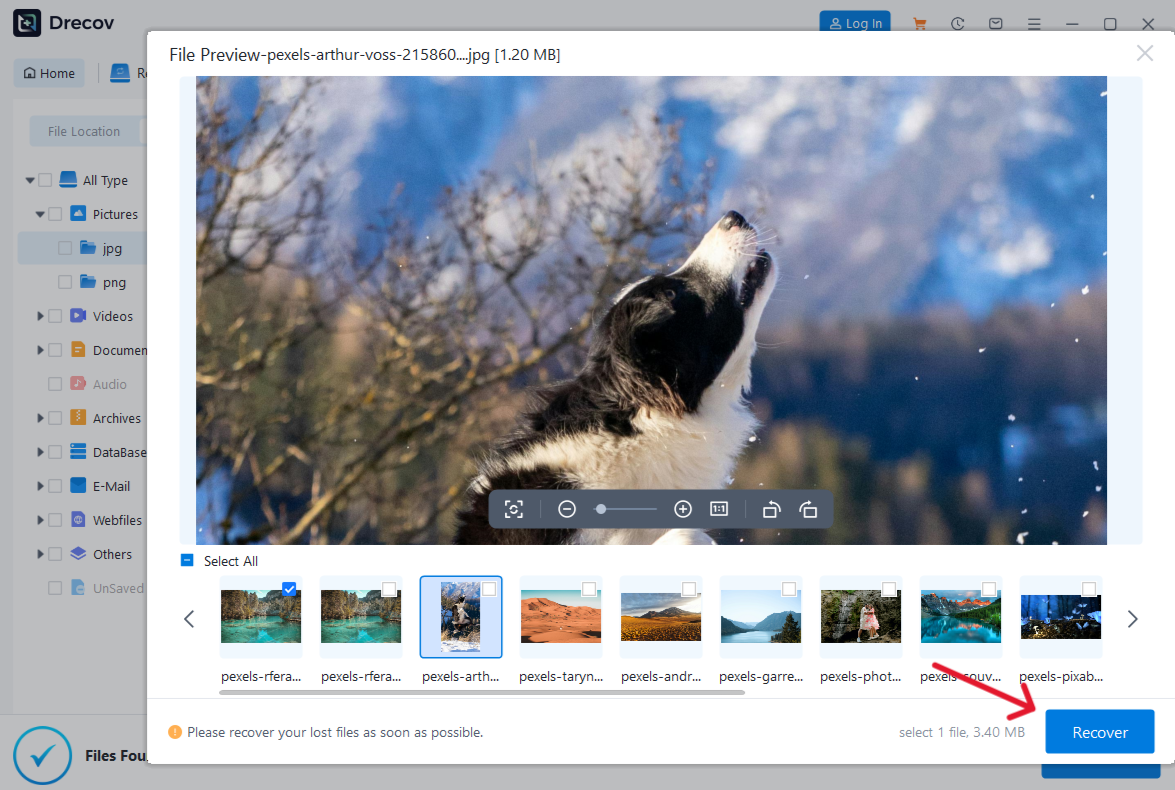
Narrow results by file type, former path, or name when those details remain available. Preview several documents, photos, and videos from different folders. A thumbnail is not enough: check complete pages and later video sections after saving a sample. If a recovered archive matters, test whether a copy can extract before declaring the folder restored.
Step 5: Recover elsewhere and test the output
Save the selected files to the healthy destination, never to the source. If the results do not appear where expected, check the Drecov Folder or Recovery Folder on that destination. Open a representative sample and compare it with the file list you made before scanning. Verify critical documents and complete media before making changes to the original device.
⚠ Warning: Install it on a drive different from the one where your data was lost to prevent overwriting.
Repair or replace only after verification
Once two independent copies of the important files exist, you can decide whether the source drive is worth troubleshooting. If errors follow a removable drive across computers and cables, replacement is often more sensible than trusting it again. If a stable drive only has a logical file-system problem, a repair may restore access, but it still changes metadata. Microsoft’s CHKDSK documentation explains that options such as /f fix errors on a volume. That is why recovery and verification come first.
If only one application cannot open the copied file, test another suitable viewer or the application’s own repair feature on a duplicate. A data recovery scan locates and exports files; it is not the same as repairing the internal structure of a damaged document. Keep the untouched source until you know which problem you actually have. For a broader hardware warning, the I/O error decision guide gives stop conditions.
Conclusion
When Windows cannot read the source file or disk, first learn whether one file, a connection, or the entire device is affected. Copy what still opens and stop if the hardware becomes unstable. If a stable Windows-readable source has missing or inaccessible files, Drecov can search it, preview likely results, and save selected files to another healthy drive. Open and verify those copies before running repair tools or reusing the original storage.
⚠ Warning: Install it on a drive different from the one where your data was lost to prevent overwriting.