







Understanding the HTML5 Video Not Found Issue
Why HTML5 Videos Are Important
HTML5 video has become the standard for web media content due to its compatibility with most browsers, mobile devices, and modern web platforms. Unlike older Flash-based videos, HTML5 videos do not require plugins and support adaptive streaming, making them essential for:
- Streaming websites and media platforms
- Online education content
- Social media video sharing
- Embedded video advertisements
- Personal or professional portfolios
When users encounter html5 video not found errors, it disrupts streaming, online presentations, and content delivery, often resulting in frustrated audiences or lost website engagement.
What “HTML5 Video File Not Found” Means
An html5 video file not found error occurs when the browser cannot locate the video source specified in the HTML <video> tag. Common causes include:
- Incorrect file paths or URLs
- Deleted or corrupted video files
- Permissions restrictions
- Unsupported video formats or codecs
⚠️Warning: Avoid repeatedly refreshing or attempting to reload videos from broken paths, as it may temporarily cache errors in your browser.
Common Causes of HTML5 Video Not Found Errors
Incorrect File Paths or URLs
One of the most frequent reasons for html video file not found errors is an incorrect source path. This may happen when:
- Moving video files to a new server folder
- Renaming video files without updating HTML code
- Copying HTML code from another project without updating URLs
Even a minor typo in the file name or folder path can prevent the video from loading.
File Deletion or Corruption
If the video has been deleted or corrupted, browsers will display html5:video file not found errors. Causes include:
- Accidental deletion
- Storage device failure such as HDD, SSD, or SD card damage
- Malware attacks
- Improper downloads or interrupted transfers
Unsupported Video Formats or Codecs
HTML5 videos must be encoded in compatible formats such as MP4 (H.264), WebM, or Ogg. Errors like html 5 video not found can occur if:
- A browser does not support the video codec
- The video uses an unusual or outdated format
- The
<source>tag specifies the wrong MIME type
Browser and Server Permissions
Sometimes the html5 video not found fix is as simple as adjusting permissions:
- Server restrictions may block access to video files
- CORS issues prevent streaming from other domains
- Browser security settings may block local or external video playback
Preparing for HTML5 Video Recovery
Check the Video Source Location
Verify that the HTML <video> tag correctly points to the video file. Consider:
- Absolute vs relative paths
- Correct file extensions (.mp4, .webm, .ogg)
- Case sensitivity in filenames
Test Videos in Different Browsers
Testing in multiple browsers can identify whether the issue is local or server-wide:
- Chrome, Firefox, Edge, Safari
- Mobile browsers on Android and iOS
- Check developer console logs for 404 errors
⚠️Warning: Some browsers cache errors. Clear cache or use private/incognito mode when testing.
Check for File Corruption
Signs of corrupted video files include:
- Video not opening in media players
- File size showing 0 bytes
- Browser logs indicating unsupported format or corruption
Data recovery may be required if corruption is suspected.
How HTML5 Video Recovery Software Works
Mechanics Behind Video Recovery
Video recovery software scans storage devices for missing or corrupted video files. It works by:
- Searching deleted file entries and metadata
- Reconstructing broken file structures
- Supporting multiple formats including MP4, WebM, and Ogg
- Previewing recoverable files before restoration
Deep Scan vs Quick Scan
- Quick Scan: Checks directories for recently deleted videos; fast but limited
- Deep Scan: Examines raw sectors to locate lost or fragmented videos; slower but more thorough
Deep scans are especially useful for html 5 video file not found caused by deletion or storage corruption.
Method 1: Recover HTML5 Videos Using PandaOffice Drecov
Test Environment
| Component | Configuration |
|---|---|
| Operating System | Windows 11 Pro |
| Storage Device | 256GB SSD |
| Video Type | MP4 |
| Data Loss Scenario | Accidental Deletion from Server |
| Scan Type | Deep Scan |
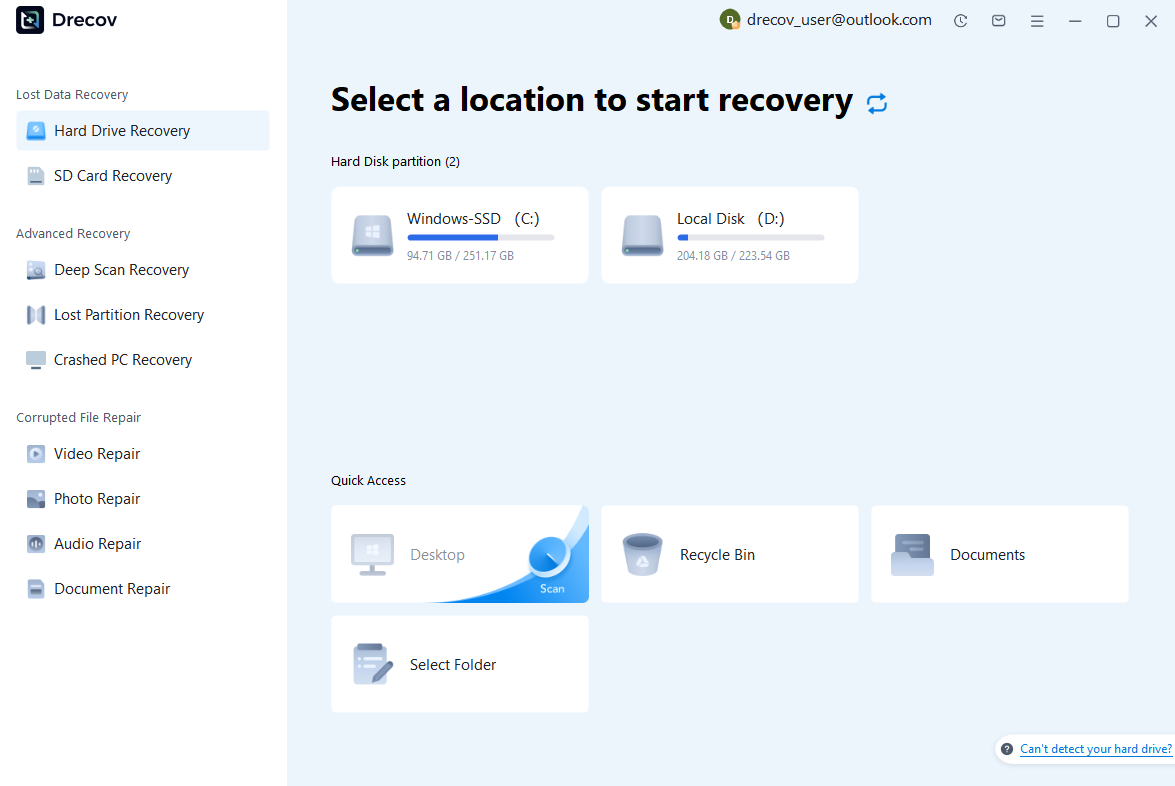
Step 1: Scan the Storage Device (SD Card / Hard Drive / USB)
Connect your device (SD card, HDD/SSD, or USB drive) to your computer and launch PandaOffice Drecov. Select the target device and start the scan. The software will perform a quick scan and deep scan to detect lost or deleted data.
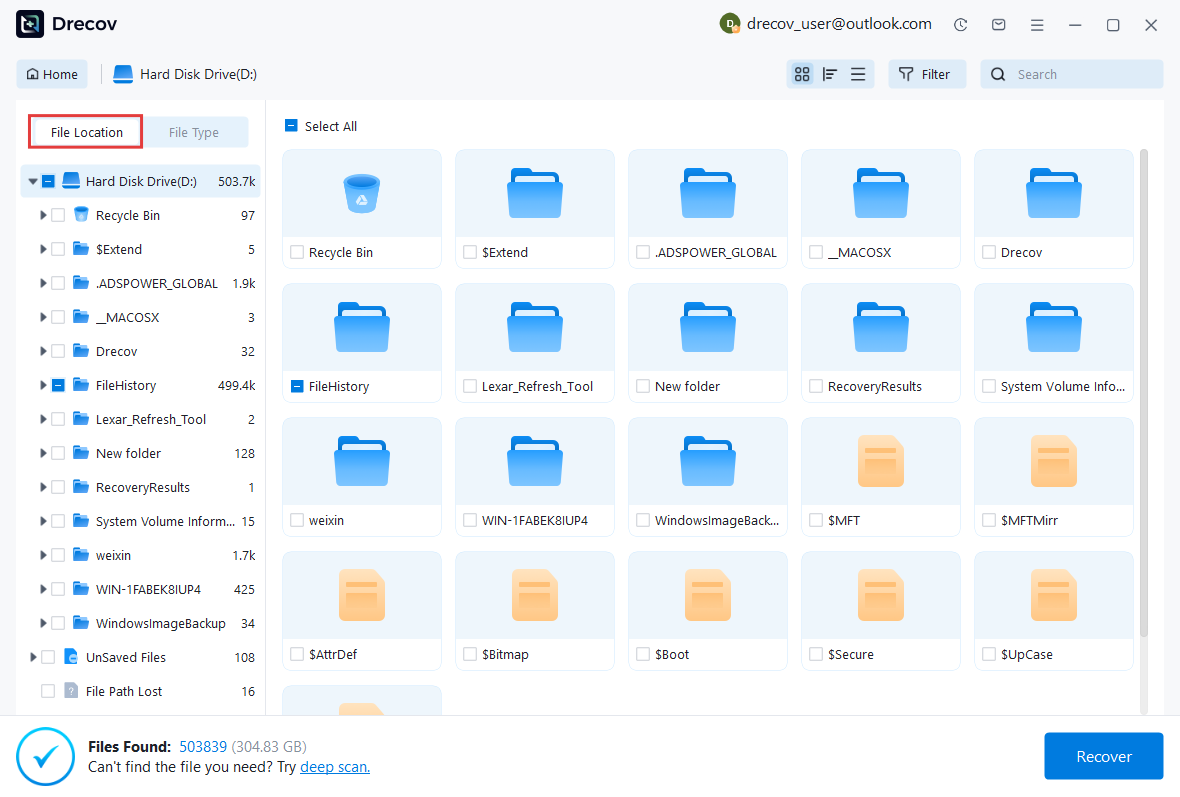
Step 2: Locate and Preview Lost Files
After scanning, browse the detected files and use the preview feature to check recoverable data. You can preview documents (Word, Excel, PDF), photos, and videos to ensure file integrity before recovery.
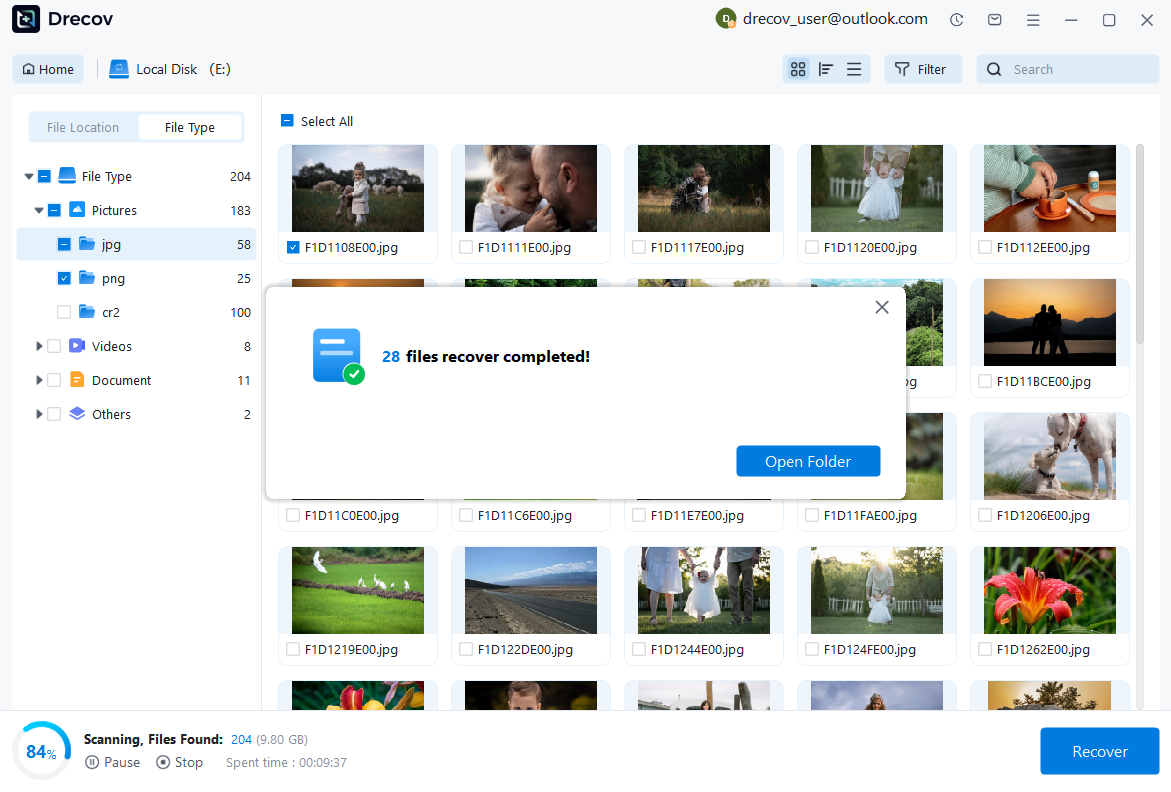
Step 3: Recover and Save to a New Location
Select the files you want to restore and click recover. Save all recovered data to a different drive or location (not the original device) to avoid overwriting lost data.
Why Choose PandaOffice Drecov Recovery Software?
PandaOffice Drecov offers a fast, secure, and user-friendly solution for recovering lost files across multiple scenarios. Whether you need email recovery, ZIP File Recovery, format data recovery, or help to recover deleted drafts Outlook, the software provides reliable recovery performance for both personal and business users.
PandaOffice Drecov supports recovery from formatted hard drives, SSDs, USB drives, SD cards, and external storage devices. Its advanced scanning engine can locate deleted archives, damaged ZIP files, lost Outlook drafts, and accidentally removed documents with high accuracy. For users searching for how to find deleted messages in Teams, PandaOffice Drecov can also help recover exported chat files, attachments, and related local cache data when available.
Key advantages include:
- Deep scan technology for complex data loss situations
- Support for emails, archives, videos, photos, and office documents
- Recovery from accidental deletion, formatting, corruption, and system crashes
- Easy preview before restoring files
- Compatible with Windows and multiple storage devices
Unlike complicated enterprise recovery tools, PandaOffice Drecov keeps the recovery process simple. Users can scan, preview, and restore files in just a few steps without technical expertise.
Whether you are dealing with lost Outlook drafts, corrupted ZIP archives, formatted drives, or missing communication data, PandaOffice Drecov provides an efficient and practical recovery experience designed to minimize downtime and protect important files.
Disk imaging ensures that even partially corrupted drives can be preserved. This is often the safest approach before attempting any aggressive repair operations for fix bad sectors on hard drive situations.
⚠️Warning: Do not recover videos to the same drive where they were lost to prevent overwriting other recoverable files.
Method 2: Verify HTML5 Video Source Paths
Test Environment
| Component | Configuration |
|---|---|
| Operating System | macOS Ventura |
| Browser | Safari |
| Video Type | MP4/WebM |
| Data Loss Scenario | Broken URL reference |
Incorrect paths often cause why cant i see html5 video in browser errors.
- Open the HTML file and locate the
<video>tag. - Check that the
srcattribute points to the correct file and folder. - Correct any typos in filenames or extensions.
- Test video playback in multiple browsers.
- Adjust relative/absolute paths if necessary.
Method 3: Restore Videos from Server Backups
Test Environment
| Component | Configuration |
|---|---|
| Server OS | Linux Ubuntu 22.04 |
| Video Type | MP4/WebM |
| Data Loss Scenario | Accidental overwrite or deletion |
- Access your server backup directory.
- Locate the folder containing lost videos.
- Copy the video files back to their original path.
- Test playback in all target browsers.
- Ensure file permissions allow public access.
Method 4: Repair Corrupted HTML5 Video Files
Test Environment
| Component | Configuration |
|---|---|
| Operating System | Windows 11 |
| Browser | Google Chrome |
| Video Type | MP4 |
| Data Loss Scenario | Corrupted Video File |
Sometimes the video exists on the server, but the browser still displays html5 video file not found because the file itself is damaged. This can happen after interrupted downloads, failed uploads, unexpected shutdowns, or storage errors.
Common symptoms include:
- Video loads but does not play
- Black screen appears instead of video content
- Audio plays without video
- Browser reports unsupported media format
- Video duration displays incorrectly
A damaged file header or missing metadata may prevent browsers from recognizing the video properly.
- Download the video file from the server.
- Test playback in a local media player.
- Check whether the file opens in VLC or another compatible player.
- Use a video repair utility if playback fails.
- Upload the repaired file back to the server and test again.
After repair, clear the browser cache and reload the webpage to verify that the video functions correctly.
Method 5: Fix Browser Compatibility Problems
Test Environment
| Component | Configuration |
|---|---|
| Operating System | Windows 10 |
| Browser | Firefox |
| Video Type | MP4 |
| Data Loss Scenario | Browser Playback Error |
When users search for why cant i see html5 video in browser, browser compatibility is often the root cause.
Not all browsers support every video codec. A video may work perfectly in one browser while failing in another.
Common compatibility issues include:
- Unsupported codec
- Outdated browser version
- Disabled hardware acceleration
- Conflicting browser extensions
- Corrupted browser cache
- Update the browser to the latest version.
- Disable browser extensions temporarily.
- Clear browser cache and cookies.
- Test the video in another browser.
- Re-encode the video using H.264 MP4 format if necessary.
MP4 with H.264 video and AAC audio remains the most widely supported combination across modern browsers.
⚠️ Warning: Avoid relying on uncommon codecs if your videos need to work across multiple devices and browsers.
Method 6: Check Server Permissions and Access Rights
Test Environment
| Component | Configuration |
|---|---|
| Server OS | Ubuntu 22.04 |
| Web Server | Apache |
| Video Type | MP4 |
| Data Loss Scenario | Permission Restriction |
Even when the video file exists and remains healthy, permission problems may trigger html5:video file not found errors.
Typical permission-related causes include:
- Incorrect file ownership
- Restricted folder permissions
- Server configuration errors
- Blocked media directories
- Security software interference
- Verify that the video file exists in the correct directory.
- Check folder permissions on the server.
- Confirm file ownership settings.
- Restart the web server after applying changes.
- Test video accessibility directly through the file URL.
If users cannot access the video URL directly, the issue usually originates from permissions or server configuration rather than HTML code.
Method 7: Resolve Cross-Origin Resource Sharing (CORS) Errors
Test Environment
| Component | Configuration |
|---|---|
| Browser | Microsoft Edge |
| Video Source | External CDN |
| Video Type | MP4 |
| Data Loss Scenario | Cross-Domain Access Error |
Many websites deliver videos through external content delivery networks (CDNs). Improper CORS settings may result in html 5 video file not found messages even when the file is available.
Common CORS-related situations include:
- Videos hosted on a different domain
- CDN configuration changes
- Missing Access-Control-Allow-Origin headers
- Third-party hosting restrictions
- Open browser developer tools.
- Check the Network and Console tabs for CORS errors.
- Verify server response headers.
- Configure appropriate Access-Control-Allow-Origin settings.
- Reload the webpage and test playback.
Correct CORS configuration allows browsers to access media resources securely across domains.
Method 8: Convert Videos to HTML5-Compatible Formats
Test Environment
| Component | Configuration |
|---|---|
| Operating System | Windows 11 |
| Browser | Chrome |
| Original Format | AVI |
| Data Loss Scenario | Unsupported Format |
Many reports of html video file not found are actually caused by unsupported video formats.
HTML5 generally supports:
- MP4 (H.264)
- WebM
- Ogg
Older formats may not function correctly in modern browsers.
- Identify the current video format.
- Open a video conversion tool.
- Convert the file to MP4 with H.264 encoding.
- Replace the original video file on the server.
- Update the HTML source path if necessary.
Converting to a browser-friendly format often resolves playback issues without requiring major code changes.
Method 9: Recover Videos from Damaged Storage Devices
Test Environment
| Component | Configuration |
|---|---|
| Storage Device | SD Card |
| Operating System | Windows 11 |
| Video Type | MP4 |
| Data Loss Scenario | Device Corruption |
If the original HTML5 video was stored on a damaged storage device before upload, the file may become inaccessible or corrupted.
Potential causes include:
- Bad sectors
- File system corruption
- Unexpected power loss
- Unsafe device removal
- Physical wear
- Stop using the affected storage device.
- Connect it to a stable computer.
- Create a disk image if possible.
- Perform a deep scan using recovery software.
- Recover videos to a healthy storage location.
Early recovery attempts significantly improve the likelihood of restoring complete video files.
Preventing HTML5 Video Not Found Errors
Maintain Proper File Organization
A structured file system reduces broken links and missing video references.
Best practices include:
- Consistent folder naming
- Organized media directories
- Clear version control
- Proper documentation of file locations
Good organization simplifies website maintenance and reduces accidental mistakes.
Implement Regular Backup Procedures
Backups remain the most effective defense against data loss.
Recommended backup locations include:
- External drives
- Cloud storage
- NAS devices
- Remote servers
Maintaining multiple copies helps protect against hardware failures and accidental deletions.
Monitor Server Changes Carefully
Many html5 video not found fix situations arise after website updates.
Before deploying changes:
- Verify file paths
- Test video playback
- Check permissions
- Validate CDN configurations
A quick review can prevent significant playback issues for visitors.
Use Widely Supported Video Formats
For maximum compatibility:
- Use MP4 with H.264 encoding
- Keep file names simple
- Avoid unusual codecs
- Test on multiple browsers
Standardized formats minimize compatibility problems and improve user experience.
Frequently Asked Questions About HTML5 Video Errors
What Causes HTML5 Video Not Found Errors Most Often?
The most common causes include incorrect file paths, deleted video files, server permission issues, unsupported formats, and browser compatibility problems.
How Do I Perform an HTML5 Video Not Found Fix Quickly?
Start by checking whether the video file exists, verifying the HTML source path, clearing browser cache, and testing playback in multiple browsers.
Can Corrupted Videos Trigger HTML5 Video Errors?
Yes. A corrupted MP4, WebM, or Ogg file may appear unavailable even though it exists on the server.
Why Cant I See HTML5 Video in Browser Even Though the File Exists?
Possible reasons include:
- Codec incompatibility
- Browser cache issues
- Permission restrictions
- CORS errors
- Corrupted video files
Testing the video directly through its URL can help isolate the cause.
What Does HTML5:Video File Not Found Mean?
This message indicates that the browser cannot access, locate, or properly process the specified video resource.
Can a Deleted Video Be Recovered?
In many cases, yes. Recovery is often possible if the storage space has not been overwritten by new data.
Why Do Users Search for Camwhores HTML5 Video Not Found?
This phrase is commonly associated with users encountering video playback issues on specific websites. The underlying causes are generally the same as other HTML5 video errors, including broken links, unavailable files, browser restrictions, or server-side problems.
Conclusion
The html5 video not found error can result from multiple factors, including broken file paths, deleted videos, corrupted media files, browser compatibility issues, permission restrictions, and server configuration problems. Although the message may appear simple, identifying the actual cause requires a systematic troubleshooting process.
Start by verifying the video source location and testing playback across different browsers. If the file is missing, backups or recovery software may help restore it. For damaged videos, repair tools and format conversion can often return files to a playable state. Developers should also review permissions, CORS settings, and server configurations to ensure browsers can access video resources correctly.
By following the methods described in this guide, website owners, developers, and content creators can effectively diagnose and resolve html 5 video not found issues while reducing the risk of future playback failures.





