







Microsoft Word documents are widely used for business reports, academic papers, contracts, and personal records. However, users sometimes encounter a frustrating situation where a document opens successfully but cannot be edited. Messages such as “This document is protected,” “Editing has been restricted,” or “The file is read-only” can prevent changes from being made.
Fortunately, there are several ways to unlock the Word document depending on the type of restriction applied. Some files are protected by editing limitations, while others are marked as read-only or locked by user permissions. In certain cases, document corruption may also prevent editing.
This guide explains the most common reasons Word files become locked and provides step-by-step solutions to help you unlock Word document access. Whether you’re trying to unlock Word file restrictions, remove editing protection, or learn how to unlock a Word document safely, the methods below can help restore editing functionality.
Why Word Documents Become Locked and Uneditable
Understanding Different Types of Word Document Restrictions
Not all Word document locks are the same. Microsoft Word offers multiple protection mechanisms designed to prevent unauthorized modifications.
Common restrictions include:
- Read-only mode
- Restrict Editing settings
- Password-protected editing
- User permission controls
- Shared document locks
- Cloud synchronization conflicts
Each protection type requires a different approach. Before attempting any modifications, it is important to identify the exact reason editing has been blocked.
Many users immediately assume they need a password, but some restrictions can be removed without entering one. Understanding the distinction between document protection and document encryption helps determine the most effective solution.
How Editing Protection Affects Document Access
Editing protection is commonly used in workplaces and educational institutions. Administrators often enable restrictions to preserve formatting, prevent accidental edits, or control document distribution.
When editing protection is enabled, users may still view and print the document while being unable to modify text, images, or formatting.
Unlike full encryption, editing protection usually affects only document modification privileges rather than document access itself.
This distinction becomes important when attempting unlocking Word document restrictions because some editing protections can be removed directly from Word settings.
Common Situations That Prevent You from Editing a Word File
Several scenarios frequently cause editing issues:
- Documents downloaded from email attachments
- Files stored on network drives
- Shared company documents
- OneDrive synchronization conflicts
- Files transferred from external devices
- Corrupted Word documents
Identifying the source of the restriction can significantly reduce troubleshooting time and improve the chances of restoring normal editing access.
What You Should Check Before You Unlock Word Document Protection
Verify Whether the File Is Read-Only
Before attempting advanced recovery methods, check whether the file has simply been marked as read-only.
A read-only file allows users to open and view content while preventing modifications. This setting can be applied intentionally by the document creator or automatically by Windows.
To verify:
- Right-click the document.
- Select Properties.
- Review the Attributes section.
- Check whether Read-only is enabled.
If the option is selected, disabling it may immediately restore editing access.
Many users searching for how can I unlock a Word document discover that the issue is nothing more than a read-only attribute.
Determine If Password Protection Is Enabled
Some Word files include password-based editing protection.
There are generally two types:
- Password required to open
- Password required to edit
If the document opens normally but editing remains restricted, the creator may have configured editing protection only.
Understanding this distinction helps determine whether unlock Word document without password methods are applicable.
⚠️Warning: Only remove protection from documents you own or have permission to modify.
Check User Permissions and Sharing Settings
Modern collaboration platforms such as OneDrive and SharePoint introduce additional permission controls.
A file may appear editable locally while remaining locked because of:
- Account permission limitations
- Shared workspace settings
- Document ownership restrictions
- Synchronization conflicts
Reviewing file permissions before making changes can prevent unnecessary troubleshooting.
Identify Corruption-Related Locking Issues
In some situations, Word displays editing restrictions because the document structure has become damaged.
Signs of corruption include:
- Unexpected error messages
- Missing content
- Formatting inconsistencies
- Failure to save changes
- Frequent application crashes
If corruption is suspected, repair or recovery methods may be required before editing can resume.
⚠️Warning: Create a backup copy before attempting any document repairs.
Methods to Unlock the Word Document and Restore Editing Access
Method 1: Remove Read-Only Attributes from a Word File
Test Environment
- Windows 11 Pro
- Microsoft Word 365
- DOCX File Marked as Read-Only
The simplest solution is often the most effective. If the file was marked as read-only, removing the attribute can immediately restore editing functionality.
Begin by locating the document in File Explorer.
Right-click the file and choose Properties. Under the General tab, locate the Read-only option near the bottom of the window.
If the box is checked:
- Uncheck Read-only.
- Click Apply.
- Select OK.
- Reopen the document.
After reopening, attempt to edit the content.
This method is particularly effective when files are transferred from external drives, downloaded from the internet, or copied from backup archives.
Because no password removal is involved, it remains one of the safest ways to unlock Word file editing restrictions.
Method 2: Turn Off Restrict Editing in Microsoft Word
Test Environment
- Windows 10
- Microsoft Word 2021
- Protected Business Report
Microsoft Word includes a built-in Restrict Editing feature designed to limit modifications.
To review existing restrictions:
- Open the document.
- Select the Review tab.
- Click Restrict Editing.
- Review active protection settings.
If protection can be removed, choose Stop Protection.
In some cases, Word may request a password supplied by the document creator.
However, documents protected through organizational policies may permit administrators or authorized users to disable restrictions directly.
After removing protection:
- Save the file.
- Close Word.
- Reopen the document.
- Confirm editing capability.
This method is frequently used by organizations that distribute templates and forms requiring controlled editing permissions.
Method 3: Unlock Word Document Without Password Using Document Settings
Test Environment
- Windows 11
- Microsoft Word 365
- Editing Restrictions Without Encryption
Many users specifically search for unlock Word document without password solutions.
Fortunately, some documents contain editing restrictions without true encryption.
To investigate:
- Open the document.
- Navigate to File.
- Select Info.
- Review Protect Document settings.
Look for restrictions such as:
- Mark as Final
- Restrict Editing
- Read-Only Recommendations
Removing these settings may restore editing access immediately.
After disabling the restriction:
- Save the document.
- Create a new file version.
- Verify editing functionality.
This approach works only when protection settings are administrative rather than password-encrypted.
⚠️Warning: Password-encrypted documents generally require the correct password for authorized modification.
Method 4: Save the Locked File in Another Format
Test Environment
- Windows 10
- DOCX File with Compatibility Issues
- Microsoft Office 2019
Certain editing problems stem from compatibility conflicts rather than actual document protection.
Converting the file to another format can sometimes remove problematic settings.
To try this method:
- Open the document.
- Select Save As.
- Choose Rich Text Format (RTF) or another compatible format.
- Save the file.
- Reopen the converted version.
- Save it again as DOCX.
This process rebuilds portions of the document structure and may eliminate restrictions caused by formatting inconsistencies.
Users experiencing unusual editing behavior often find that exporting and reimporting the file resolves hidden compatibility issues.
The method is especially useful for older documents created with previous versions of Microsoft Office.
Method 5: Recover and Repair a Locked Word File with PandaOffice Drecov
Test Environment
- Windows 11 Pro
- Corrupted DOCX File
- Editing Disabled Because of File Damage
Sometimes the inability to edit a document results from corruption rather than intentional protection.
When document structures become damaged, Microsoft Word may incorrectly display protection-related messages or refuse to save modifications.
In such situations, PandaOffice Drecov can help recover healthy versions of damaged Word documents.
The recovery workflow typically involves:
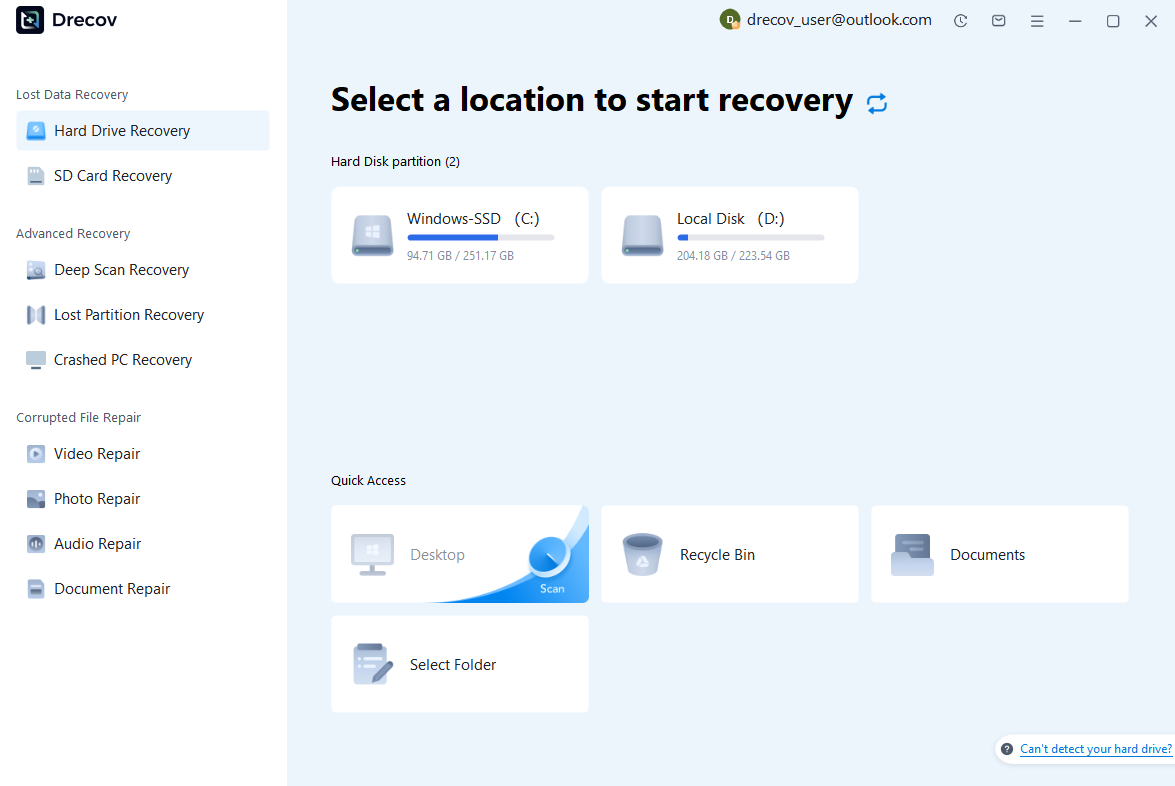
Step 1: Scan the Storage Device (SD Card / Hard Drive / USB)
Connect your device (SD card, HDD/SSD, or USB drive) to your computer and launch PandaOffice Drecov. Select the target device and start the scan. The software will perform a quick scan and deep scan to detect lost or deleted data.
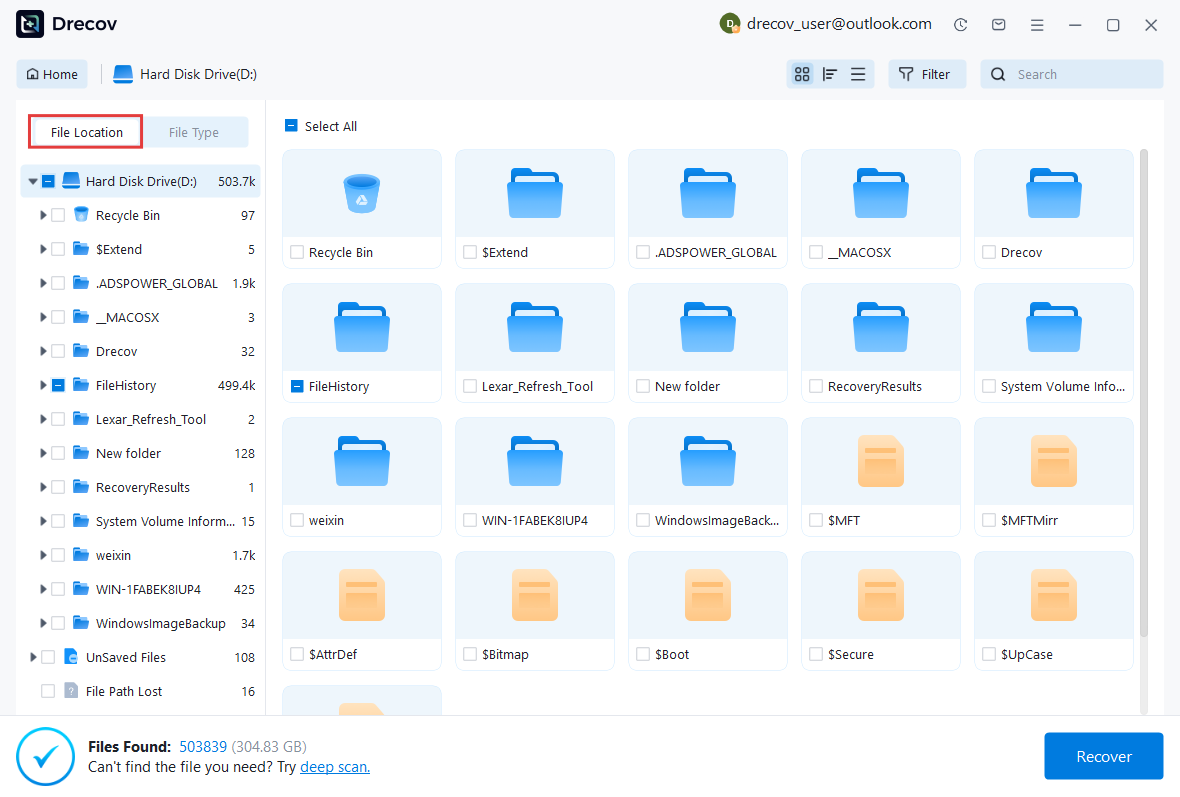
Step 2: Locate and Preview Lost Files
After scanning, browse the detected files and use the preview feature to check recoverable data. You can preview documents (Word, Excel, PDF), photos, and videos to ensure file integrity before recovery.
Step 3: Recover and Save to a New Location
Select the files you want to restore and click recover. Save all recovered data to a different drive or location (not the original device) to avoid overwriting lost data.

Why Choose PandaOffice Drecov Recovery Software?
PandaOffice Drecov offers a fast, secure, and user-friendly solution for recovering lost files across multiple scenarios. Whether you need email recovery, ZIP File Recovery, format data recovery, or help to recover deleted drafts Outlook, the software provides reliable recovery performance for both personal and business users.
PandaOffice Drecov supports recovery from formatted hard drives, SSDs, USB drives, SD cards, and external storage devices. Its advanced scanning engine can locate deleted archives, damaged ZIP files, lost Outlook drafts, and accidentally removed documents with high accuracy. For users searching for how to find deleted messages in Teams, PandaOffice Drecov can also help recover exported chat files, attachments, and related local cache data when available.
Key advantages include:
- Deep scan technology for complex data loss situations
- Support for emails, archives, videos, photos, and office documents
- Recovery from accidental deletion, formatting, corruption, and system crashes
- Easy preview before restoring files
- Compatible with Windows and multiple storage devices
Once recovered, the repaired document may open normally and allow unrestricted editing.
This method is particularly useful when traditional protection-removal techniques fail because the underlying issue involves file corruption rather than access restrictions.
Advanced Ways to Unlock Word File Restrictions
Modify File Permissions Through Windows Security Settings
Test Environment
- Windows 11 Pro
- Microsoft Word 365
- Document Stored on Local Drive
- User Account with Limited Permissions
In some situations, the document itself is not protected by Word. Instead, Windows file permissions prevent modification.
This issue commonly occurs when:
- Files are copied from another computer
- Documents are restored from backups
- User account permissions change
- Files are transferred from company networks
To check permissions:
- Right-click the Word document.
- Select Properties.
- Open the Security tab.
- Review the permissions assigned to your account.
- Verify that Write and Modify permissions are allowed.
If permissions are restricted, an administrator may need to grant access.
After updating permissions, reopen the file and test whether editing is available.
This solution is often overlooked because users assume Word itself is responsible for the restriction. In reality, Windows security settings can block modifications even when no protection exists within the document.
Understanding the relationship between file permissions and editing privileges is essential when troubleshooting unlock Word document issues.
Test Environment
- Windows 10
- Microsoft Word 2021
- Shared Team Document
Modern workplaces frequently use collaborative editing features. While convenient, these tools sometimes create document locks that prevent modifications.
Shared documents may become temporarily unavailable because:
- Another user is actively editing the file
- A synchronization process is running
- The file is checked out by another team member
- Administrative restrictions have been applied
To resolve this issue:
- Confirm whether another user currently has the document open.
- Save a local copy if permitted.
- Check sharing settings within Microsoft Word.
- Request editing access from the document owner if necessary.
Many users searching for how do you unlock Word document restrictions discover that collaboration settings—not password protection—are responsible for the problem.
If the document belongs to a shared workspace, consult the file owner before modifying permissions.
Test Environment
- Windows 11
- Microsoft 365
- OneDrive-Synced Document
Cloud storage platforms introduce additional layers of document management.
Occasionally, synchronization issues cause Word to display messages indicating that a file is locked for editing.
Common causes include:
- Incomplete synchronization
- Multiple devices editing simultaneously
- Account authentication problems
- Offline editing conflicts
To troubleshoot:
- Verify that OneDrive is fully synchronized.
- Sign out and sign back into Microsoft 365.
- Close duplicate instances of the file.
- Restart OneDrive synchronization.
- Open the document again.
Cloud-based locking mechanisms are designed to prevent version conflicts. Once synchronization completes successfully, editing capabilities are often restored automatically.
This solution can be especially effective for users who frequently work across multiple devices.
Address Compatibility Mode Limitations
Test Environment
- Windows 10
- Legacy DOC Document
- Microsoft Word 365
Older Word documents may open in Compatibility Mode, limiting certain editing features.
Compatibility Mode is designed to preserve formatting when opening files created with older Office versions. However, it can occasionally create confusion by restricting access to newer editing tools.
To convert the file:
- Open the document.
- Select File.
- Choose Info.
- Click Convert if available.
- Save the file in modern DOCX format.
After conversion, reopen the document and verify that editing functions normally.
Although Compatibility Mode is not a true security feature, removing it can resolve issues that appear similar to document protection.
⚠️Warning: Converting older documents may slightly alter formatting. Review important files carefully after conversion.
Why Unlocking Word Document Attempts Sometimes Fail
Password Encryption Versus Editing Restrictions
One of the most common misunderstandings involves the difference between editing restrictions and encryption.
Editing restrictions typically allow users to view the document while limiting modifications.
Encryption, however, protects the file using a password and prevents unauthorized access altogether.
If a document is encrypted:
- The file may not open without the password.
- Editing restrictions cannot be removed through standard settings.
- Recovery options become significantly more limited.
Users attempting unlocking Word document protections should first determine whether encryption is involved.
This distinction helps avoid wasting time on methods that are not applicable to password-protected files.
Document Ownership and Permission Conflicts
Some documents remain locked because ownership information is tied to another user account.
This situation frequently occurs when:
- Files are transferred from old computers
- Employee accounts are removed
- Documents are restored from archived systems
- User profiles become corrupted
Ownership conflicts can prevent modifications even when the document appears accessible.
Taking ownership through Windows Security settings may restore editing rights if administrative access is available.
Without appropriate permissions, however, modifications may remain blocked.
File Corruption and Metadata Problems
Corruption is another major reason protection-removal attempts fail.
Document metadata stores important information about:
- Authors
- Permissions
- Revision history
- Editing status
If metadata becomes damaged, Word may incorrectly interpret the document as protected.
Signs of corruption include:
- Unexpected protection messages
- Missing content
- Random formatting changes
- Failure to save edits
- Frequent application crashes
When corruption is suspected, file recovery or repair procedures often provide better results than standard protection-removal methods.
Software Version Compatibility Issues
Different Microsoft Office versions sometimes interpret document settings differently.
For example:
- A document created in Word 365 may behave differently in Word 2010.
- Older protection methods may not display correctly in newer versions.
- Third-party word processors may alter protection settings.
If editing remains unavailable after multiple attempts, testing the file in another Office version may help identify compatibility-related issues.
Understanding software differences can simplify troubleshooting and prevent unnecessary modifications.
Frequently Asked Questions About Unlock Word Documents
How Can I Unlock a Word Document Without a Password?
The answer depends on the type of restriction.
If the document is:
- Read-only
- Marked as Final
- Protected through editing settings
- Restricted by permissions
You may be able to remove the restriction without entering a password.
However, encrypted files generally require the correct password for authorized access.
Many users looking for how can I unlock a Word document successfully restore editing access by adjusting document settings rather than removing passwords.
How Do You Unlock Word Document Files Marked as Read-Only?
To remove read-only status:
- Right-click the file.
- Select Properties.
- Uncheck Read-only.
- Click Apply.
- Reopen the document.
If the file continues to open in read-only mode, investigate sharing permissions, cloud synchronization settings, or security restrictions.
This remains one of the simplest ways to unlock Word file access.
Can I Unlock Word File Protection Without Losing Formatting?
In most cases, yes.
Methods such as:
- Removing read-only attributes
- Disabling Restrict Editing
- Adjusting permissions
typically preserve formatting and content.
However, methods involving format conversion or document reconstruction may occasionally alter layouts, fonts, or embedded objects.
Creating a backup before making changes remains the safest approach.
Why Does Word Say the Document Is Locked for Editing?
Several factors can trigger this message:
- Another user is editing the file.
- The document is synchronized through OneDrive.
- Editing restrictions are enabled.
- File permissions are limited.
- Temporary lock files exist.
Identifying the exact cause is the key to resolving the issue efficiently.
The message itself does not always indicate password protection.
What Should I Do If None of the Methods Work?
If all standard solutions fail:
- Create a backup of the document.
- Test the file on another computer.
- Open it using a different Office version.
- Check for corruption.
- Recover a healthy copy using document recovery software.
Persistent editing issues often indicate underlying corruption or permission conflicts rather than simple protection settings.
⚠️Warning: Avoid repeatedly saving a potentially corrupted document, as additional damage may occur.
Conclusion
Choosing the Best Way to Unlock Word Documents
Word document restrictions can originate from several different sources, including read-only settings, editing protections, permission limitations, synchronization conflicts, and file corruption.
Because each situation requires a different solution, identifying the root cause should always be the first step.
For many users, simple adjustments to file properties or Word settings are sufficient to unlock the Word document and restore editing access.
Preventing Future Editing Restrictions
To reduce future problems:
- Maintain regular backups.
- Store important files in trusted locations.
- Monitor cloud synchronization status.
- Keep Microsoft Office updated.
- Verify permissions before sharing documents.
These practices help minimize unexpected editing restrictions and reduce the risk of data loss.
Key Steps for Maintaining Accessible Word Files
Understanding the differences between editing protection, read-only status, file permissions, and encryption makes troubleshooting significantly easier.
Whether you need to unlock Word, remove editing restrictions, or determine how to unlock Word file access after corruption, the methods outlined in this guide provide practical solutions for a wide range of scenarios.
By following these best practices and applying the appropriate method for your situation, you can safely restore editing functionality and maintain reliable access to important Word documents.
⚠️Warning: If a document is protected by encryption and belongs to another person or organization, always obtain authorization before attempting to modify access settings.





