







Understanding Google Photos and Cross-Account Transfer Basics
What Google Photos Actually Does in Cloud Storage
Google Photos is a cloud-based media management system designed to store images and videos across devices using a Google account. When users try to perform tasks like how to transfer google photos to another google account, they often assume it works like simple file copying. However, the system is based on account-bound cloud synchronization rather than traditional storage.
Each image uploaded to Google Photos is tied to a specific Google account identity. This means that when users attempt to move photos from one google account to another, they are not moving physical files but rather recreating or duplicating cloud-stored data across separate environments.
This architecture is important because it determines what transfer methods are possible. Unlike local storage, Google Photos does not allow direct cross-account file movement. Instead, users must rely on export, sharing, or sync-based solutions.
Understanding this structure helps prevent mistakes such as data loss, duplication, or incomplete migration during transfer processes.
Why Users Need to Move Google Photos Between Accounts
There are many real-life reasons why users need to perform moving google photos from one account to another operations. One of the most common is storage limitation. Free Google accounts share 15GB of space across Gmail, Drive, and Photos, which quickly fills up for active users.
Another major reason is account separation. Many users create multiple accounts for work, personal use, or backup purposes. Over time, they need to consolidate data into a single account, requiring a structured method to move google photos to another account.
Security is also a key factor. If a Google account is compromised or locked, users may urgently need to migrate photos to a new account to preserve their data.
Finally, device upgrades or ecosystem changes can force users to reorganize their cloud storage, especially when switching phones or managing multiple devices.
Limitations You Must Know Before Moving Photos
Before performing any transfer, users should understand that Google Photos does not support a direct “move” function between accounts. This is why searches like move photos between google accounts often lead users to indirect solutions.
Key limitations include:
- No direct cross-account transfer button
- Metadata may not always remain intact
- Album structure may not fully preserve
- Large libraries require significant time to migrate
- Sync delays may occur during upload
Because of these constraints, users must choose the right method depending on whether they want full migration or partial transfer.
How to Transfer Google Photos to Another Google Account
Method 1: Google Takeout Full Export Transfer
Google Takeout is the most complete solution for how to transfer google photos to another google account because it exports all media at once.
Step-by-Step Process
- Open Google Takeout website
- Deselect all services except Google Photos
- Choose export format (ZIP files)
- Click “Create Export”
- Wait for Google to prepare data
- Download ZIP files to computer
- Extract all images locally
- Sign in to second Google account
- Upload files into Google Photos
Test Environment
- Source Account: Google Photos (Primary Gmail)
- Destination Account: Secondary Gmail
- Data Size: 28GB photos + videos
- Export Type: Multi-part ZIP archive
- Upload Tool: Chrome browser
⚠️ Warning: Keep original data until upload is fully verified.
Method 2: Album Sharing and Save to Library Method
This method is widely used for move photos from one google account to another when selective transfer is needed.
Step-by-Step Process
- Open Google Photos source account
- Select photos or create album
- Click Share button
- Enter destination Gmail address
- Send invitation
- Open shared album in second account
- Click “Save to library”
Test Environment
- Source Account: Personal Gmail
- Destination Account: Backup Gmail
- Albums Shared: 9 albums
- Total Photos: 3,800 images
- Network: Stable Wi-Fi 100 Mbps
Method 3: Manual Download and Re-upload Method
This method is commonly used for moving google photos to another account when users want full control over selection.
Step-by-Step Process
- Open Google Photos
- Select images manually or in batches
- Click Download
- Save files locally
- Sign into second Google account
- Open upload page
- Drag and drop files
- Wait for upload completion
Test Environment
- Device: Windows 11 laptop
- Data Size: 7.5GB photos
- Upload Duration: ~2 hours
- Connection: Fiber 200 Mbps
⚠️ Warning: File order may change after upload.
Method 4: Google Photos Partner Sharing Auto Sync
This method is useful for users searching how do i move photos to google photos in an automated way.
Step-by-Step Process
- Open Google Photos settings
- Enable Partner Sharing
- Add second Google account
- Choose sharing scope (all photos or selected)
- Accept invitation on destination account
- Enable auto-save option
Test Environment
- Feature: Partner Sharing
- Sync Mode: Continuous cloud sync
- Devices: Android + Web
- Sync Type: Real-time
⚠️ Warning: Deleting photos in source account may affect shared library.
Method 5: Google Drive Indirect Transfer Method
This method is used for structured migration when performing move google photos to another account.
Step-by-Step Process
- Export photos from Google Photos
- Upload to Google Drive
- Organize into folders
- Share Drive folder
- Copy to second account
- Re-upload into Google Photos if needed
Test Environment
- Source: Google Drive
- Destination: Secondary Gmail
- Data Size: 11GB mixed media
- Transfer Type: Manual sync
Method 6: Data Recovery Before Migration (Pandaoffice Drecov)
Before transferring, users should ensure no files are lost. If photos are accidentally deleted, Pandaoffice Drecov can recover them from local storage.
Step-by-Step Process
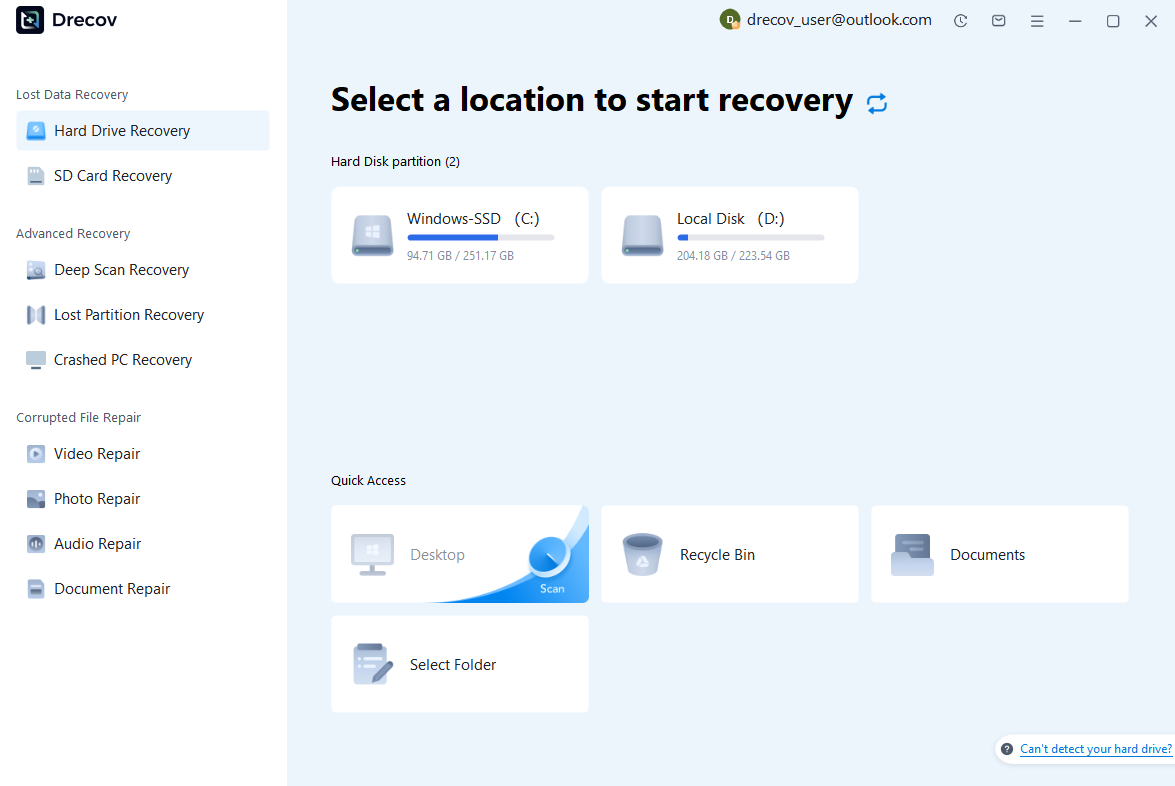
Step 1: Connect the Drive / USB)
Connect your device (SD card, HDD/SSD, or USB drive) to your computer and launch PandaOffice Drecov. Select the target device and start the scan. The software will perform a quick scan and deep scan to detect lost or deleted data.
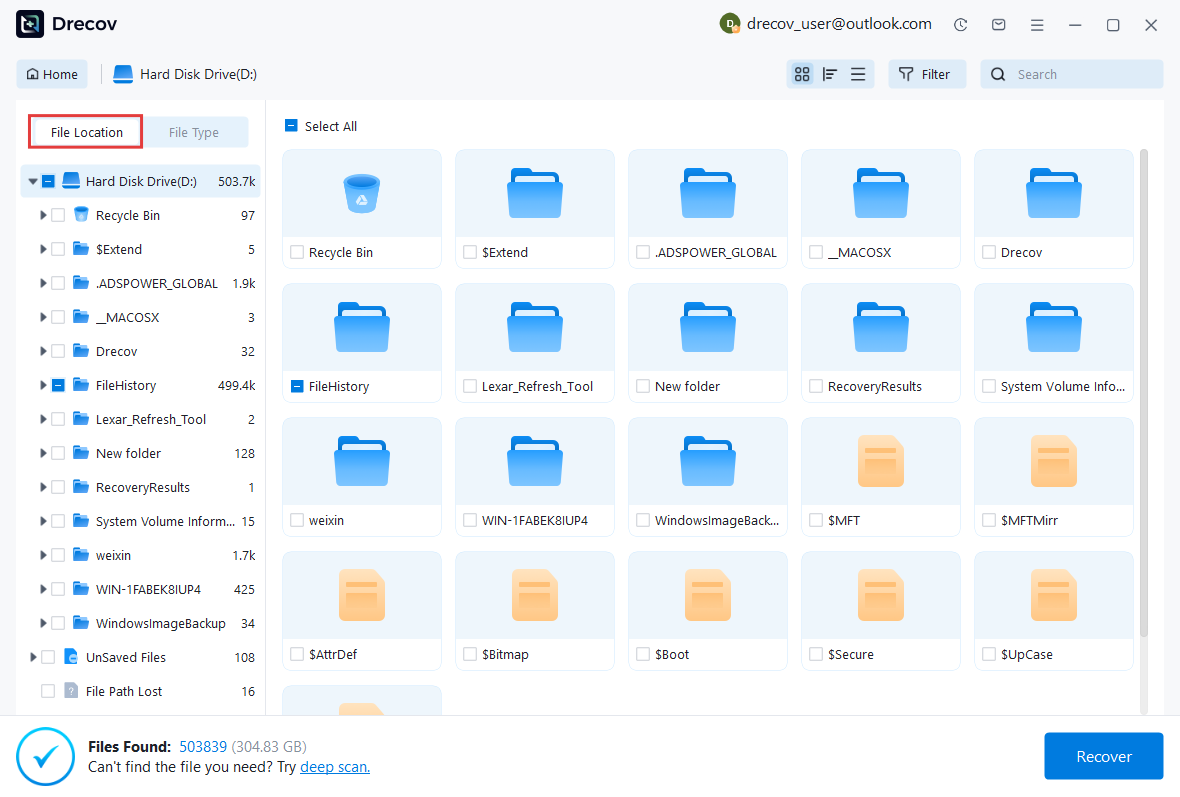
Step 2: Locate and Preview Lost Files
After scanning, browse the detected files and use the preview feature to check recoverable data. You can preview documents (Word, Excel, PDF), photos, and videos to ensure file integrity before recovery.
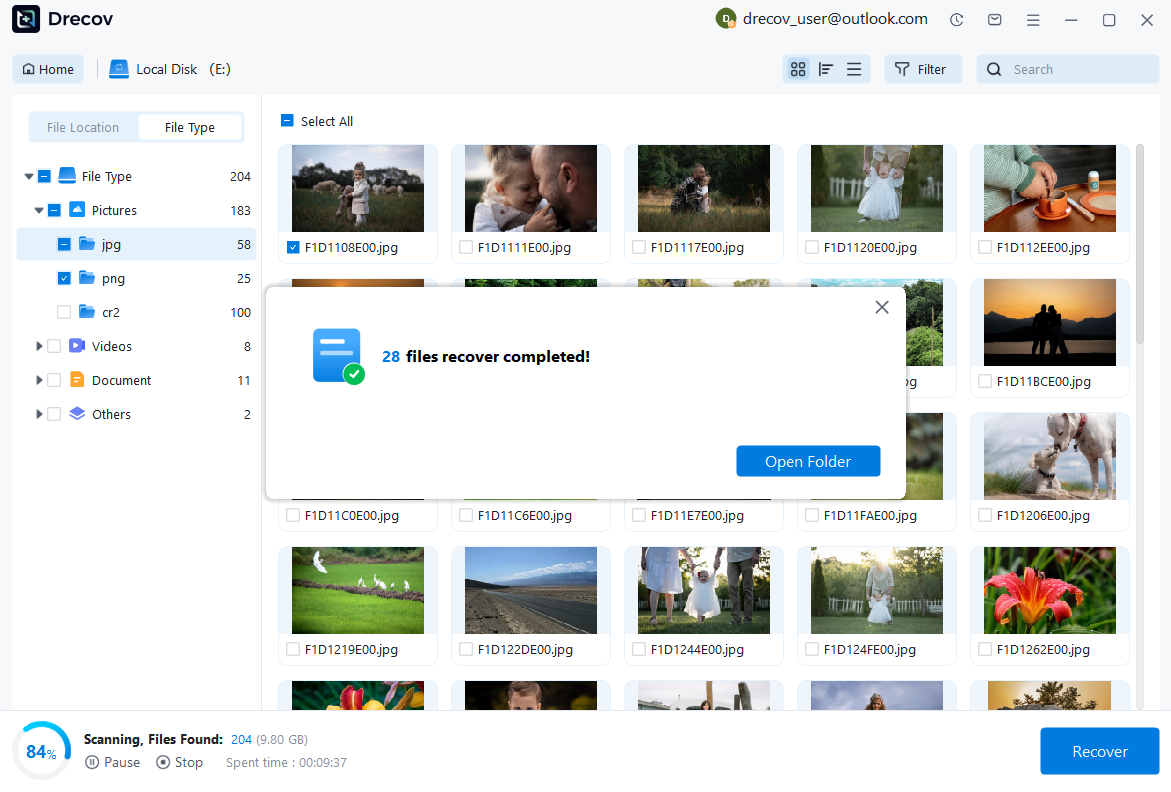
Step 3: Recover and Save to a New Location
Select the files you want to restore and click recover. Save all recovered data to a different drive or location (not the original device) to avoid overwriting lost data.
Why Choose PandaOffice Drecov Recovery Software?
PandaOffice Drecov offers a fast, secure, and user-friendly solution for recovering lost files across multiple scenarios. Whether you need email recovery, ZIP File Recovery, format data recovery, or help to recover deleted drafts Outlook, the software provides reliable recovery performance for both personal and business users.
PandaOffice Drecov supports recovery from formatted hard drives, SSDs, USB drives, SD cards, and external storage devices. Its advanced scanning engine can locate deleted archives, damaged ZIP files, lost Outlook drafts, and accidentally removed documents with high accuracy. For users searching for how to find deleted messages in Teams, PandaOffice Drecov can also help recover exported chat files, attachments, and related local cache data when available.
After recovery, test the file again. If the audio stream was damaged because of storage issues, a recovered version may play normally.
This method is particularly useful when only a few files exhibit audio problems while VLC works correctly with all other media.
This method can help users recover files from floppy disk storage after accidental deletion, formatting, or logical corruption.
Test Environment
- Device: Windows 11 PC
- Storage: 512GB SSD
- File Types: JPG / PNG / MP4
- Scan Mode: Deep recovery scan
⚠️ Warning: Recover files before overwriting disk space.
Duplicate Photos After Transfer
When performing moving google photos from one account to another, duplicate files are one of the most frequent issues. This usually happens when users combine multiple methods such as Google Takeout, manual upload, or album sharing.
Google Photos does not always detect identical images accurately because differences in metadata, filename, or compression may cause the same image to appear as separate files.
In large migrations, duplicates can quickly increase storage usage and make library organization more complex. Users often discover repeated images only after the transfer is completed.
⚠️ Warning: Avoid using multiple transfer methods at the same time to reduce duplication risk.
Metadata Loss and Timeline Issues
Another common issue during move photos between google accounts is metadata inconsistency. Metadata includes capture date, location, and device information.
When files are downloaded and re-uploaded, operating systems may modify timestamps. This causes images to appear in incorrect chronological order inside Google Photos.
Users who rely on timeline organization often notice that older photos suddenly appear as newly uploaded content after migration.
⚠️ Warning: Always verify timeline order after completing transfer.
Sync Delay and Upload Processing Time
When handling how to transfer google photos to another google account, users often underestimate processing time. Google Photos processes uploads in the background rather than instantly displaying them.
Large libraries may take hours or even days to fully appear depending on file size, internet speed, and server load. Videos generally take longer than images.
During this period, users may think photos are missing even though they are still processing.
⚠️ Warning: Do not re-upload the same files during processing delays.
Storage Limit Confusion
Many users performing move google photos to another account face storage-related issues. This happens when the destination account does not have enough free space.
Since Google storage is shared between Gmail, Drive, and Photos, users may underestimate actual usage. As a result, uploads may fail or stop midway.
Album Structure Not Fully Preserved
During migration, album organization may not always remain identical. While Google Takeout preserves files, it does not guarantee perfect album reconstruction after import.
This often requires manual reorganization after transfer, especially for users with large and complex libraries.
Advanced Recommendations for Smooth Transfer
1. Organize Photos Before Migration
Before starting any moving google photos to another account, it is important to organize images into albums or folders. This helps reduce confusion after transfer and makes verification easier.
2. Use Stable Internet Connection
Large photo transfers require stable and continuous internet. Interruptions can cause incomplete uploads or duplicated files.
A strong Wi-Fi or wired connection is recommended for best results.
3. Avoid Mixing Multiple Transfer Methods
One of the biggest mistakes users make during how do i move photos to google photos workflows is combining multiple methods at the same time.
Using Takeout + sharing + manual upload together increases duplication risk and sync errors.
4. Check Storage Before Starting Migration
Before beginning any transfer, always ensure the destination account has enough available storage space. Running out of storage mid-transfer can cause incomplete uploads or failed synchronization.
FAQ: Google Photos Account Transfer
Can I directly move Google Photos between accounts?
No. Google does not provide a direct transfer feature. Users must rely on Takeout, sharing, or manual upload methods to complete move photos from one google account to another.
Which method is fastest for large libraries?
Google Takeout is generally the most efficient for large datasets because it exports everything at once. However, upload time still depends on internet speed.
Will albums stay the same after transfer?
Not always. Some methods preserve grouping, but full album structure is not guaranteed during moving google photos from one account to another.
Is it safe to delete photos after migration?
Only after confirming that all files have been successfully uploaded and are accessible in the destination account.
Conclusion: Best Strategy for Google Photos Transfer
Moving photos between Google accounts requires selecting the right method based on your needs.
- Google Takeout → Best for full backup migration
- Album Sharing → Best for selective transfer
- Manual Upload → Best for control and flexibility
- Partner Sharing → Best for continuous sync
- Drive Method → Best for structured file handling
Before starting, always prepare storage space, ensure stable internet, and stick to a single method to avoid duplication or data loss.
With proper planning, users can safely move google photos to another account without losing important memories or disrupting organization.





