







Understanding Outlook Email Deletion and Recovery
What Happens When Emails Are Deleted in Outlook
Microsoft Outlook includes several layers of protection that help users avoid losing important emails. When you delete a message, Outlook usually moves it to the Deleted Items folder rather than removing it immediately. This design gives users an opportunity to restore messages before permanent deletion occurs.
However, many users eventually empty the Deleted Items folder or remove messages manually. At that point, Outlook treats the email as permanently deleted from the standard mailbox view.
Even so, permanent deletion does not always mean the email is completely unrecoverable. Depending on your Outlook version, Microsoft 365 subscription, Exchange configuration, and backup settings, Outlook may continue storing recoverable copies in hidden system folders.
Users searching how to recover permanently deleted emails in Outlook are often surprised to learn that several recovery options may still exist after deletion.
The available recovery path depends on factors such as:
- Outlook account type
- Exchange retention settings
- Backup availability
- PST or OST file condition
- Time elapsed since deletion
Understanding how Outlook handles deleted emails can significantly improve your chances of successful recovery.
When Permanently Deleted Emails Can Still Be Recovered
Many Outlook users assume that a permanently deleted message disappears immediately. In reality, Outlook and Microsoft Exchange often maintain hidden recovery mechanisms.
Recovery may be possible when:
- Recoverable Items still contains the message
- Exchange retention policies remain active
- PST backups exist
- Windows backup copies are available
- Data files have not been overwritten
Organizations using Microsoft 365 frequently configure retention settings that preserve deleted emails for compliance and auditing purposes. These settings can provide an additional recovery opportunity even after users remove messages from Deleted Items.
People searching how can I recover permanently deleted emails in Outlook should first determine whether their account is connected to Exchange Online, Microsoft 365, or a local PST file.
Each configuration offers different recovery methods and recovery time limits.
⚠️ Warning: Avoid creating large amounts of new mailbox data after discovering email loss. Some recovery opportunities become more difficult as Outlook synchronizes new changes.
Common Reasons Outlook Emails Are Permanently Deleted
Accidental Emptying of Deleted Items
One of the most common causes of Outlook email loss is accidentally emptying the Deleted Items folder.
This often happens during routine mailbox cleanup when users attempt to free storage space or organize folders.
Common situations include:
- Bulk email deletion
- Cleaning spam folders
- Removing old conversations
- Mistaken folder selection
- Keyboard shortcut errors
After the Deleted Items folder is emptied, many users immediately begin searching how do I recover permanently deleted emails in Outlook because the messages no longer appear anywhere in the mailbox.
Fortunately, Outlook may still retain deleted emails within hidden recovery areas depending on account configuration.
The sooner recovery begins, the better the chances of restoring the missing messages.
Retention Policy and Auto-Cleanup Rules
Many organizations use automated retention policies to manage mailbox storage.
These rules may:
- Delete old emails automatically
- Empty Deleted Items periodically
- Archive messages after specific periods
- Remove content that exceeds retention limits
Although these policies help control storage growth, they occasionally remove important emails unexpectedly.
Users often discover missing messages weeks or months after the deletion event occurred.
In Microsoft 365 environments, administrators can sometimes recover emails that users can no longer access directly.
Before assuming that a message has been lost permanently, verify whether organizational retention rules may have moved or archived the content.
Understanding these policies is critical when attempting to recover permanently deleted emails in Outlook.
Account Synchronization Problems
Synchronization issues can also create the appearance of missing emails.
Potential causes include:
- Outlook profile corruption
- Exchange connection failures
- Multiple device conflicts
- Cached mode synchronization problems
- Microsoft 365 account errors
In some situations, emails remain available on the server but disappear from a specific Outlook client.
Before beginning recovery procedures, verify:
- Webmail access
- Account synchronization status
- Mobile device mailbox content
- Outlook cache settings
Many seemingly deleted emails reappear after synchronization issues are resolved.
Users should always confirm whether a synchronization problem exists before attempting advanced recovery techniques.
PST and OST File Corruption
Outlook stores mailbox data inside PST or OST files.
These files may become corrupted due to:
- Unexpected shutdowns
- Storage failures
- System crashes
- Malware infections
- File size limitations
When corruption occurs, Outlook may fail to display emails even though the underlying data still exists.
Signs of corruption include:
- Missing folders
- Inaccessible mailboxes
- Synchronization errors
- Outlook crashes
- Incomplete search results
Many users searching how to recover a permanently deleted email in Outlook eventually discover that file corruption contributed to the apparent loss.
Recovering or repairing Outlook data files often restores access to messages without requiring mailbox-level recovery procedures.
⚠️ Warning: Do not repeatedly repair a damaged PST file without creating a backup copy first. Additional repair attempts may increase the risk of data loss.
How to Recover Permanently Deleted Emails in Outlook
Method 1: Restore Emails from the Recoverable Items Folder
Many Outlook accounts include a hidden recovery area called Recoverable Items. Even after messages are removed from the Deleted Items folder, Outlook or Microsoft Exchange may temporarily retain them in this location.
Test Environment
- Microsoft Outlook 365
- Microsoft Exchange Online
- Windows 11 Pro
- Recently Deleted Email
Steps
- Open Outlook.
- Navigate to the Deleted Items folder.
- Select Recover items recently removed from this folder.
- Browse the available recoverable messages.
- Choose the emails you want to restore.
- Click Recover.
- Verify that the emails return to their original folders.
This method is often the fastest solution for users searching how to recover permanently deleted emails in Outlook. The Recoverable Items folder serves as a secondary safety net before Exchange permanently removes messages.
Recovery availability depends on:
- Exchange retention settings
- Account type
- Organization policies
- Time since deletion
If the desired email is not available, proceed to backup-based recovery methods.
Method 2: Recover Emails from Outlook Backup Files
Backup files provide another effective recovery option.
Many Outlook users create PST archives or maintain automated backups through Windows Backup, OneDrive, or enterprise backup solutions.
Test Environment
- Outlook 2021
- PST Backup File Available
- Windows 11
- External Backup Drive
Steps
- Launch Outlook.
- Select File > Open & Export.
- Choose Open Outlook Data File.
- Browse to the backup PST file.
- Open the archive.
- Search for the missing email.
- Copy or move the recovered message back into the active mailbox.
PST backups often contain:
- Emails
- Attachments
- Contacts
- Calendars
- Notes
Users wondering how can I recover permanently deleted emails in Outlook should always check for existing backup files before attempting more advanced recovery procedures.
A recent backup can restore emails quickly while preserving message metadata and attachments.
⚠️ Warning: Always work with a copy of the backup file when possible to avoid accidental modification of the original archive.
Method 3: Recover Outlook Data with PandaOffice Drecov
If Outlook data files have been deleted, formatted, or removed from storage devices, recovery software may help retrieve the lost PST or OST files.
Test Environment
- Windows 11
- Deleted PST File
- NVMe SSD
- Outlook Data Folder Previously Removed
Steps
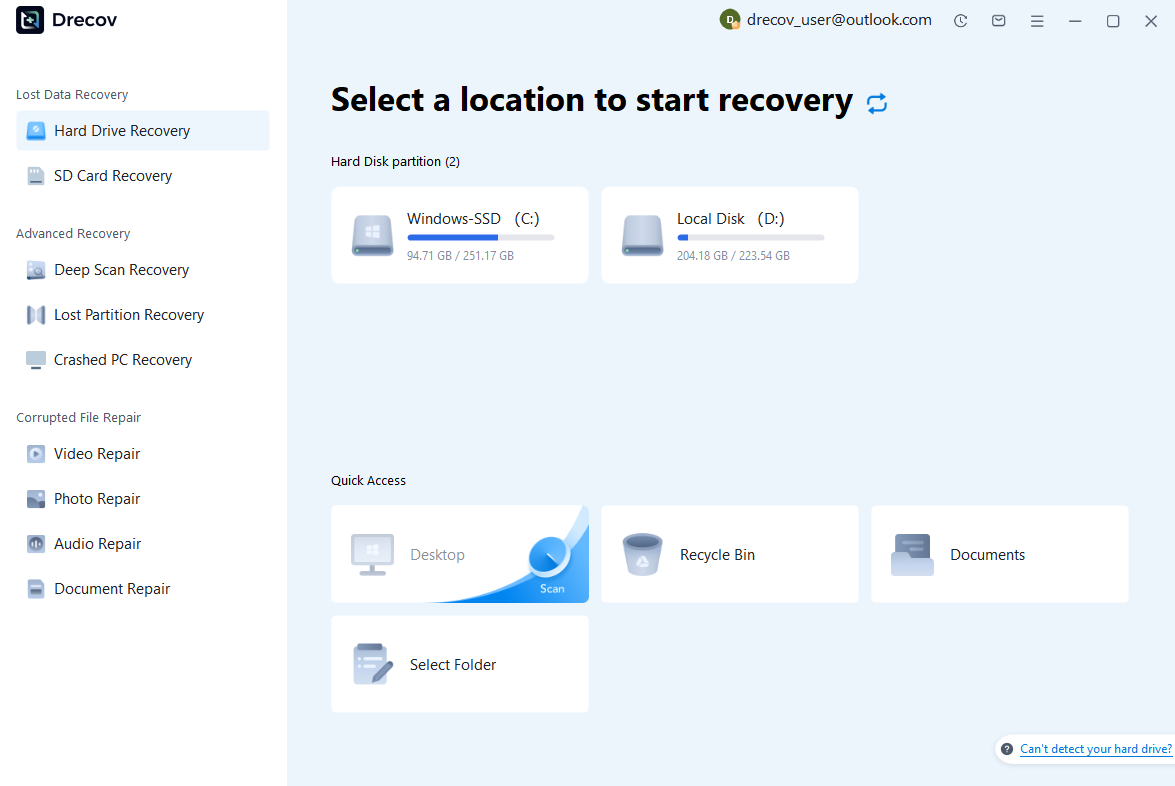
Step 1: Connect the Drive / USB)
Connect your device (SD card, HDD/SSD, or USB drive) to your computer and launch PandaOffice Drecov. Select the target device and start the scan. The software will perform a quick scan and deep scan to detect lost or deleted data.
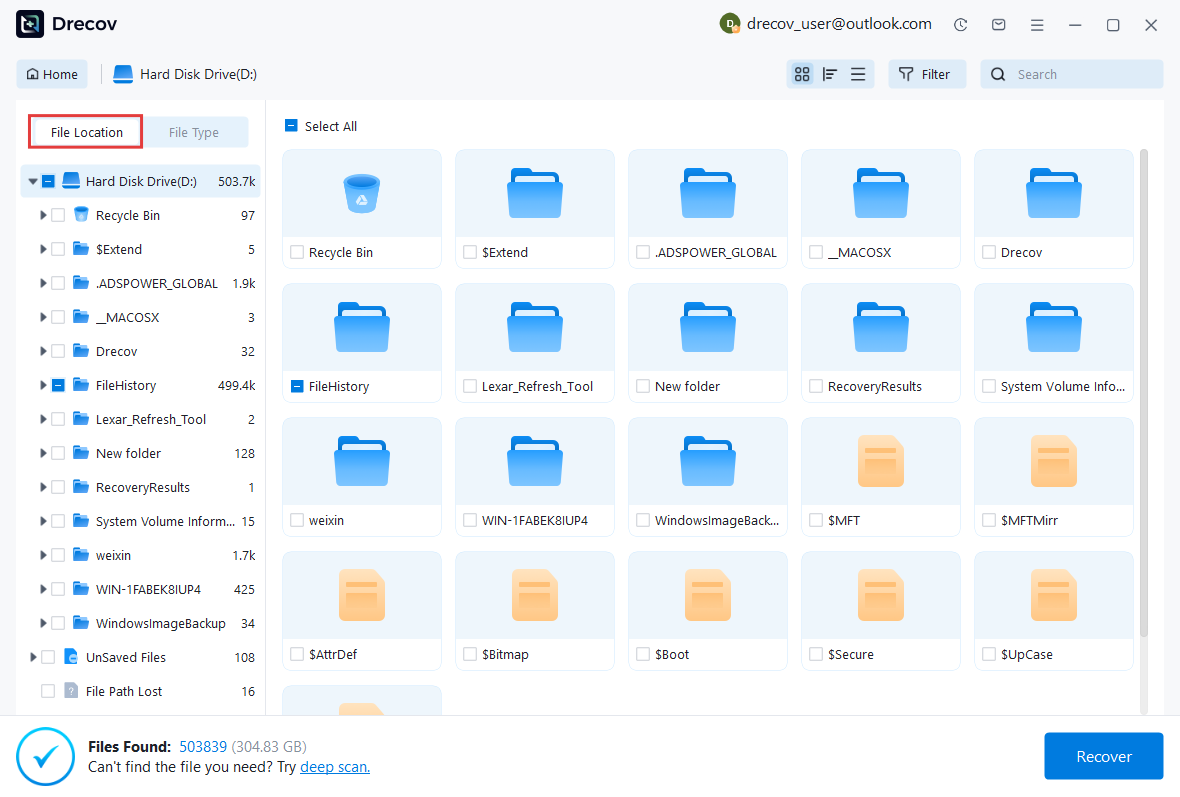
Step 2: Locate and Preview Lost Files
After scanning, browse the detected files and use the preview feature to check recoverable data. You can preview documents (Word, Excel, PDF), photos, and videos to ensure file integrity before recovery.
Step 3: Recover and Save to a New Location
Select the files you want to restore and click recover. Save all recovered data to a different drive or location (not the original device) to avoid overwriting lost data.

Why Choose PandaOffice Drecov Recovery Software?
PandaOffice Drecov offers a fast, secure, and user-friendly solution for recovering lost files across multiple scenarios. Whether you need email recovery, ZIP File Recovery, format data recovery, or help to recover deleted drafts Outlook, the software provides reliable recovery performance for both personal and business users.
PandaOffice Drecov supports recovery from formatted hard drives, SSDs, USB drives, SD cards, and external storage devices. Its advanced scanning engine can locate deleted archives, damaged ZIP files, lost Outlook drafts, and accidentally removed documents with high accuracy. For users searching for how to find deleted messages in Teams, PandaOffice Drecov can also help recover exported chat files, attachments, and related local cache data when available.
After recovery, test the file again. If the audio stream was damaged because of storage issues, a recovered version may play normally.
This method is particularly useful when only a few files exhibit audio problems while VLC works correctly with all other media.
This method can help users recover files from floppy disk storage after accidental deletion, formatting, or logical corruption.
PandaOffice Drecov can help recover Outlook mailbox files that were deleted accidentally, removed during storage cleanup, or lost after formatting events.
This approach is particularly useful when users need to recover permanently deleted emails in Outlook but no longer possess a working backup copy.
The success rate depends on:
- Storage condition
- Time since deletion
- Amount of overwritten data
- File fragmentation level
Prompt recovery attempts generally produce the best results.
Additional Recovery Options for Lost Outlook Emails
Restore Outlook PST Files from Previous Versions
Windows includes a Previous Versions feature that may help restore earlier copies of Outlook data files.
Test Environment
- Windows 11
- File History Enabled
- Outlook PST Stored Locally
Steps
- Locate the folder that contained the PST file.
- Right-click the folder.
- Select Properties.
- Open the Previous Versions tab.
- Review available snapshots.
- Select a version created before the deletion.
- Restore the folder or copy the PST file elsewhere.
This method works best when:
- File History was enabled
- System Restore points exist
- Previous versions contain Outlook data
Users researching how to recover a permanently deleted email in Outlook often overlook Windows recovery features that may already contain usable mailbox backups.
Recover Emails Through Microsoft 365 Administrator Tools
Organizations using Microsoft 365 may have additional recovery options available through administrative tools.
Test Environment
- Microsoft 365 Business Premium
- Exchange Online
- Administrator Access
Recovery Procedure
- Sign in to the Microsoft 365 Admin Center.
- Open Exchange Administration.
- Review mailbox retention settings.
- Search for recoverable messages.
- Restore eligible emails.
- Verify mailbox synchronization.
Administrators may also access:
- Retention policies
- Litigation holds
- Compliance archives
- eDiscovery tools
These resources can preserve email content even after users believe the messages have been permanently removed.
In corporate environments, IT administrators should be consulted before performing extensive recovery operations.
Repair Corrupted Outlook Data Files
Corruption sometimes prevents Outlook from displaying existing emails.
Test Environment
- Outlook 2021
- Corrupted PST File
- Windows 11
Steps
- Close Outlook.
- Locate the Inbox Repair Tool (SCANPST.EXE).
- Select the affected PST file.
- Create a backup.
- Start the repair process.
- Reopen Outlook.
- Verify mailbox contents.
The Inbox Repair Tool can correct various PST-related issues, including:
- Folder inconsistencies
- Missing emails
- Damaged indexes
- Synchronization errors
In some situations, repairing the mailbox file restores access to messages without requiring any actual data recovery.
⚠️ Warning: Always create a backup copy before repairing a damaged PST file.
Frequently Asked Questions About Outlook Email Recovery
How Can I Recover Permanently Deleted Emails in Outlook?
The most effective recovery methods include:
- Recoverable Items Folder
- PST backups
- Microsoft 365 retention features
- Previous Versions
- Outlook data file recovery
The best option depends on the account type and available backups.
How Do I Recover Permanently Deleted Emails in Outlook Without a Backup?
If no backup exists, check the Recoverable Items folder first.
If the email is no longer available there, you may need to recover deleted PST or OST files from the storage device where Outlook stored its data.
Taking immediate action can improve recovery success rates.
How to Recover a Permanently Deleted Email in Outlook After Emptying Deleted Items?
After Deleted Items has been emptied, Outlook may still retain messages within Recoverable Items.
If that option is unavailable, investigate:
- PST archives
- Microsoft 365 retention tools
- Local backups
- Recovery software
The recovery path depends on how the mailbox is configured.
Are Permanently Deleted Outlook Emails Gone Forever?
Not necessarily.
Many Outlook environments maintain hidden retention systems that preserve deleted content for a limited time.
Additional recovery opportunities may exist through:
- Exchange retention policies
- Backup systems
- PST archives
- Storage-level recovery
The longer recovery is delayed, the more difficult restoration may become.
Can I Recover Emails from a Corrupted PST File?
Yes.
Many corrupted PST files can be repaired using Outlook’s built-in Inbox Repair Tool. If the file itself has been deleted, recovery software may help restore the original PST before repair attempts begin.
Final Thoughts
Losing important Outlook emails can disrupt business operations, project management, customer communication, and personal correspondence. Fortunately, permanently deleted messages are not always lost forever.
Users should first check the Recoverable Items folder, followed by PST archives, Windows Previous Versions, Microsoft 365 retention tools, and mailbox repair options. These methods often restore emails without requiring extensive recovery procedures.
When Outlook data files themselves have been deleted or removed from storage devices, PandaOffice Drecov can help recover PST and OST files, providing another opportunity to restore valuable mailbox content.
Whether you are trying to learn how to recover permanently deleted emails in Outlook, determine how can I recover permanently deleted emails in Outlook, or find out how do I recover permanently deleted emails in Outlook, acting quickly and preserving available data will significantly improve your chances of success. Maintaining regular mailbox backups remains the most reliable strategy for preventing future email loss.





