







You download an important video, double-click it, and suddenly Windows throws a vague error message or opens a completely black screen with no sound. Frustrating, right? If the video file ends with the extension .MOV, you are dealing with a digital container format originally developed by Apple. While these files work seamlessly on Mac devices, Windows users frequently run into annoying compatibility bottlenecks. That is precisely why so many people search for effective ways regarding how to open .MOV files on Windows.
Whether you are trying to watch high-resolution iPhone videos, edit professional camera footage, or play downloaded media, this extensive guide will show you exactly how to open .MOV files on Windows step by step. You will also learn why some files fail to play, how to fix deeper system playback errors, and how to salvage media when things go completely wrong.
What Is a .MOV File?
Before diving into the actual technical solutions, it is highly beneficial to understand what you are working with. A .MOV file is a multimedia container format created by Apple specifically for its native QuickTime framework.
Because it acts as a comprehensive container, a single file can simultaneously store multiple types of tracks, including:
- Video Streams: The core visual data compressed using various compression standards.
- Audio Tracks: High-fidelity sound channels, which can include multiple language tracks.
- Subtitles and Text: Timed text data embedded directly into the video container.
- Timecode and Metadata: Essential information used by professional editing programs to track frame rates, camera settings, and creation dates.
Think of the MOV format as a sturdy travel suitcase. Inside that suitcase, you can neatly pack different types of content like video streams, audio tracks, and localized subtitles. The fundamental problem arises because some Windows operating systems do not naturally know how to unpack that specific Apple-designed suitcase correctly.
Because many modern standalone cameras, iPhones, and advanced editing suites prioritize this format due to its ability to preserve high video quality with excellent compression layout, encountering these files on your PC is almost inevitable.
Why MOV Files Sometimes Won’t Open on Windows
A lot of everyday users immediately assume the video file itself is broken or corrupted when it stubbornly refuses to open. In reality, the root issue is usually caused by missing software support or unrecognized inner configurations.
Common Reasons MOV Files Don’t Play
| Problem | Explanation |
| Missing Codec | Windows lacks the specific compression decoder needed to read the internal data stream. |
| Unsupported Player | The default application selected by the OS does not have structural code to handle .MOV wrappers. |
| Corrupted File Data | The binary data of the file was broken during a file transfer or an incomplete download process. |
| Outdated Software | Legacy media players struggle to parse modern compression algorithms like HEVC or ProRes. |
| Incomplete Download | The structural footer of the video file is missing because the download sequence was cut short. |
Windows Media Player, especially older or un-updated installations, may not fully support all .MOV structural variations. That is because .MOV is just the outer shell—the actual video stored inside that shell might use highly advanced codecs such as:
- H.264 (AVC): Broadly supported, but still occasionally errors out on legacy systems.
- HEVC (H.265): The high-efficiency format used by newer iPhones which requires a paid or specialized decoder on Windows.
- Apple ProRes: A professional, visually lossless production codec that requires specific editing deployment packages to render properly.
Without the exact matching system decoder for those specific compression variations, your media player will simply display an error message or crash.
Best Ways to Open MOV Files on Windows
If you are stuck trying to figure out how to open .MOV files on Windows, there are several highly effective methods available. We have organized these solutions starting from the simplest software adjustments up to advanced recovery techniques.
1. Use VLC Media Player
One of the absolute best, most reliable, and time-tested solutions for Windows users is switching to the open-source VLC Media Player.
Why VLC Works So Well
- It supports almost every modern video and audio format out of the box.
- It includes its own internal library of built-in codecs, meaning it bypasses the Windows system registry entirely.
- It is completely free, open-source, and lightweight.
- It functions flawlessly across all modern versions, including Windows 10 and Windows 11.
How to Open MOV Files with VLC
- Step 1: Download the official software version directly from the verified VideoLAN Official Website. Run the installer script and follow the on-screen configuration prompts.
- Step 2: Launch the VLC Media Player application from your desktop or Start Menu.
- Step 3: Locate the problematic video file in your Windows File Explorer window.
- Step 4: Drag the file into the player window, or simply right-click the video file, select Open with, and choose VLC Media Player from the context list.
VLC acts like a universal remote control for media formats. Instead of making you manually install separate, confusing codecs for every strange file type you encounter, VLC already understands most formats automatically. For a vast majority of users, this single adjustment completely solves the problem.
2. Use Windows Media Player with Third-Party Codec Packs
If you strongly prefer utilizing built-in native applications instead of downloading separate third-party software, you will need to expand your system’s translation vocabulary by installing additional codec packs.
What Are Codecs?
A codec compresses raw media streams for storage and decompresses them in real-time during playback. Without the correct modern codec installed locally on your system drive, the Windows operating system cannot interpret the specialized video data.
Safe and Popular Codec Packs
- K-Lite Codec Pack (Standard or Mega): A highly reliable bundle that updates your entire system registry with safe playback decoders.
- CCCP (Combined Community Codec Pack): A lightweight package designed specifically to handle modern digital video containers.
Once you safely download and install one of these packages, native tools like Windows Media Player gain immediate support for a much wider array of formats, allowing you to successfully master how to open .MOV files on Windows without abandoning your favorite default player.
3. Use the Movies & TV App (With HEVC Extensions)
Modern versions of Windows include the built-in Movies & TV app. While it can open basic files natively, it frequently hits a wall if the video was shot on a modern Apple device using high-efficiency settings.
How to Try It
- Step 1: Right-click your video file within its local folder directory.
- Step 2: Hover over the Open with selection line to reveal the secondary application list.
- Step 3: Select Movies & TV.
If the video plays back normally, your file is using a basic compression layout. However, if the screen remains pitch black while audio plays, or if a prompt appears stating that a specific extension is required, you must open the official Microsoft Store and download the HEVC Video Extensions package. This small system update gives native Windows applications the exact mathematical formulas needed to unlock modern Apple high-efficiency files.
4. Convert MOV Files to Universal MP4 Format
If a specific file completely refuses to cooperate despite trying multiple players, converting the file container directly into an alternate format like .MP4 is a highly practical workaround.
Why MP4 Is Easier
The .MP4 format possesses the absolute broadest compatibility layout across nearly every single operating system, mobile device, gaming console, and social media platform in existence.
Best MOV to MP4 Converters
- HandBrake: An exceptional, open-source desktop transcoder that gives you complete control over bitrates, resolutions, and quality factors.
- CloudConvert: A safe, web-based tool ideal for smaller files where you do not want to install dedicated desktop software.
- VLC Converter Feature: A hidden, completely free tool built directly into your existing VLC player installation.
Converting a video is like translating an old foreign manuscript into a more commonly spoken language. Once the transformation is finished, system playback becomes completely effortless.
How to Convert MOV to MP4 Using VLC
Many everyday users don’t realize that VLC can double as an incredibly robust file converter.
- Step 1: Open your VLC Media Player application.
- Step 2: Click on the Media menu located in the top-left tool ribbon, then select Convert / Save… (or press the hotkey shortcut
Ctrl + R). - Step 3: In the File tab window that appears, click the Add… button to select the specific video file you want to change.
- Step 4: Click the Convert / Save button located at the bottom of the dialogue window.
- Step 5: Under the Settings section profile dropdown, choose Video – H.264 + MP3 (MP4).
- Step 6: Click the Browse button to select your desired destination folder, give your new file a distinct name ending in
.mp4, and click Start.
This built-in feature is entirely free, does not append annoying watermarks, and works surprisingly well for all standard video conversions.
Opening MOV Files from iPhone on Windows
One of the absolute most common real-world scenarios involves users transferring personal home videos from a modern iPhone directly over to a Windows desktop or laptop PC.
Why iPhone MOV Files Cause Structural Issues
Modern Apple iOS devices utilize advanced default camera settings to save storage space. They prioritize:
- HEVC (High-Efficiency Video Coding): A highly advanced compression standard that cuts file sizes nearly in half compared to older standards while fully maintaining visual fidelity.
- High Efficiency Capture Settings: System protocols that default to a
.MOVwrapper configuration that older Windows installations cannot interpret natively.
Quick Fixes for iPhone Media
- Install Official Extensions: Purchase the official HEVC Video Extensions from the Microsoft Store platform.
- Adjust iPhone Transfer Settings: Open your iPhone’s system Settings menu, navigate directly to Photos, scroll down to the bottom section labeled “Transfer to Mac or PC”, and tap to select Automatic. This forces the iOS operating system to automatically convert the files into standard, widely compatible formats whenever you plug your phone into a Windows PC via a USB cable.
How to Fix MOV Files That Have No Sound
Sometimes you successfully open the file, but you are met with a frustrating silent movie—the video plays perfectly, but the audio track does not work at all.
Possible Causes for Audio Failure
- Missing Audio Codec: The file may use an advanced surround sound format (like AC3 or a specific linear PCM track) that your basic audio driver doesn’t understand.
- Corrupted Audio Stream: The audio portion of the binary file was damaged during a network interruption or an un-optimized copy routine.
- Improper Audio Output Mapping: Your media player might be trying to send the audio signal to a disconnected device or an incorrect sound channel.
Quick Solutions to Restore Audio
- Verify Audio Channels in VLC: Open the silent video in VLC, go to the top menu bar, select Audio -> Audio Track, and make sure the track is actively enabled rather than turned off.
- Update System Audio Drivers: Press the hotkey combination
Windows Key + X, select Device Manager, expand the Sound, video and game controllers category, right-click your main audio device, and choose Update driver. - Transcode to Standard Formats: Run the file through a converter to transform the internal audio track into standard AAC or MP3 format.
Addressing Data Loss & Corruption with PandaOffice Drecov data recovery software
What happens when your problem isn’t just a simple missing codec? If a video file suddenly displays error codes such as “0xc00d36c4”, throws severe visual glitching artifacts, or disappears entirely from your storage drive, you are likely dealing with file system corruption or accidental deletion.
This is incredibly common if a memory card is pulled out of a camera while it is still actively saving, or if a hard drive partition encounters a sudden power outage. When these stressful situations happen, utilizing professional-grade data extraction software becomes absolutely mandatory.
⚠ Warning: Install it on a drive different from the one where your data was lost to prevent overwriting.
How to Recover Lost or Damaged Video Files Using PandaOffice Drecov data recovery software
If your media file is missing, partially overwritten, or inaccessible due to storage card errors, the PandaOffice Drecov data recovery software provides a deeply robust framework designed to scan raw drive clusters, rebuild damaged index maps, and rescue lost video files safely.
⚠️ CRITICAL WARNING: If you realize a video file is missing or corrupted on an external drive, SD card, or local partition, immediately stop writing any new data to that specific device. Saving new files, taking new pictures, or downloading software onto that exact same drive can permanently overwrite the hidden fragments of your lost video, making successful recovery mathematically impossible. Always install recovery tools onto a completely separate, healthy drive.
Here is the comprehensive step-by-step methodology to recover your files:
- Step 1: Select the Target Target Drive for Scanning. Hover your mouse cursor over the specific drive letter or external card volume where your files were originally stored. Click the prominent Scan button located adjacent to the drive icon to initiate the advanced search algorithm.

- Step 2: Monitor the Deep Scanning Routine. The software will immediately begin execution of two simultaneous operations: a rapid Deep Scan to parse your file allocation tables, followed by a comprehensive raw sector-by-sector cluster analysis. You can monitor the real-time progress bar at the top of the interface screen.

- Step 3: Filter the Scan Results specifically for MOV Files. To avoid sorting through thousands of unrelated system files, utilize the built-in file type filtering sidebar. Click on the Video category folder, or utilize the search bar in the top-right quadrant of the UI and type
.movto instantly isolate your target media files.
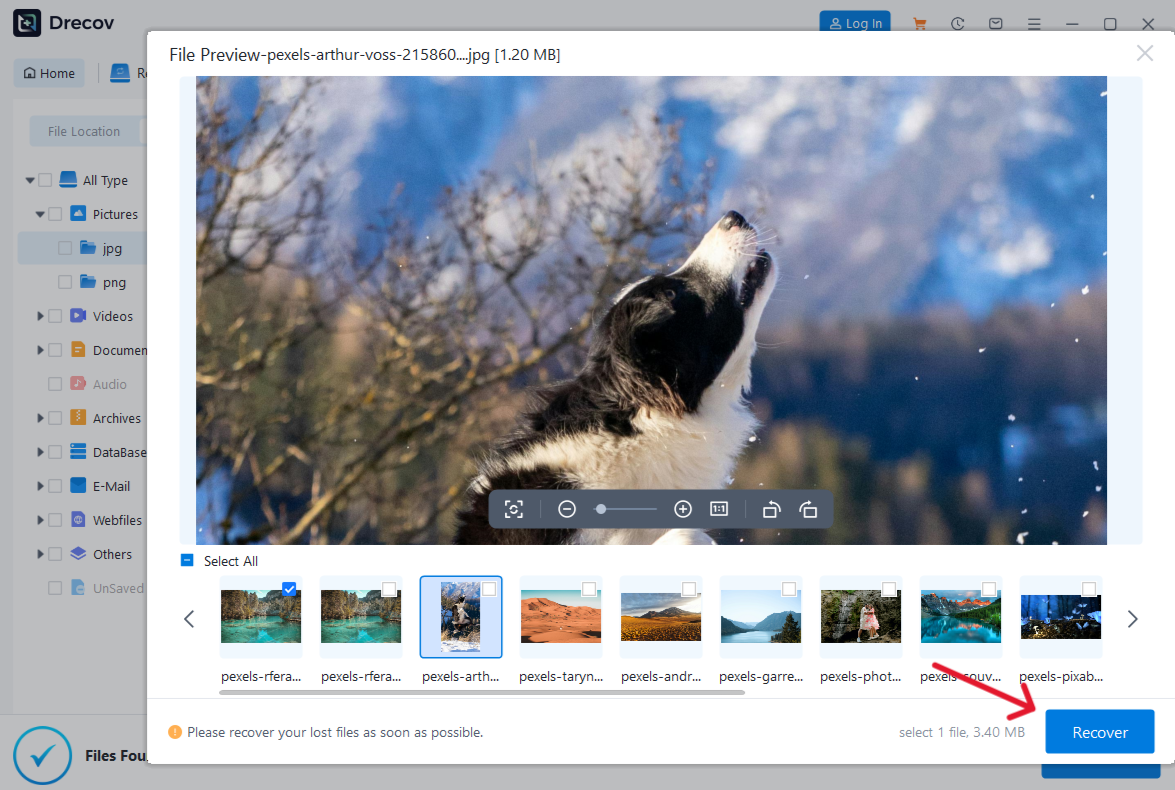
- Step 4: Preview and Execute the Recovery Sequence. Double-click any discovered video file within the results interface to open the built-in preview pane. This allows you to verify that the file’s internal structure is fully intact before recovering it. Mark the checkbox next to the specific videos you wish to salvage, and click the Recover button located in the lower-right corner.
- Step 5: Choose a Safe Destination Directory. A system dialogue window will prompt you to select a directory to save the recovered data. Choose a location on an entirely separate storage drive (such as saving files to your local desktop instead of back onto the problematic SD card). Click OK to complete the extraction process.
Essential Post-Recovery Optimization Links
Once you have successfully mastered the file recovery process, you may want to address other common Windows system performance and data synchronization bottlenecks. Review these helpful resources to keep your PC optimized and secure:
- If you utilize web browsers alongside media playback, learning exactly where Firefox bookmarks are stored on your PC ensures you never lose access to your favorite online video conversion tools or streaming portals.
- If you are constantly working with cloud backups for your video projects and encounter upload errors, discovering how to handle OneDrive Windows 10 not syncing issues can instantly prevent future network transfer corruptions.
- If you operate in a cross-platform workspace using both Mac-formatted external drives and Windows workstations, check out this complete guide to fix a LaCie hard drive not showing up on Mac to keep your media pipelines running smoothly without sudden storage disconnects.
Practical Tips to Prevent MOV Playback Problems
To completely avoid running into compatibility blocks or file corruption issues in the future, try adopting these simple media management habits:
Keep All System Software Frequently Updated
Legacy software configurations lack the processing instructions to decode modern high-efficiency compression frameworks. Keep your media apps updated regularly.
Avoid Incomplete Media Transfers
Never pull a USB data cable or an SD card out of your computer while a file copy progress bar is active. Prematurely interrupting a data stream cuts off the file’s metadata footer, causing major structural corruption.
Set Reliable Default Media Apps
Avoid software conflicts by mapping your system settings so that files open automatically in your best player. Press Windows Key + I to open Settings, select Apps, click Default apps, search for your preferred player, and set it to handle all .mov file extensions.
Maintain Ample Local Storage Overhead
High-quality video files require plenty of scratch space to render smoothly. If your local system drive (C:) drops below 10% remaining capacity, your computer may struggle to decode complex video streams in real-time.
How to open .mov files on windows FAQs
1. Why won’t my .MOV file open on Windows by default?
This usually occurs because your active Windows media app does not have the specific compression decoder needed to read the file’s internal video stream.
2. What is the safest free player for running .MOV files on a PC?
VLC Media Player is widely considered the safest option because it is completely free, ad-free, open-source, and includes its own library of built-in playback decoders.
3. Can old versions of Windows Media Player open these files?
Legacy versions often cannot read them out of the box. However, you can add this support by downloading a trusted third-party bundle like the K-Lite Codec Pack.
4. Is there an advantage to using .MOV instead of .MP4?
Yes. The format supports high-end professional formats like Apple ProRes, making it a preferred choice for video editors who need to preserve every detail during production.
5. How do I convert a file to .MP4 for free without downloading apps?
For smaller files, you can use secure online conversion platforms like CloudConvert. For larger files, using the built-in conversion tool inside VLC Media Player is a great, secure option.
Conclusion
Learning how to open .MOV files on Windows is a straightforward process once you understand how these files are built. In most cases, you don’t need to be a technical expert—simply downloading a versatile media player like VLC or installing the proper system extension will instantly fix the issue. The format is a highly efficient way to preserve pristine video quality, and with the right tools on your PC, you can enjoy these files without any playback headaches.
If you ever encounter a file that won’t play due to a corrupted transfer or accidental deletion, remember that solutions like PandaOffice Drecov data recovery software can safely scan your drive and restore your important footage. By choosing reliable software and keeping your system updated, you can easily open, play, convert, and edit any video file that comes your way.






