







Many users rely on VLC Media Player because it supports a wide range of video and audio formats without requiring additional codecs. However, even this popular media player can occasionally encounter audio playback issues. You may open a video and discover no sound in VLC, or notice that the picture plays normally while the audio is completely missing.
Problems such as no sound on VLC media player, VLC player no sound, or VLC not playing sound can occur on both Windows and macOS systems. Sometimes the issue stems from incorrect VLC settings, while in other cases it may be caused by damaged media files, outdated drivers, or operating system conflicts.
The good news is that most VLC audio problems can be resolved without advanced technical knowledge. This guide explains the common causes of audio playback failures and provides proven solutions to restore sound quickly.
Why VLC Media Player Has No Sound
Understanding Common VLC Audio Playback Problems
When VLC opens a media file, it must decode the audio stream and send the sound to the operating system’s audio device. If any part of this process fails, users may experience VLC media no sound issues.
Common symptoms include:
- Video plays but audio is missing
- Audio cuts in and out
- Sound works in other players but not VLC
- Certain file formats have no audio
- Audio disappears after a VLC update
These symptoms can indicate either a VLC configuration problem or an issue with the media file itself.
In many situations, users assume their speakers are malfunctioning when the real problem exists within VLC’s audio settings.
Understanding how VLC handles audio playback helps narrow down the source of the issue and identify the correct solution.
How VLC Processes Audio Streams
VLC uses built-in codecs to decode audio formats such as:
- AAC
- MP3
- FLAC
- WAV
- OGG
- AC3
After decoding the audio stream, VLC sends the output to the selected playback device.
This process involves several components:
- Media file decoding
- Audio processing
- Output module selection
- Operating system audio routing
- Hardware playback
If any of these components fail, users may experience VLC no sound problems.
For example, an incorrect output module can prevent audio from reaching speakers even though VLC successfully decodes the file.
Similarly, damaged AAC audio streams may cause VLC to play video without producing sound.
Why Audio Works in Other Players but Not VLC
One of the most confusing situations occurs when audio works perfectly in another media player but not in VLC.
This usually indicates:
- VLC configuration issues
- Output module conflicts
- Corrupted VLC preferences
- Codec-related playback problems
Because VLC uses its own internal codecs, its behavior can differ from applications such as Windows Media Player or Movies & TV.
As a result, a file that plays correctly elsewhere may still trigger no sound from VLC media player errors.
The good news is that these issues are often resolved by adjusting VLC settings rather than replacing the media file.
Symptoms of VLC Sound-Related Errors
Different audio problems can point to different causes.
Typical symptoms include:
- Muted playback
- Missing audio tracks
- Distorted sound
- Delayed audio
- Audio output device errors
If VLC has no sound across all files, the issue likely involves software settings or system configuration.
If only one file experiences problems, the media itself may be damaged or improperly encoded.
Recognizing these patterns can save time during troubleshooting.
Common Reasons VLC Is Not Playing Sound
Incorrect VLC Audio Settings
Misconfigured audio settings represent one of the most common causes of no sound on VLC player issues.
Settings that can affect playback include:
- Audio output module
- Volume normalization
- Device selection
- Audio track preferences
Even a small configuration change can prevent VLC from sending audio correctly.
Users often encounter this issue after experimenting with advanced playback settings or installing software that modifies multimedia configurations.
Reviewing VLC’s audio preferences should therefore be one of the first troubleshooting steps.
Corrupted AAC or Audio Files
Media file corruption can also cause sound playback failures.
Common causes include:
- Interrupted downloads
- Storage device errors
- Unexpected system shutdowns
- Incomplete file transfers
A damaged AAC stream may produce symptoms such as:
- Silent playback
- Audio distortion
- Random interruptions
- Missing sound tracks
When corruption affects only one file, VLC itself may be functioning correctly.
Testing additional media files helps determine whether the issue is player-related or file-specific.
Outdated Audio Drivers and System Conflicts
Audio drivers act as the communication layer between software and sound hardware.
Outdated drivers can create:
- Playback failures
- Device detection errors
- Missing audio output
- Compatibility issues
If users experience no sound VLC player problems across multiple applications, the operating system may require driver updates.
Modern Windows updates occasionally introduce compatibility changes that affect multimedia software.
Ensuring drivers remain current helps prevent such conflicts.
Audio Output Module Misconfiguration
VLC offers multiple output modules designed for different hardware environments.
Examples include:
- DirectX Audio Output
- WaveOut Output
- Automatic Output
- OpenAL Output
In some situations, VLC may select an output module that is incompatible with the current system configuration.
This can lead to VLC player no sound errors even when all other settings appear normal.
Switching to a different output module often resolves the issue quickly.
⚠️Warning: Avoid changing multiple advanced VLC settings simultaneously. Test one adjustment at a time to identify the actual cause.
Methods to Fix VLC No Sound Problems
Method 1: Check VLC Volume and Audio Settings
Test Environment
- Windows 11 Pro
- VLC Media Player 3.x
- AAC Audio File
- Built-In Speakers
The simplest solution is often overlooked.
Before modifying advanced settings, verify that VLC itself is not muted.
Follow these steps:
- Open VLC.
- Play a media file.
- Check the volume slider.
- Ensure volume is above 0%.
- Confirm the mute button is not enabled.
Next, verify the audio track:
- Click Audio.
- Select Audio Track.
- Choose the available track.
Some video files contain multiple audio streams, and VLC may select an empty or unsupported track.
Testing playback with another media file can also help identify whether the issue is specific to one file.
If sound returns after switching tracks, no further troubleshooting may be required.
Method 2: Change VLC Audio Output Module
Test Environment
- Windows 10
- VLC Media Player 3.x
- MP4 Video with AAC Audio
If VLC not playing sound persists, the audio output module may be responsible.
To change the output module:
- Open VLC.
- Navigate to Tools > Preferences.
- Select Audio.
- Locate Output Module.
- Choose a different option.
- Save settings.
- Restart VLC.
Many users find that switching between DirectX and WaveOut restores audio functionality.
The reason is simple: different output modules communicate with hardware differently.
A module that works well on one system may not perform properly on another.
After changing the setting, test multiple files to confirm that the issue has been resolved.
Method 3: Reset VLC Preferences to Default Settings
Test Environment
- Windows 11
- VLC Media Player
- Customized Playback Settings
Over time, configuration changes can accumulate and create unexpected playback problems.
Resetting VLC restores all settings to their original defaults.
To reset preferences:
- Open VLC.
- Select Tools > Preferences.
- Click Reset Preferences.
- Confirm the action.
- Restart VLC.
This process removes custom audio settings that may be causing conflicts.
Users experiencing no sound from VLC player after updates or configuration changes often find this solution particularly effective.
Resetting preferences is also safer than manually modifying dozens of advanced settings.
Method 4: Update Audio Drivers and System Components
Test Environment
- Windows 10 Pro
- Realtek Audio Driver
- VLC Media Player 3.x
Driver problems can prevent audio playback even when VLC functions correctly.
To update drivers:
- Open Device Manager.
- Expand Sound, Video and Game Controllers.
- Right-click the audio device.
- Select Update Driver.
- Follow the update process.
- Restart the computer.
Updated drivers can improve:
- Device compatibility
- Audio stability
- Playback performance
- System reliability
After rebooting, launch VLC and test the affected media files.
Many cases of no sound on VLC media player disappear after installing the latest manufacturer-supported drivers.
This is especially true following major Windows updates.
Method 5: Repair Corrupted Audio or Video Files with PandaOffice Drecov
Test Environment
- Windows 11 Pro
- VLC Media Player 3.x
- Damaged MP4 Video with AAC Audio
- SSD Storage Device
If only specific files produce VLC no sound errors while other media plays normally, file corruption may be the root cause.
Corruption can occur because of:
- Interrupted downloads
- Storage device failures
- Virus attacks
- Improper file transfers
- Unexpected power outages
In such cases, changing VLC settings may not solve the problem because the audio stream itself is damaged.
PandaOffice Drecov can help recover media files that have been lost or affected by storage-related issues. If the original file became corrupted after accidental deletion, formatting, or drive errors, recovering a healthy version of the file may restore normal playback.
A typical workflow includes:
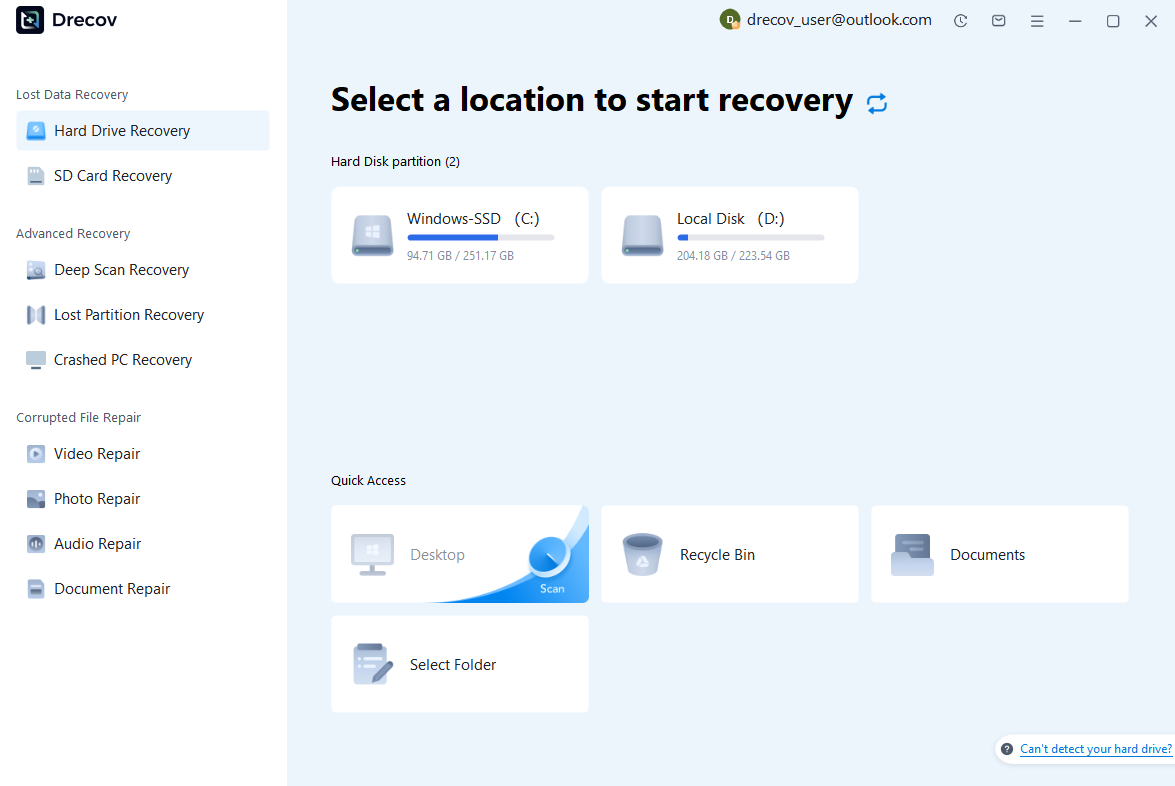
Step 1: Connect the Drive / USB)
Connect your device (SD card, HDD/SSD, or USB drive) to your computer and launch PandaOffice Drecov. Select the target device and start the scan. The software will perform a quick scan and deep scan to detect lost or deleted data.
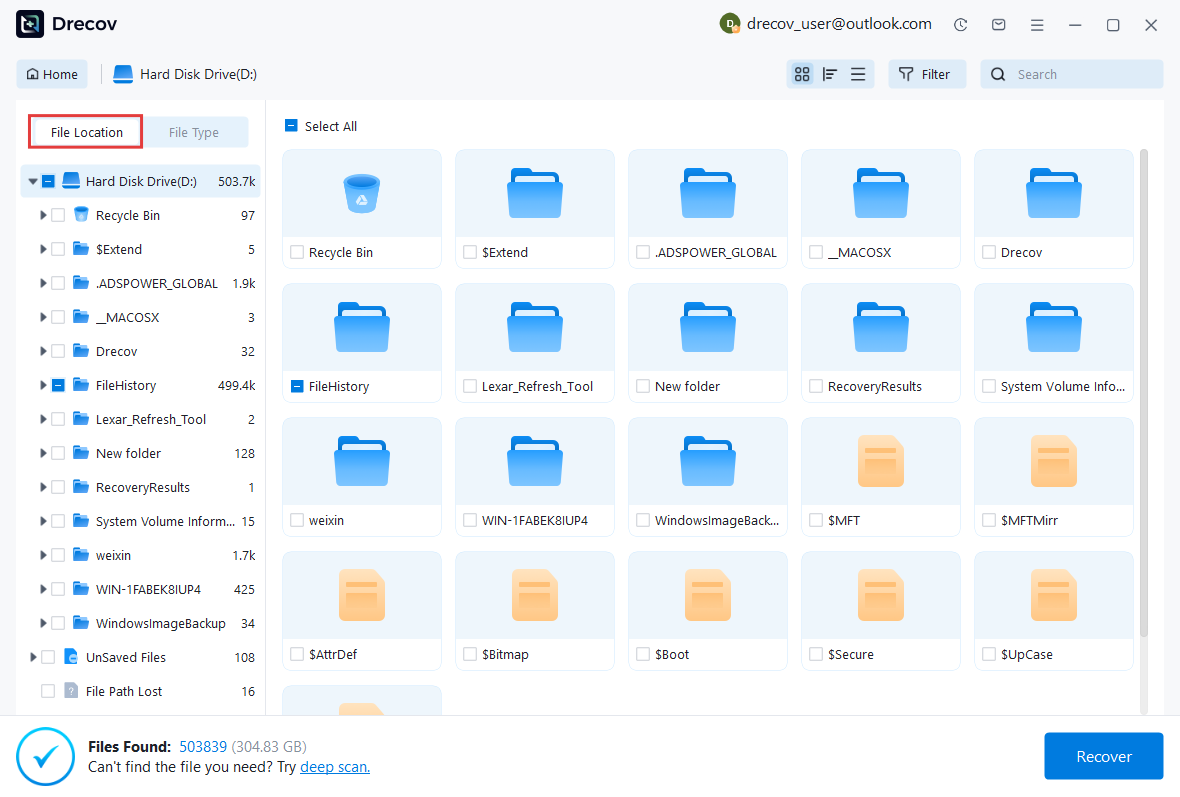
Step 2: Locate and Preview Lost Files
After scanning, browse the detected files and use the preview feature to check recoverable data. You can preview documents (Word, Excel, PDF), photos, and videos to ensure file integrity before recovery.
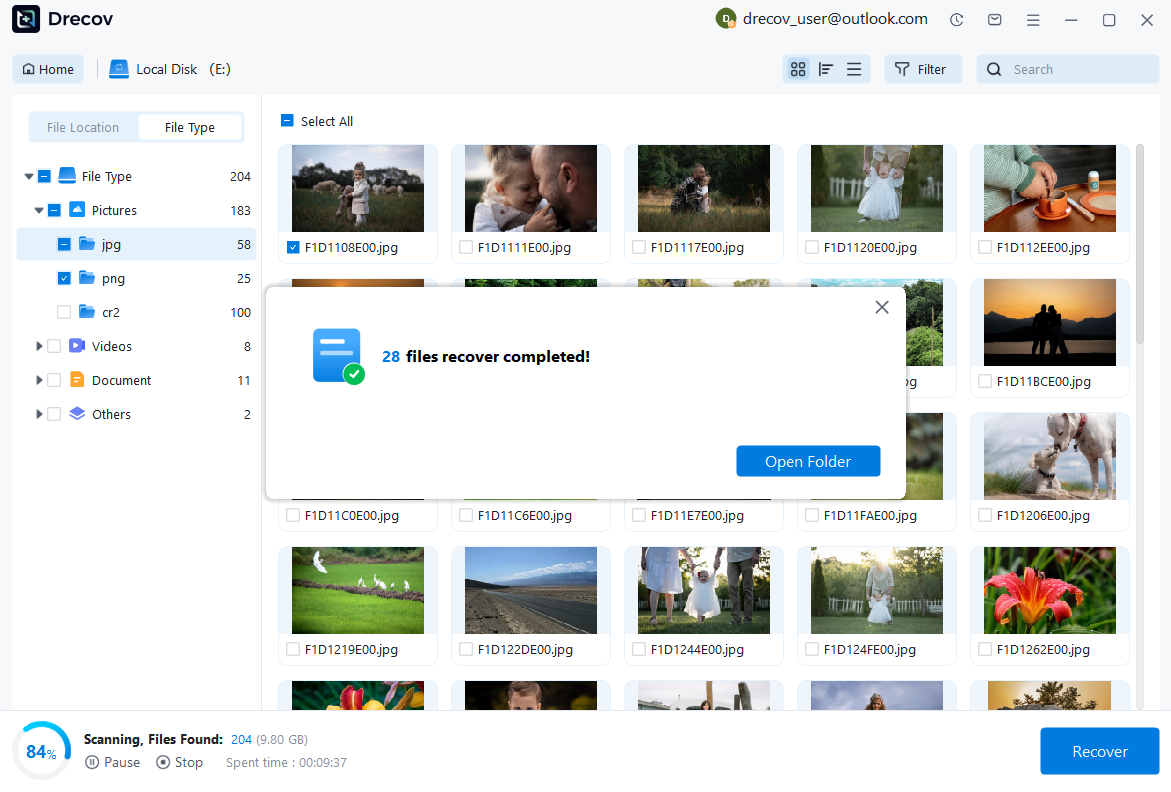
Step 3: Recover and Save to a New Location
Select the files you want to restore and click recover. Save all recovered data to a different drive or location (not the original device) to avoid overwriting lost data.
Why Choose PandaOffice Drecov Recovery Software?
PandaOffice Drecov offers a fast, secure, and user-friendly solution for recovering lost files across multiple scenarios. Whether you need email recovery, ZIP File Recovery, format data recovery, or help to recover deleted drafts Outlook, the software provides reliable recovery performance for both personal and business users.
PandaOffice Drecov supports recovery from formatted hard drives, SSDs, USB drives, SD cards, and external storage devices. Its advanced scanning engine can locate deleted archives, damaged ZIP files, lost Outlook drafts, and accidentally removed documents with high accuracy. For users searching for how to find deleted messages in Teams, PandaOffice Drecov can also help recover exported chat files, attachments, and related local cache data when available.
After recovery, test the file again. If the audio stream was damaged because of storage issues, a recovered version may play normally.
This method is particularly useful when only a few files exhibit audio problems while VLC works correctly with all other media.
⚠️Warning: Save recovered files to a different drive to avoid overwriting recoverable data.
Advanced Troubleshooting for VLC Audio Issues
Disable Audio Enhancements That Interfere with VLC
Windows audio enhancements can occasionally conflict with media applications.
These enhancements may include:
- Virtual surround sound
- Loudness equalization
- Spatial audio processing
- Manufacturer-specific effects
To disable enhancements:
- Right-click the speaker icon.
- Open Sound Settings.
- Select your playback device.
- Open Properties.
- Navigate to Enhancements.
- Disable all enhancements.
- Test VLC again.
Many users experiencing VLC media no sound discover that disabling enhancements immediately restores playback.
Audio effects designed for gaming or conferencing sometimes interfere with multimedia applications.
Testing playback with enhancements disabled helps determine whether system-level processing is causing the issue.
Resolve Codec and AAC Decoding Problems
AAC is one of the most common audio formats used in MP4 videos.
Although VLC generally supports AAC natively, certain files may use unusual encoding settings that create playback issues.
Symptoms can include:
- Silent audio tracks
- Partial sound playback
- Audio dropouts
- Unsupported codec warnings
To troubleshoot:
- Test the file in another player.
- Check file information.
- Verify codec details.
- Convert the file if necessary.
Free media analysis tools can reveal codec information and help identify compatibility problems.
If a file uses an uncommon AAC profile, converting it to a standard format may restore audio playback.
This solution is particularly useful when VLC has no sound only for specific AAC files.
Fix Hardware Acceleration Audio Conflicts
Hardware acceleration helps VLC improve playback performance by utilizing graphics hardware.
However, certain driver combinations may introduce audio problems.
To disable hardware acceleration:
- Open VLC.
- Select Tools > Preferences.
- Open Input/Codecs.
- Locate hardware-accelerated decoding.
- Disable the feature.
- Save settings.
- Restart VLC.
After making the change, test playback again.
Users occasionally report that no sound from VLC player disappears after disabling hardware acceleration because the audio and video processing pipelines become more stable.
This adjustment is especially helpful on older computers or systems with problematic graphics drivers.
Check Windows Sound Device Configuration
Sometimes VLC sends audio to the wrong output device.
This commonly occurs when:
- Bluetooth devices disconnect unexpectedly
- USB headsets are removed
- Multiple audio devices are installed
- HDMI audio settings change
To verify the active device:
- Open Windows Sound Settings.
- Review the selected output device.
- Choose the correct speakers or headphones.
- Restart VLC.
- Test playback.
Users often spend considerable time troubleshooting VLC only to discover that audio is being routed to an inactive device.
Checking sound output settings should therefore be included in any comprehensive troubleshooting process.
⚠️Warning: Disconnect unused audio devices during testing to eliminate routing conflicts.
Frequently Asked Questions About VLC No Sound Problems
Why Does VLC Have No Sound While Other Players Work?
This situation usually indicates a VLC-specific configuration issue.
Possible causes include:
- Incorrect output module settings
- Muted audio tracks
- Corrupted VLC preferences
- Hardware acceleration conflicts
Because VLC uses its own playback engine, audio behavior may differ from other applications.
Resetting VLC preferences or changing the audio output module often resolves the issue.
How Do I Fix No Sound on VLC Media Player?
The most effective troubleshooting sequence is:
- Check VLC volume controls.
- Verify the audio track selection.
- Change the output module.
- Reset VLC preferences.
- Update audio drivers.
- Test with another media file.
Following these steps systematically resolves most cases of no sound on VLC media player.
Why Is VLC Not Playing Sound for AAC Files?
AAC-related issues generally occur because of:
- Corrupted audio streams
- Unsupported AAC profiles
- Incomplete downloads
- Container format problems
Testing the file with another player helps determine whether the problem lies with VLC or the media file itself.
If the file is damaged, recovering or replacing it may be necessary.
Can Corrupted Files Cause VLC Audio Problems?
Yes.
Corruption can affect:
- Audio tracks
- Metadata
- Codec information
- File structure
When corruption occurs, VLC may display video while failing to produce sound.
In such cases, repairing or recovering the file is often more effective than adjusting VLC settings.
How Do I Restore Default VLC Audio Settings?
To restore defaults:
- Open VLC.
- Select Tools > Preferences.
- Click Reset Preferences.
- Confirm the reset.
- Restart VLC.
This procedure removes custom configurations that may be causing audio playback issues.
Users experiencing persistent VLC player no sound errors frequently find that a complete reset restores normal functionality.
Conclusion
Choosing the Right Fix for VLC Audio Problems
Audio issues in VLC can originate from multiple sources, including software settings, operating system conflicts, codec problems, and damaged media files.
Fortunately, most cases of VLC not playing sound can be resolved through straightforward troubleshooting.
The most effective approach is to begin with simple checks before moving to advanced solutions.
Start by verifying:
- VLC volume settings
- Audio track selection
- Output device configuration
- Playback preferences
If these checks do not resolve the issue, proceed to output module adjustments, preference resets, and driver updates.
How to Prevent Future VLC Sound Issues
Preventive maintenance can reduce the likelihood of future audio problems.
Recommended practices include:
- Keeping VLC updated
- Updating audio drivers regularly
- Avoiding unnecessary configuration changes
- Downloading media from reliable sources
- Monitoring storage device health
Maintaining both software and hardware properly helps ensure stable multimedia playback.
Best Practices for Reliable Media Playback
For the best playback experience:
- Use supported file formats.
- Keep system drivers current.
- Verify audio output devices before troubleshooting.
- Create backups of important media files.
- Recover damaged files promptly if storage issues occur.
Whether you’re dealing with no sound in VLC, no sound from VLC media player, or VLC media no sound after opening an AAC file, understanding the underlying cause is the key to finding the right solution.
By following the methods outlined in this guide, most users can restore audio playback and continue enjoying their media without interruption.
⚠️Warning: If multiple media players fail to produce sound, investigate system-wide audio settings before making further VLC-specific changes.





