







Watching a video becomes frustrating when the sound and picture are out of sync. You may hear dialogue before a person’s lips move or notice sound effects occurring several seconds after the corresponding action appears on screen. These synchronization problems are commonly described as VLC audio delay issues and can affect various media formats, including MP4, MKV, AVI, and MOV files.
Many users encounter problems such as audio delay in VLC, VLC player delay audio, or VLC video has delayed audio while watching movies, streaming content, or playing locally stored videos. Sometimes the delay is minor and barely noticeable. In other cases, the gap between audio and video becomes so significant that the content is difficult to enjoy.
The good news is that most synchronization problems can be resolved through VLC settings, driver updates, playback adjustments, or file repairs. This guide explains why audio delays occur and provides practical solutions to restore proper synchronization.
Understanding VLC Audio Delay and Sync Problems
What Causes VLC Media Player Audio Delay During Playback
One of the most common playback issues reported by VLC users is VLC media player audio delay. This occurs when audio and video streams fail to remain synchronized during playback.
A video file actually contains multiple components that VLC must process simultaneously:
- Video stream
- Audio stream
- Subtitle data
- Metadata
- Timing information
When these components are processed correctly, audio and video remain synchronized.
However, if one stream is delayed, VLC may play sound too early or too late. This creates a noticeable mismatch between what viewers see and hear.
Audio delay problems may originate from:
- Corrupted media files
- Incorrect synchronization settings
- Driver conflicts
- Hardware acceleration issues
- Codec compatibility problems
Understanding the source of the delay is essential because different causes require different solutions.
How Audio and Video Synchronization Works in VLC
To understand audio delay VLC issues, it helps to know how VLC manages playback.
When a video starts, VLC reads timing information embedded within the media file. This information tells the player when specific audio and video frames should be presented.
The synchronization process involves:
- Decoding video frames.
- Decoding audio packets.
- Managing playback timing.
- Sending video to the display.
- Sending audio to the output device.
Any interruption in this workflow can introduce delays.
For example, if audio processing occurs more slowly than video decoding, sound may lag behind the image. Conversely, if the audio stream starts too early, viewers may hear dialogue before seeing the corresponding mouth movements.
Modern computers usually handle synchronization automatically, but software conflicts and damaged files can interfere with normal playback.
Common Symptoms of VLC Audio Delay Issues
Different synchronization problems may present themselves in different ways.
Common symptoms include:
- Dialogue playing before lip movement
- Sound effects occurring late
- Audio gradually drifting out of sync
- Delays that worsen during playback
- Problems affecting only specific videos
Users experiencing VLC delay audio often notice that the issue becomes more apparent during conversations because human speech makes synchronization errors easier to detect.
Some delays remain consistent throughout the video, while others increase over time.
A constant delay often indicates synchronization settings issues.
A delay that worsens gradually may suggest corruption, decoding problems, or performance limitations.
Recognizing the pattern can help identify the most effective solution.
When VLC Video Has Delayed Audio vs. File Corruption Problems
Not every synchronization problem is caused by VLC itself.
In some cases, the media file already contains timing errors before playback begins.
Signs of file-related issues include:
- The same delay appears in multiple players.
- Different computers show identical symptoms.
- Playback problems occur only with one file.
- Audio streams contain encoding errors.
When VLC video has delayed audio but other videos play normally, the file itself may be damaged.
By contrast, if every video exhibits synchronization issues, VLC settings or system configuration are more likely responsible.
Determining whether the problem is player-related or file-related should be one of the first troubleshooting steps.
Why Audio Delay Happens in VLC Media Player
Corrupted Video Files and Damaged Audio Streams
File corruption is a major cause of synchronization problems.
Media files can become damaged because of:
- Interrupted downloads
- Faulty storage devices
- Power failures
- Malware infections
- Transfer errors
When corruption affects timing information, VLC may struggle to synchronize audio and video correctly.
Common symptoms include:
- Delayed dialogue
- Missing audio segments
- Playback stuttering
- Synchronization drift
The severity of the delay depends on which part of the file is affected.
A damaged audio stream may create a constant delay throughout the entire video, while corrupted timing metadata may cause synchronization to deteriorate gradually.
Testing the same file on another device can help determine whether corruption is involved.
Incorrect VLC Audio Synchronization Settings
VLC includes built-in synchronization controls that allow users to manually adjust timing.
While these settings are useful, incorrect values can create noticeable delays.
Settings that may affect synchronization include:
- Audio track synchronization
- Playback speed adjustments
- Audio output configuration
- Cache values
Sometimes users accidentally modify these settings while using keyboard shortcuts.
For example, a small synchronization offset may remain active without the user realizing it.
As a result, every video begins exhibiting delay audio in VLC symptoms.
Reviewing synchronization settings should therefore be one of the first troubleshooting steps when audio delays appear unexpectedly.
Hardware Acceleration and Driver Conflicts
Hardware acceleration allows VLC to use graphics hardware to improve playback performance.
While beneficial in many situations, hardware acceleration can occasionally create synchronization issues.
Potential causes include:
- Outdated graphics drivers
- Incompatible GPU settings
- Driver bugs
- System resource conflicts
When hardware acceleration functions improperly, audio and video streams may be processed at different rates.
This can result in:
- Audio lag
- Video lag
- Intermittent synchronization errors
- Playback instability
Users experiencing VLC audio delay after updating drivers or graphics software should consider testing playback with hardware acceleration disabled.
Outdated VLC Versions and Codec Compatibility Issues
VLC is regularly updated to improve compatibility and fix playback bugs.
Older versions may struggle with:
- New video codecs
- Advanced audio formats
- High-resolution content
- Modern container formats
Codec-related issues can interfere with synchronization and create noticeable playback delays.
Examples include:
- AAC audio streams
- HEVC video
- High-bitrate MKV files
- Variable frame rate recordings
Installing the latest version of VLC often resolves known compatibility problems.
Likewise, keeping audio and graphics drivers updated helps ensure smooth playback.
⚠️Warning: Download VLC updates only from official sources to avoid modified or potentially unsafe versions.
Methods to Fix Audio Delay in VLC
Method 1: Adjust Audio Delay Using VLC Keyboard Shortcuts
Test Environment
- Windows 11 Pro
- VLC Media Player 3.x
- MP4 Video with AAC Audio
The quickest way to fix audio delay in VLC is by using VLC’s built-in synchronization shortcuts.
These shortcuts allow users to adjust audio timing during playback without opening advanced menus.
If audio plays too early:
- Press K to delay audio.
If audio plays too late:
- Press J to advance audio.
Each key press modifies synchronization by a small increment.
To use this method:
- Open the affected video.
- Observe whether audio leads or lags.
- Press J or K as needed.
- Continue adjusting until synchronization improves.
- Watch several scenes to verify accuracy.
This solution works particularly well when the delay remains constant throughout the video.
Because changes occur instantly, users can fine-tune synchronization while playback continues.
Many cases of VLC player delay audio are resolved within seconds using this simple approach.
Method 2: Change Audio Synchronization Settings in VLC Preferences
Test Environment
- Windows 10
- VLC Media Player 3.x
- MKV Video File
If keyboard adjustments provide only temporary relief, VLC’s synchronization settings may require modification.
To access synchronization controls:
- Open VLC.
- Select Tools.
- Choose Track Synchronization.
- Locate Audio/Video synchronization.
- Adjust the delay value.
- Apply changes.
- Test playback.
Positive values delay audio.
Negative values advance audio.
Finding the correct setting may require experimentation because different videos can exhibit different synchronization behaviors.
This method is useful when a specific file consistently experiences audio delay VLC problems.
Once the correct value is identified, playback becomes significantly smoother and more enjoyable.
Users should test multiple scenes before finalizing adjustments to ensure synchronization remains accurate throughout the entire video.
Method 3: Disable Hardware Acceleration to Reduce VLC Audio Delay
Test Environment
- Windows 11
- VLC Media Player
- 4K Video Playback
Hardware acceleration improves performance by offloading decoding tasks to the graphics processor.
However, certain driver combinations can create synchronization issues.
To disable hardware acceleration:
- Open VLC.
- Navigate to Tools > Preferences.
- Select Input/Codecs.
- Locate Hardware-Accelerated Decoding.
- Set the option to Disabled.
- Save settings.
- Restart VLC.
After restarting:
- Open the affected video.
- Compare synchronization.
- Monitor playback stability.
Users frequently report improvements after disabling hardware acceleration, especially when dealing with older graphics hardware or problematic driver versions.
If synchronization improves, hardware processing was likely contributing to the delay.
This method is particularly effective when VLC media player audio delay appears suddenly after a graphics driver update.
⚠️Warning: Disabling hardware acceleration may increase CPU usage during playback, especially with high-resolution video content.
Method 4: Update VLC and Audio Drivers
Test Environment
- Windows 10 Pro
- Realtek HD Audio Driver
- VLC Media Player 3.x
- MP4 and MKV Video Files
Outdated software is a common cause of VLC audio delay issues. VLC receives regular updates that improve codec compatibility, playback stability, and synchronization performance. Likewise, audio drivers play a critical role in processing and delivering sound correctly.
To update VLC:
- Open VLC Media Player.
- Click Help.
- Select Check for Updates.
- Install any available updates.
- Restart VLC.
To update audio drivers:
- Open Device Manager.
- Expand Sound, Video and Game Controllers.
- Right-click your audio device.
- Select Update Driver.
- Follow the installation process.
- Restart the computer.
After updating both VLC and audio drivers, test the affected video again.
Older software versions may struggle with:
- Modern audio codecs
- High-bitrate media files
- New Windows updates
- Advanced video containers
Updating both VLC and system drivers often resolves delay audio in VLC without requiring any additional adjustments.
Method 5: Recover or Repair Corrupted Media Files with PandaOffice Drecov
Test Environment
- Windows 11 Pro
- Corrupted MP4 Video
- AAC Audio Track
- SSD Storage Device
When synchronization issues occur only in one or two files, corruption may be the actual cause.
A damaged video file can contain:
- Broken timestamps
- Incomplete audio streams
- Missing metadata
- Corrupted frame information
These problems often lead to VLC video has delayed audio symptoms that cannot be fixed through player settings alone.
If the original file became corrupted because of accidental deletion, storage errors, formatting, or interrupted transfers, PandaOffice Drecov may help recover an intact version.
Recovery steps typically include:
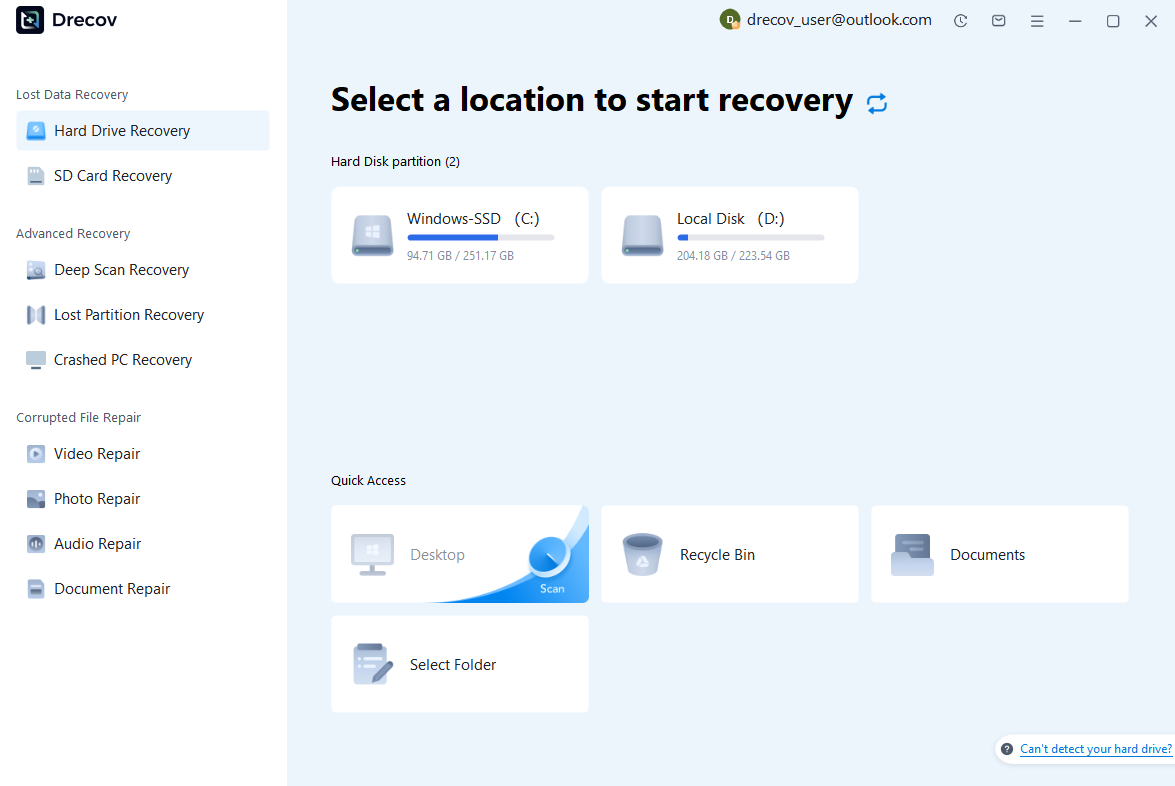
Step 1: Scan the Storage Device (SD Card / Hard Drive / USB)
Connect your device (SD card, HDD/SSD, or USB drive) to your computer and launch PandaOffice Drecov. Select the target device and start the scan. The software will perform a quick scan and deep scan to detect lost or deleted data.
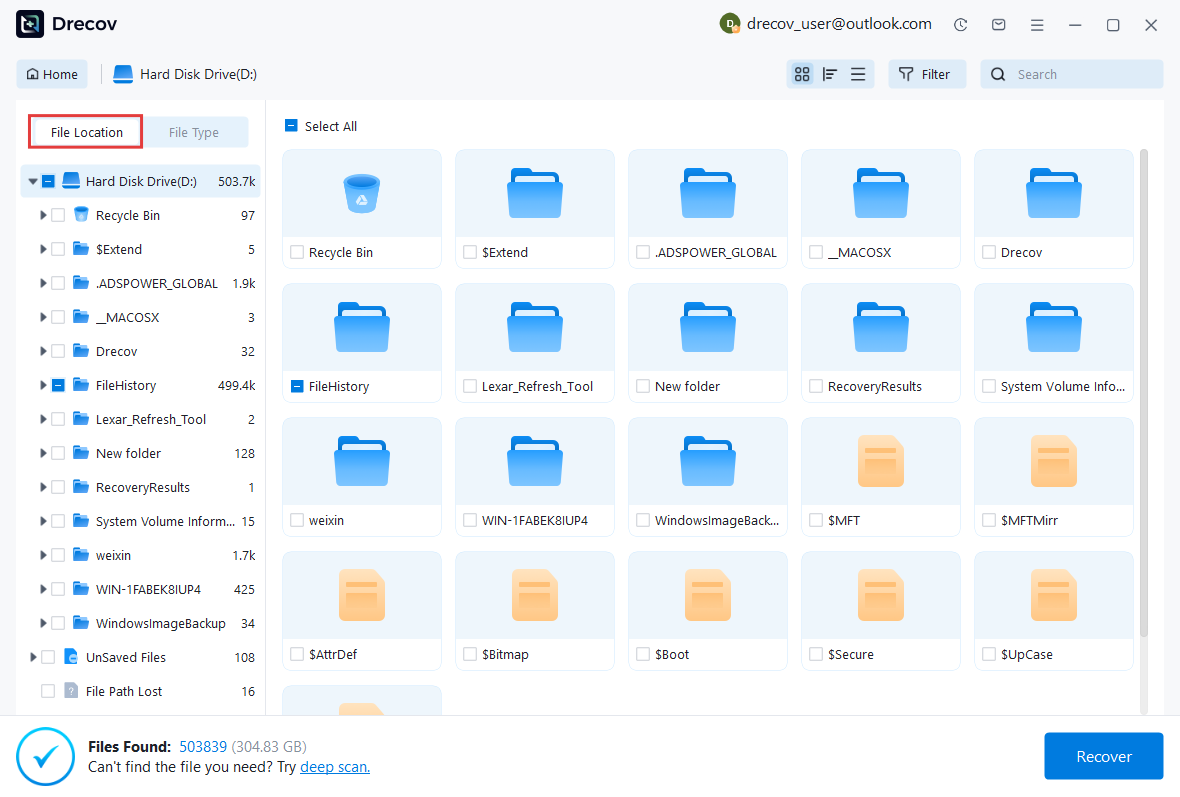
Step 2: Locate and Preview Lost Files
After scanning, browse the detected files and use the preview feature to check recoverable data. You can preview documents (Word, Excel, PDF), photos, and videos to ensure file integrity before recovery.
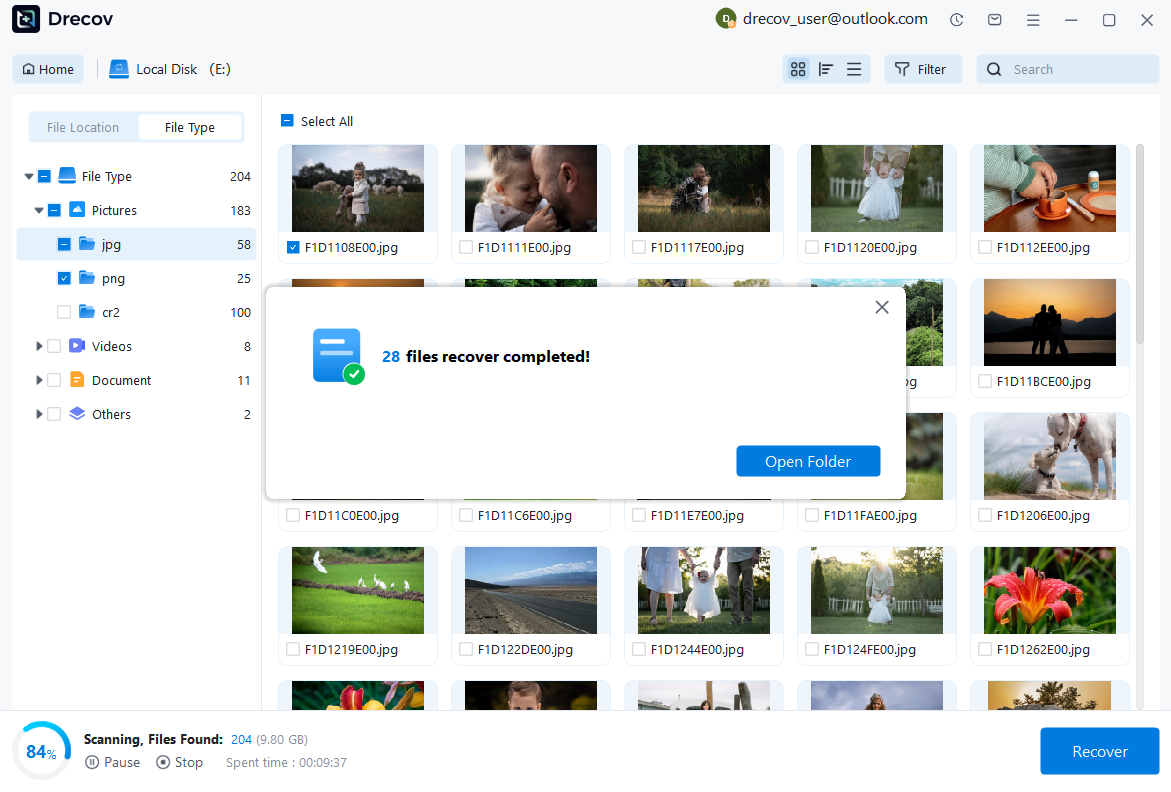
Step 3: Recover and Save to a New Location
Select the files you want to restore and click recover. Save all recovered data to a different drive or location (not the original device) to avoid overwriting lost data.
Why Choose PandaOffice Drecov Recovery Software?
PandaOffice Drecov offers a fast, secure, and user-friendly solution for recovering lost files across multiple scenarios. Whether you need email recovery, ZIP File Recovery, format data recovery, or help to recover deleted drafts Outlook, the software provides reliable recovery performance for both personal and business users.
PandaOffice Drecov supports recovery from formatted hard drives, SSDs, USB drives, SD cards, and external storage devices. Its advanced scanning engine can locate deleted archives, damaged ZIP files, lost Outlook drafts, and accidentally removed documents with high accuracy. For users searching for how to find deleted messages in Teams, PandaOffice Drecov can also help recover exported chat files, attachments, and related local cache data when available.
Key advantages include:
- Deep scan technology for complex data loss situations
- Support for emails, archives, videos, photos, and office documents
- Recovery from accidental deletion, formatting, corruption, and system crashes
- Easy preview before restoring files
- Compatible with Windows and multiple storage devices
Once recovered, open the file in VLC and verify whether synchronization has improved.
This method is particularly effective when playback problems affect only specific videos while all other media files play normally.
⚠️Warning: Avoid recovering files to the same storage location where data loss originally occurred.
Advanced Solutions for Persistent VLC Audio Delay
Convert the Video File to a Different Format
Certain media files contain encoding issues that VLC struggles to process efficiently.
Converting the file to a new format can rebuild:
- Video streams
- Audio streams
- Container metadata
- Timing information
Popular conversion targets include:
- MP4 (H.264 + AAC)
- MKV
- MOV
A fresh conversion often eliminates synchronization problems caused by damaged timestamps or incompatible encoding settings.
This solution is particularly useful when audio delay VLC occurs consistently with one specific file.
Check Codec Compatibility and Audio Streams
Not all media files use the same codecs.
Examples include:
- AAC
- MP3
- AC3
- DTS
- FLAC
Some codecs may create synchronization challenges depending on:
- VLC version
- Operating system
- Driver compatibility
- Hardware capabilities
Use a media analysis tool to inspect:
- Audio codec
- Video codec
- Frame rate
- Audio bitrate
If the file uses an uncommon codec configuration, converting it to a standard format may resolve VLC delay audio issues.
Compatibility problems are especially common with older recordings and videos downloaded from unreliable sources.
Optimize VLC Cache and Playback Settings
VLC uses caching to improve playback stability.
However, cache settings that are too low can contribute to synchronization issues.
To modify cache settings:
- Open VLC Preferences.
- Select Input/Codecs.
- Locate File Caching.
- Increase the cache value.
- Save settings.
- Restart VLC.
Increasing cache values may improve playback when:
- Files are stored on slow drives
- Network connections are unstable
- High-bitrate videos are being played
Users who experience intermittent VLC media player audio delay often benefit from larger cache buffers.
Experiment with different values until playback becomes stable.
Test the Media File in Another Player
Comparing playback across multiple applications helps determine whether the problem originates from VLC or the media file itself.
If another player also exhibits synchronization issues:
- The file is likely damaged.
- Encoding problems may exist.
- Timing information may be corrupted.
If other players work correctly:
- VLC settings may require adjustment.
- Output modules may be conflicting.
- Cache settings may be inadequate.
This simple test can save considerable troubleshooting time.
By identifying whether the problem follows the file or the player, users can focus on the most relevant solutions.
⚠️Warning: Do not assume VLC is responsible for every synchronization issue. File corruption is often the underlying cause.
Frequently Asked Questions About VLC Audio Delay
How Do I Fix VLC Audio Delay Quickly?
The fastest solution is usually VLC’s built-in synchronization shortcuts.
During playback:
- Press J if audio is late.
- Press K if audio is early.
These adjustments take effect immediately and allow users to fine-tune synchronization without leaving playback mode.
Why Does VLC Video Have Delayed Audio Only on Certain Files?
When only specific files experience synchronization issues, the cause is often:
- File corruption
- Encoding problems
- Damaged timestamps
- Incomplete downloads
Testing additional videos helps determine whether the problem is file-specific or system-wide.
Can Corrupted Files Cause Audio Delay in VLC?
Yes.
Corruption may affect:
- Audio tracks
- Video streams
- Timing information
- Metadata
When corruption occurs, VLC may struggle to maintain synchronization even though the player itself is functioning correctly.
Recovering or replacing the file is often the most effective solution.
What Is the Best Audio Delay Setting in VLC?
There is no universal setting.
The correct synchronization value depends on:
- The media file
- Audio hardware
- Playback environment
- Driver configuration
Most users only need small adjustments measured in milliseconds.
Testing several scenes throughout the video helps determine the most accurate value.
Will Updating VLC Fix Synchronization Problems?
In many cases, yes.
Updates often include:
- Codec improvements
- Playback fixes
- Performance enhancements
- Bug corrections
Keeping VLC updated ensures maximum compatibility with modern media formats and reduces the likelihood of VLC player delay audio issues.
Conclusion
Choosing the Best Fix for VLC Audio Delay
Audio synchronization problems can significantly affect the viewing experience, but they are usually solvable.
The most effective solution depends on the underlying cause.
Common causes include:
- Incorrect synchronization settings
- Corrupted media files
- Driver conflicts
- Hardware acceleration issues
- Codec incompatibilities
Identifying the source of the problem allows users to apply the appropriate fix more efficiently.
How to Prevent Future Audio Synchronization Issues
Preventive measures can reduce the likelihood of future playback problems.
Recommended practices include:
- Keeping VLC updated
- Updating audio drivers regularly
- Storing media on reliable storage devices
- Avoiding interrupted downloads
- Backing up important files
These habits improve playback reliability and reduce the risk of corruption-related synchronization issues.
Best Practices for Smooth VLC Playback
For the best viewing experience:
- Use supported media formats.
- Verify file integrity before troubleshooting.
- Test videos on multiple players.
- Monitor storage device health.
- Keep software components current.
Whether you’re dealing with audio delay in VLC, VLC audio delay, or a situation where VLC video has delayed audio, the methods in this guide provide practical solutions for restoring proper synchronization.
By applying the appropriate fixes and maintaining healthy media files, users can enjoy smooth, synchronized playback across a wide variety of video formats.
⚠️Warning: If synchronization issues occur in multiple media players and across multiple files, investigate operating system audio settings and hardware performance before focusing solely on VLC.





