







Understanding the BCDboot Copy Boot Files Error
The error “bcdboot failure when attempting to copy boot files” appears when Windows cannot create or transfer boot configuration files to the system partition. This issue usually occurs during Windows repair, SSD cloning, startup troubleshooting, or after modifying partitions.
Many users see similar messages such as:
- failure when attempting to copy boot files
- failure attempting to copy boot files
- failure when attempting to copy boot files.
These errors indicate that the system cannot properly access the EFI partition, system reserved partition, or Windows boot directory.
The BCDboot command is responsible for rebuilding Windows startup files. When it fails, the operating system may become unbootable or stuck in an automatic repair loop.
Common symptoms include:
- Black screen after startup
- Windows recovery loop
- Missing Boot Manager
- “Operating System Not Found”
- Bootrec command failures
This issue affects both Windows 10 and Windows 11 systems and is especially common on computers using GPT disks and UEFI firmware.
Why Failure When Attempting to Copy Boot Files Happens
Corrupted EFI Partition
The EFI System Partition stores critical startup information required for Windows booting. If the partition becomes corrupted, Windows cannot write new boot files successfully.
Possible causes include:
- Sudden shutdowns
- Disk corruption
- Failed updates
- Partition deletion
- Power interruption during repair
When the EFI partition becomes unreadable, the system may reject the BCDboot process completely.
Test Environment
- Windows 11 Pro 23H2
- GPT NVMe SSD
- UEFI mode enabled
- Recovery environment from USB installer
The EFI partition was corrupted after a failed Windows update.
Wrong BIOS or UEFI Settings
Firmware configuration problems are another common reason behind failure when attempting to copy boot files.
Windows supports two startup modes:
- Legacy BIOS
- UEFI
At the same time, disks can use:
- MBR partition style
- GPT partition style
If these settings do not match, Windows may fail to rebuild boot information.
Examples include:
| Disk Style | Required Boot Mode |
|---|---|
| GPT | UEFI |
| MBR | Legacy BIOS |
A mismatch often prevents the system from detecting the correct boot partition.
Test Environment
- Windows 10 Home
- ASUS motherboard
- GPT SSD
- BIOS accidentally switched to Legacy Mode
Switching back to UEFI resolved the startup repair issue.
⚠️Warning: Changing BIOS settings incorrectly may prevent Windows from loading entirely.
Damaged Windows Startup Files
Corrupted Windows system files may also trigger failure attempting to copy boot files errors.
Important startup files include:
- bootmgr
- winload.efi
- BCD database
- EFI startup records
When these files become damaged, the BCDboot command cannot duplicate them properly.
Common causes include:
- Malware infections
- Interrupted updates
- SSD corruption
- Unsafe shutdowns
Test Environment
- Windows 11 Enterprise
- Intel SATA SSD
- System interrupted during cumulative update installation
DISM repair restored damaged startup resources successfully.
How to Fix BCDboot Failure When Attempting to Copy Boot Files
Assign a Drive Letter to the EFI Partition
Sometimes Windows cannot locate the EFI partition because it has no assigned drive letter.
Follow these steps:
- Boot into Windows Recovery Environment
- Open Command Prompt
- Enter:
diskpart
- Display disks:
list disk
- Select the main disk:
select disk 0
- Show partitions:
list partition
- Select the EFI partition:
select partition X
- Assign a drive letter:
assign letter=S
- Exit DiskPart:
exit
- Rebuild boot files:
bcdboot c:\windows /s s: /f UEFI
This method recreates startup information inside the EFI partition.
Test Environment
- Windows 11 Pro
- HP laptop
- GPT NVMe SSD
The EFI partition lacked a drive letter after cloning the SSD.
Repair System Files Using SFC and DISM
Corrupted system components frequently cause bcdboot failure when attempting to copy boot files.
Run the following command:
sfc /scannow /offbootdir=c:\ /offwindir=c:\windows
After the scan finishes, run:
DISM /Image:C:\ /Cleanup-Image /RestoreHealth
These utilities repair damaged Windows files automatically.
After repairs are complete, retry:
bcdboot c:\windows
This method works well when system corruption prevents boot file creation.
Test Environment
- Windows 10 Pro
- Dell desktop PC
- Corrupted system files after forced shutdown
SFC repaired several missing startup components.
⚠️Warning: Do not interrupt DISM or SFC scans while they are running.
Rebuild the BCD Store Manually
If the Boot Configuration Data becomes corrupted, manually rebuilding it can resolve failure when attempting to copy boot files.
Run the following commands one by one:
bootrec /fixmbr
bootrec /fixboot
bootrec /scanos
bootrec /rebuildbcd
If /fixboot returns “Access Denied,” assign the EFI partition letter first.
Then execute:
bootsect /nt60 sys
Finally rerun the BCDboot command.
This process refreshes damaged boot entries and startup data.
Test Environment
- Windows 11 Home
- Lenovo gaming laptop
- Corrupted BCD store after dual-boot removal
Manual rebuild restored normal boot behavior.
Switch BIOS Mode to Match the Disk Style
Firmware mismatches commonly trigger failure attempting to copy boot files errors.
To check disk type:
diskpart
list disk
A GPT disk shows an asterisk (*) under the GPT column.
Correct combinations:
- GPT → UEFI mode
- MBR → Legacy BIOS mode
After adjusting firmware settings, save changes and reboot.
Then retry:
bcdboot c:\windows
Test Environment
- Windows 10 laptop
- MBR HDD
- BIOS configured for UEFI accidentally
Changing to Legacy mode fixed the boot issue immediately.
⚠️Warning: Do not convert partitions unless a backup exists.
Repair Disk Errors Using CHKDSK
Disk corruption may stop Windows from copying startup files correctly.
Run:
chkdsk c: /f /r
This command:
- Repairs file system errors
- Detects bad sectors
- Attempts data recovery
If large numbers of bad sectors appear, the storage drive may be failing physically.
After completion, rerun BCDboot.
Test Environment
- Windows 11 desktop
- Western Digital HDD
- File system corruption after sudden power loss
CHKDSK repaired multiple bad clusters successfully.
Recover Important Files Before Advanced Repair
Use Pandaoffice Drecov for Boot Failure Data Recovery
When Windows becomes unbootable, recovering files before performing risky repairs is highly recommended.
Pandaoffice Drecov can recover data from systems affected by:
- Startup corruption
- EFI partition damage
- BCD failures
- Unbootable Windows systems
Supported recovery types include:
- Documents
- Photos
- Videos
- SSD recovery
- Partition recovery
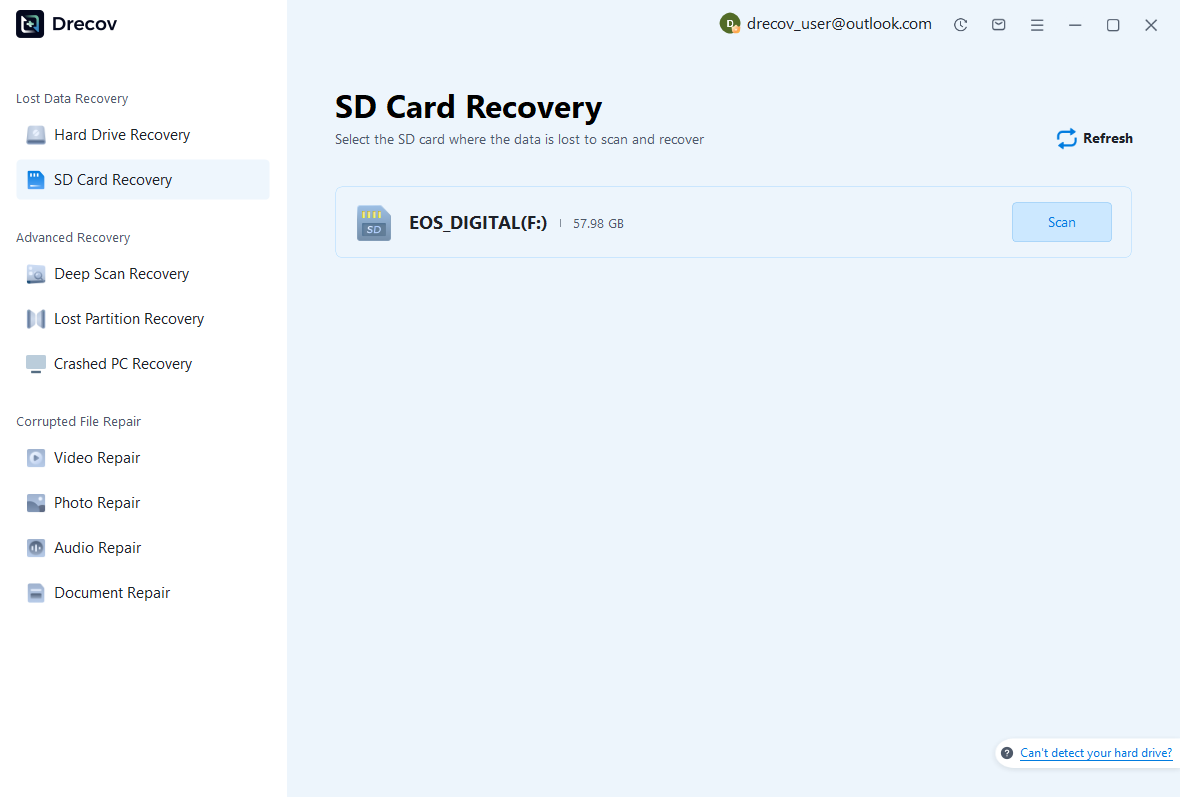
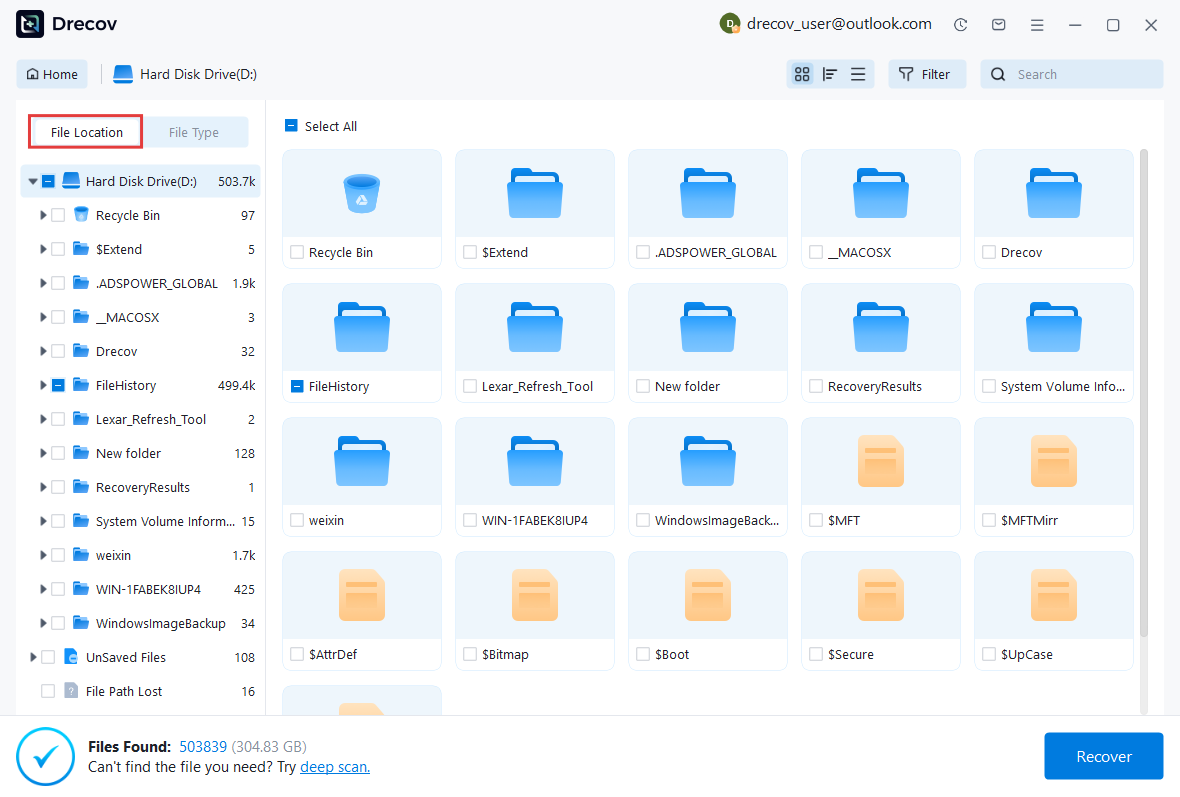
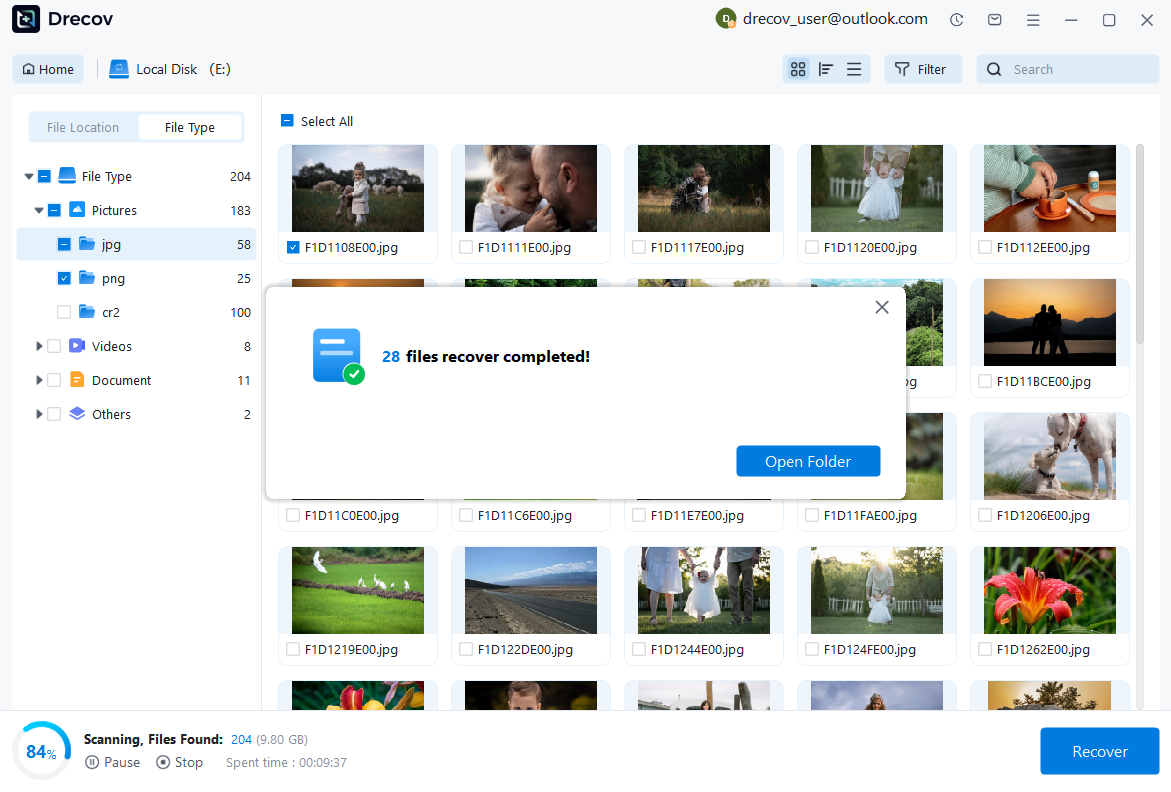
Basic recovery process:
- Install Pandaoffice Drecov on a working computer
- Create bootable recovery media
- Start the damaged PC using the recovery drive
- Scan the affected disk
- Recover critical files safely
This reduces the risk of permanent data loss during advanced troubleshooting.
Why Choose PandaOffice Drecov Recovery Software?
PandaOffice Drecov offers a fast, secure, and user-friendly solution for recovering lost files across multiple scenarios. Whether you need email recovery, ZIP File Recovery, format data recovery, or help to recover deleted drafts Outlook, the software provides reliable recovery performance for both personal and business users.
PandaOffice Drecov supports recovery from formatted hard drives, SSDs, USB drives, SD cards, and external storage devices. Its advanced scanning engine can locate deleted archives, damaged ZIP files, lost Outlook drafts, and accidentally removed documents with high accuracy. For users searching for how to find deleted messages in Teams, PandaOffice Drecov can also help recover exported chat files, attachments, and related local cache data when available.
Key advantages include:
- Deep scan technology for complex data loss situations
- Support for emails, archives, videos, photos, and office documents
- Recovery from accidental deletion, formatting, corruption, and system crashes
- Easy preview before restoring files
- Compatible with Windows and multiple storage devices
Unlike complicated enterprise recovery tools, PandaOffice Drecov keeps the recovery process simple. Users can scan, preview, and restore files in just a few steps without technical expertise.
Whether you are dealing with lost Outlook drafts, corrupted ZIP archives, formatted drives, or missing communication data, PandaOffice Drecov provides an efficient and practical recovery experience designed to minimize downtime and protect important files.
Test Environment
- Windows 11 unbootable system
- Samsung NVMe SSD
- Corrupted EFI structure
Over 95% of user documents were recovered successfully before repair.
⚠️Warning: Save recovered files to another drive instead of the damaged system partition.
Advanced Ways to Solve Persistent Boot File Problems
Create a New EFI System Partition
If the EFI partition is severely damaged, creating a new one may solve failure when attempting to copy boot files permanently.
Open DiskPart:
diskpart
Then run:
list disk
select disk 0
create partition efi size=100
format quick fs=fat32
assign letter=s
Finally rebuild boot files:
bcdboot c:\windows /s s: /f UEFI
This method creates a clean startup environment.
Test Environment
- Windows 11 Pro
- Deleted EFI partition
- GPT SSD configuration
A fresh EFI partition restored boot access successfully.
Run Windows Startup Repair
Windows installation media includes automatic startup repair tools.
Steps:
- Boot using Windows installation USB
- Click “Repair your computer”
- Select Troubleshoot
- Choose Startup Repair
- Allow Windows to diagnose startup issues
Startup Repair can fix:
- Missing BCD entries
- Corrupted boot sectors
- EFI configuration problems
- Registry startup issues
This method works well for moderate boot corruption.
Test Environment
- Windows 10 notebook
- Automatic repair loop
- Corrupted startup registry
Startup Repair recreated damaged boot records automatically.
Tips to Prevent Future BCDboot Errors
Protect System Partitions Carefully
Hidden system partitions should never be modified unnecessarily.
To reduce future boot failures:
- Avoid deleting EFI partitions
- Use reliable partition tools
- Shut down Windows properly
- Keep SSD firmware updated
Many startup issues originate from accidental partition changes.
Create Regular System Backups
System image backups simplify recovery dramatically when startup failures occur.
Recommended backup options include:
- External SSD backups
- Windows Backup and Restore
- NAS storage
- Cloud synchronization
Restore points should be created before:
- BIOS updates
- Disk cloning
- Partition resizing
- Windows upgrades
Regular backups minimize downtime and recovery stress.
⚠️Warning: Backups stored on the same drive may fail during hardware damage.
FAQ About Failure When Attempting to Copy Boot Files
Can BCDboot Errors Be Fixed Without Reinstalling Windows?
Yes. Most startup problems can be repaired using:
- DiskPart
- BCDboot
- Bootrec
- SFC
- DISM
- Startup Repair
Reinstallation is usually unnecessary unless the system is severely damaged.
Why Does Bootrec /Fixboot Show Access Denied?
This often happens because:
- EFI partition permissions are missing
- The partition has no drive letter
- BIOS settings are incorrect
Assigning a drive letter usually fixes the problem.
Will BCDboot Delete Personal Files?
No. The BCDboot utility mainly copies startup files and rebuilds boot entries.
However, users should still back up important data before attempting repairs.
Can SSD Failure Cause Boot File Errors?
Yes. Failing SSDs may prevent Windows from reading or writing startup information properly.
Common signs include:
- Slow boot times
- Frequent crashes
- SMART warnings
- Random blue screens
Hardware diagnostics can help confirm SSD health.
Conclusion
The bcdboot failure when attempting to copy boot files error is a serious but repairable Windows startup issue. Corrupted EFI partitions, damaged system files, BIOS mismatches, and disk errors are among the most common causes.
Fortunately, tools like DiskPart, Bootrec, CHKDSK, SFC, and Startup Repair can often restore boot functionality without reinstalling Windows. For users worried about data loss, Pandaoffice Drecov provides a practical solution for recovering files before advanced repair procedures begin.
By understanding the root causes behind failure when attempting to copy boot files, users can troubleshoot startup problems more effectively and reduce the risk of permanent system failure.





