







If your computer has started feeling slow, laggy, or cluttered, temporary data could be the hidden culprit behind your daily frustrations. Over time, Windows 10 temporary files pile up quietly in the background like dust collecting under heavy furniture. The good news is that learning how to delete temporary files windows 10 is surprisingly easy and highly rewarding. You do not need advanced technical skills or expensive software tools to reclaim your storage. With just a few simple built-in methods, you can clean your system completely, free up crucial storage, and improve overall performance.
This comprehensive guide will walk you through every major method step by step. We will explain exactly why temporary files matter, how to safely delete them without losing your critical data, and how to use advanced methods to recover any data you might accidentally lose along the way.
What Are Temporary Files in Windows 10?
Temporary files are exactly what their name suggests—files created temporarily by the operating system or specific applications during normal daily use. Windows creates them for a wide variety of tasks, including:
- Installing system updates and patches
- Browsing the internet and caching images
- Editing documents and spreadsheet files
- Running heavy software or video games
Applications utilize these temporary files to store short-term information while processes remain active. For instance, when you edit a word document, your office software creates a temporary backup file in the background in case the program crashes unexpectedly. This ensures you do not lose your progress.
Here is the problem: many temporary files do not get deleted automatically after the application closes. Over weeks, months, or years, thousands of these digital leftovers accumulate on your drive. Imagine leaving disposable coffee cups on your office desk every day without ever throwing them away. Eventually, the clutter becomes impossible to ignore, and it begins to hinder your ability to work.
These files can easily consume several gigabytes of storage, especially if you have not cleaned your operating system in a long time. On systems running on limited solid-state drive (SSD) space, this severe clutter can significantly impact performance, preventing Windows from operating at peak efficiency.
Why You Should Delete Temporary Files
Learning how to delete temporary files windows 10 is not just about saving physical storage space. It can also drastically improve your computer’s responsiveness, speed, and overall efficiency.
When your system storage gets crowded, Windows has less room to manage virtual memory and temporary system operations. This storage crunch directly leads to slow startup times, delayed application launches, frequent system freezing, reduced gaming performance, and general instability.
Benefits of Removing Temporary Files
| Benefit | Explanation |
| More Storage Space | Frees up valuable disk space for personal photos, videos, and apps. |
| Faster Performance | Reduces unnecessary system clutter so the OS finds files quicker. |
| Better System Stability | Removes corrupted or broken temporary data that causes software crashes. |
| Improved App Performance | Applications run smoother because they do not have to sift through old cache. |
| Faster Windows Updates | Provides the necessary breathing room for system installation processes. |
Deleting temporary files is like cleaning out a messy garage. Suddenly, there is more room to move around, you can find what you need instantly, and every single tool functions more efficiently.
How to Delete Temporary Files Using Windows Settings
One of the easiest and safest ways to remove system clutter in Windows 10 is through the built-in Settings app. This modern interface provides a clear breakdown of what is eating up your storage space.
- Step 1: Click on the Start Menu icon in the bottom-left corner of your desktop screen or press the Windows key on your keyboard.
- Step 2: Click on the Settings gear icon located on the left side of the menu to launch the main settings control center.
- Step 3: Go to the System option, which is typically the very first icon in the grid layout.
- Step 4: Select Storage from the left-hand navigation sidebar to view your local drive distribution details.
- Step 5: Under your local drive section (usually labeled C:), click directly on the category named Temporary files.
- Step 6: Wait a few moments for Windows to scan your computer. The system will display clear categories such as Downloads, Recycle Bin, Temporary Internet Files, and Windows Update Cleanup.
- Step 7: Carefully check the boxes next to the categories you fully intend to delete, then click the prominent Remove files button at the top of the list to wipe them out.
This specific method is incredibly beginner-friendly because Windows clearly labels what each individual category contains. It is a highly safe and efficient way to clean your PC without risking your personal photos or system files.
Delete Temporary Files Using Disk Cleanup
Another classic tool in Windows 10 is the legacy Disk Cleanup utility. Even though it has been around for several generations of Windows, it remains incredibly effective for deep maintenance tasks.
How to Use Disk Cleanup
- Step 1: Press the Windows + S hotkey combination to open the system search bar instantly.
- Step 2: Type Disk Cleanup into the search box and press the Enter key to launch the utility app.
- Step 3: Select your primary drive (usually the C: drive) from the drop-down menu and click OK.
- Step 4: Wait patiently for Windows to quickly scan your files and calculate how much space you can recover.
- Step 5: Check the boxes next to the categories you want to delete. If you want to clear deeper system files, click the Clean up system files button near the bottom.
- Step 6: Click the OK button, then confirm your choice by clicking Delete Files to start the cleaning process.
Disk Cleanup can seamlessly remove temporary files, system cache, delivery optimization files, and old Windows update files. This tool is especially useful because it targets deep system clutter that regular users often overlook entirely. Think of Disk Cleanup like a professional cleaning crew—it reaches deep places you normally would not think to clean yourself.
Delete Temporary Files Using the Run Command
If you want a faster, more direct manual method, you can access the temporary file folders directly using raw system paths. This allows you to bypass user interfaces entirely and clean files instantly.
Method 1: The Local User %temp% Folder
- Step 1: Press the Windows + R hotkey combination on your keyboard to instantly open the Run dialog box.
- Step 2: Type
%temp%into the open text field and press Enter or click OK. This command opens your local user temporary folder. - Step 3: Press Ctrl + A simultaneously to select every single file and folder inside this directory.
- Step 4: Press the Delete key on your keyboard, or press Shift + Delete to bypass the Recycle Bin completely and delete them permanently.
Important Note: During this process, some files may refuse to delete, displaying an error message stating that the file is currently in use. This is completely normal behavior because those files belong to applications running in the background right now. Simply click Skip to continue clearing out the rest of the folder.
Method 2: The System-Wide Temp Command
- Step 1: Open the Run dialog box again by pressing Windows + R on your keyboard.
- Step 2: Type
temp(without the percentage signs) into the box and press Enter. - Step 3: If a prompt appears asking for administrator permissions to access the folder, click Continue.
- Step 4: Use the Ctrl + A shortcut to select all files, then delete them using the Delete key.
These hidden folders often contain massive amounts of legacy junk files that can safely be removed from your operating system without causing any negative side effects.
How Storage Sense Automatically Cleans Temporary Files
Windows 10 includes an intelligent native feature called Storage Sense. This automated tool deletes unnecessary files without requiring you to perform manual cleanup routines every single month.
How to Enable Storage Sense
- Step 1: Open the Settings app via the Start Menu or by pressing Windows + I.
- Step 2: Navigate directly to System, then click on the Storage option on the left pane.
- Step 3: Locate the Storage Sense toggle switch near the top of the window and switch it to the On position.
- Step 4: Click on the link text that reads “Configure Storage Sense or run it now” to customize your automated cleanup settings.
Within this settings menu, you can easily customize the cleanup frequency (such as every week or every month), specify how long files should remain in your Recycle Bin before automatic deletion, and determine when items in your Downloads folder should be purged.
Storage Sense works essentially like a robot vacuum cleaner for your computer. Once activated properly, it quietly keeps your local storage organized in the background while you focus on your actual work. This is undoubtedly one of the best long-term solutions for maintaining peak system performance effortlessly.
Delete Browser Temporary Files and Cache
Web browsers create huge amounts of temporary files, including cached images, website cookies, and script data. Over time, these files consume significant storage space and can sometimes cause websites to load improperly.
How to Clear Google Chrome Cache
- Step 1: Open your Google Chrome browser window.
- Step 2: Press the Ctrl + Shift + Delete shortcut keys together to instantly launch the “Clear browsing data” settings panel.
- Step 3: Set the time range drop-down menu to All time to ensure a thorough clean.
- Step 4: Check the boxes for Cookies and other site data and Cached images and files.
- Step 5: Click the Clear data button to complete the process.
How to Clear Microsoft Edge Cache
- Step 1: Open the Microsoft Edge browser on your desktop.
- Step 2: Press Ctrl + Shift + Delete on your keyboard to open the safety clearance options menu.
- Step 3: Select the specific historical items you wish to clear, ensuring you select cache and cookies.
- Step 4: Click the Clear now button to confirm your deletion.
Clearing your web browser cache not only frees up immediate storage space, but it can also quickly fix loading and display rendering issues on your favorite websites.
What If You Accidentally Delete Important Files?
While mastering how to delete temporary files windows 10, many users run into a common nightmare scenario: accidentally deleting an important personal folder, a crucial work document, or downloading a file that was mistakenly left sitting in the Recycle Bin or the temporary folders.
If you accidentally wiped out critical files during your system cleanup, do not panic. The data is not truly gone from your hard drive; Windows has simply marked that storage space as available for rewriting. As long as you act quickly, you can recover your files using specialized data recovery tools.
Recovering Lost Files with PandaOffice Drecov data recovery software
When regular Windows tools cannot restore your missing files, using professional software like PandaOffice Drecov data recovery software is your absolute best course of action. This advanced tool is designed specifically to scan your hard drive deeply, bypass system restrictions, and safely pull back deleted documents, photos, and system data. Let’s break down the exact steps to rescue your files safely.
⚠ Warning: Never download or install the recovery software onto the exact same drive partition where your lost files were located. Doing so can overwrite the deleted data in memory, making it impossible to recover. If your files were on the C: drive, install the software on an external drive or a secondary D: drive partition.
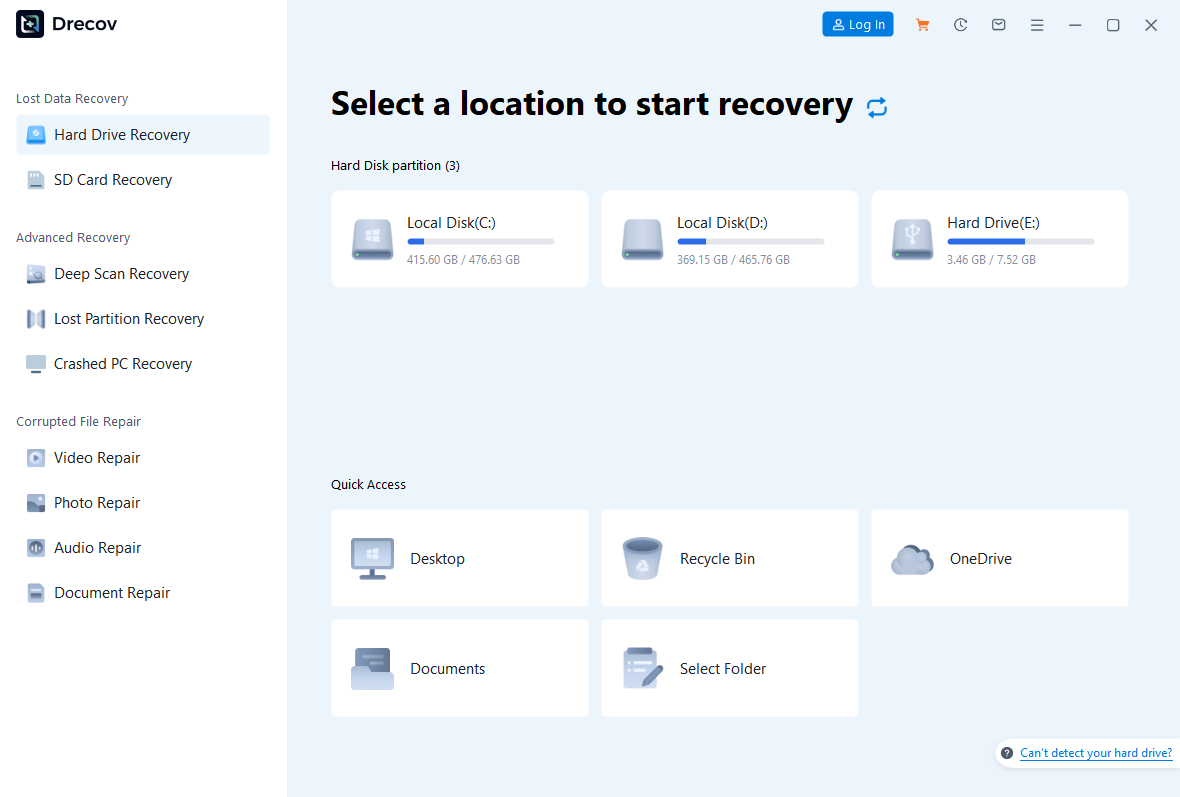
Step 1: Launch the Tool and Select the Location
Open the program on your desktop. On the main home screen, you will see a clean visual layout showing all available storage drives, connected USB flash sticks, and external hard disks. Click to select the specific drive or folder where your deleted files used to live (for example, select the C: Drive or select the Recycle Bin directly), then click the Scan button.
Step 2: Run the Storage Scan
The software will automatically initiate a quick scan, followed immediately by a highly sophisticated deep scan. It will systematically comb through the binary data of your drive to locate traces of deleted documents. You can monitor the real-time progress bar at the top of the interface, which shows how many files have been successfully located.
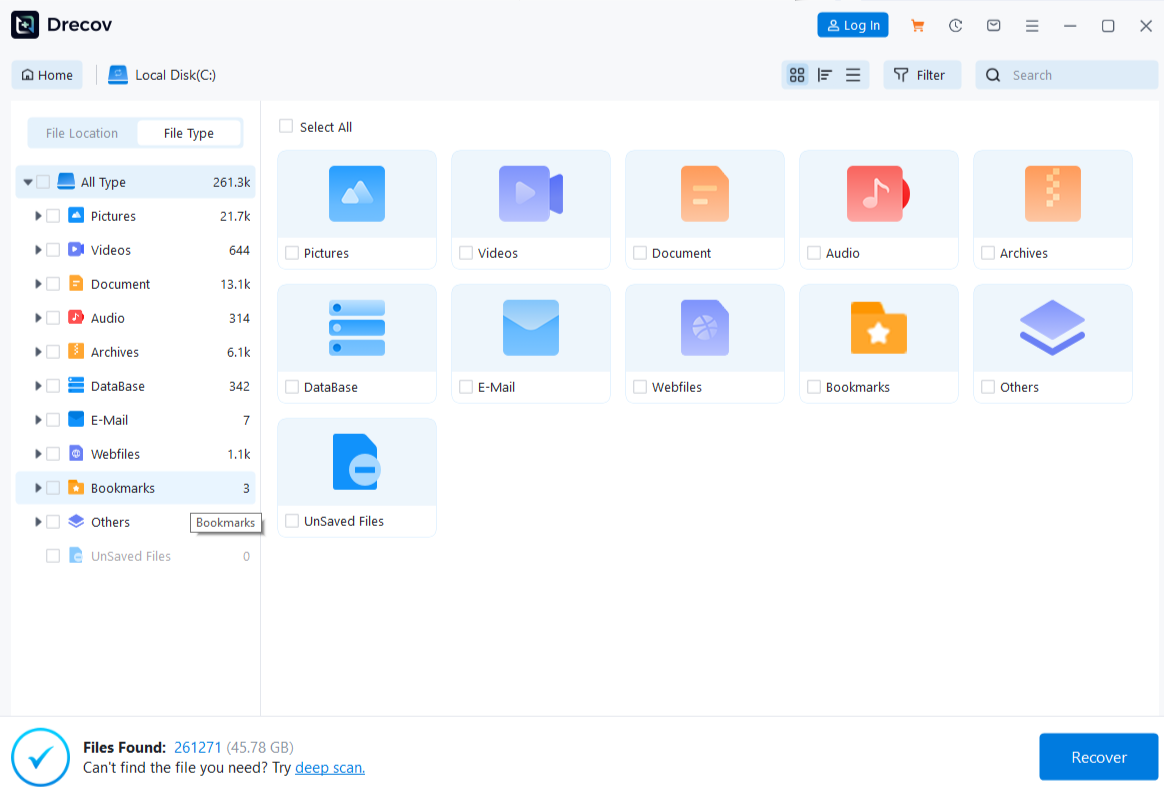
Step 3: Preview and Filter Found Files
Once the scan concludes, use the left-hand folder tree or the file category filters to sort through the results. PandaOffice Drecov data recovery software allows you to preview images, text files, and office documents directly within the application window before you commit to saving them. This saves time and ensures you are restoring the exact right file.
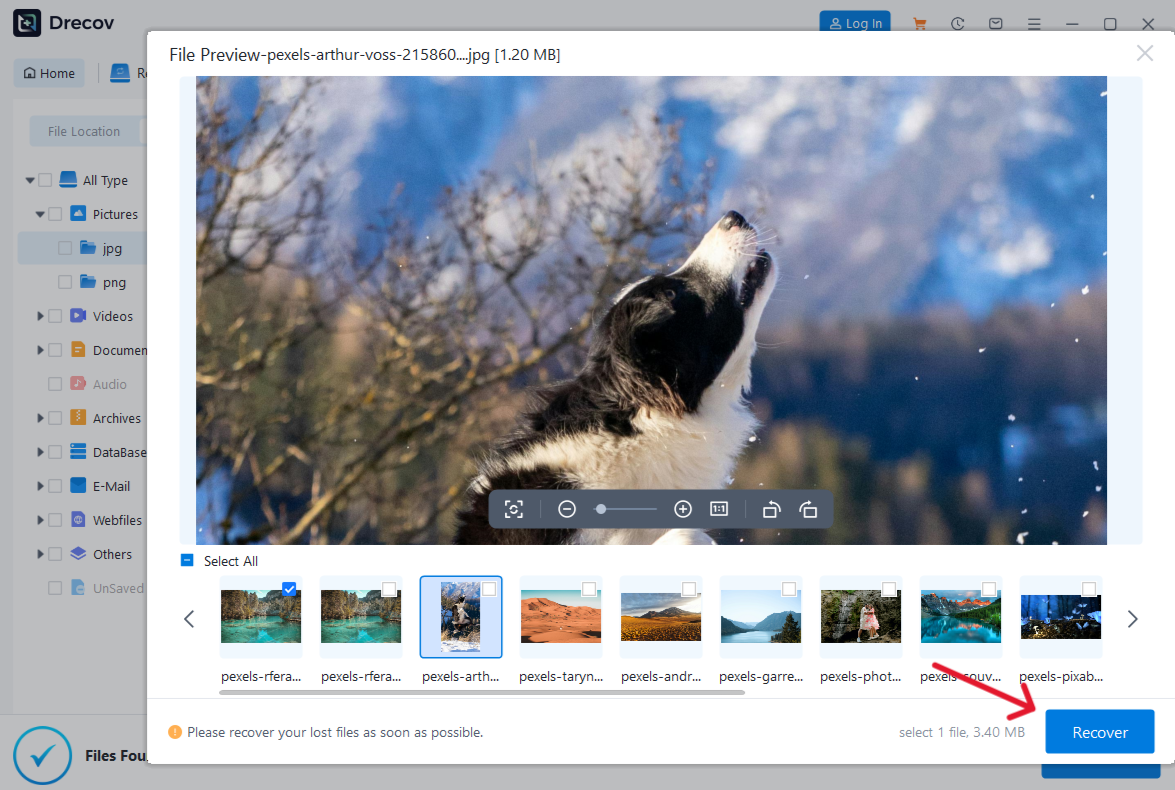
Step 4: Save Your Recovered Data Safely
Check the boxes next to the specific files or folders you want to rescue. Click the Recover button located in the bottom-right corner of the screen. A prompt will appear asking you to choose a destination directory. Select a safe folder on a completely different drive (such as an external USB drive or a secondary hard drive) and click OK to finish the restoration.
Helpful Related Guides for Windows Users
If you are interested in further optimizing your system storage or managing your application data efficiently, feel free to explore our additional step-by-step guides below:
- To learn how to protect your web browsing data and restore lost links, check out our guide on how to get your Google Chrome bookmarks back.
- If cloud storage apps are filling up your local drive automatically, read our complete guide to stop OneDrive sync.
- For users dealing with physical storage card problems on external cameras or devices, see our complete guide to recover data from CF card.
- For more details on how Windows manages its built-in utility tools, you can review the official Microsoft Support guide on disk cleanup.
Signs Your Windows 10 PC Urgently Needs a Cleanup
If you are not entirely sure whether your personal computer requires a deep cleaning session, keep a close watch for these common system warning signs:
- Low Disk Space Notifications: Persistent red warning bars appearing on your C: drive inside File Explorer.
- Slow Startup Times: Your computer takes several minutes to reach a usable desktop state after turning it on.
- Freezing Applications: Programs frequently display “Not Responding” tags or lag when opening simple menus.
- High Disk Usage: Task Manager indicates your hard drive is constantly running at 100% capacity even when idle.
- Frequent System Crashes: Experiencing unexplained blue screen errors or sudden app closures during normal workloads.
These common symptoms almost always indicate heavy storage clutter and excessive temporary file buildup. Fortunately, they can usually be resolved by following the maintenance methods detailed above.
How Often Should You Delete Temporary Files?
There is no strict universal rule for computer maintenance schedules, but a great rule of thumb depends entirely on your daily usage patterns:
- Light Users (Browsing & Word Processing): Once every calendar month is more than enough to keep things running cleanly.
- Heavy Users & Gamers: Once every week to ensure temporary game shaders and patch files do not congest your SSD.
- Professional Workstations (Video Editors & Designers): Every few days, as large rendering software can generate dozens of gigabytes of temporary scratch disk files in a single afternoon.
Regular computer maintenance keeps your entire operating system healthy, responsive, and ready for demanding tasks. Think of it like brushing your teeth. You do not wait until there is a serious painful problem to start taking care of things—you clean regularly to prevent a breakdown from happening in the first place.
Common Mistakes to Avoid During System Cleanup
Deleting Important Downloads
Always review the contents of your default Downloads folder before checking its box in the Windows Storage settings or Disk Cleanup. Many users accidentally wipe out downloaded receipts, setup files, or personal photos that they forgot to move to a permanent folder.
Utilizing Unsafe Third-Party Registry Cleaners
Be incredibly careful when downloading free online “PC boosters” or “registry cleaners.” Many of these aggressive third-party tools can accidentally delete vital Windows registry keys, causing catastrophic system errors, data corruption, or malware infections. Stick to official Windows utilities or verified data tools.
Ignoring Low Storage Warning Notifications
Never leave your primary system drive completely full. Windows requires a minimum of 10% to 15% of free space on your primary partition to properly manage virtual memory paging files and install vital security updates. Ignoring low space warnings can lead to data corruption or a failure to boot up entirely.
How to delete temporary files windows 10 FAQs
1. Is it safe to delete temporary files in Windows 10?
Yes, it is completely safe to delete these files. Temporary files are designed to hold short-term data while a process is active. Once the application finishes running, these files become dead weight and can be safely purged from your computer.
2. Will deleting temporary files speed up my PC?
Yes. Removing massive amounts of file clutter frees up local disk space and reduces the indexing workload on your storage drive. This allows Windows 10 to manage virtual memory more efficiently, resulting in faster startup speeds and smoother application performance.
3. What happens if I delete all files in the Temp folder?
Most files will delete successfully, which frees up immediate space. If a file is currently being used by an active background program, Windows will safely block you from deleting it. You can simply skip those specific files without worry.
4. How much space can temporary files take up over time?
It varies depending on your computer habits. If you stream high-definition videos, install frequent updates, or use creative design software, temporary files can easily accumulate anywhere from 5 GB to over 50 GB of digital junk over several months.
5. Does Windows 10 automatically delete temporary files?
Windows 10 can do this automatically if you explicitly enable the Storage Sense feature within your system storage settings. Once enabled, it will run quietly in the background and delete old temporary files on a customized schedule.
Conclusion
Learning how to delete temporary files windows 10 is undeniably one of the simplest yet most effective ways to restore your computer’s performance. Temporary files may seem completely harmless individually, but when thousands of them bundle together over time, they create massive performance bottlenecks, eat up expensive SSD storage space, and severely reduce system efficiency.
Whether you choose to use the modern Windows Settings app, the trusted legacy Disk Cleanup tool, direct Run commands, or activate the automated convenience of Storage Sense, each method plays a valuable part in keeping your computer clutter-free. Regular cleanup routines are not just simple maintenance tasks—they represent essential preventive care for your digital environment.






