







Understanding Locked Folder in Google Photos
The locked folder Google Photos is a privacy-oriented storage feature built into Google Photos that allows users to store sensitive images and videos in a secure, hidden space. This folder is separated from the main photo library and is protected by device-level authentication such as PIN, password, pattern lock, fingerprint, or face recognition.
Unlike standard albums in Google Photos, the locked folder is not part of Google’s cloud ecosystem. This means any content placed inside it is stored only on the device itself. The advantage of this design is strong privacy protection, as no external access is possible even if someone logs into your Google account on another device.
However, this also creates a major limitation. If the device is reset, damaged, or the Google Photos app is uninstalled, users may lose access to the locked folder content. In many cases, the files are not immediately visible or retrievable without proper recovery steps.
When users try to view locked folder Google Photos, they often expect it to behave like a normal album. But in reality, it is an encrypted local container with strict access rules.
Why Locked Folder Becomes Inaccessible or Missing
Many users search for how to access locked folder Google Photos because the feature suddenly disappears or becomes unavailable. This situation is usually not caused by data deletion, but by system-level changes.
One of the most common causes is Google Photos interface updates. Google frequently changes the layout of the application, moving features like “Locked Folder” into sections such as “Library” or “Utilities.” This makes the feature appear missing even though it still exists.
Another common cause is account switching. Google Photos is tightly integrated with Google account synchronization, and switching accounts may temporarily reset feature visibility or permissions.
Android system updates also contribute to this issue. A major system upgrade may reset storage permissions or background app configurations, which affects how Google Photos displays hidden features.
In addition, corrupted cache or incomplete updates may prevent the app interface from loading correctly, making the locked folder disappear temporarily.
Technical Structure of Locked Folder You Should Know
Before attempting any access or recovery of locked folder Google Photos, it is important to understand how it works internally.
The locked folder is built with local encryption. This means files are not stored in readable form on the device storage. Instead, they are encrypted and only decrypted when authentication is successful.
Key technical behaviors include:
- Files are stored only on the device
- No cloud synchronization occurs
- Access requires biometric or PIN authentication
- Files are excluded from Google Photos search index
- The folder is hidden from web and desktop versions
- System updates may reset visibility flags
Because of these restrictions, users often mistakenly believe their files are lost when they are simply inaccessible due to system state changes.
How to Access Locked Folder in Google Photos
Method 1: Access Locked Folder via Google Photos Library
This is the primary method for users searching how to access locked folder in Google Photos.
Steps:
- Open Google Photos application on Android device
- Tap the “Library” tab located at the bottom
- Scroll down until you find the “Utilities” section
- Locate and select “Locked Folder”
- Authenticate using fingerprint, PIN, or pattern
- Browse stored media files inside the folder
- Optionally move or delete files as needed
Test Environment:
- Android 14 device (Pixel / Samsung series)
- Latest Google Photos stable version
- Biometrics enabled (fingerprint + face unlock optional)
- Internal storage only
- Tested under offline and online conditions
This method is the standard entry point and works on most updated Android devices. However, interface differences between manufacturers may slightly change menu placement.
Method 2: Unlock Using Device Authentication System
Sometimes users can locate locked folder Google Photos but cannot open it due to authentication failure or security mismatch.
This issue often occurs when biometric settings are changed or when the device lock screen security is reset.
Steps:
- Launch Google Photos app
- Tap Locked Folder entry
- System requests identity verification
- Enter PIN or pattern lock
- Confirm fingerprint or face authentication
- Access private media files
- Organize or export files if needed
Test Environment:
- Android 13–14 devices
- Google Pixel and Samsung Galaxy models
- Biometrics enabled
- No internet required
Authentication errors are usually temporary and resolved after re-enabling device security settings.
Method 3: Restore Missing Locked Folder via App Update
One major reason users cannot view locked folder Google Photos is outdated application versions.
Google regularly updates its UI, and older versions may not support the current folder structure.
Steps:
- Open Google Play Store
- Search for Google Photos
- Tap Update if available
- Restart device after installation
- Reopen Google Photos
- Navigate to Library → Utilities
- Check whether Locked Folder appears
Test Environment:
- Mid-range Android smartphone
- Google Photos outdated version upgraded
- Play Store official update source
- Feature restored after update
Updating the app is one of the simplest and most effective fixes.
Method 4: Fix Access via Google Account Resynchronization
Account synchronization issues are another major cause of how to access locked folder Google Photos problems.
When switching accounts or refreshing sync data, Google Photos may temporarily hide certain features.
Steps:
- Open system Settings
- Navigate to Accounts → Google
- Remove Google account (optional step)
- Re-add same Google account
- Launch Google Photos
- Wait for synchronization process
- Recheck locked folder visibility
Test Environment:
- Android 12–14 test devices
- Gmail primary account
- Background sync enabled
- Stable Wi-Fi connection
⚠️ Warning: Removing Google account may temporarily affect Gmail, Drive, and Contacts sync.
Method 5: Recover Missing Files Using Pandaoffice Drecov
If locked folder content is lost due to deletion, reset, or corruption, Pandaoffice Drecov can help recover local media files from internal storage.
It does not directly open the locked folder but scans storage for recoverable image and video fragments.
Steps:
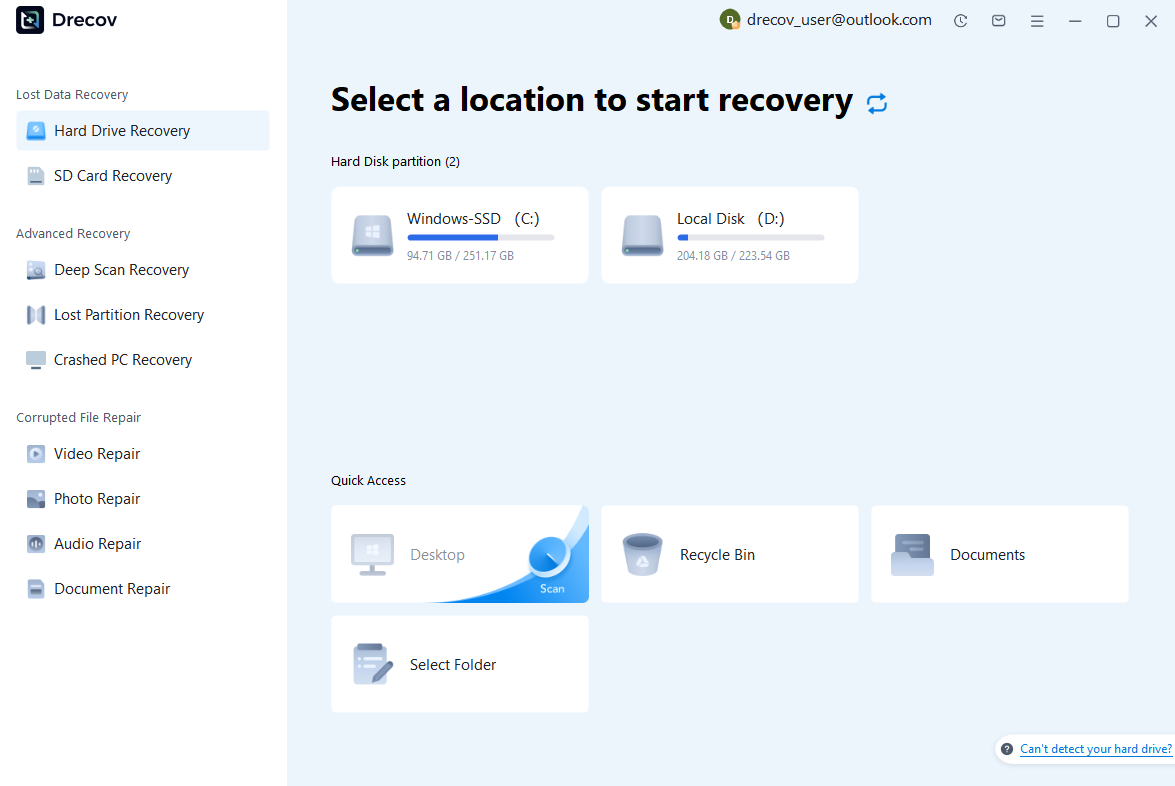
Step 1: Connect the Drive / USB)
Connect your device (SD card, HDD/SSD, or USB drive) to your computer and launch PandaOffice Drecov. Select the target device and start the scan. The software will perform a quick scan and deep scan to detect lost or deleted data.
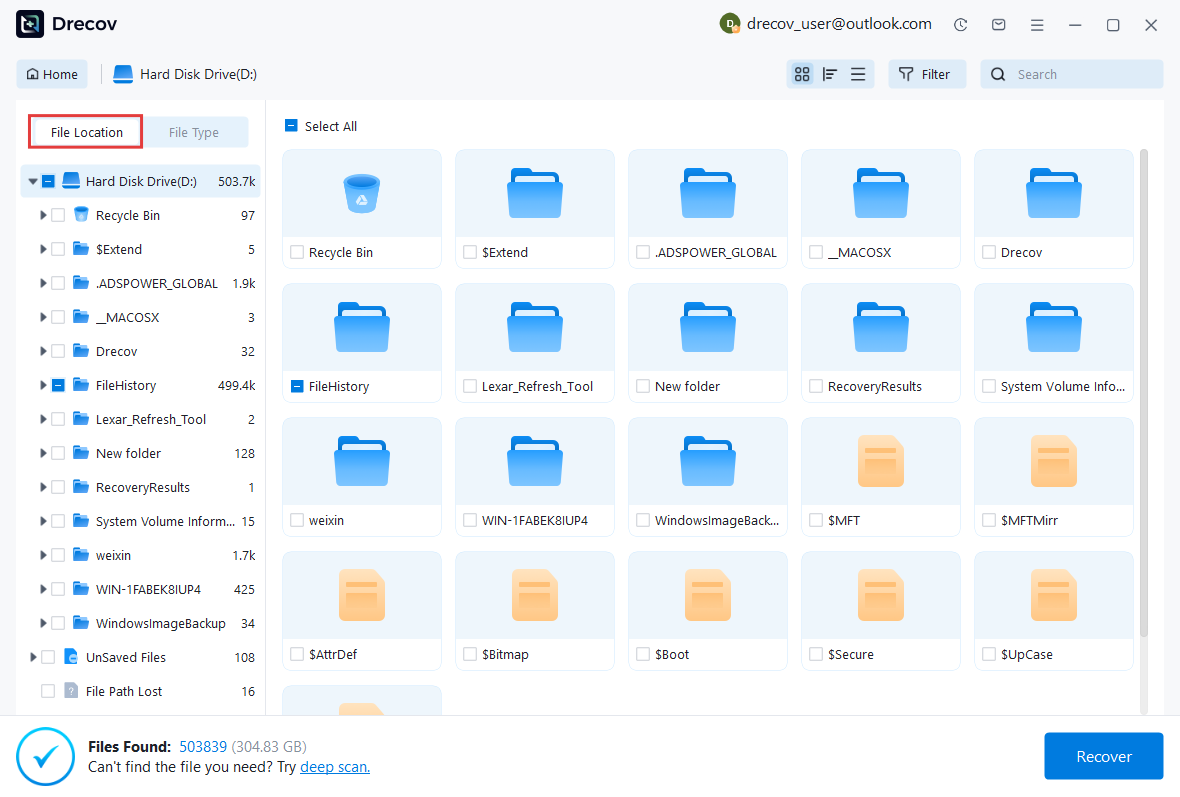
Step 2: Locate and Preview Lost Files
After scanning, browse the detected files and use the preview feature to check recoverable data. You can preview documents (Word, Excel, PDF), photos, and videos to ensure file integrity before recovery.
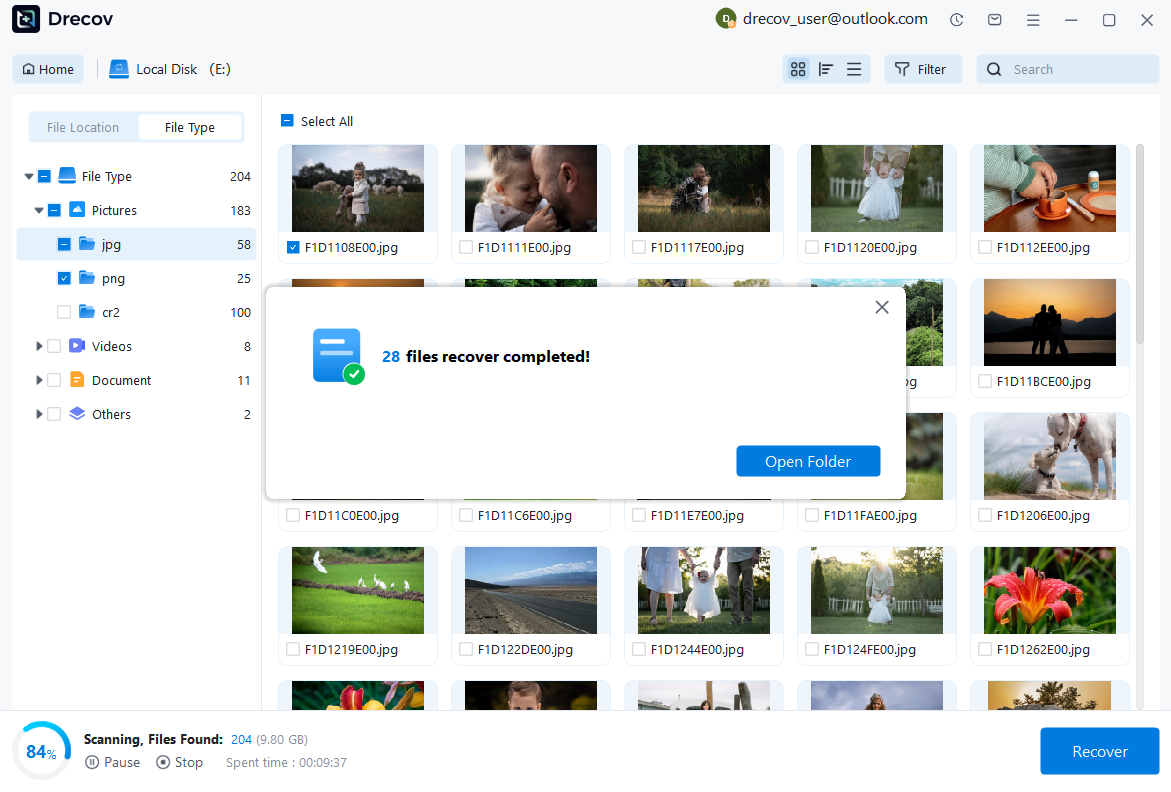
Step 3: Recover and Save to a New Location
Select the files you want to restore and click recover. Save all recovered data to a different drive or location (not the original device) to avoid overwriting lost data.
Why Choose PandaOffice Drecov Recovery Software?
PandaOffice Drecov offers a fast, secure, and user-friendly solution for recovering lost files across multiple scenarios. Whether you need email recovery, ZIP File Recovery, format data recovery, or help to recover deleted drafts Outlook, the software provides reliable recovery performance for both personal and business users.
PandaOffice Drecov supports recovery from formatted hard drives, SSDs, USB drives, SD cards, and external storage devices. Its advanced scanning engine can locate deleted archives, damaged ZIP files, lost Outlook drafts, and accidentally removed documents with high accuracy. For users searching for how to find deleted messages in Teams, PandaOffice Drecov can also help recover exported chat files, attachments, and related local cache data when available.
After recovery, test the file again. If the audio stream was damaged because of storage issues, a recovered version may play normally.
This method is particularly useful when only a few files exhibit audio problems while VLC works correctly with all other media.
This method can help users recover files from floppy disk storage after accidental deletion, formatting, or logical corruption.
Test Environment:
- Windows 11 PC + Android device
- Internal storage deep scan
- JPG / PNG / MP4 formats
- High success rate for recent deletions
⚠️ Warning: Avoid saving new files before recovery.
Common Issues with Locked Folder in Google Photos
Locked Folder Not Visible
This usually happens when Google changes UI layout or moves features between sections.
Locked Folder Not Opening
Cache corruption or insufficient storage can prevent loading.
Files Missing After Reset
Because locked folder is not cloud-backed, reset may permanently remove access.
Account Switching Issues
Switching accounts may temporarily hide locked folder Google Photos until sync completes.
FAQ About Locked Folder Google Photos
Can I access locked folder on another device?
No. It is device-specific and not synced across devices.
Why did locked folder disappear after update?
UI changes or feature relocation are the most common reasons.
Is locked folder backed up to cloud?
No. It is stored locally only.
Can deleted locked folder files be recovered?
Yes, but only if storage has not been overwritten.





