







Data recovery software can show many kinds of results: recoverable files, previewable files, reconstructed files, damaged files, and sometimes files that need repair. These terms are related, but they do not mean the same thing.
Understanding the difference helps users judge scan results more accurately.
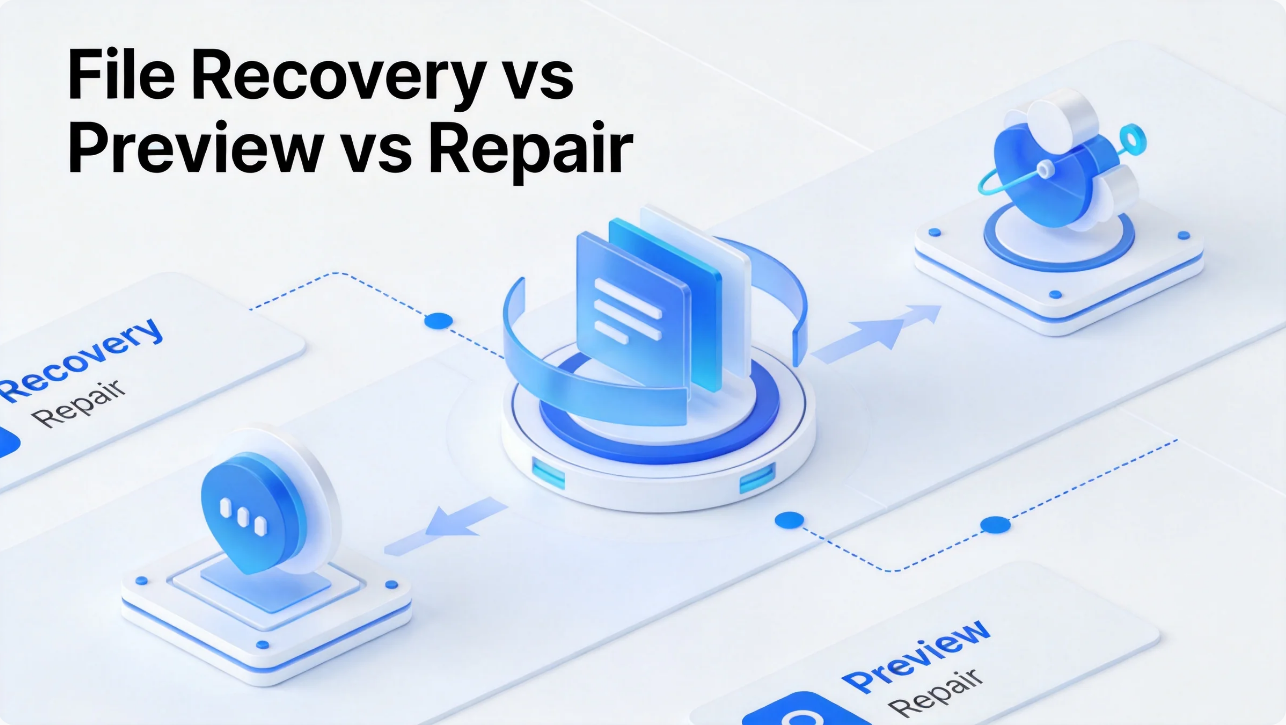
What file recovery means
File recovery means the software can save file content from a storage device after deletion, formatting, corruption, or another data loss event.
Recovery may be based on:
– File system records.
– Deleted file entries.
– File signatures.
– Known file structures.
– Raw sector scanning.
The best proof of recovery is that the recovered file matches the original content. In controlled testing, this can be verified with hashes such as SHA256.
What file preview means
Preview means the software can display the file before you recover it.
Preview is helpful because it lets users confirm that a photo, document, or video is likely useful. However, preview is not the same as complete recovery.
A preview may be unavailable because:
– The type is not supported for preview.
– The file is too large.
– The file is damaged.
– The software can recover the file but cannot render it.
– The file is an archive, database, email store, or project format.
If a file cannot be previewed, it may still be recoverable.
What file repair means
File repair is different from recovery. Repair attempts to fix a damaged file so it can open again.
For example:
– A recovered video may need repair if its index is damaged.
– A document may need repair if internal XML structures are broken.
– A photo may need repair if image data is incomplete.
Recovery gets the file back. Repair tries to make a damaged file usable.
Why this distinction matters
Users may assume that if a file cannot be previewed, it cannot be recovered. That is not always true.
Users may also assume that if a file is recovered, it must open. That is also not always true, especially if the original content was partially overwritten before recovery.
The right interpretation is:
– Recovered means saved from the source device.
– Previewable means the software can show it before saving.
– Repaired means damaged file content has been fixed or improved.
What Drecov’s FAT32 test proved
In a controlled FAT32 formatted-drive test, Drecov recovered all 1,980 test samples with matching SHA256 hashes. This proves byte-level recovery for the tested sample set.
It does not mean every file type was previewed inside the software. It also does not mean Drecov repaired damaged versions of every file format.
That boundary is important. The test proves recovery integrity in that scenario, not universal preview or repair support for all formats.
How users should evaluate recovered files
After recovery:
1. Open important files from the recovery destination.
2. Preview photos and documents when available.
3. Check file size and extension.
4. For archives, try opening or extracting a copy.
5. For business files, compare hashes if you have a baseline.
6. Keep damaged files separate for possible repair.
Do not delete the source drive until you have checked the recovered files.
What Should We Do?
Use Drecov to scan and recover files first. Then verify important recovered files by opening, previewing, checking size, or using hash comparison when available.
Steps:
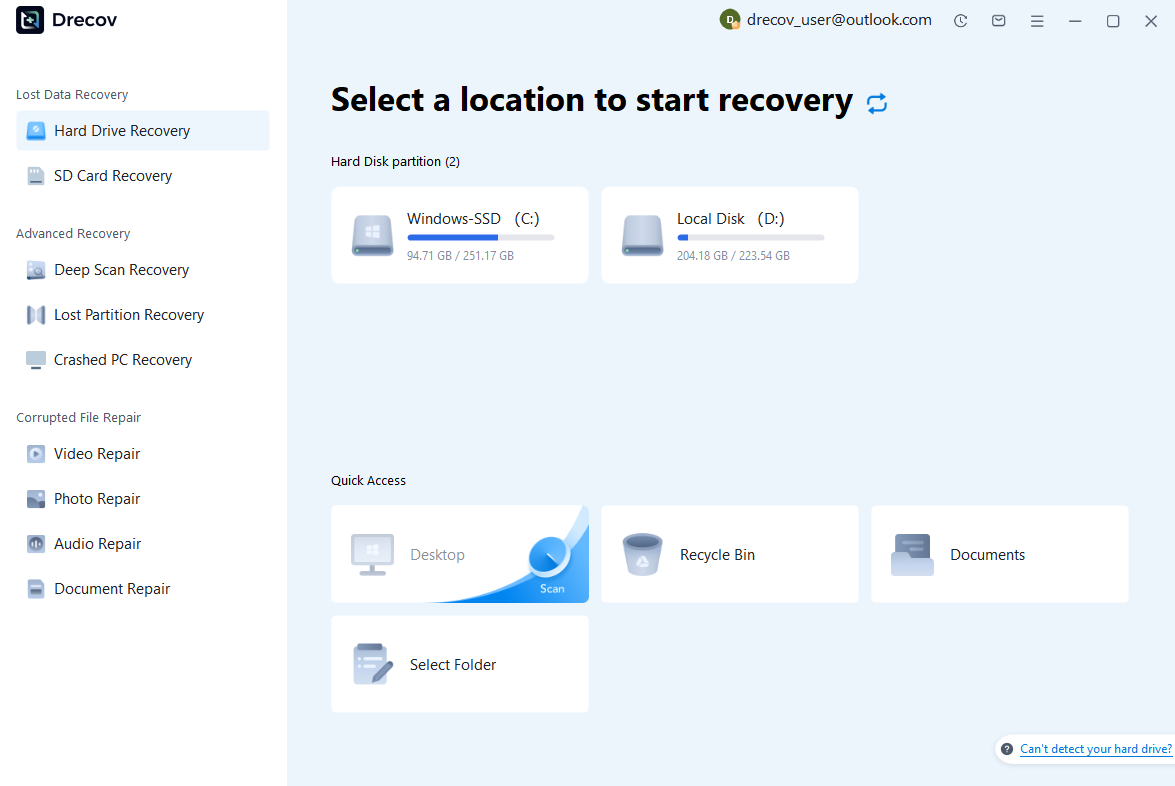
Step 1: Connect the Drive / USB)
Connect your device (SD card, HDD/SSD, or USB drive) to your computer and launch PandaOffice Drecov. Select the target device and start the scan. The software will perform a quick scan and deep scan to detect lost or deleted data.
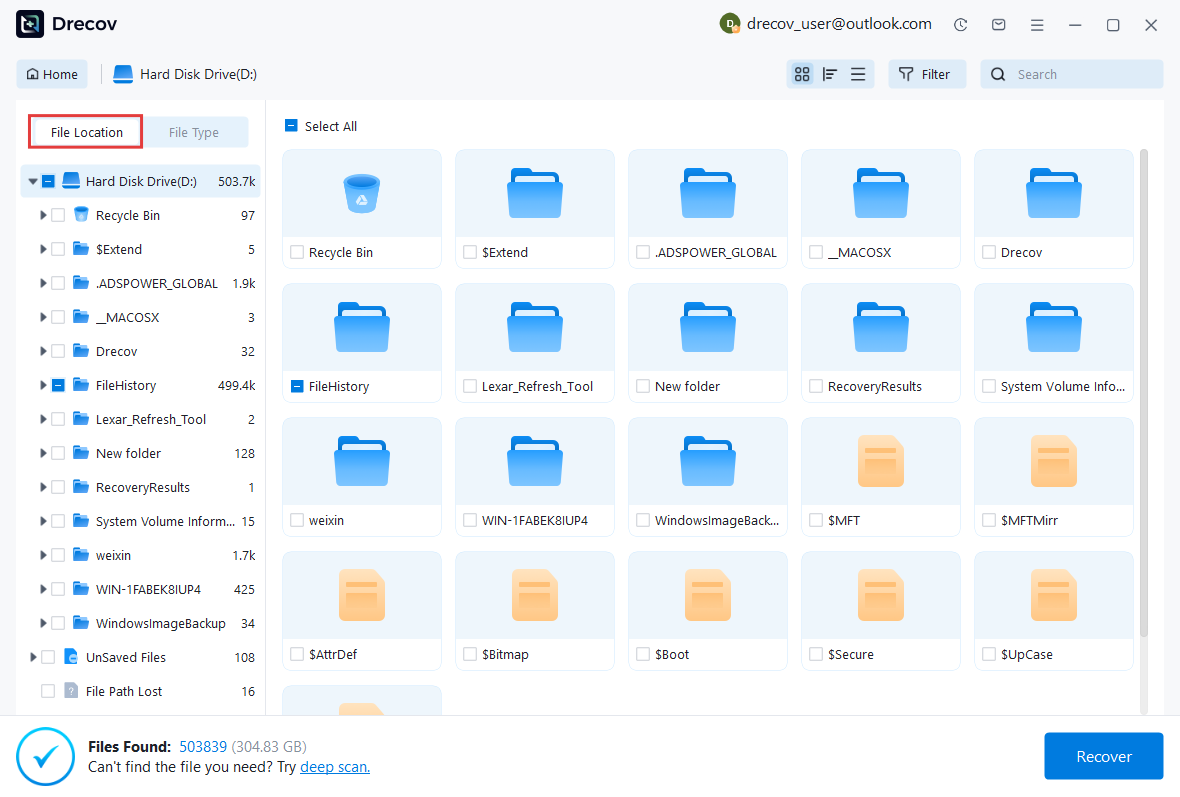
Step 2: Locate and Preview Lost Files
After scanning, browse the detected files and use the preview feature to check recoverable data. You can preview documents (Word, Excel, PDF), photos, and videos to ensure file integrity before recovery.
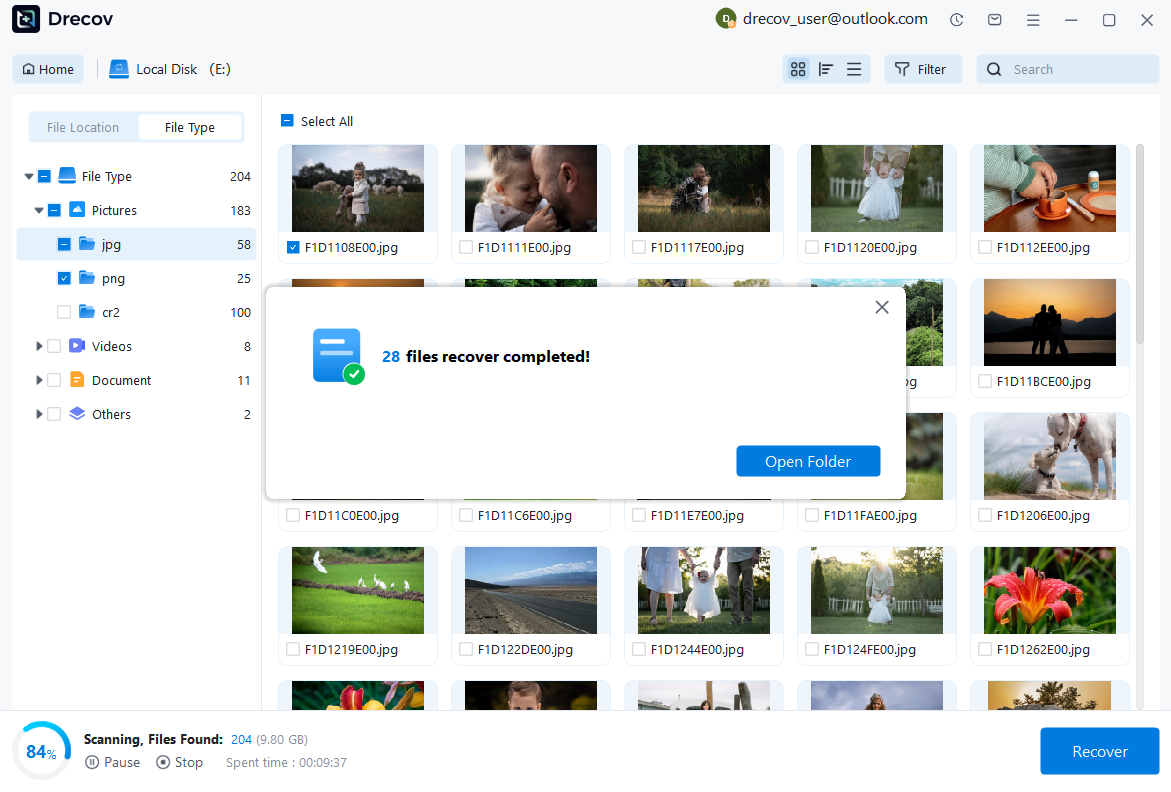
Step 3: Recover and Save to a New Location
Select the files you want to restore and click recover. Save all recovered data to a different drive or location (not the original device) to avoid overwriting lost data.
Why Choose PandaOffice Drecov Recovery Software?
PandaOffice Drecov offers a fast, secure, and user-friendly solution for recovering lost files across multiple scenarios. Whether you need email recovery, ZIP File Recovery, format data recovery, or help to recover deleted drafts Outlook, the software provides reliable recovery performance for both personal and business users.
PandaOffice Drecov supports recovery from formatted hard drives, SSDs, USB drives, SD cards, and external storage devices. Its advanced scanning engine can locate deleted archives, damaged ZIP files, lost Outlook drafts, and accidentally removed documents with high accuracy. For users searching for how to find deleted messages in Teams, PandaOffice Drecov can also help recover exported chat files, attachments, and related local cache data when available.
FAQ
If a file cannot be previewed, can it still be recovered?
Yes. Some file types are recoverable but not previewable inside the software.
If a file is recovered, will it always open?
Not always. If the file was overwritten or fragmented, the recovered copy may be incomplete or damaged.
Is repair the same as recovery?
No. Recovery saves lost file data. Repair attempts to fix damaged file structure.
What did the Drecov FAT32 test prove?
It proved byte-level recovery for the test samples by matching SHA256 hashes. It did not claim universal preview or repair for every file type.
Should I keep the source drive after recovery?
Yes, until you verify the recovered files. If something important is missing, you may need another scan or another recovery method.
Evidence note
This article uses the FAT32 formatted-drive test as recovery integrity evidence while separating recovery from preview and repair capabilities.





