
If Windows Update is taking forever, identify the stage before touching the power button. A download that barely moves depends on the network; an installation inside Windows depends on the update and available storage; a restart screen may keep working without showing frequent percentage changes. Note the displayed text, percentage, time since the last visible change, and whether the machine responds. Do not invent a universal timeout. Microsoft says update duration varies with connection, network settings, and update size. Intervene only after confirming that progress has truly stopped or an error appears, and protect files before any reset or reinstall.
Read the screen before deciding it is stuck
Write down the exact phase shown. “Downloading” in Settings is different from “Installing,” “Restarting,” “Working on updates,” or “Undoing changes.” A progress indicator may pause at one number while the work behind it continues. Compare the screen after a reasonable period under stable power rather than relying on a single glance. Check whether the disk activity light, fan, or text changes. None of these signs guarantees success, but a changing message is evidence against an immediate forced shutdown.
Look for a specific error code or a request for action. A prompt to free disk space, reconnect to the internet, or restart has a clearer next step than a slowly moving percentage. On a laptop, connect reliable power and avoid closing the lid during a restart stage. Do not run heavy downloads or disk-cleaning tools while Windows is installing updates. If the machine becomes dangerously hot, emits an electrical smell, or develops repeated storage errors, stop and seek appropriate hardware help rather than treating it as ordinary update slowness.
The Microsoft Windows Update troubleshooting page notes that download and installation time depends on connection speed, network settings, and update size. It also provides stage-specific checks and the Windows Update troubleshooter. Use that guidance for the current Windows version; do not assume a percentage proves how many minutes remain. A large feature update and a small cumulative update can behave differently.
Downloading slowly: investigate the connection
When Settings still says Downloading, test whether the computer can load a normal webpage. Check that Wi-Fi or Ethernet is connected and stable. If other devices on the same network are also slow, the connection may explain the wait. Pause unrelated large transfers on the network and keep the PC awake with reliable power. A metered connection, corporate policy, VPN, or temporary Microsoft service condition can affect delivery; verify the setting or ask the administrator rather than switching security controls at random.
Record whether the displayed percentage changes after the connection is stable. If the network was interrupted, reconnect and use Settings > Windows Update > Check for updates when the interface is responsive. Do not repeatedly delete update caches simply because a download is slow. That action changes Windows Update’s local state and belongs after simpler checks and a backup. If a clear error code appears, use the code and current Microsoft instructions instead of a generic list of commands.
A download problem is not a reason to run Drecov. Your personal files are usually still where they were. The relevant question is whether Windows can reach the update service and has enough room to download. If the update screen instead changes to Installing, switch to the next phase rather than continuing to troubleshoot Wi-Fi. Keep a note of the phase change so you do not repeat fixes that no longer apply.
⚠ Warning: Install it on a drive different from the one where your data was lost to prevent overwriting.
Installing slowly inside Windows: check space and responsiveness
During an installation that still leaves the desktop usable, open Settings > System > Storage and check free space on the system drive. Low space can block an update or cause an error. Remove only files you recognize or use Windows’ own cleanup choices after checking their descriptions. Do not delete unfamiliar system folders or empty a Downloads folder that holds the only copy of something important. Preserve an external or cloud copy of essential work before removing large local files.
If Settings remains responsive, note whether the update percentage changes and whether the PC is busy with another installation. Restart only when Windows prompts you to do so or after a genuine failure and a normal save of open work. Use the Windows Update troubleshooter on a responsive desktop if progress has clearly stopped or an error is recorded. In current Windows 11 guidance, Microsoft points users to the Get Help troubleshooter; Settings also provides Troubleshoot > Other troubleshooters in supported versions. Follow the interface shown on your version rather than forcing an older menu path.
Security software, drivers, and pending restarts can complicate installation, but do not disable protection reflexively. A prompt or error code provides more useful evidence. If the update repeatedly crashes the computer, that is no longer merely “taking forever”; the separate guide on Windows Update crashing a computer covers stop errors and repeated failures. Keep the current article for a slow or apparently stationary update without a confirmed crash.
Restart screen unchanged: wait, observe, then choose a safe exit
On a full-screen “Working on updates” or similar restart screen, you may not have access to Settings. Keep the machine on stable power and watch for a change in text, percentage, fan pattern, or automatic restart. A long pause alone does not prove a permanent hang. Do not press the power button several times just because a number is unchanged. A forced stop during system writes can lead to rollback, startup repair, or inaccessible files.
When to step in relies on device behavior rather than a rigid timeframe. Let any rollback finish if the screen eventually displays “Undoing changes.” Note the exact error and look for a proper fix whenever the computer endlessly boot-loops, throws a stop code, or stays stuck without showing progress. Only perform a single forced power-down if the system completely stalls, and observe the subsequent startup carefully. Avoid getting trapped in a cycle of repetitive hard reboots.
Once Windows returns, check Settings > Windows Update > Update history to see whether the update installed, failed, or rolled back. Reopen a few local documents. A normal desktop does not automatically prove every file is present, while an update failure does not automatically mean personal files were erased. If you plan to cancel an update rather than troubleshoot it, read the separate article on canceling Windows updates and verify that its steps match your current stage; stopping a download and interrupting an active reboot are not equivalent actions.
After the update, verify files before repairing Windows
Before Reset this PC, reinstalling Windows, deleting update folders, or changing partitions, check backups and key local folders. Open several recent documents, not just the folder names. Verify OneDrive or another sync service from a separate device when possible. An update may sign you into a different profile or move you into a temporary account, so check the account name and familiar user folders before assuming that files were deleted. If the desktop itself appears empty, the guide on desktop files missing after a Windows update deals with that distinct symptom.
Keep a record of the update name, error code, and changes you tried. A troubleshooter result should be followed by a fresh check of Settings and Update history. If the update repeatedly fails, a normal restart and official Windows diagnostics are safer than copying an unverified command sequence.That condition needs data protection or professional assessment before further writes.
When Windows no longer starts but the original drive is stable, first establish a supported route to the files. A compatible recovery environment or safe access from another Windows machine may be necessary. BitLocker-protected storage requires its recovery key and authorized access. Do not format or initialize a drive merely because an environment labels it unreadable. A reset that keeps some files is not a substitute for verifying a separate backup of irreplaceable content.
Drecov is for missing local files, not update speed
Drecov is Windows data-recovery software. It does not download an update faster, repair Windows Update services, or guarantee recovery from a physically failing drive. If files were genuinely deleted or became inaccessible after a failed update, and the original volume is stable and accessible, its Quick Scan, optional Deep Scan, filters, preview, and recovery to another healthy destination can help search for local copies. Lost Partition Recovery is a separate mode for a lost partition, not a replacement for Windows startup repair.
Before a scan, stop writing to the affected volume and prepare a different healthy drive. Do not install Drecov onto the same partition where files are missing. If the computer cannot start, confirm a compatible recovery environment or safe access to the source first; do not pretend that a desktop application can be opened on an unusable Windows session. If the drive clicks, drops offline, or has severe read errors, stop repeated scans and consider imaging or professional recovery.
⚠ Warning: Install it on a drive different from the one where your data was lost to prevent overwriting.
Recover only after confirming a local file is missing
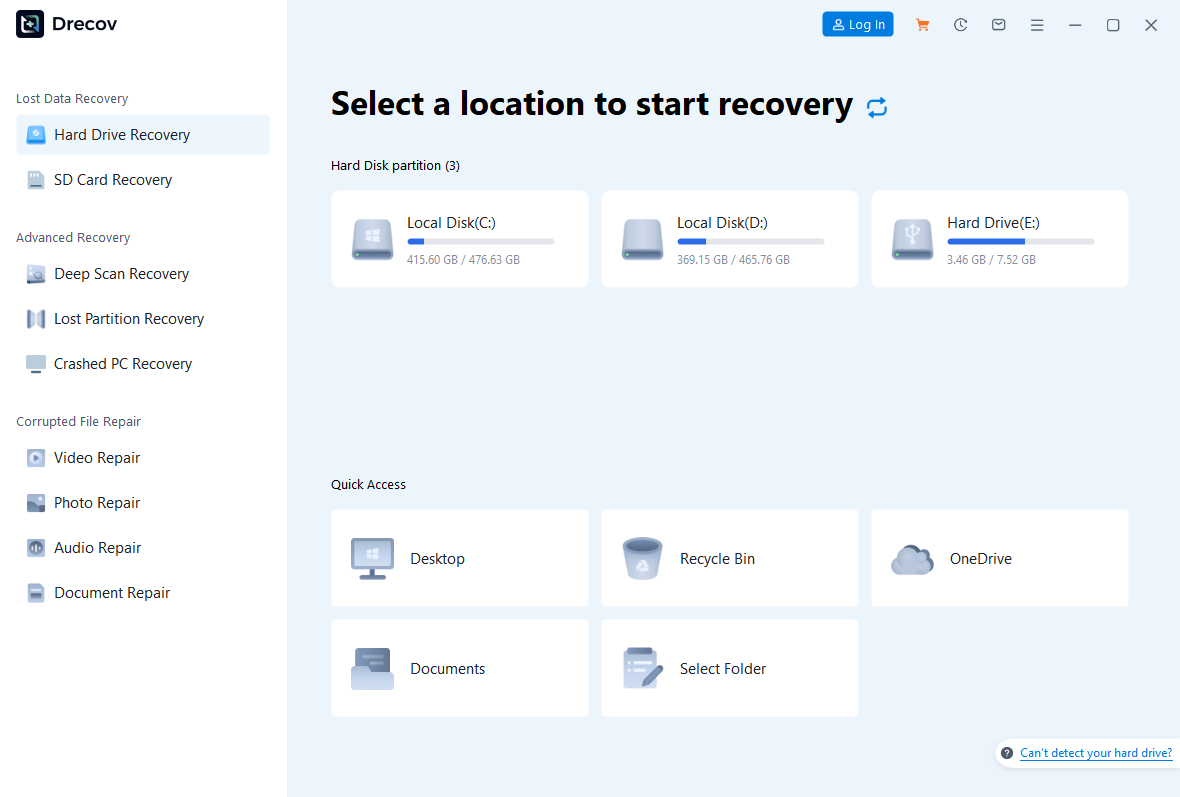
Step 1: Open Drecov and select the original location
Choose the partition that held the missing Desktop, Documents, or Pictures files before the update. Use the former user profile and folder as search clues. A healthy external drive prepared for output is not the source.
Step 2: Run Quick Scan, then decide on Deep Scan
Start with Quick Scan. If the files are absent and the drive remains stable, try Deep Scan. Stop if recognition changes or read errors worsen. Repeating scans does not fix a failing SSD or HDD.
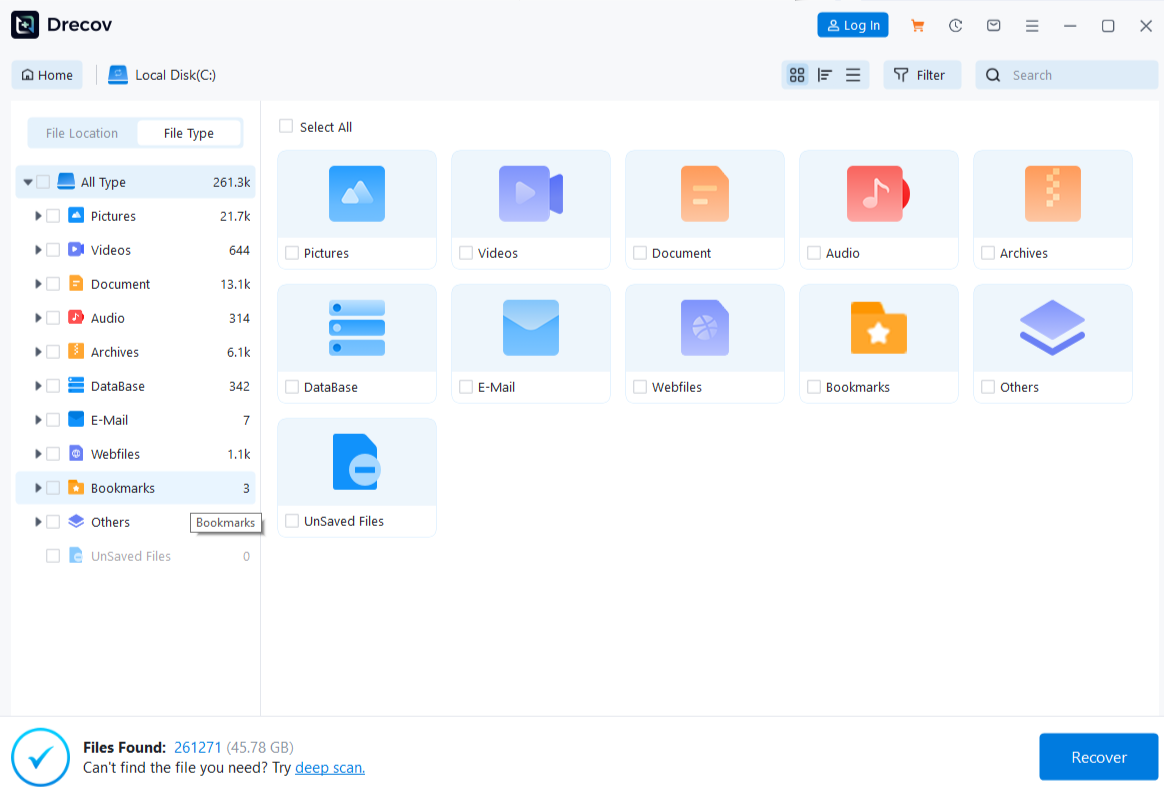
Step 3: Filter and preview likely results
Narrow by file type, name, former path, and date where available. Preview representative documents and photos. A readable sample does not prove every file, page, or version is intact. Keep several plausible candidates when dates differ.
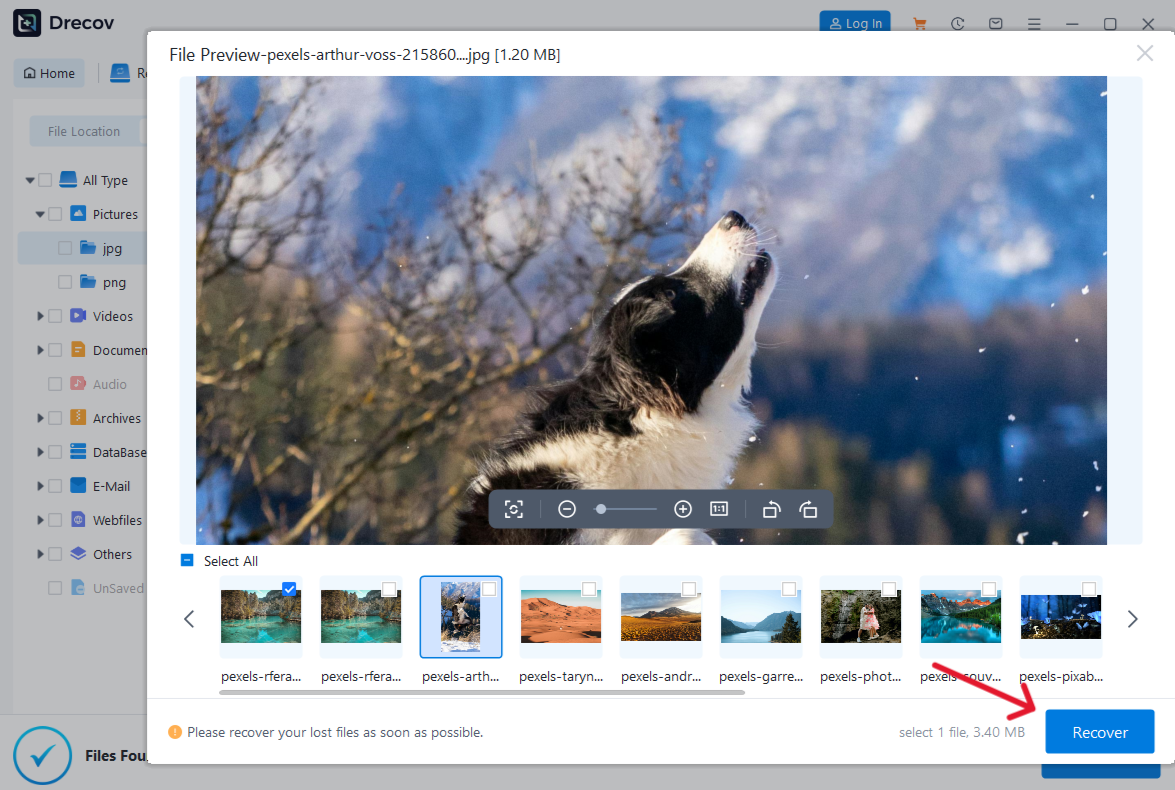
Step 4: Recover elsewhere and verify before more repairs
Save the selected files to the healthy destination, never back to the original volume. If a result is not in the expected output path, check Drecov Folder or Recovery Folder. Open important files and verify their contents on the destination before running a reset, reinstall, cleanup, or further repair. Preserve the source if recovery is incomplete.
⚠ Warning: Install it on a drive different from the one where your data was lost to prevent overwriting.
Conclusion
When Windows Update is taking forever, the safest next step depends on its stage. A slow download calls for connection checks; an installation needs space and error review; a restart screen should not be interrupted merely because one percentage pauses. Record the actual behavior, use Microsoft’s relevant troubleshooter after a confirmed stall, and protect local files before system-changing repairs. Drecov does not speed up updates. It belongs only to the later case where files are truly missing from a stable, accessible source and can be restored to another healthy drive.
⚠ Warning: Install it on a drive different from the one where your data was lost to prevent overwriting.