







The message “Word experienced an error trying to open the file” does not identify one universal defect. It can come from an untrusted download, blocked file, missing permission, damaged Office installation, unsafe add-in, interrupted transfer, or corruption inside one document. Preserve the original before trying repair. Then test a duplicate in a controlled order. If the file disappeared or the storage copy cannot be read, recover another copy before Office repair, disk repair, or repeated saves change the evidence.
Why Word Experienced an Error Trying to Open the File
Record the complete message, the document path, extension, byte size, and where the file came from. A DOCX received by email has a different trust history from a local file that opened yesterday. A file copied from a failing USB drive presents another problem entirely. Check whether the name ends in .docx, .doc, .docm, or another format; merely renaming an extension does not convert its contents.
Open a newly created blank document and one known-good existing document. If both work, Word itself is probably capable of opening files and the investigation should stay focused on the affected copy. If Word fails before any document loads, start the application in Safe Mode and examine add-ins or Office installation health. This scope test prevents broad repairs from being applied to one damaged file.
Do not click Enable Editing or Enable Content automatically. Protected View is a security boundary, not a corruption detector. Confirm the sender, scan the file, and make a copy first. A macro-enabled document deserves extra caution because content can execute after trust is granted. Security checks and data recovery solve different questions, so neither should be used to bypass the other.
Make a preservation copy and test the file location
Use File Explorer to duplicate the document to a healthy local folder with a short path. Keep the original unchanged and name the duplicate clearly as a test copy. If it came from email, a browser, a network share, OneDrive, or removable media, this local duplicate separates path, synchronization, and connection trouble from internal document damage.
Right-click the duplicate, choose Properties, and inspect the General and Security tabs. If Windows shows an Unblock option for a trusted file, use it only after confirming the source. Verify that your account has read access. Avoid taking ownership of broad folders or weakening security across the drive merely to open one item; a narrowly scoped copy is safer and easier to reverse.
A zero-byte file contains no document payload for Word to reconstruct. A much smaller copy may indicate an interrupted download or transfer. Compare size and modified time with attachments, cloud versions, backups, and a colleague’s copy. When another complete source exists, retrieving it is preferable to repairing a partial container.
Choose the least destructive Word method
Start Word without the document and use File > Open > Browse. Select the test copy, open the menu beside Open, and choose Open and Repair. Save any successful result under a new filename. Do not replace the preserved original. Reopen the new file after closing Word because an initial display does not prove that the package can be saved and loaded again.
If Open and Repair fails, try inserting the document text into a new blank document or using Recover Text from Any File on a duplicate. Text recovery is deliberately limited: formatting, pictures, fields, comments, headers, footnotes, embedded objects, and tracked changes may be missing. Treat its output as a content salvage result, not a repaired equivalent of the original document.
For files stored in OneDrive or SharePoint, inspect version history before disk recovery. Also check email attachments, Teams or shared folders, File History, and Previous Versions where configured. Compare candidate dates and content instead of assuming the newest timestamp is the most complete. Synchronization may have propagated a damaged or empty version.
Recover a missing Word copy with Drecov before repair
PandaOffice Drecov is Windows data recovery software for documents and other common file categories on PCs, HDDs, SSDs, external drives, USB drives, SD cards, and memory cards. When Word fails to load a document and shows messages like word experienced an error trying to open the file, Drecov’s role is narrow but useful: locate a deleted, lost, or inaccessible Word copy on stable, readable storage before you modify the source. Read-only recovery scanning, Quick Scan, Deep Scan, filtering, preview, and recovery to a healthy destination help preserve that separation. Drecov does not repair Word’s application code, remove malware, fix physical hardware, or guarantee recovery of overwritten sectors.
⚠ Warning: Install it on a drive different from the one where your data was lost to prevent overwriting.
Stop writing to the location that held the document. Do not install Drecov on that partition, and prepare another healthy physical device for output. Repeated disconnects, clicking, severe read delays, or changing capacity are reasons to stop direct scanning. An unstable device should be imaged with appropriate tools or handled by a recovery professional.
Drecov steps for the lost-document branch
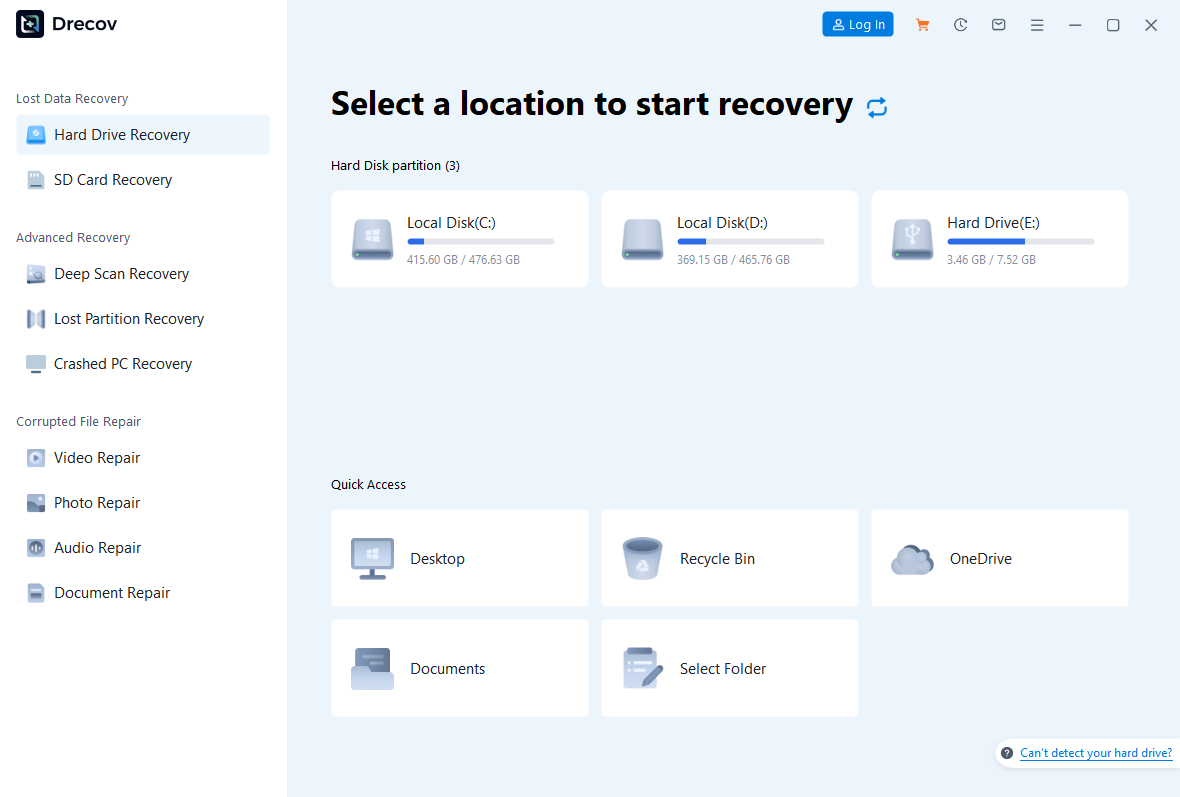
Step 1: Open Drecov and select the original Word file location
From a healthy Windows installation, open Drecov and choose the partition, folder, USB drive, or other stable source that contained the missing document. If its partition disappeared, use Lost Partition Recovery rather than creating a replacement partition. Confirm the source model and capacity before scanning.
Step 2: Run Quick Scan and check the former folder
Start Quick Scan first. Look under the document’s former path and recently deleted results. Keep Word, cloud synchronization, and download activity from writing to the source while the search runs.
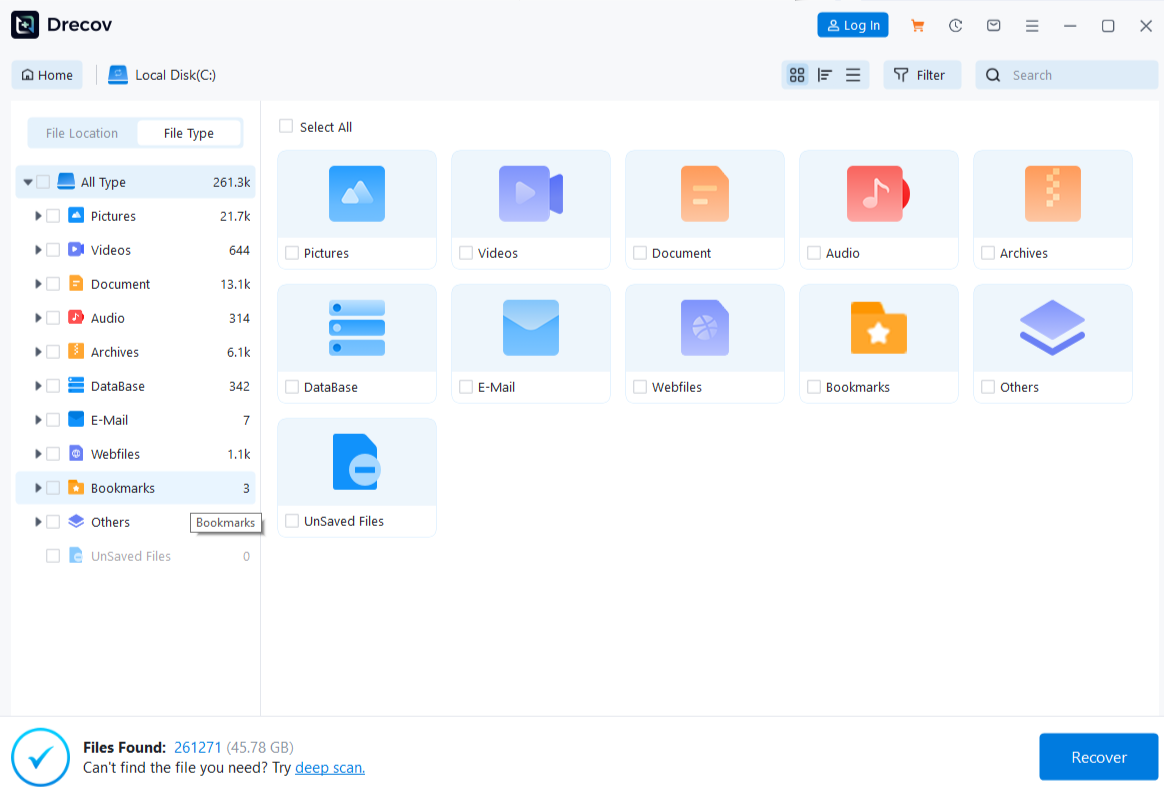
Step 3: Use Deep Scan only when the device remains stable
If Quick Scan does not find the required DOCX, DOC, or DOCM file, run Deep Scan only on consistently readable media. Stop if detection or read behavior worsens. A longer scan cannot make failing hardware reliable.
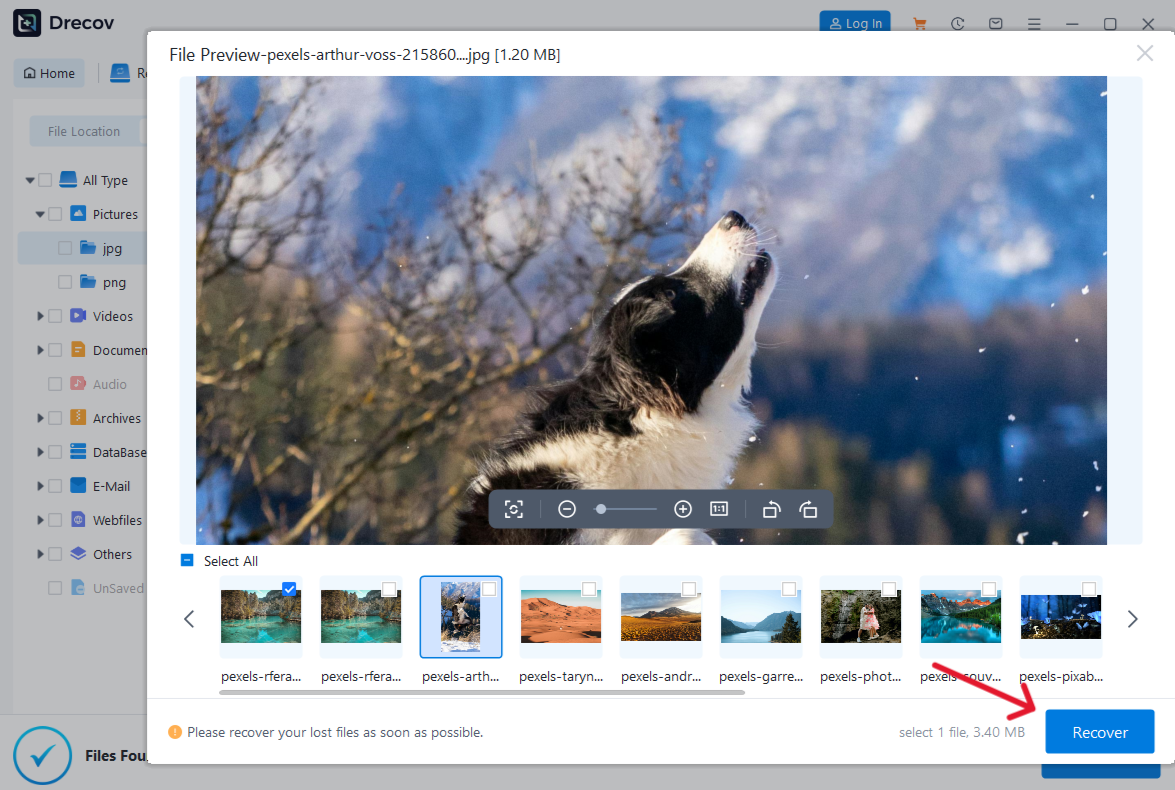
Step 4: Filter, preview, and recover to another device
Filter by document type, filename, former path, and relevant date. Preview supported candidates when available, while remembering that a preview cannot prove every embedded object or tracked change is intact. Recover selected copies to the prepared healthy device, never to the source.
Step 5: Verify the recovered document before Office repair
If output is not in the expected folder, check Drecov Folder or Recovery Folder. Open a duplicate with macros disabled, inspect page count, images, tables, comments, and tracked changes, then save and reopen it. Keep the raw recovered copy until the verified version and a second backup exist.
Validate the result instead of trusting one successful open
Scroll through the entire recovered or repaired document. Check headers, footers, tables, text boxes, equations, citations, fields, comments, tracked changes, embedded files, and page numbering. Compare a known passage or word count with a PDF, printed copy, colleague version, or earlier export. Large documents need samples from the beginning, middle, and end.
Save the working result to a healthy folder under a new name, close Word, restart it, and reopen the result. Export a PDF when layout matters. If content vanishes after save, preserve both versions and stop further editing on the only useful copy. A successful launch is only the first checkpoint.
Once the document is safe, repair Office, disable a faulty add-in, adjust a trusted file’s properties, or investigate storage as the evidence requires. Do not run CHKDSK on a source drive merely because Word reported an application-level error. File-system repair writes metadata and belongs after important files have been copied or recovered.
Common questions about this Word error
Why does the same file open on another computer?
That result points toward the first computer’s Office build, add-ins, trust settings, permissions, or file association. Save a verified copy elsewhere before changing the original system.
Can changing .doc to .docx fix the file?
No. An extension labels a format; it does not convert the internal structure. Open a valid source with compatible software and use Save As instead.
Does Open and Repair preserve everything?
Not necessarily. Word may remove damaged records to make the remaining package readable. Compare formatting, embedded content, fields, and revision history before accepting the result.
When should I stop trying at home?
Stop when the storage disconnects, clicks, reports severe errors, changes capacity, or cannot remain readable. Preserve the device state and seek controlled imaging or professional recovery.
Related Drecov resources include Drecov for Windows data recovery, restore an earlier Word document version, recover a deleted Word document, and guidance on keeping recovery output off the source. For the platform-specific facts, consult the official documentation.
Check package integrity without editing the only copy
A DOCX or DOCM file is a package of related parts rather than one flat page stream. If a duplicate can be opened as an archive by a trusted tool, the presence of document.xml, relationship data, media, and styles can help a specialist identify scope. Do not delete a supposedly damaged component from the only copy. Manual package work can make the document easier to open while silently removing images, links, comments, or fields. Preserve the original and document every change made to the test copy.
Conclusion
When Word experienced an error trying to open the file, preserve the original and identify whether trust, permission, location, Word itself, or the document is failing. Use Word’s repair features only on a duplicate. If a local copy was deleted or became inaccessible on stable storage, Drecov can scan, filter, preview, and recover candidates to another healthy device. Verify the full document before repairing Office or changing the source drive.






