







To learn how to recover deleted dropbox files, sign in to dropbox.com with the account that owned or edited the item and open Deleted Dropbox items. Restore the cloud item prior to scanning a computer. If it is absent, check version history, activity, shared-folder membership, and Rewind eligibility. Drecov belongs only in the final branch where a real local copy existed on a stable Windows disk.
Identify Where the Deletion Actually Happened
Pause sync on the synced Windows PC if local deletions are still propagating. Do not permanently delete cloud items, clear caches, or reinstall the desktop client until the cloud account and local folders have been inventoried. recently deleted local Dropbox items For current vendor guidance, see the official support documentation.
| Observed condition | What it suggests | Next safe action |
|---|---|---|
| File appears under Deleted Dropbox items | Dropbox retains a restorable cloud record | Select the item and restore it |
| An older version exists | The file was changed rather than deleted | Preview and restore the correct version |
| Shared folder vanished | Membership or ownership may have changed | Ask the owner and check account activity |
| Many Dropbox items changed together | A broad event synced the account | Consider Rewind if available |
| File never synced to Dropbox | Only a local copy may have existed | Check Recycle Bin, backups, then local recovery |
| Local sync disk is unstable | Direct scanning may worsen failure | Stop and image or seek professional recovery |
Read the Evidence prior to Changing the System
File appears under Deleted Dropbox items
Dropbox retains a restorable cloud record. Select the item and restore it.
An older version exists
The file was changed rather than deleted. Preview and restore the correct version.
Membership or ownership may have changed. Ask the owner and check account activity.
Many Dropbox items changed together
A broad event synced the account. Consider Rewind if available.
File never synced to Dropbox
Only a local copy may have existed. Check Recycle Bin, backups, then local recovery.
Local sync disk is unstable
Direct scanning may worsen failure. Stop and image or seek professional recovery.
Recover a Missing Local Sync Copy With Drecov
Drecov recovers local Dropbox-folder copies that were actually stored on a Windows drive and later deleted or made inaccessible. It cannot restore a cloud-only item that never reached the PC, change Dropbox retention, or undo account permissions. PandaOffice Drecov is designed for Windows file recovery across PC drives, HDDs, SSDs, external storage, USB drives, SD cards, and memory cards. Read-only recovery mode uses Quick Scan, Deep Scan when needed, filtering or sync path tools, preview, and Lost Partition Recovery. It covers photos, videos, documents, emails, audio, and archives, and it saves requested results to a independent destination. Drecov cannot repair physical damage, reverse fully overwritten data, fix the application or operating-system fault, or guarantee recovery.
⚠ Warning: Install it on a drive different from the one where your data was lost to prevent overwriting.
Step 1: Stop New Writes and Test Storage Stability
Stop using the synced sync path for downloads, updates, synchronization, temporary Dropbox items, and new installations. Check backups without altering the local origin. If the target drive clicks, repeatedly disconnects, freezes Windows, returns severe read errors, or cannot retain its correct identity and capacity, stop direct scans. Image it under controlled conditions or seek professional recovery.
Step 2: Prepare Another Physical Destination
Connect a independent drive with enough free space for the restored set set. Drecov must run from a independent Windows installation and must not be installed on the partition that held the lost data. The destination should be writable, stable, and separate from the local origin.
Step 3: Open Drecov After the Local origin Is Stabilized and Select the Former Sync path
Open PandaOffice Drecov and select the stable Windows volume and former Dropbox sync folder that held the local copy. Confirm the disk identity, capacity, user account, former folder, and loss event prior to starting a scan. If Windows cannot boot, connect a stable local origin drive to another working Windows PC rather than installing recovery software on that disk.

Step 4: Run Quick Scan prior to Deep Scan
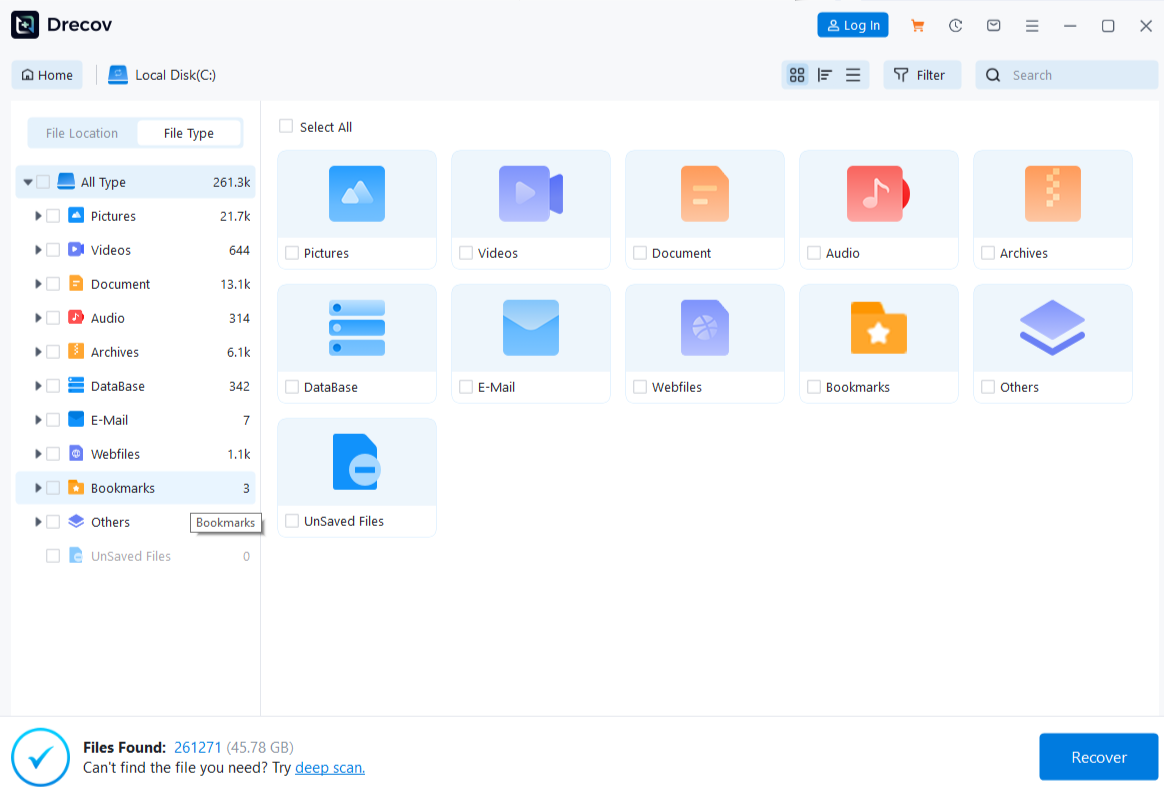
Start Quick Scan for a recent deletion or newly inaccessible path. If the target is not present and the local origin remains stable, continue with Deep Scan. Use Lost Partition Recovery when the volume entry itself disappeared; do not initialize, format, repartition, or create a replacement volume first.
Step 5: Filter and Preview the Right Candidates
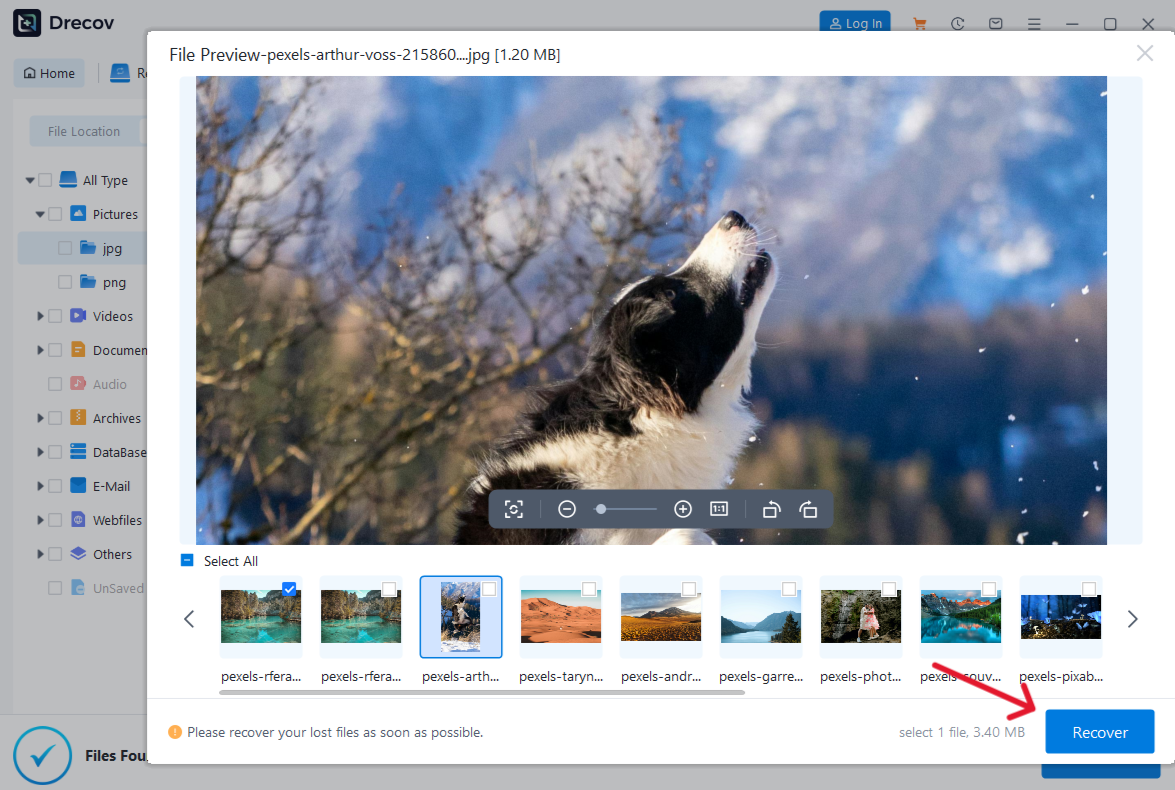
Use the former Dropbox path, filename, extension, owner folder, and deletion date; include working documents, photos, video, audio, email exports, and archives. Preview representative supported Dropbox items prior to selecting the full set. A successful preview shows that the sample can be decoded, but it cannot certify every page, frame, archive member, linked asset, game state, or byte.
Step 6: Recover Elsewhere and Verify prior to Repair
Recover requested Dropbox items to the prepared independent drive, never to the source. If results are not in the expected destination path, inspect Drecov Folder or Recovery Folder. Open restored documents, compare them with Dropbox version history, test archives, and confirm shared-folder context prior to resuming sync. Complete that validation before resuming Dropbox sync, clearing cache, unlinking the computer, reinstalling Dropbox, or reorganizing the restored folder.
Restore Cloud History Before Touching the PC
Restore From Deleted Dropbox items
Sign in on the web, open Deleted Dropbox items, select the correct item, and choose Restore. The item returns to its previous Dropbox sync path.
Use Version History for Overwrites
Open the file history, compare timestamps and previews, and restore the generation that contains the needed content.
A move, rename, unshare, or owner action can look like deletion. Account activity explains which branch applies.
Use Rewind for a Broad Incident
When an eligible account has many coordinated deletions or ransomware changes, Rewind may restore a folder or account state.
Recover a Local-Only Copy Last
Use Recycle Bin and backups first. Scan the local drive only if evidence shows the file existed there and cloud recovery cannot supply it.
Confirm the Restored set and Avoid a Second Loss
Open restored documents, compare them with Dropbox version history, test archives, and confirm shared-folder context prior to resuming sync. separate recovery destination Keep the recovered copy and any disk image until the underlying problem has remained stable through several normal uses.
- Do not treat “File appears under Deleted Dropbox items” as proof of a different cause without completing its related check.
- Do not treat “An older version exists” as proof of a different cause without completing its related check.
- Do not treat “Shared folder vanished” as proof of a different cause without completing its related check.
- Do not treat “Many Dropbox items changed together” as proof of a different cause without completing its related check.
- Do not treat “File never synced to Dropbox” as proof of a different cause without completing its related check.
How to recover deleted dropbox files FAQs
How long does Dropbox keep deleted Dropbox items?
Retention depends on the current plan and policy, so check the account rather than relying on an old number.
Dropbox states that restore access depends on having edit permission.
What if Delete forever was used?
Permanently deleted cloud items generally cannot be restored through normal Dropbox tools.
Can Drecov scan Dropbox cloud storage?
No. It scans stable local Windows storage where an offline or synchronized copy existed.
Should I reinstall Dropbox first?
No. Verify cloud history and preserve local evidence prior to changing the client. For additional context, see verifying recovered content.
Conclusion
The safest answer to how to recover deleted dropbox files is cloud first: Deleted Dropbox items, version history, activity, shared ownership, and Rewind when available. If a local copy existed but is now missing, Drecov can recover it from stable Windows storage to another target drive prior to synchronization or client changes resume.






