







You normally do not lose file contents when you zip a file because ZIP uses lossless compression: extraction reconstructs the stored bytes. That is different from converting a photo, video, or audio file with a lossy codec. Risk enters through the workflow instead: deleting originals before testing the archive, unsupported metadata, encryption choices, incomplete transfers, damaged split parts, or an interrupted write. Verify the ZIP before treating it as the only copy. This guide explains “do you lose anything when you zip a file” with practical checks that protect important files before system or storage changes.
Locate the Steam Read Failure
Start with the current state, not the most dramatic possible cause for this Steam cannot read its library case. Protect irreplaceable files, note exact messages and recent changes, and confirm which disk or folder is involved for this Steam cannot read its library case. Windows ZIP extraction methods To confirm the platform behavior for Steam cannot read its library, consult the official documentation.
| What you observe | What it means | Safest next move |
|---|---|---|
| ZIP extracts and files open | Stored contents are probably intact | Compare counts and representative hashes |
| Photos barely shrink | The source format is already compressed | Do not use size as a quality test |
| One split part is missing | The archive set is incomplete | Retrieve every part before repair |
| CRC or unexpected-end error appears | Archive data may be damaged or truncated | Preserve all copies and redownload |
| Originals were deleted after zipping | Archive is now the only local copy | Stop writes if recovery is needed |
Lossless Compression Preserves Stored File Bytes
A ZIP utility encodes repeated patterns and stores information needed to reconstruct each member. A successful extraction should return the same file data. Zipping does not lower JPEG quality, change document wording, or transcode video merely because the archive becomes smaller.
Write down the result and compare it with the previous state before proceeding for this Steam cannot read its library case.
Separate File Content From Metadata and Permissions
File timestamps, ownership, access-control lists, alternate data streams, symbolic links, and platform-specific attributes may not travel identically through every ZIP tool. If those details matter, test with the same operating systems and utility used by the recipient rather than assuming byte preservation covers the entire environment.
Use that evidence to stay on this branch; do not combine unrelated repairs in one attempt for this Steam cannot read its library case.
Expect Small Savings for Already Compressed Media
JPEG, MP4, MP3, PDF, DOCX, and many project formats already contain compression. A ZIP may barely shrink them, yet it still groups files and can add integrity checks. Tiny size reduction does not mean the archive discarded image or audio quality.
Choose a reversible check where possible and define what a successful result should look like for this Steam cannot read its library case.
Test Encryption, Split Archives, and Transfers
Password and encryption support differs among tools. Microsoft warns that encrypted source files can be unencrypted when extracted through some compressed-folder workflows. A split archive requires every part, and email or cloud transfer can truncate a file without making the original source corrupt.
Keep the source and the verified backup separate so a later action cannot overwrite both for this Steam cannot read its library case.
Verify Before Deleting the Original Folder
Extract the ZIP to a separate test folder, open representative documents and media, compare file counts and sizes. Also, use hashes when exact identity matters. Keep the original folder and a second backup until the archive has survived a real restore test.
Retest the original symptom once, then stop if the device becomes less stable for this Steam cannot read its library case.
Protect the Library Before Disk Repair
Lossless describes the archive algorithm, not every surrounding operation. If an application exports an image at lower quality before zipping, the loss occurred during export. If a mail service recompresses an attachment or a cloud tool creates previews, that is outside the ZIP operation. Compare the files placed into the archive with the extracted files, not with an earlier source that may have been converted first.
CRC information helps detect accidental changes, but a successful CRC check is not a substitute for a backup strategy or strong authenticity controls. A damaged central directory can make intact members difficult to locate, while a truncated archive may contain only early data. Preserve the original archive and every split part before trying repair utilities. Write repaired output to a new location so a failed attempt cannot replace the best evidence.
For a dependable archive test, count files and folders, extract to an empty location, open several small and large members. Also, compare cryptographic hashes when exact identity matters. Also test names containing non-English characters and paths near platform limits. If permissions, symbolic links, or executable attributes matter, use an archive format and tool that explicitly preserves them. Keep at least one independent backup rather than treating a single ZIP as permanent storage.
A Practical Checkpoint
Archive verification should also cover the recipient’s environment. A ZIP that works on the creator’s PC may fail elsewhere because of unsupported encryption, path length, filename encoding, or missing split volumes. Send a test archive containing non-sensitive representative files before committing a large transfer. Communicate the expected filename, size, and hash through a separate channel when integrity matters. The archive can remain lossless while the delivery process still produces an incomplete or inaccessible copy.
- Compare counts and representative hashes; confirm the observed condition was zip extracts and files open before using that action.
- Do not use size as a quality test; confirm the observed condition was photos barely shrink before using that action.
- Retrieve every part before repair; confirm the observed condition was one split part is missing before using that action.
- Preserve all copies and redownload; confirm the observed condition was crc or unexpected-end error appears before using that action.
- Stop writes if recovery is needed; confirm the observed condition was originals were deleted after zipping before using that action.
When a Real Local File Has Been Lost
Drecov is relevant only when the original files or ZIP archive were actually deleted or became inaccessible on stable Windows storage. It can locate archives and their source files, preview supported results. Also, recover elsewhere; it does not repair every damaged archive or recreate missing split parts. When Steam cannot read its library, PandaOffice Drecov provides Windows data recovery for PCs, HDDs, SSDs, external disks, USB drives, SD cards, and memory cards. For Steam cannot read its library, the supported recovery set includes photos, video, documents, email data, audio, and archives. That Steam cannot read its library recovery path combines Quick Scan, Deep Scan, filters, preview, a healthy destination, and Lost Partition Recovery.
⚠ Warning: Install it on a drive different from the one where your data was lost to prevent overwriting.
Step 1: Stabilize the Source and Select the Original Location
Suspend Steam downloads, updates, and library maintenance. A library drive that disconnects or freezes Explorer is no longer a routine Steam repair. Prepare a separate healthy target for Steam cannot read its library, keep the Drecov installation off the loss volume, then open PandaOffice Drecov. Also, select the stable drive and original folder where the deleted files or archive existed.

Step 2: Start With Quick Scan
Quick Scan is the first pass for recently removed saves or mods; Deep Scan follows only on a stable library drive. Do not initialize, format, repartition, or create a replacement volume for this Steam cannot read its library case. If the required files are absent and the source remains stable, continue with Deep Scan for this Steam cannot read its library case. Use Lost Partition Recovery when the partition entry itself has disappeared rather than treating formatting as a recovery method for this Steam cannot read its library case.

Step 3: Filter, Locate, and Preview Candidates
Filter by ZIP and related archive types, source file extensions, filename, former folder, modified date, and expected project contents. Preview representative supported files before selecting the entire set for this Steam cannot read its library case. A preview is evidence for that sample, not a promise that every page, frame, archive member, or related project asset is intact for this Steam cannot read its library case.
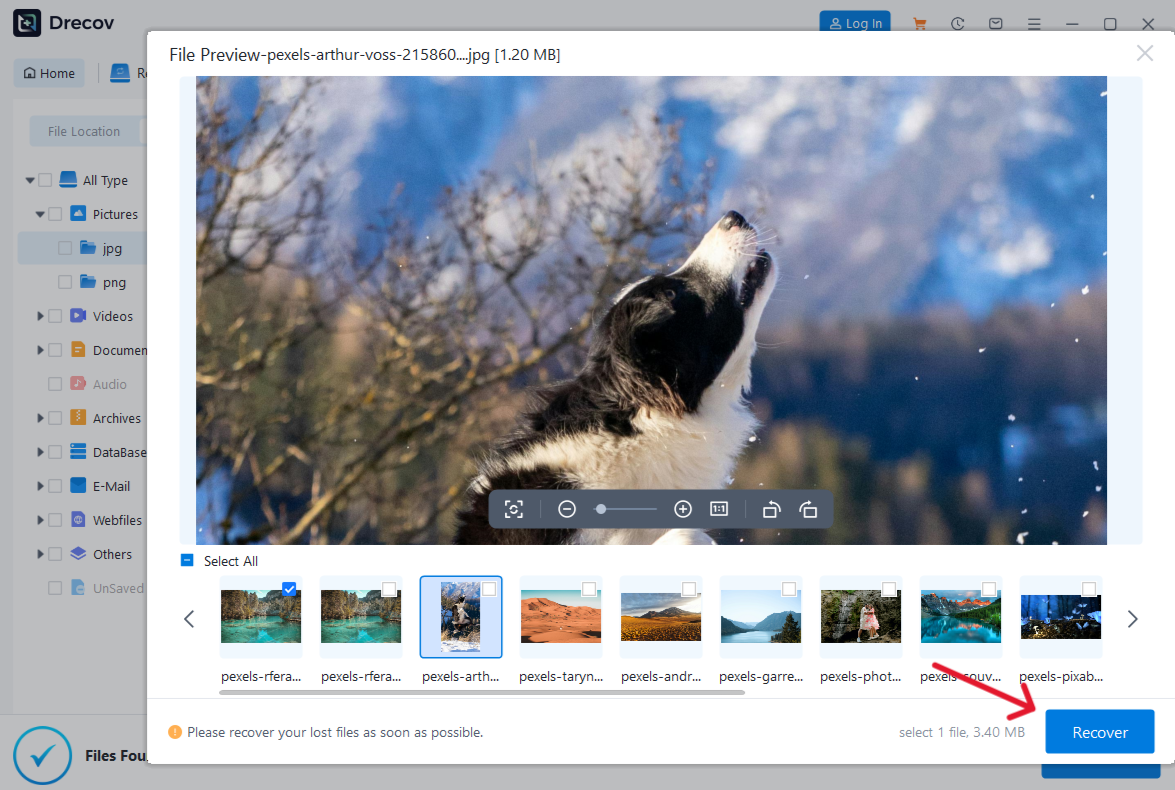
Step 4: Recover Elsewhere and Confirm the Output
Place restored saves and mods on the healthy target, not inside the Steam library that is still under diagnosis. If the output for this Steam cannot read its library case is not where expected, inspect Drecov Folder or Recovery Folder before scanning again. Extract recovered archives to a separate test folder, open representative members, compare file counts, and use hashes when exact identity is important. Keep the original source unchanged until the Steam cannot read its library checks pass and the result has a second verified copy.
Step 5: Repair Only After Verification
Complete recovery and verification before archive repair, deleting alternate copies, re-creating the ZIP, formatting storage, CHKDSK, or replacing the original backup. Drecov does not repair physical damage, remove malware, fix Windows or applications, or guarantee recovery of overwritten data for this Steam cannot read its library case. Those boundaries determine when repair tools or a specialist should take over for this Steam cannot read its library case.
Test Saves and the Library After Repair
Extract recovered archives to a separate test folder, open representative members, compare file counts, and use hashes when exact identity is important. Use verify recovered file integrity when exact identity matters. Retain the recovered set and any disk image until the original problem has remained stable through normal use for this Steam cannot read its library case.
Steam Disk Read Error Questions
Does ZIP reduce photo quality?
No. ZIP itself is lossless and does not transcode the photo.
Why is my ZIP almost the same size?
Many media and office formats are already compressed.
Can metadata change?
Yes. Permissions, ownership, timestamps, links, and platform-specific attributes may differ by tool.
Should I delete originals after zipping?
Only after extraction tests and an independent backup.
Can Drecov fix a CRC error?
It may recover another intact copy, but it is not a universal archive-repair tool.
For a related safeguard in the Steam cannot read its library branch, review recover recently deleted originals.
When troubleshooting “do you lose anything when you zip a file”, begin with the least invasive step and verify recovered files before attempting repairs.
Conclusion
You normally do not lose file contents when you zip a file because ZIP uses lossless compression: extraction reconstructs the stored bytes. Protect important local data before broad repair, follow the evidence toward the narrowest suitable action, and verify the outcome for this Steam cannot read its library case. When files are genuinely missing while Steam cannot read its library, Drecov supplies Quick Scan, Deep Scan, preview, and Lost Partition Recovery. Also, recovery to another healthy destination.






