







A .CHK file is usually a recovered file or folder fragment placed in a FOUND.000-style directory after Windows checks a file system. It is not a special document format. Preserve the entire folder first, because blindly renaming every fragment to JPG. DOCX, or ZIP can conceal what the bytes actually contain.
.chk file: safe diagnosis
CHKDSK can convert lost chains or orphaned allocation units into numbered .CHK entries when file-system metadata no longer connects them to a normal name. One entry might contain a complete small file, part of a larger file, a directory fragment, or unrelated slack. The extension alone says nothing about the original content.
The presence of CHK files indicates that the file system was already checked or repaired. It does not prove that every missing file was preserved. Folder names, filenames, timestamps, and fragmented portions may be gone even when useful payload bytes remain.
Work on Copies and Identify File Signatures
Copy the complete FOUND.000 folder to another healthy drive without changing the source. Inspect one duplicate at a time with a trusted file-identification utility or hex viewer. Common formats begin with recognizable signatures, but a matching header does not guarantee that the ending and internal structures are complete.
Try opening a copied fragment with an application only after its likely type is known. Rename the copy, not the source. Office Open XML documents are ZIP containers; JPEG, PNG, PDF, media, and archive formats each have different structural markers. A viewer error may mean the fragment is partial rather than incorrectly named.
Prefer Intact Originals to Reconstructed Fragments
If important files disappeared before FOUND.000 appeared, recovering their original directory entries may produce better names. Dates, and completeness than rebuilding CHK fragments. Stop writing to the affected volume, especially if CHKDSK has already changed its metadata.
A storage device that disconnects, clicks, or reports severe read errors should not be subjected to repeated CHKDSK runs or direct scans. Image stable-enough media or consult a professional. CHK fragments cannot compensate for a worsening physical fault.
.chk file — Useful related reading includes fix ZIP extraction error 0x80004005, recover deleted archives, and check whether a file is corrupted.
Recover Missing Local Data Before Repair Changes the Source
PandaOffice Drecov is Windows data recovery software for PCs, HDDs, SSDs, external drives, USB drives, SD cards, and memory cards. It works in read-only recovery mode and can locate photos, videos, documents, emails, audio, and archives. In this case, its role is to retrieve intact versions of files that were missing before the disk check; it does not repair hardware, decrypt protected data, remove malware, or reconstruct overwritten bytes.
⚠ Warning: Install it on a drive different from the one where your data was lost to prevent overwriting.
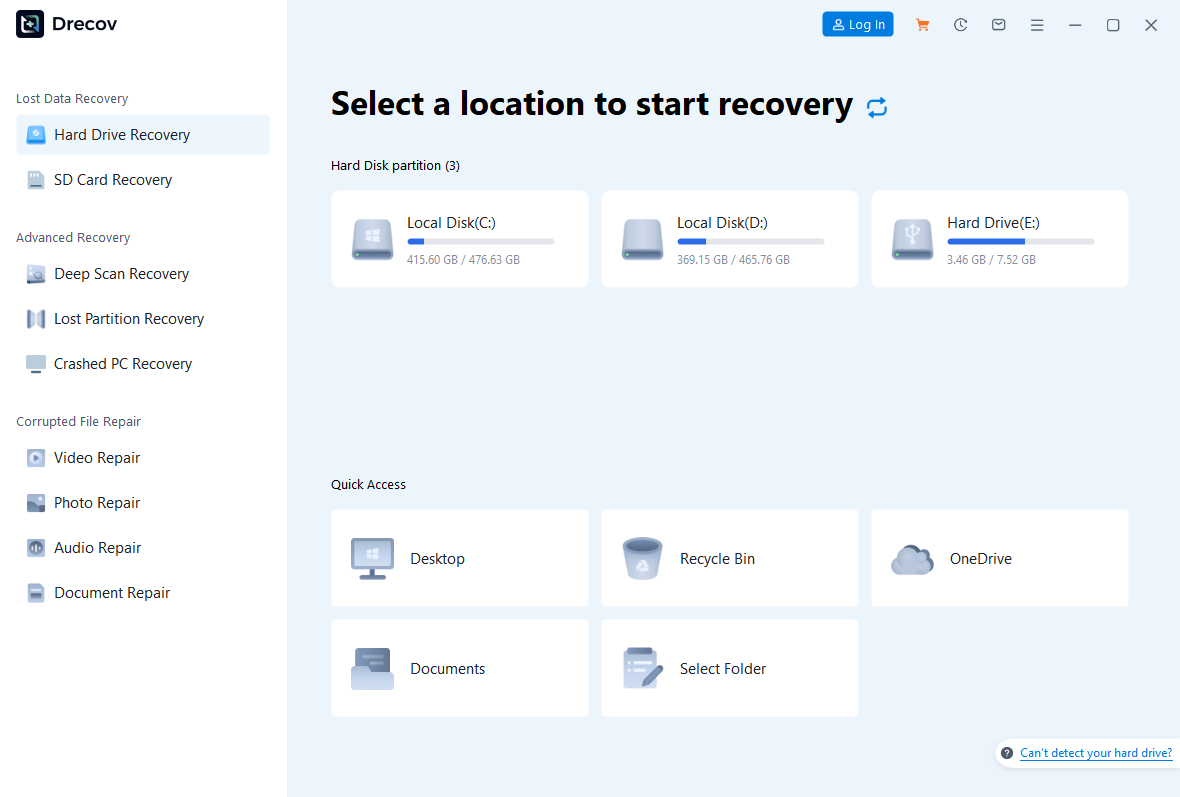
Step 1: Open Drecov and Select the Original Source
Stop new writes and assess stability. If the device clicks, drops offline, changes capacity, or reports severe read errors. Stop direct scanning and seek imaging or professional recovery. Prepare another healthy destination and do not install Drecov on the source. Open Drecov, then select the original stable volume that produced FOUND.000, not the copied CHK working folder.
Step 2: Run Quick Scan Before a Broader Search
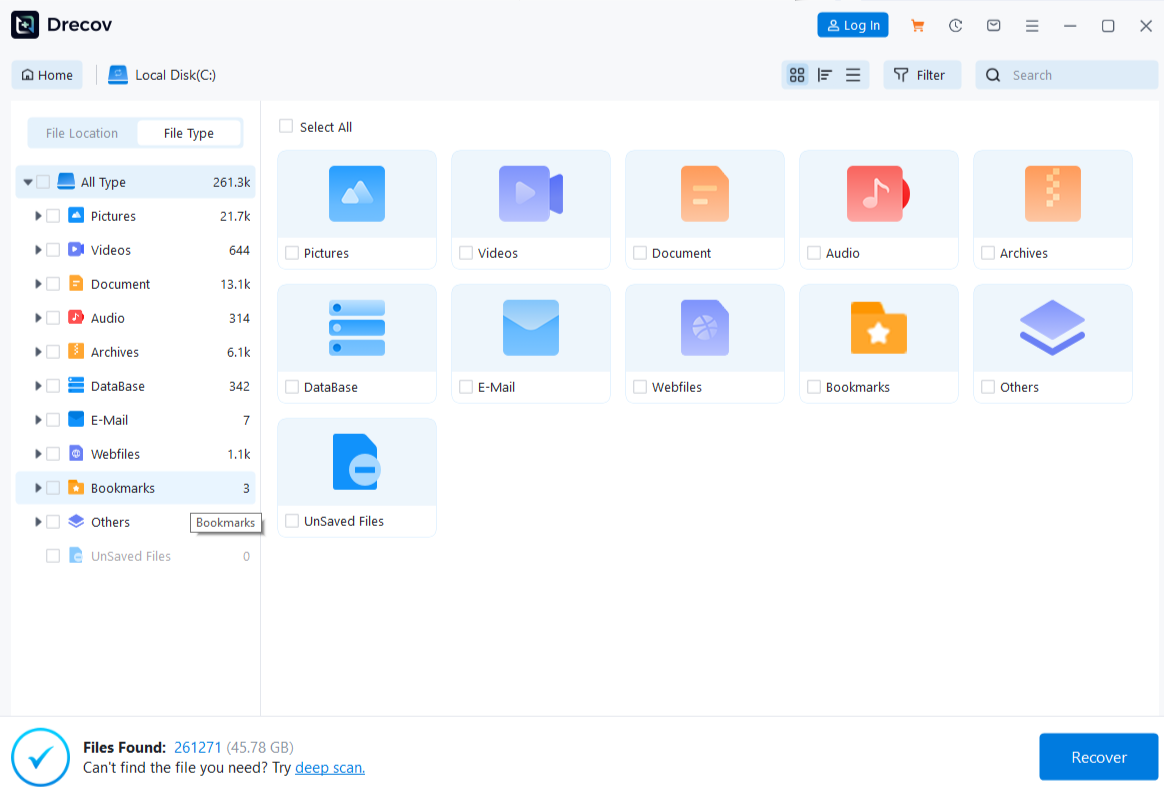
Start Quick Scan and examine the original path first. Look for intact versions of files that were missing before the disk check. Compare available names, dates, sizes, and folders with the evidence gathered earlier.
Step 3: Use Deep Scan Only While the Source Is Stable
If Quick Scan misses the needed files and the source remains stable, run Deep Scan. It can find older signatures whose original paths may be missing. Stop if new instability appears; no scan can reconstruct overwritten data.
Step 4: Filter and Preview the Most Plausible Candidates
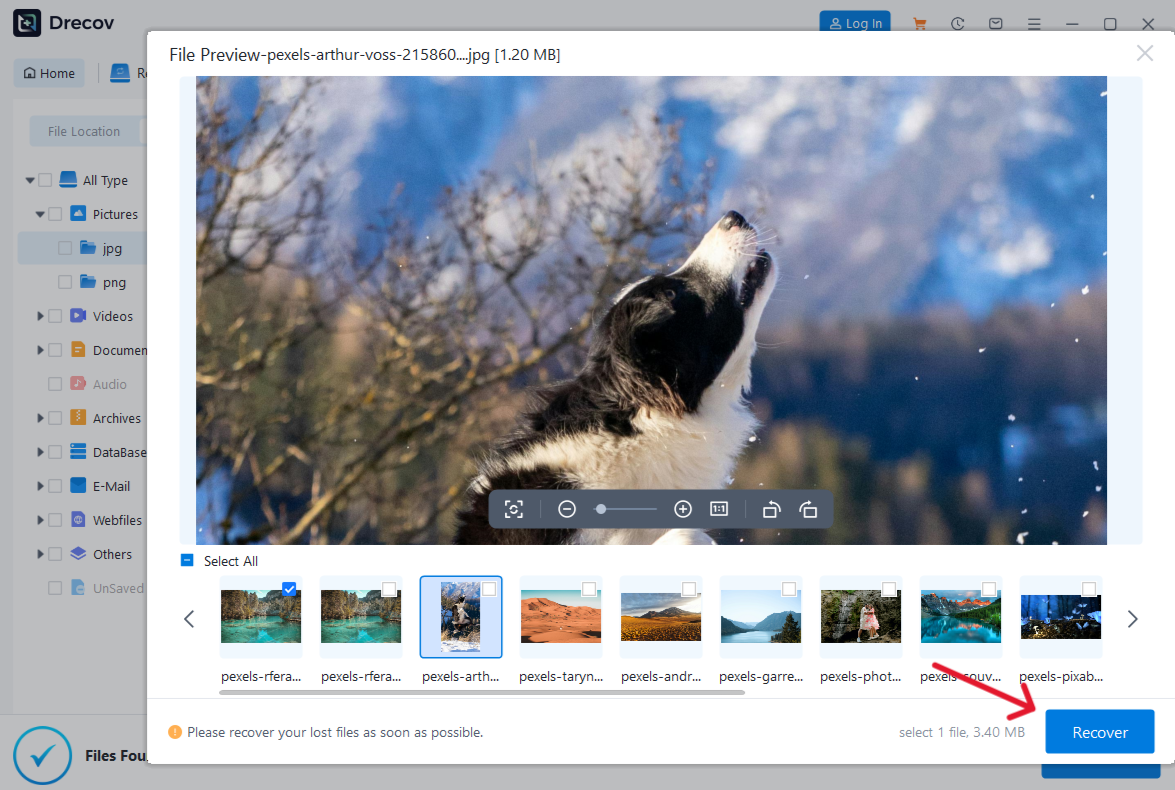
Narrow results using expected file type, former folder, approximate size, date, and recognizable filename. Preview several representative supported files. One successful preview supports that sample, not every page, frame, archive member, formula, or linked asset.
Step 5: Recover to Another Device and Verify
Restore selected files to the prepared healthy destination, never to the source. Check Drecov Folder or Recovery Folder if output is not where expected. Then compare recovered originals with CHK reconstructions and keep whichever copy passes complete content checks. Complete that verification before CHKDSK, formatting, reset, partition work, reinstallation, or other source changes.
⚠ Warning: Install it on a drive different from the one where your data was lost to prevent overwriting.
Validate Any File Reconstructed from a CHK Fragment
Open the beginning, middle, and end of media; inspect every page of a document where practical. Test archive integrity; and compare known dimensions or duration. Keep the untouched fragment and record every extension tried. A file that merely opens may still be truncated.
.chk file — For the relevant documented behavior, consult the official technical guidance. Use that source for current interface or command details, and keep the protected original available while testing.
Decide whether a CHK fragment is worth reconstructing
A .CHK file is usually a fragment placed in a FOUND.000 folder after file-system checking. Its name no longer identifies the original document, and one CHK item may contain a complete small file. Part of a large file, or unrelated directory data. Copy the entire FOUND.000 folder before testing extensions or carving content.
Start with signatures, size, and context. A JPEG commonly begins with FF D8 FF, a PDF with %PDF, and a ZIP-based Office document with PK. Signature identification can suggest a candidate type, but changing the extension does not repair missing bytes. Open tests should use copies and appropriate viewers, never the sole fragment.
Validate reconstructed candidates beyond the first screen. Check all document pages, the end of an audio or video timeline, archive integrity, and whether embedded objects load. Several fragments may belong to one original file, and automatic joining can produce convincing but false results. Preserve ambiguous pieces for specialist analysis.
File-carving utilities can classify many fragments at once, but their output still needs human review. Group candidates by signature and size, then compare them with the types of files that disappeared before CHKDSK ran. A 4 KB fragment is unlikely to contain a complete high-resolution photo or long document. Keep a log linking every renamed copy to its original CHK number. That record lets you reverse mistaken identifications without touching the preserved FOUND.000 source.
Questions Readers Commonly Ask
Can I delete CHK files?
Only after important missing data has been recovered or ruled out and verified copies exist. Some fragments may contain the only surviving portion of a file.
Does changing .CHK to .JPG repair a photo?
No. Renaming only changes the label. It helps an application try the content when the underlying signature really is JPEG.
Why are CHK filenames meaningless?
The original directory metadata may no longer have been connected to the recovered clusters, so Windows assigned generic numbers.
Keep the diagnosis tied to observable evidence
CHKDSK can convert lost chains or orphaned allocation units into numbered .CHK entries when file-system metadata no longer connects them to a normal name. One entry might contain a complete small file, part of a larger file, a directory fragment, or unrelated slack. The extension alone says nothing about the original content.
Why one successful test is not enough
The presence of CHK files indicates that the file system was already checked or repaired. It does not prove that every missing file was preserved. Folder names, filenames, timestamps, and fragmented portions may be gone even when useful payload bytes remain.
Preserve the cleanest available version
Copy the complete FOUND.000 folder to another healthy drive without changing the source. Inspect one duplicate at a time with a trusted file-identification utility or hex viewer. Common formats begin with recognizable signatures, but a matching header does not guarantee that the ending and internal structures are complete.
Use the result to choose the next action
Try opening a copied fragment with an application only after its likely type is known. Rename the copy, not the source. Office Open XML documents are ZIP containers; JPEG, PNG, PDF, media, and archive formats each have different structural markers. A viewer error may mean the fragment is partial rather than incorrectly named.
Know when the source needs specialist handling
If important files disappeared before FOUND.000 appeared, recovering their original directory entries may produce better names. Dates, and completeness than rebuilding CHK fragments. Stop writing to the affected volume, especially if CHKDSK has already changed its metadata.
Compare the protected copy with the working result
A storage device that disconnects, clicks, or reports severe read errors should not be subjected to repeated CHKDSK runs or direct scans. Image stable-enough media or consult a professional. CHK fragments cannot compensate for a worsening physical fault.
Document the point at which the symptom changed
Open the beginning, middle, and end of media; inspect every page of a document where practical. Test archive integrity; and compare known dimensions or duration. Keep the untouched fragment and record every extension tried. A file that merely opens may still be truncated.
Conclusion
A .CHK file is evidence of a file-system event, not a guaranteed intact original. Work from copies, identify signatures, and verify complete content before trusting a renamed fragment. If the original files disappeared from a stable readable drive, Drecov may locate better candidates than manually reconstructing isolated fragments.
⚠ Warning: Install it on a drive different from the one where your data was lost to prevent overwriting.





