







When Windows reports that the extraction operation was not completed, keep the original archive untouched. Note the full security or extraction message, copy the archive to a short local path, and verify its source. Do not disable antivirus protection or delete the only archive merely to make the warning disappear.
extraction operation was not completed: safe diagnosis
The same opening words can accompany a Windows Security detection, error 0x80004005, a destination permission failure, or an incomplete archive. Protection History identifies a Defender action and the detected item. File Explorer or the extraction program may instead name a path, CRC, header, or disk-space problem.
Treat a threat detection as a security decision, not a compression failure. Verify the sender, digital signature, download source, and expected contents. Restore or allow an item only when its legitimacy is independently established. A narrow, temporary exception is safer than disabling real-time protection.
Test a Copy in a Short, Writable Destination
Duplicate the archive to a healthy local folder such as C:\Extract-Test and extract into a new empty subfolder. Long nested names, reserved characters, an unavailable network destination, or a protected folder can stop an otherwise healthy archive. Confirm that the destination has more free space than the expanded contents require.
Right-click the downloaded copy, open Properties, and use Unblock only when Windows shows that option and the source is trusted. Do not take ownership of an entire system directory for one archive. If another account created the destination, choose a folder your account already controls.
Check Archive Completeness Before Trying More Extractors
Use the archive application’s test function on the copied file. For multipart archives, collect every numbered segment in one folder and start with the first part. Compare the download size or checksum with the publisher’s value when available. Re-download from the original trusted source if transfer interruption is likely.
A second reputable extractor can separate an application limitation from structural damage. It does not repair missing bytes. If several tools identify the same CRC, header, or unexpected-end error. Preserve the archive and look for another source, backup, or intact earlier copy.
Extraction operation was not completed — Useful related reading includes fix ZIP extraction error 0x80004005, recover deleted archives, and check whether a file is corrupted — extraction operation was not completed.
Recover Missing Local Data Before Repair Changes the Source
PandaOffice Drecov becomes relevant only if an intact archive or the original files that were compressed are actually missing or inaccessible on stable storage. The Windows application supports PCs, HDDs, SSDs, external drives, USB media, SD cards, and memory cards. Its read-only mode, Quick Scan, Deep Scan, filters, preview, healthy-destination output, Lost Partition Recovery, and Crashed PC Recovery recover files rather than fix the underlying application, device electronics, encryption, or overwritten content.
⚠ Warning: Install it on a drive different from the one where your data was lost to prevent overwriting.
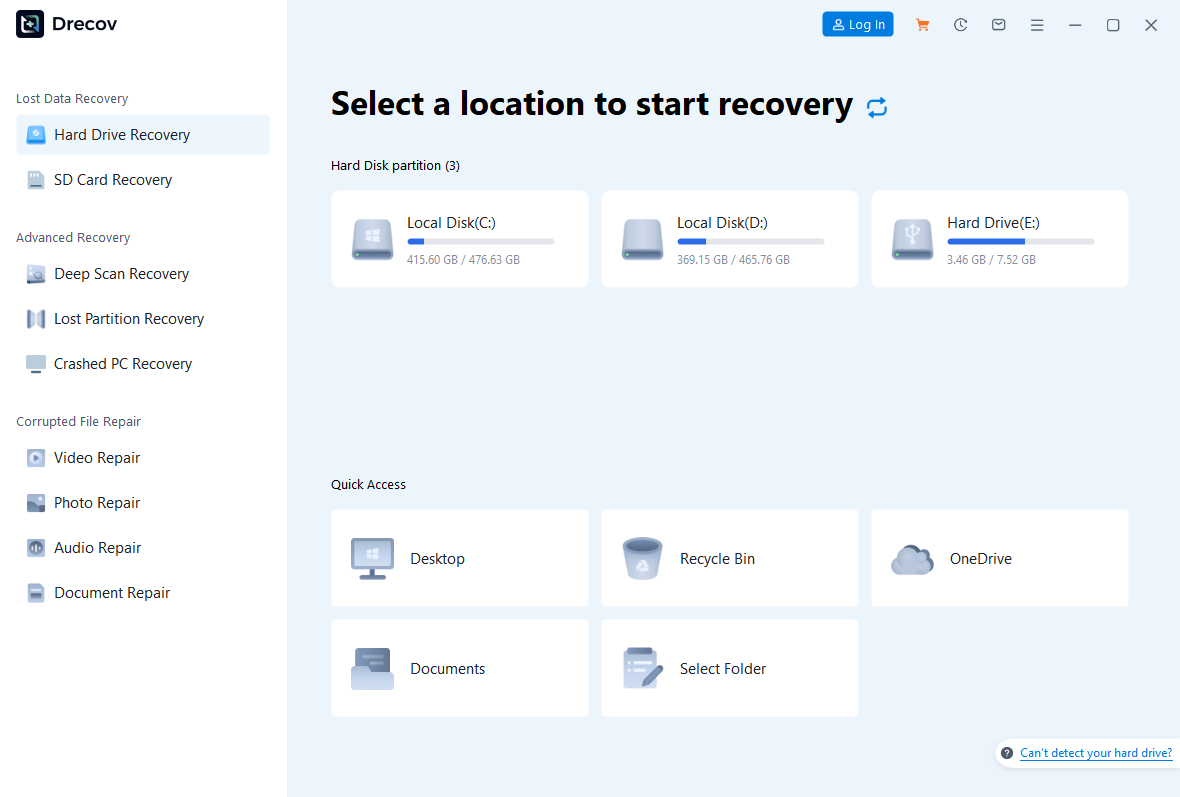
Step 1: Open Drecov After Preparing an Independent Destination
First stop source activity and judge physical stability. Repeated dropouts, unusual sounds, heat, wrong capacity, or serious read failures call for imaging or professional help. Attach a healthy destination, avoid installing on the loss volume, open Drecov. And select the stable drive that held the complete archive before deletion, truncation, or an interrupted transfer.
Step 2: Search the Recent File-System View with Quick Scan
Run Quick Scan and inspect the source-specific paths for an intact archive or the original files that were compressed. Use the known location and timing to reject unrelated results early.
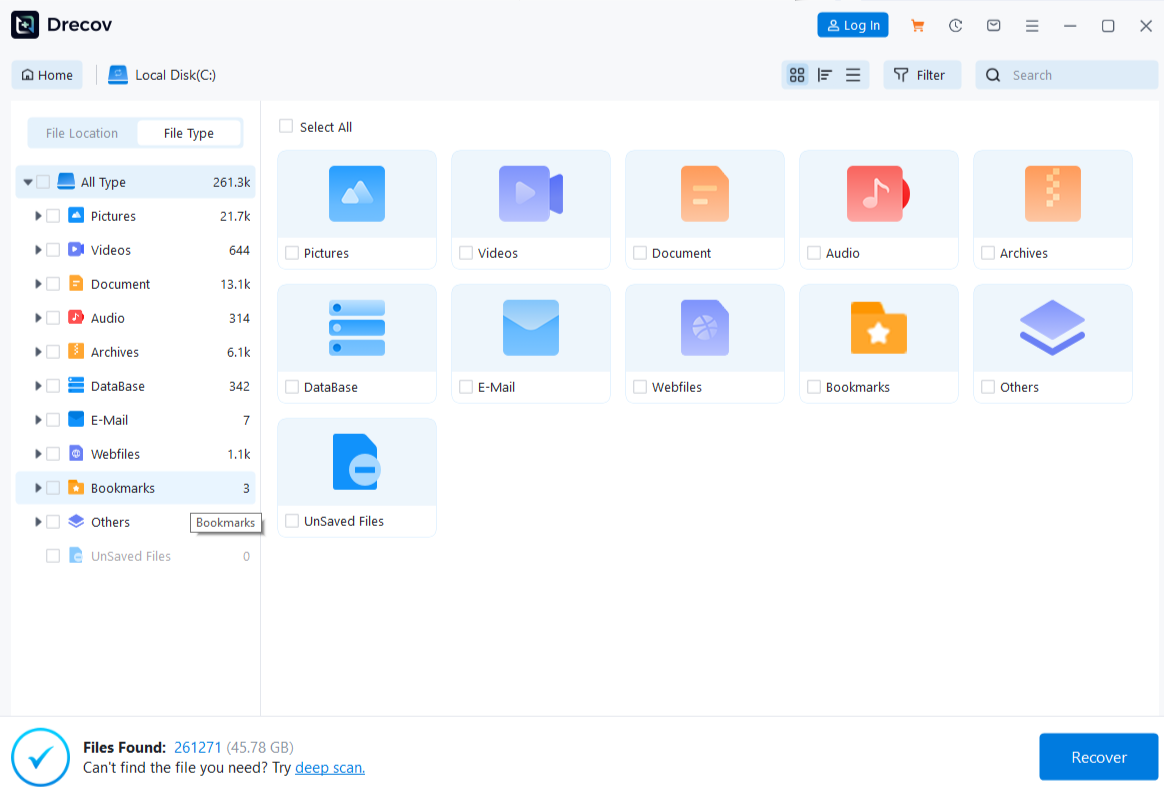
Step 3: Continue with Deep Scan When the Medium Remains Sound
Deep Scan is the next option only when Quick Scan misses the target and storage stays stable. It can locate file signatures after directory metadata is lost. But later writes and SSD TRIM may sharply reduce what remains.
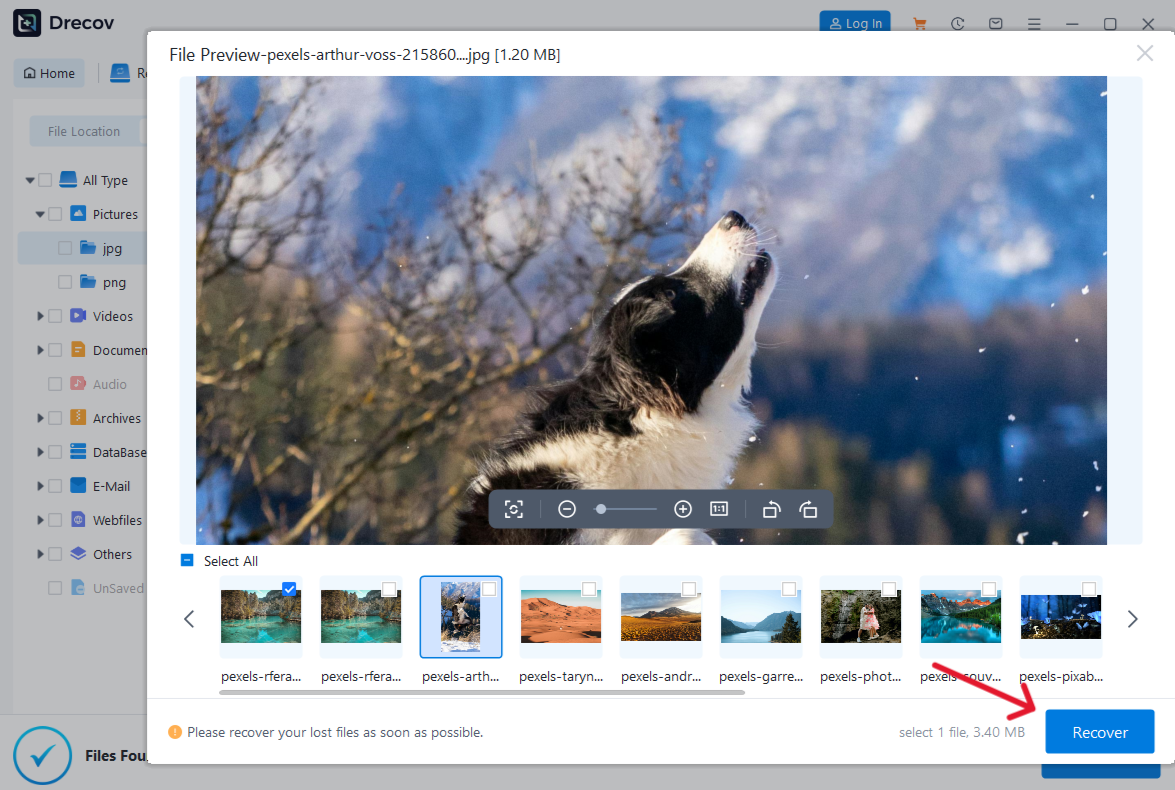
Step 4: Filter the Result Set and Preview Representative Content
Use archive extension, original download or project folder, filename, size, and creation date. Preview several supported candidates at useful points. Keep in mind that preview confirms decodable portions rather than guaranteeing every component.
Step 5: Recover Away from the Source and Validate the Outcome
Save selected output to the separate healthy device. Look in Drecov Folder or Recovery Folder when needed. Next, test archive integrity and open files from the beginning, middle, and end of the recovered set. Preserve the source until validation is complete, then decide whether repair, reset, formatting, or replacement is appropriate.
⚠ Warning: Install it on a drive different from the one where your data was lost to prevent overwriting.
Verify the Extracted Set, Not Just One File
Compare the expected folder layout and file count. Open representative documents, images, media, and nested archives. Scan the extracted destination with current security definitions. Delete test outputs only after an intact set is confirmed elsewhere.
Extraction operation was not completed — For the relevant documented behavior, consult the official technical guidance. Use that source for current interface or command details, and keep the protected original available while testing — extraction operation was not completed.
Read the security event before retrying extraction
Windows often stops extraction because Defender or another security product detected a threat. But the message can also follow a blocked path, an incomplete archive, or a permission problem. Open Windows Security protection history and match the event time and filename. Do not disable protection merely to force the archive open.
Obtain a fresh archive from the legitimate source and compare its published checksum or digital signature when available. Move it to a short local path that you control, but keep suspicious material quarantined. If a clean, verified archive fails only in one extractor. Test the operating system’s built-in method or a reputable alternative without bypassing malware controls.
Successful extraction is not the final test. Confirm that expected files exist, scan the output, and open representative items in patched applications. If security repeatedly flags the same component, stop and contact the software publisher. If files disappeared during cleanup, determine whether they are quarantined before treating them as deleted.
For password-protected or multipart archives, verify the password source and naming sequence before declaring damage. Every volume must belong to the same set and finish downloading completely. Do not rename random parts to make the extractor accept them. Compare sizes with the publisher’s list and keep all pieces in one local folder. If a CRC error identifies one member, retrieve that volume again from the trusted source rather than repeatedly extracting the entire archive onto the original storage device.
Extraction operation was not completed FAQs
Should I turn off Microsoft Defender?
No. Review Protection History and verify the file first. Broadly disabling protection increases risk and does not repair a damaged archive.
Can changing the extraction folder fix the error?
Yes when path length, permissions, or free space caused the failure. It cannot replace missing archive bytes.
Why does one file extract while the rest fail?
Some archive entries may remain intact even when another segment, CRC, or header is damaged.
Keep the diagnosis tied to observable evidence
The same opening words can accompany a Windows Security detection, error 0x80004005, a destination permission failure, or an incomplete archive. Protection History identifies a Defender action and the detected item. File Explorer or the extraction program may instead name a path, CRC, header, or disk-space problem.
Why one successful test is not enough
Treat a threat detection as a security decision, not a compression failure. Verify the sender, digital signature, download source, and expected contents. Restore or allow an item only when its legitimacy is independently established. A narrow, temporary exception is safer than disabling real-time protection.
Preserve the cleanest available version
Duplicate the archive to a healthy local folder such as C:\Extract-Test and extract into a new empty subfolder. Long nested names, reserved characters, an unavailable network destination, or a protected folder can stop an otherwise healthy archive. Confirm that the destination has more free space than the expanded contents require.
Use the result to choose the next action
Right-click the downloaded copy, open Properties, and use Unblock only when Windows shows that option and the source is trusted. Do not take ownership of an entire system directory for one archive. If another account created the destination, choose a folder your account already controls.
Know when the source needs specialist handling
Use the archive application’s test function on the copied file. For multipart archives, collect every numbered segment in one folder and start with the first part. Compare the download size or checksum with the publisher’s value when available. Re-download from the original trusted source if transfer interruption is likely.
Compare the protected copy with the working result
A second reputable extractor can separate an application limitation from structural damage. It does not repair missing bytes. If several tools identify the same CRC, header, or unexpected-end error. Preserve the archive and look for another source, backup, or intact earlier copy.
Document the point at which the symptom changed
Compare the expected folder layout and file count. Open representative documents, images, media, and nested archives. Scan the extracted destination with current security definitions. Delete test outputs only after an intact set is confirmed elsewhere.
Conclusion
When the extraction operation was not completed, the correct response depends on whether security software. Archive damage, path rules, or permissions caused the stop. Verify the source and protection history first. Drecov is only a recovery option for clean local files that were genuinely deleted. Not a way to restore or run detected malware.
⚠ Warning: Install it on a drive different from the one where your data was lost to prevent overwriting.





