







When File Explorer won’t open, first determine whether only the Explorer window is broken or the files themselves are inaccessible. Press Ctrl+Shift+Esc to open Task Manager, restart Windows Explorer, and then test a folder through the Run dialog. If folders open by another route, your data is probably still present. If the drive also disappears, freezes, clicks, or disconnects, stop treating this as a simple Windows interface problem and protect important files before repair.
Identify What “Won’t Open” Means on This PC
The same complaint can describe several different failures. The taskbar folder icon may do nothing. An Explorer window may flash and close, remain blank, or freeze while loading a particular directory. In other cases, the desktop and taskbar disappear because the Explorer shell has crashed. These symptoms point to different layers, so note exactly what happens before changing settings.
- Only one shortcut fails: its target or pinned entry may be invalid.
- All Explorer windows fail, but other apps work: suspect the Explorer process, Quick Access history, or a shell extension.
- A new Windows account works: the original user profile or its per-user settings are likely involved.
- Opening one drive freezes every window: examine that storage device before running repair commands.
- The whole PC is unstable: treat Explorer as one symptom of a wider driver, memory, or storage problem.
Record whether the problem began after installing an archive tool, cloud client, antivirus package, graphics utility, or context-menu extension. Also note whether it occurs after sign-in, only when browsing a network location, or only when a USB drive is attached. That evidence prevents a long list of unrelated fixes.
Regain Folder Access Without Depending on Explorer
Restart the shell process
Open Task Manager with Ctrl+Shift+Esc. Find Windows Explorer on the Processes tab and choose Restart. If it is missing, select Run new task, enter explorer.exe, and press Enter. A restored taskbar and working window indicate that the shell process had stalled. This does not explain why it stalled, so repeat the original action and notice which folder or device triggers the failure.
Open a known local folder through Run
Press Windows+R and enter %UserProfile%. Then test %Temp% and a simple path such as C:\Windows. If these locations open while a pinned shortcut does not, unpinning and recreating that shortcut is more appropriate than resetting Windows. If local paths work but a network share hangs, disconnect the unavailable mapping and troubleshoot the network resource separately.
Use an application’s Open dialog
Notepad or another trusted desktop program can provide a temporary route through File > Open. This is useful for copying one critical document to a healthy external drive. It is not a substitute for diagnosing a disk that repeatedly stops responding. Cancel the operation if the source drive vanishes or the copy rate repeatedly falls to zero with read errors.
Separate Explorer Trouble from a Drive That Is Failing
Open Disk Management by right-clicking Start and selecting it from the menu. Do not initialize or format anything. Check whether the expected disk appears with its normal model, capacity, partitions, and drive letter. A volume that appears correctly in Disk Management but not in Explorer may have a letter, mount, permission, or file-system issue. A disk that is absent from firmware and Disk Management points toward power, cabling, controller, or hardware failure.
Physical warning signs change the safe response. Clicking, repeated spin-up attempts, burning smell, changing capacity, severe read errors, or constant disconnects are reasons to power down the device. Repeated scans can stress unstable media. Imaging with suitable hardware or professional recovery is safer when the files matter.
If the disk is stable and only one folder causes a delay, check whether that location contains unavailable network references, damaged thumbnails, or a very large media collection. Switch the folder view to Details after access returns and disable the preview pane temporarily. Do not run CHKDSK merely because Explorer is slow. CHKDSK modifies file-system structures; recover needed files first when corruption is possible.
Repair the Windows Shell in the Order the Evidence Supports
Clear Quick Access history
If Explorer opens through %UserProfile% but hangs on Home or Quick Access, an unavailable recent location may be blocking it. Open File Explorer Options from Windows Search or Control Panel. Under Privacy, clear the history and temporarily stop showing recently used files and frequently used folders. Reopen Explorer and then restore those preferences if the problem is gone.
Test another account or Safe Mode
A newly created local test account separates profile-specific trouble from a machine-wide fault. If Explorer works there, avoid migrating or deleting the original account until its files are backed up. Safe Mode provides a different comparison because it loads fewer third-party integrations. A normal Safe Mode result makes a context-menu handler, cloud overlay, or startup application more plausible.
Disable suspect shell extensions through their applications
Archive utilities, synchronization clients, security products, and graphics tools can add Explorer menu or icon handlers. Update or temporarily disable the suspected integration using that product’s supported settings. Remove one variable at a time. If you disable several items together, a successful launch will not identify the cause.
Check Windows system files
When Explorer fails for every account and storage is stable, open an elevated Terminal and run DISM /Online /Cleanup-Image /RestoreHealth, followed by sfc /scannow. DISM services the Windows component store; SFC checks protected system files. Restart afterward and repeat the same folder test. Microsoft also provides current steps to fix File Explorer when it will not start.
Protect Inaccessible Files Before Reset or Disk Repair
If the desktop interface is broken but files remain readable through another route, copy the irreplaceable folders first. Use a different physical drive as the destination and open several copied files before assuming the backup is complete. Windows recovery options can preserve or remove different categories of data, so read what each choice does; the related overview of Windows recovery options and personal files helps distinguish them.
If local files have actually disappeared or the stable drive is no longer accessible through normal paths, PandaOffice Drecov can provide a recovery route before reset, CHKDSK, formatting, or reinstalling Windows. It is Windows data recovery software for PCs, hard drives, SSDs, external drives, USB devices, SD cards, and memory cards. Its read-only recovery mode offers Quick Scan, Deep Scan, filtering, preview, and recovery to a selected healthy destination. Lost Partition Recovery and Crashed PC Recovery address related logical-loss situations. Drecov extracts accessible data; it does not repair a failing disk, fix Explorer itself, remove malware, or restore overwritten bytes.
⚠ Warning: Install it on a drive different from the one where your data was lost to prevent overwriting.
Recover Files When Explorer Cannot Reach Them
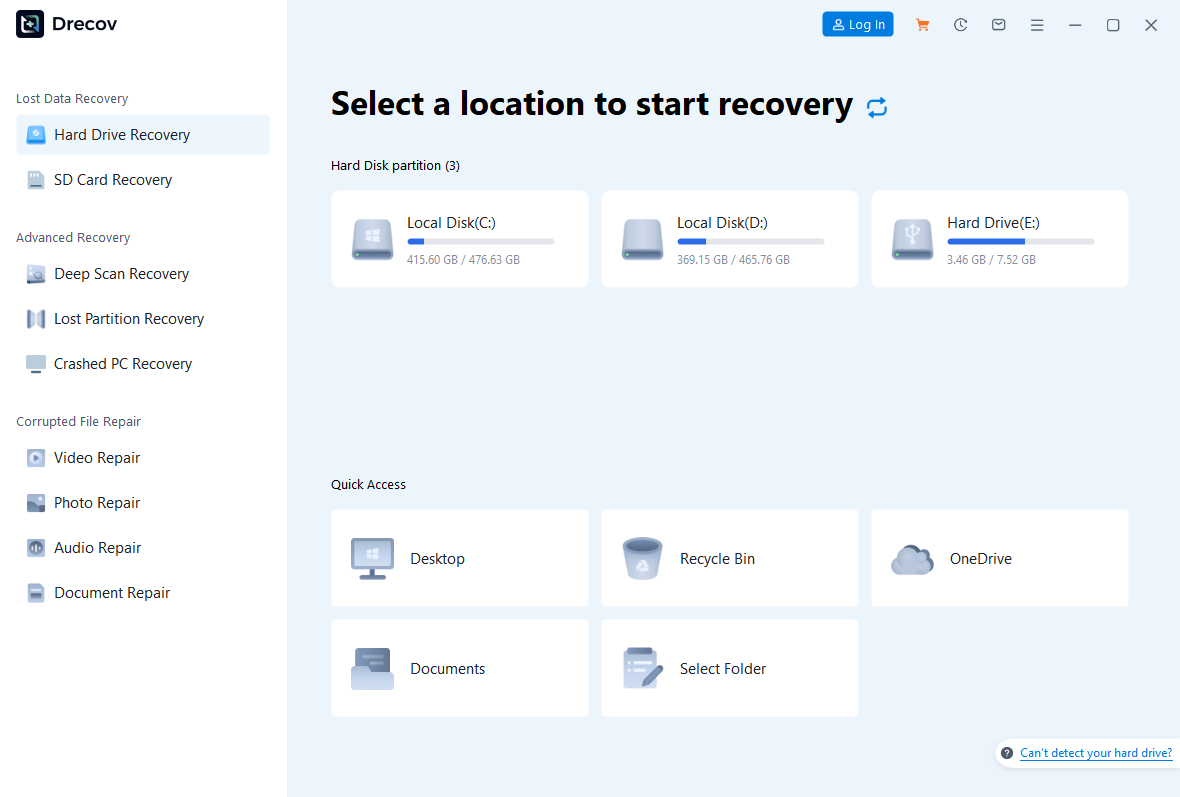
Step 1: Open Drecov and select the original location
Stop writing to the affected volume. Attach a separate healthy drive for the recovered files, and do not install Drecov on the source partition. Open Drecov and select the original disk or partition that contained the inaccessible folders. If the device disconnects or reports severe read errors, stop scanning and seek an imaging or professional-recovery path.
Step 2: Start Quick Scan and check familiar paths
Run Quick Scan first. Browse the original Desktop, Documents, Pictures, or project location and compare filenames, dates, sizes, and folder structure. Select complete folders when related files belong together.
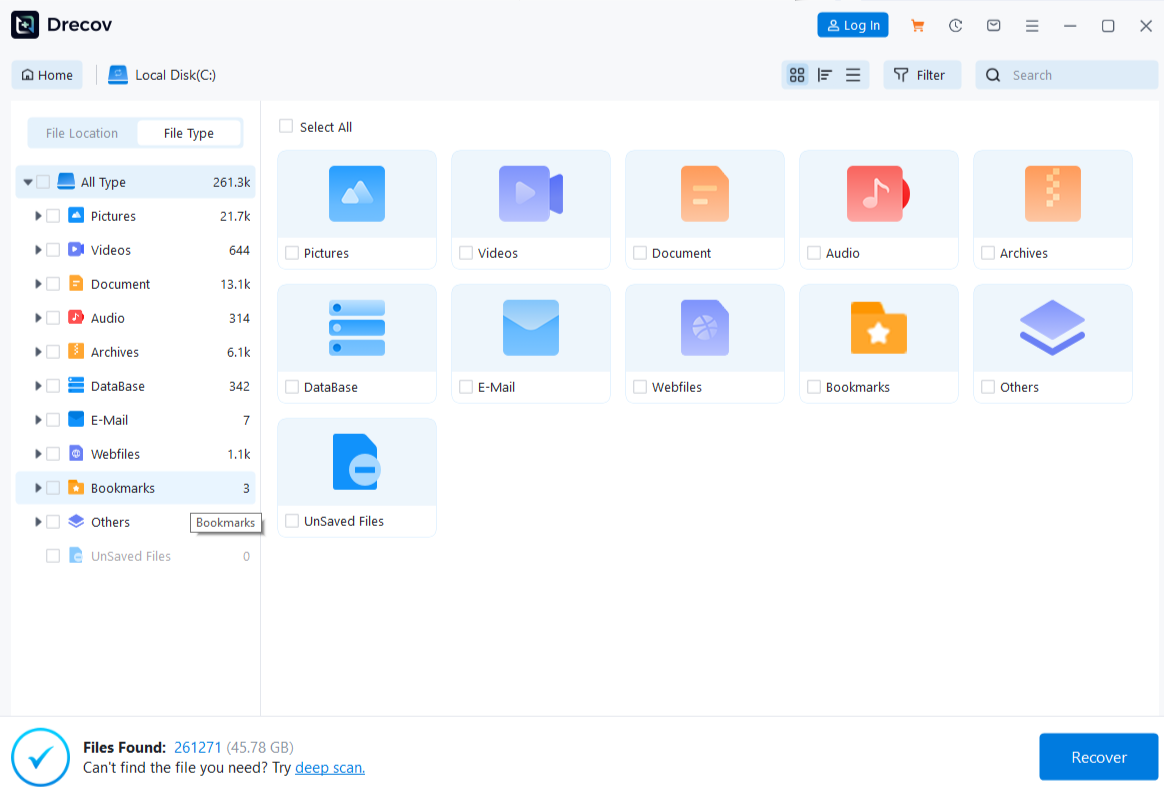
Step 3: Continue with Deep Scan only on stable media
Use Deep Scan when Quick Scan misses the needed files and the source remains stable. A broader search may find older or less organized candidates. Stop if the drive begins dropping offline, changing capacity, or developing new read errors.
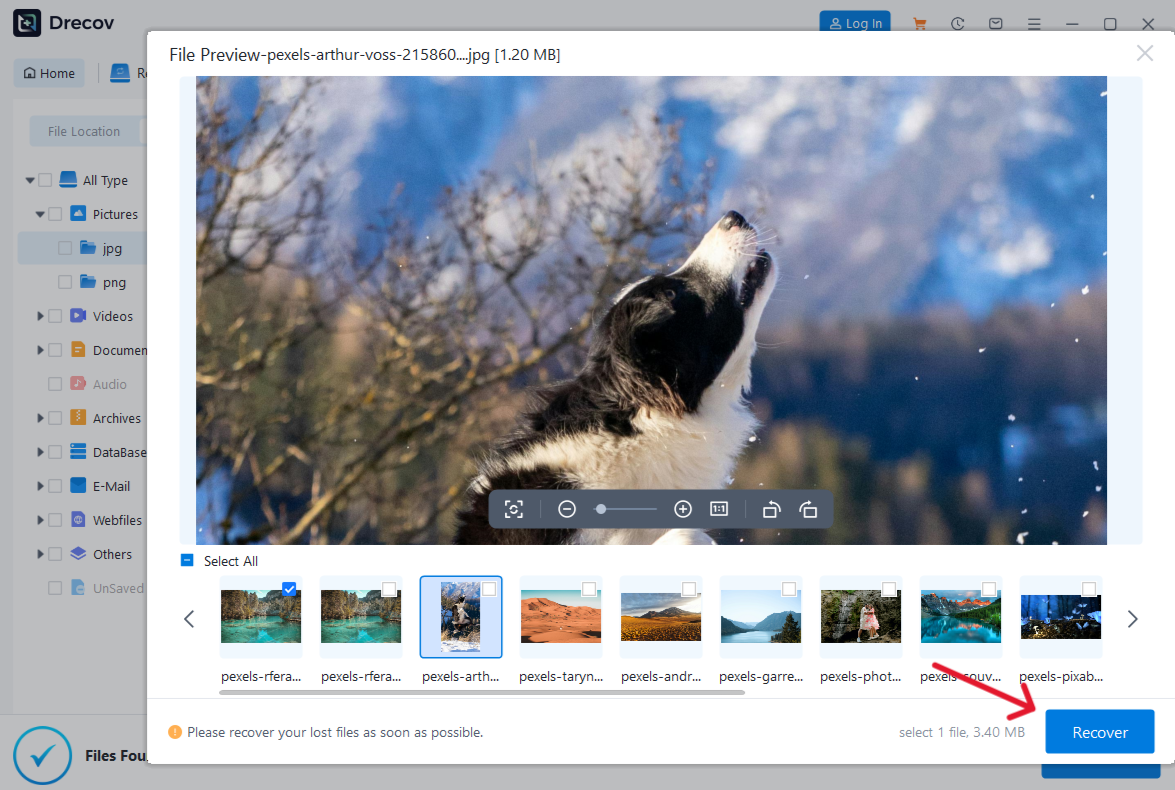
Step 4: Filter, preview, and choose representative files
Narrow the results by original path, filename, date, size, and file type. Preview several supported files from each important folder. One successful preview does not prove that every document, archive, or video is intact, so sample the material that matters most.
Step 5: Recover to another drive and verify
Recover the selected files to the prepared healthy destination, never to the source. Check Drecov Folder or Recovery Folder if the output is not where expected. Open documents, inspect images, play sample media, and test archives from the destination. Only after verification should you run file-system repair, reset Windows, or reinstall the operating system. If the PC cannot boot at all, the guide to recover files from an unbootable PC covers that separate situation.
⚠ Warning: Install it on a drive different from the one where your data was lost to prevent overwriting.
Verify the Fix Instead of Trusting One Successful Window
Restart Windows and open three different locations: a simple local folder, the folder that previously failed, and any external or network location involved. Create a temporary text file on a healthy writable volume, rename it, close the window, and open it again. This confirms more than the appearance of one Explorer window.
Watch for renewed freezes when right-clicking, opening Home, or connecting a particular drive. Those triggers distinguish a shell extension, history entry, or storage device. If Explorer failures occur alongside blue screens or application crashes, broaden the diagnosis rather than resetting the shell repeatedly. The checklist for diagnosing repeated computer crashes can help define that boundary.
Conclusion
When File Explorer won’t open, restore access by testing the Explorer process, direct folder paths, another profile, and the affected drive as separate layers. Restarting the shell or clearing Quick Access can solve an interface problem, while repeated disconnects require a storage-first response. If stable local data is genuinely missing or inaccessible, Drecov can scan the original location and recover verified files to another drive before Windows reset, CHKDSK, or reinstall.
⚠ Warning: Install it on a drive different from the one where your data was lost to prevent overwriting.





