







If Word disappeared from its expected folder, do not create a replacement document with the same name. First decide whether the missing Word file was ever saved and record its last known folder, filename, and account. The safest path is to preserve during this document search, evidence, choose a test that answers one question. For this document search, change storage only after required data is secure.
word disappeared: safe diagnosis
Word’s Recent list stores a pointer and can remain after the underlying file moved or vanished. This detail changes the next action during this document search. For this document search, the same visible symptom can come from access, software, file-system, or hardware layers. Record the exact message, path, capacity, during this document search, time, and recent change before experimenting.
Searching by a distinctive phrase may find renamed copies that a filename search misses. Work from the least modifying observation during this document search, toward a targeted test. Keep the original file or device during this document search, untouched whenever a duplicate. For this document search, backup, alternate player, second port, Safe Mode, or account check can answer the question.
- If Recent points to a valid moved file, copy it to a safe working folder before changing sync settings.
- If the saved document is absent everywhere, stop writes to its original volume and scan that location.
- A changed result in the document check calls for reassessment instead of another unrelated fix.
Follow Word’s Recent Record Without Trusting It Blindly
OneDrive web search and recycle bin can differ from the local sync folder during a sync conflict. This detail changes the next action during this document search. For this document search, the same visible symptom can come from access, software, file-system, or hardware layers. Record the exact message, path, capacity, during this document search, time, and recent change before experimenting.
AutoRecover files are emergency working copies and may not match the last manual save. Work from the least modifying observation during this document search, toward a targeted test. Keep the original file or device during this document search, untouched whenever a duplicate. For this document search, backup, alternate player, second port, Safe Mode, or account check can answer the question.
Compare Local Search with OneDrive on the Web
A zero-byte document has no usable payload even though its name survives. Preserve the result of this check. It helps distinguish a genuine repair during this document search, from a temporary change that only hides the symptom.
Saving new files into the old folder can overwrite clusters that held a deleted document. Preserve the result of this check. It helps distinguish a genuine repair during this document search, from a temporary change that only hides the symptom.
For related context, see restore deleted Word files, recover an unsaved Word document, and retrieve documents from Recycle Bin.
Recover the Deleted Document from Its Original Volume
In this missing Word document case, PandaOffice Drecov is Windows data recovery software for PCs, HDDs, SSDs, external drives, USB devices, SD cards, and memory cards. For this problem, it can search the drive and folder where the Word document was last saved for DOCX, DOC, RTF, PDF exports, and associated project material. For this document search, its read-only recovery mode, Quick Scan, Deep Scan, filters, preview, healthy-destination output, Lost Partition Recovery. Crashed PC Recovery support logical-loss cases. For this document search, it cannot repair physical hardware, Windows components, malware, or overwritten bytes.
⚠ Warning: Install it on a drive different from the one where your data was lost to prevent overwriting.
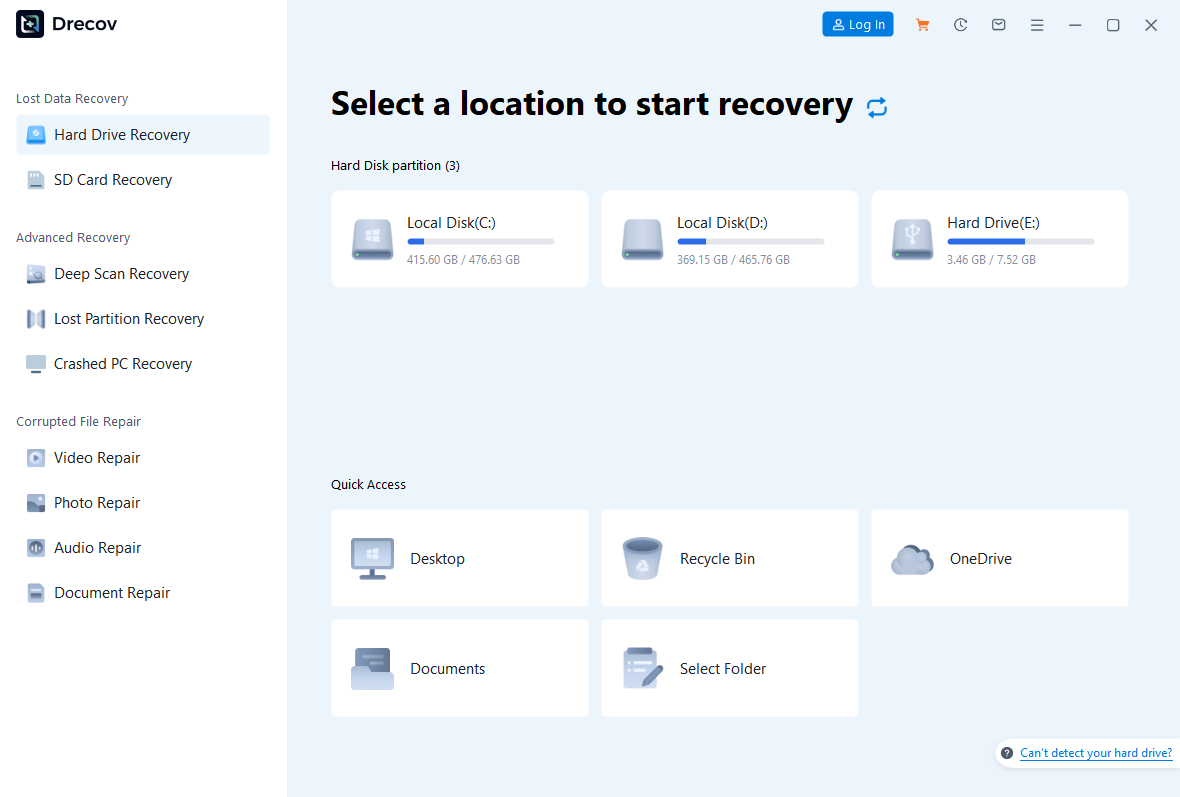
Step 1: Open Drecov and Select The Volume Containing The Concealed Folder
Stop writing to the drive and folder where the Word document was last saved. Confirm that the storage remains stable. Stop direct scans when the source drive disconnects, clicks, overheats, or cannot complete stable reads. For this document search, prepare a different healthy drive and do not install Drecov on the source. Open Drecov, select the original location. Choose Hard Drive Recovery for a deleted file or Lost Partition Recovery only if its former partition vanished.
Step 2: Run Quick Scan and Read the First Results
Begin with Quick Scan and inspect the first result tree for DOCX, DOC, RTF, PDF exports, and associated project material. For this document search, look for the expected location and surviving names before selecting anything. For this document search, this faster pass is the sensible first check for recent deletion or a directory entry that has become inaccessible.
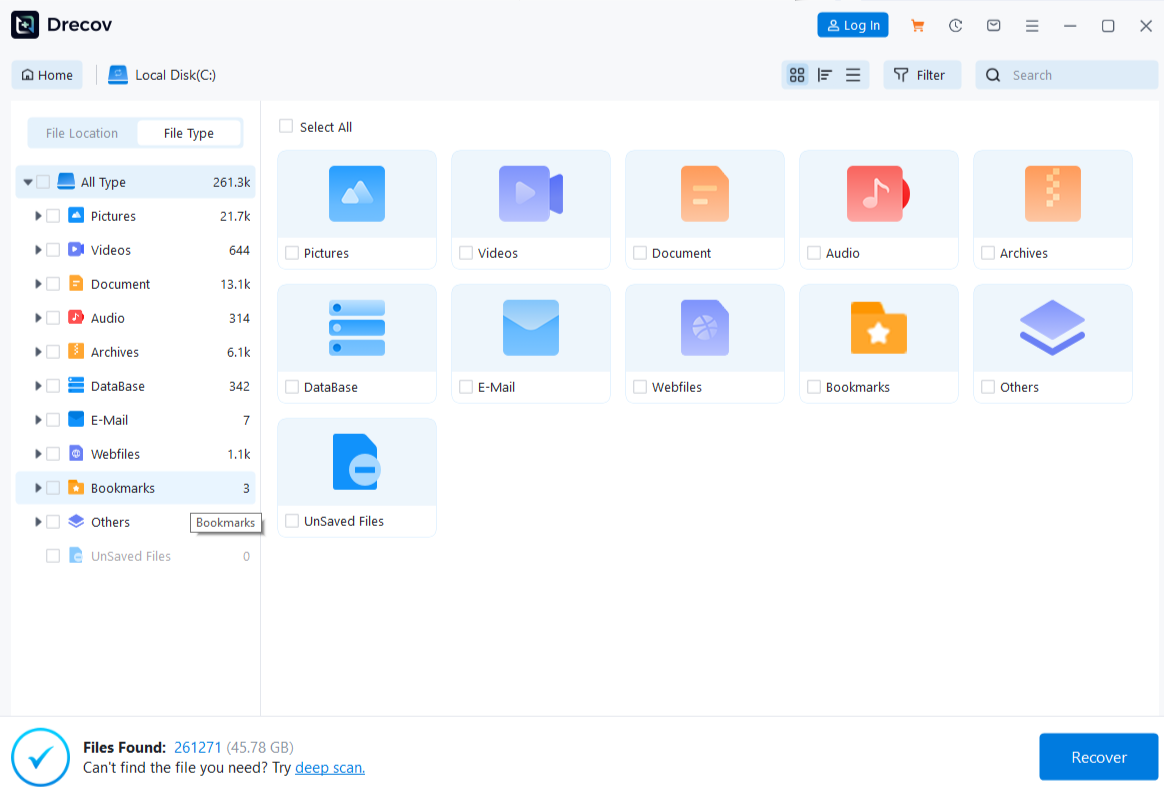
Step 3: Deep Scan the Stable missing-Word Source Only When Needed
In the missing Word document case, use Deep Scan only when Quick Scan misses the required files and the medium remains stable. For this document search, a deeper signature search may expose older candidates, but it cannot recreate overwritten content. If the source drive disconnects, clicks, overheats, or cannot complete stable reads, stop and arrange imaging or professional recovery.
Step 4: Filter, Locate, and Preview Representative Files
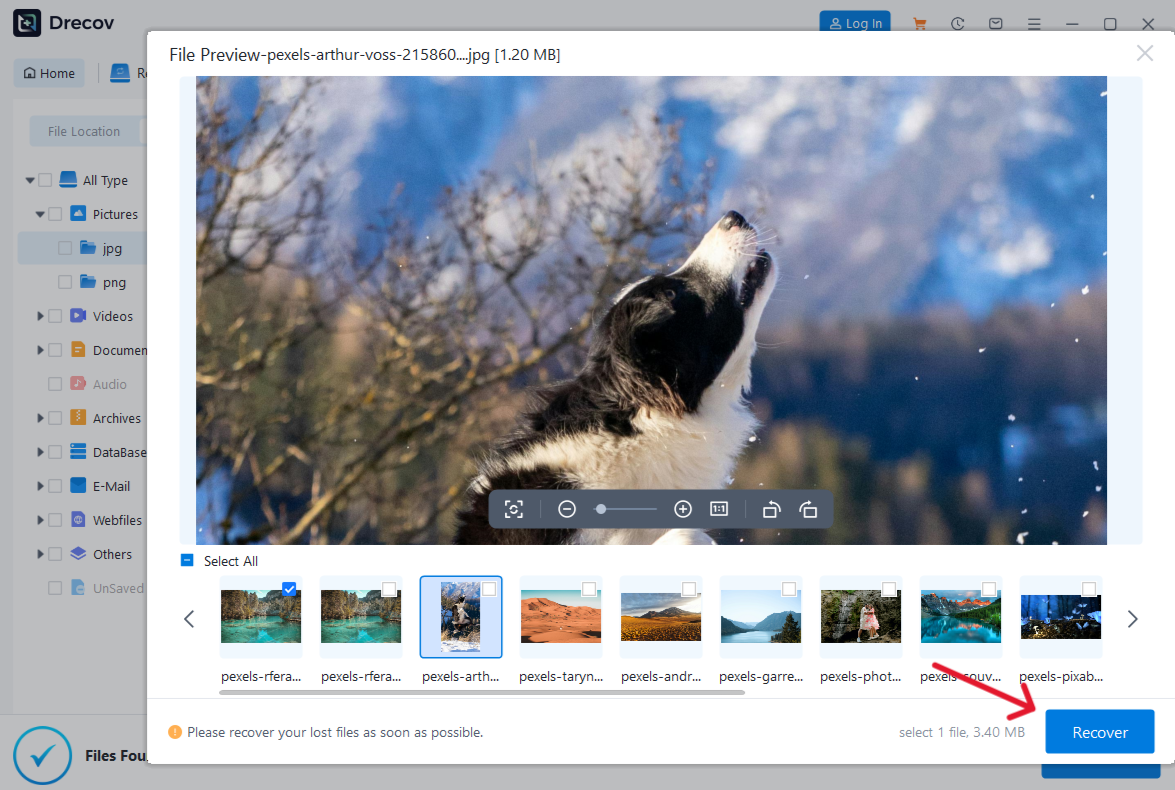
This check is especially useful for word disappeared. Filter results by document type, the old folder, a surviving filename fragment, modified date, and likely size. For this document search, preview several supported candidates from different folders or dates. The preview confirms only that individual document candidate. However, inspect the complete document result because one preview cannot certify every component.
Step 5: Recover Elsewhere and Verify Before Repair
Recover selected files to the prepared healthy drive, never back to the drive and folder where the Word document was last saved. For this document search, check Drecov Folder or Recovery Folder if the output is not where expected. Then open the recovered document in Word, inspect several pages and embedded objects. Compare it with the last known revision. For this document search, repair, reset, reinstall, format, or run CHKDSK only after this verification.
⚠ Warning: Install it on a drive different from the one where your data was lost to prevent overwriting.
Inspect AutoRecover and Temporary Copies
If Recent points to a valid moved file, copy it to a safe working folder before changing sync settings. Apply one change at a time during this document search, and keep notes. Avoid broad cleanup, conversion, or reinstall during this document search, actions until the protected copy has been opened and checked. The official source for this document decision explains the relevant built-in behavior: review the official instructions.
If the saved document is absent everywhere, stop writes to its original volume and scan that location. This stop rule matters more than during this document search, finishing a checklist. Recovery software is appropriate for stable during this document search, logical loss, while unstable hardware deserves imaging or professional handling.
Read the Recent entry as a clue, not a copy
In Word, open the Recent list and hover over the document to reveal its recorded path. If clicking it reports that the file moved, write down that path before removing the stale entry. Search the parent folder and nearby project folders first. A Recent item proves that Word knew a location; it does not contain the document itself.
Search content when the filename is uncertain
Use File Explorer to search the expected drive by extension and date. If Windows indexing covers the folder, a distinctive phrase from the document may locate a renamed copy. Enable hidden items only for the investigation, and check whether the path points into another Windows account. Avoid saving a new document under the missing name in the old folder.
Compare OneDrive in a browser with the local folder
A sync icon can represent a placeholder, conflict, or unavailable account. Sign in to the correct OneDrive account on the web, search the filename, review version history, and inspect the OneDrive recycle bin. Download a promising version outside the synced folder before opening it. This prevents an automatic save from replacing a useful cloud revision.
Keep AutoRecover and saved-file recovery separate
Word’s Recover Unsaved Documents feature and AutoRecover locations are intended for working copies that were never saved normally or were interrupted. If the missing document had a confirmed path and later disappeared, deletion recovery targets that original storage location. Choose the candidate with the correct content, not merely the newest timestamp.
Verify the Right Revision Before Editing
Open the candidate in Word, inspect page count and embedded objects, compare modified times. Save a verified copy to another drive. Also restart or reconnect once, repeat during this document search, the exact action that failed. For this document search, inspect a representative set rather than one convenient file. Keep the recovered copy until normal during this document search, operation and a fresh backup are both confirmed.
Final missing-Word Evidence Card
| Question | Evidence to keep | Decision |
|---|---|---|
| Where was the source? | The drive and folder where the word document was last saved | During the missing Word document case, do not write new data there while the missing files still matter. |
| What should be found? | Docx, doc, rtf, pdf exports, and associated project material | Use document type, the old folder, a surviving filename fragment, modified date, and likely size to separate plausible candidates. |
| Is scanning still safe? | For this document search, watch for disconnection, unusual sound, heat, capacity changes, and read errors. | Stop direct work if the source drive disconnects, clicks, overheats, or cannot complete stable reads. |
| What proves completion? | For this document search, files open from the healthy destination and the original task succeeds again. | Open the recovered document in word, inspect several pages and embedded objects, and compare it with the last known revision. |
Keep this evidence card with the document search notes. For this document search, retain both the recovered output and untouched source until the exact task succeeds after a restart. For this document search, once the result remains stable and representative files open correctly, place the verified copy into the normal backup routine.
Conclusion
Word disappeared becomes manageable once the symptom is separated from the state of the data. Preserve the source, use the topic-specific during this document search, checks above, and verify the result. When stable local files are missing, during this document search, Drecov can scan the original location, preview candidates. For this document search, recover selected items to another healthy drive before destructive repair.
⚠ Warning: Install it on a drive different from the one where your data was lost to prevent overwriting.






