







An ASV file is commonly an automatic-save or recovery artifact, but the extension is used in more than one workflow. Do not assign it a random document type. Preserve its path and timestamps, identify the application that created it, and experiment only with a duplicate.
asv file: safe diagnosis
The parent folder, neighboring filenames, creation time, and recent crash are stronger clues than the extension alone. Search the application’s recovery or AutoSave settings and compare the ASV modification time with the lost work session. Avoid uploading an unknown work file to a generic converter.
MATLAB, for example, can create autosave copies for editor files depending on preferences and version. Other software may use the same letters differently. Open the relevant application’s official recovery documentation before changing the suffix.
Preserve the Artifact Before Testing It
Copy the ASV file to another healthy folder and retain the original untouched. Record its exact byte size and calculate a hash for the duplicate if the work is important. A zero-byte artifact contains no recoverable payload, while a plausible size only justifies further inspection.
Start the creating application and use its documented recovery path. If renaming is required, rename the duplicate to the expected native extension. Do not save over the original project when the recovered content opens; use a new filename and location.
Check Content Rather Than Trusting a Successful Open
Review the beginning and end of source code or text, recalculate a model where possible. And compare embedded assets, references, sheets, or variables with a known checkpoint. AutoSave timing means the newest edits may not be present even when the file is readable.
If the ASV belongs to another program or contains binary data. A text editor may display meaningless characters without proving corruption. Use a format-aware application or viewer. Keep failed conversions separate so each attempt begins from the clean duplicate.
asv file — Useful related reading includes recover a deleted folder, restore previous file versions, and recover permanently deleted files.
Recover Missing Local Data Before Repair Changes the Source
When the checks above establish genuine local loss, PandaOffice Drecov provides a read-only Windows recovery path. It supports PCs and common internal or removable storage, plus photos, video, documents, email data, audio, and archives. Quick Scan, Deep Scan, preview, and recovery to a selected healthy destination help retrieve the deleted native project, script, or earlier ASV copy. Lost Partition Recovery and Crashed PC Recovery cover their named logical-loss situations; neither is a physical repair service.
⚠ Warning: Install it on a drive different from the one where your data was lost to prevent overwriting.
Step 1: Open Drecov and Point It to the Last Known Location
Leave the source unchanged. Confirm that it stays readable; stop on clicks, repeated disconnects, capacity changes, or severe read errors. Connect a separate healthy output drive, keep the software off the source, open Drecov. And choose the stable volume that held the project and its AutoSave artifacts.
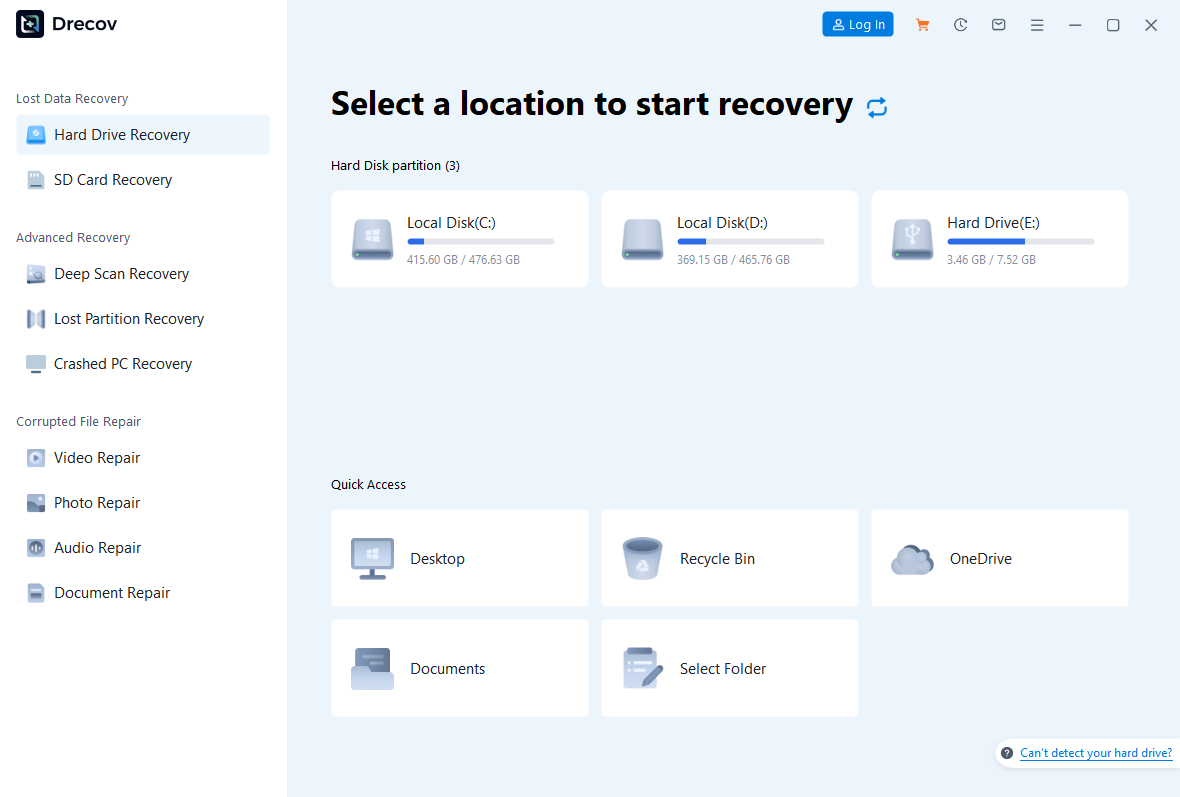
Step 2: Let Quick Scan Reconstruct the Recent View
Begin with Quick Scan. Browse the former directory and compare names, sizes. And dates while looking for the deleted native project, script, or earlier ASV copy. This focused pass is preferable to an immediate exhaustive scan after a recent loss.
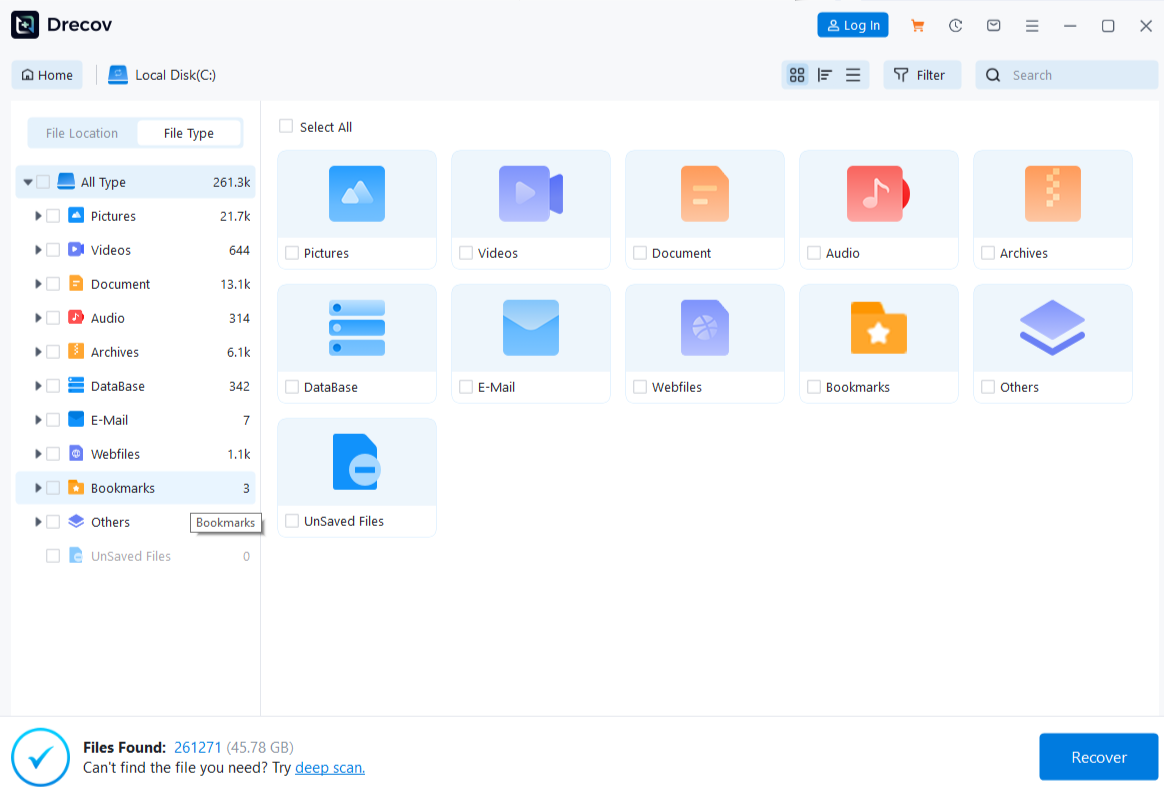
Step 3: Escalate to Deep Scan Only on Reliable Media
Use Deep Scan when the first result set is incomplete and the device remains stable. Older candidates may be organized by type rather than their former folders. End the session if the source becomes unstable and move to an image or specialist workflow.
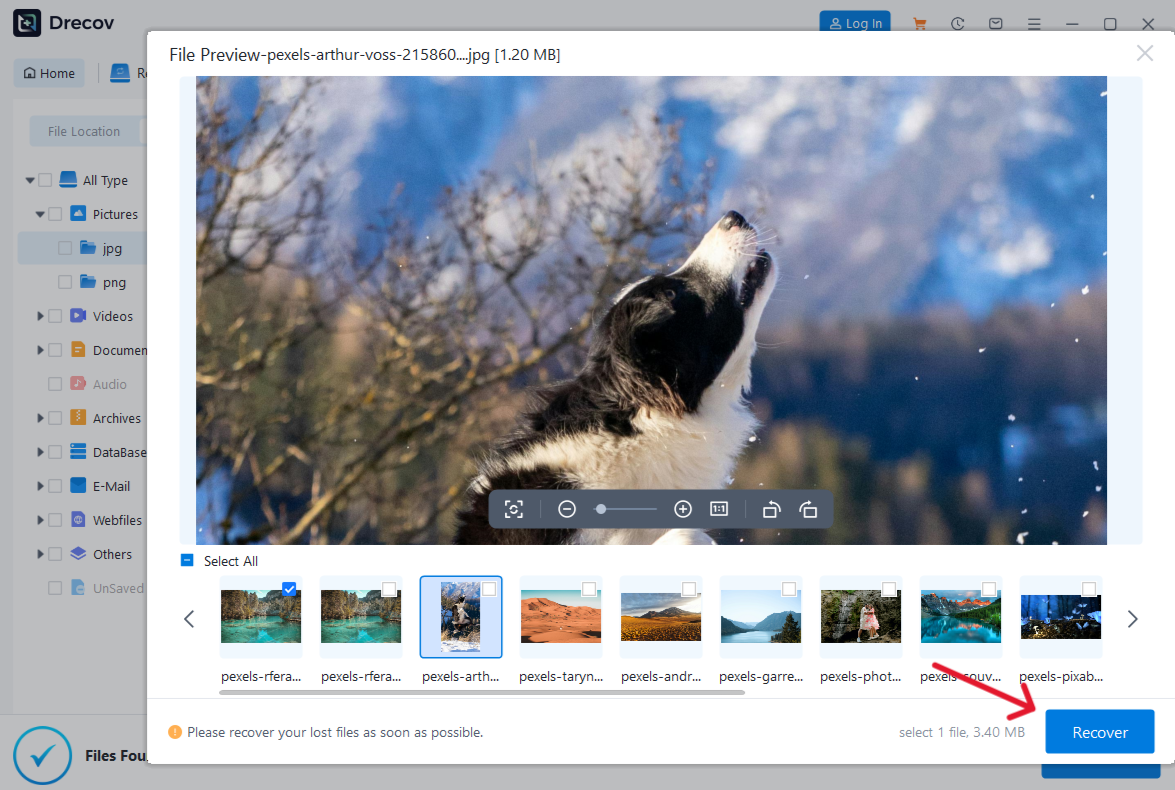
Step 4: Locate Evidence and Preview More Than One File
Apply project name, native extension, ASV extension, original folder, size, and crash-time dates. Preview a small but representative set and keep differently dated candidates separate. A thumbnail or opening page alone cannot prove an entire file is intact.
Step 5: Send the Recovery Elsewhere, Then Test It
Choose the healthy destination rather than the stable volume that held the project and its AutoSave artifacts. If files seem absent afterward, inspect Drecov Folder and Recovery Folder. Finally, open recovered copies in the creating application and compare their contents with the last known checkpoint. Only verified copies justify proceeding with repairs that write to the original storage.
⚠ Warning: Install it on a drive different from the one where your data was lost to prevent overwriting.
Recover the Missing Project When AutoSave Is Not Enough
Check normal project folders, application recovery lists, temporary locations, version-control history, cloud versions, and backups first. If the expected local project or ASV was deleted. Stop writes to its original volume and search that source rather than repeatedly editing the surviving artifact.
asv file — For the relevant documented behavior, consult the official technical guidance. Use that source for current interface or command details, and keep the protected original available while testing.
Separate AutoSave evidence from the current drawing
An ASV file is commonly associated with AutoCAD automatic saves. It is not an always-current backup and may represent an earlier moment than the DWG. Before changing its extension, copy the ASV, the current drawing, backup files. And related references into a separate working folder while keeping their timestamps.
Sort candidates by time and size, then rename only a copy from .asv to .dwg. Open it with the appropriate AutoCAD version and use drawing-audit tools on the copy if needed. External references, fonts, plot settings, and linked images may still be absent even when the geometry opens correctly.
Verify the latest intentional edits rather than accepting the newest timestamp automatically. Check layouts, layers, blocks, dimensions, xrefs, and model extents. Save a validated result under a new project name. If no ASV exists, inspect the configured automatic-save path and backup sources before scanning the original storage.
AutoCAD projects often depend on more than one drawing. Collect xrefs, images, fonts, sheet-set data, and plot configurations referenced by the recovered candidate. Use Reference Manager or the application’s missing-reference prompts to identify gaps without rebinding the sole copy. A drawing that opens with empty layouts or shifted objects is not complete. Package the verified project with eTransmit or an equivalent supported workflow only after the recovered DWG has been audited and saved to a new location.
Reopen the packaged drawing on a second workstation before declaring the project complete. This exposes missing dependencies that a familiar machine may supply silently from cached search paths.
Questions Readers Commonly Ask
Can every ASV file be opened in MATLAB?
No. The extension is not exclusive to one application. Identify the creator from the folder and surrounding project evidence.
Is the newest ASV always the best version?
Not necessarily. It may be incomplete or belong to another session. Compare timestamps and content on copies.
Can I delete old ASV files?
Only after the intended project opens, its content is verified, and a proper backup exists.
Keep the diagnosis tied to observable evidence
The parent folder, neighboring filenames, creation time, and recent crash are stronger clues than the extension alone. Search the application’s recovery or AutoSave settings and compare the ASV modification time with the lost work session. Avoid uploading an unknown work file to a generic converter.
Why one successful test is not enough
MATLAB, for example, can create autosave copies for editor files depending on preferences and version. Other software may use the same letters differently. Open the relevant application’s official recovery documentation before changing the suffix.
Preserve the cleanest available version
Copy the ASV file to another healthy folder and retain the original untouched. Record its exact byte size and calculate a hash for the duplicate if the work is important. A zero-byte artifact contains no recoverable payload, while a plausible size only justifies further inspection.
Use the result to choose the next action
Start the creating application and use its documented recovery path. If renaming is required, rename the duplicate to the expected native extension. Do not save over the original project when the recovered content opens; use a new filename and location.
Know when the source needs specialist handling
Review the beginning and end of source code or text, recalculate a model where possible. And compare embedded assets, references, sheets, or variables with a known checkpoint. AutoSave timing means the newest edits may not be present even when the file is readable.
Compare the protected copy with the working result
If the ASV belongs to another program or contains binary data. A text editor may display meaningless characters without proving corruption. Use a format-aware application or viewer. Keep failed conversions separate so each attempt begins from the clean duplicate.
Document the point at which the symptom changed
Check normal project folders, application recovery lists, temporary locations, version-control history, cloud versions, and backups first. If the expected local project or ASV was deleted. Stop writes to its original volume and search that source rather than repeatedly editing the surviving artifact.
Conclusion
An ASV file can provide an earlier AutoCAD recovery point. But it should be copied, renamed, opened, and validated without replacing the current drawing. When ASV or DWG files were deleted from stable Windows storage. Drecov can search the original folder and recover candidates to a separate healthy location.
⚠ Warning: Install it on a drive different from the one where your data was lost to prevent overwriting.





