







DVR recovery software should be chosen by the recorder, storage layout, and loss event—not by a generic “best” label. Stop recording first. Determine whether you lost an ordinary exported video, removable camera media, or footage inside proprietary DVR storage. Each case requires different access and verification.
dvr recovery software: safe diagnosis
Record the DVR or NVR model, channel count, date range, time zone. Export format, disk arrangement, and whether the system still plays footage internally. Exporting a clip and recovering deleted blocks from recorder storage are different tasks. Preserve logs and avoid changing the system clock.
If footage may be evidence, maintain a written chain of custody and work from a forensic image under appropriate authority. Consumer recovery experiments can change metadata. Physical clicking, repeated disconnects, RAID degradation, or severe read errors require specialist imaging rather than repeated software scans.
Choose Software by Storage Layer
For an ordinary MP4, AVI, or similar export deleted from a Windows-readable USB drive, general file-recovery software may be appropriate. A memory card from a compatible camera can also be scanned when stable. Proprietary DVR disks may use unfamiliar file systems, databases, segmentation, encryption, or multi-disk layouts.
Vendor export and playback software is usually the first choice when the recorder still sees its footage. Specialist DVR forensic tools are relevant when they explicitly support the exact recorder family and storage scheme. Confirm supported models from current documentation rather than assuming every CCTV disk is readable.
Evaluate Tools Without Unsupported Rankings
Ask whether the tool can work from an image, preserve the source. Identify channels and timestamps, preview recovered video, and export with auditable metadata. Verify licensing and evidentiary requirements. No single product can be declared universally best without the exact device and a documented test corpus.
Drecov is a strong fit for Windows-readable logical loss involving exported clips or supported storage categories. Its read-only recovery mode, scans, filters, preview, and healthy-destination output help separate likely video candidates. It is not a DVR hardware repair tool and does not promise support for proprietary encrypted recorder volumes.
⚠ Warning: Install it on a drive different from the one where your data was lost to prevent overwriting.
dvr recovery software — Useful related reading includes recover deleted videos, repair corrupted video files, and understand MP4 files — dvr recovery software.
Recover Missing Local Data Before Repair Changes the Source
PandaOffice Drecov is Windows data recovery software for PCs, HDDs, SSDs, external drives, USB drives, SD cards, and memory cards. It works in read-only recovery mode and can locate photos, videos, documents, emails, audio, and archives. In this case, its role is to retrieve deleted exported video files and associated metadata that the chosen source format exposes; it does not repair hardware, decrypt protected data, remove malware, or reconstruct overwritten bytes.
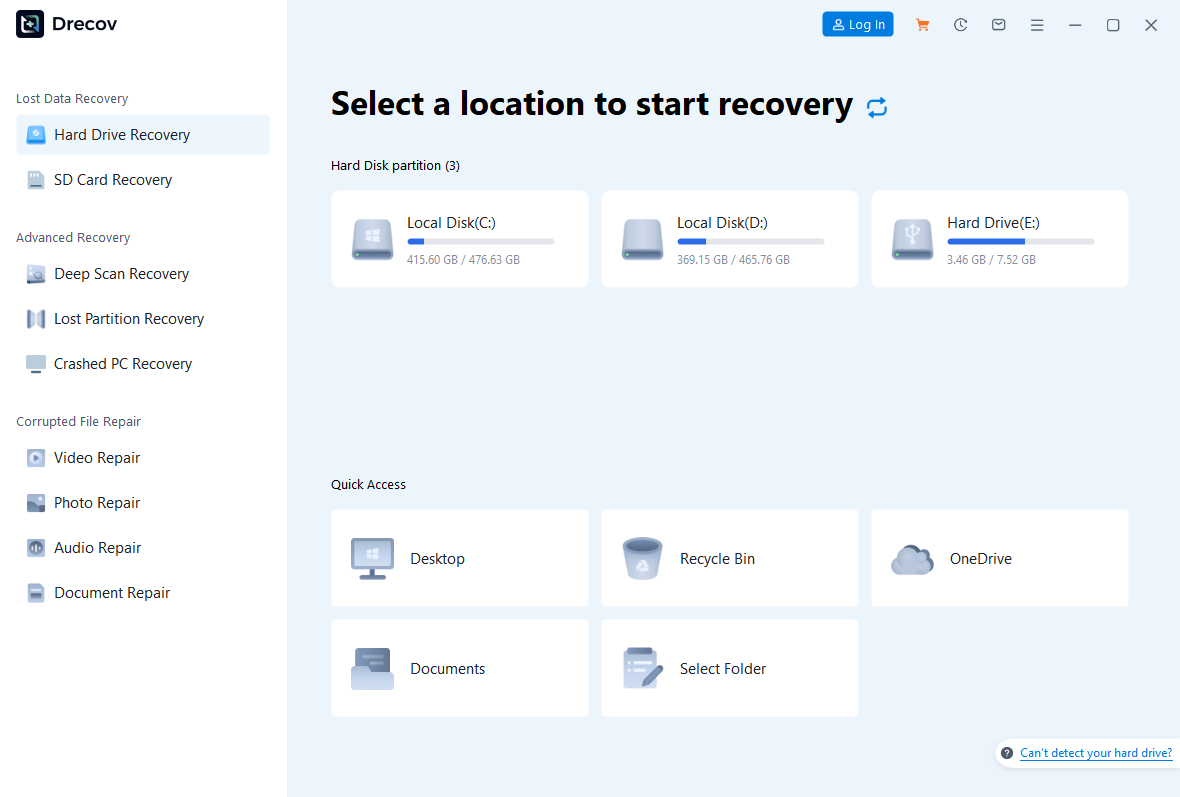
Step 1: Open Drecov and Select the Original Source
Stop new writes and assess stability. If the device clicks, drops offline, changes capacity, or reports severe read errors. Stop direct scanning and seek imaging or professional recovery. Prepare another healthy destination and do not install Drecov on the source. Open Drecov, then select the stable Windows-readable export drive, USB device. Memory card, or forensic image—not a live recording destination.
Step 2: Run Quick Scan Before a Broader Search
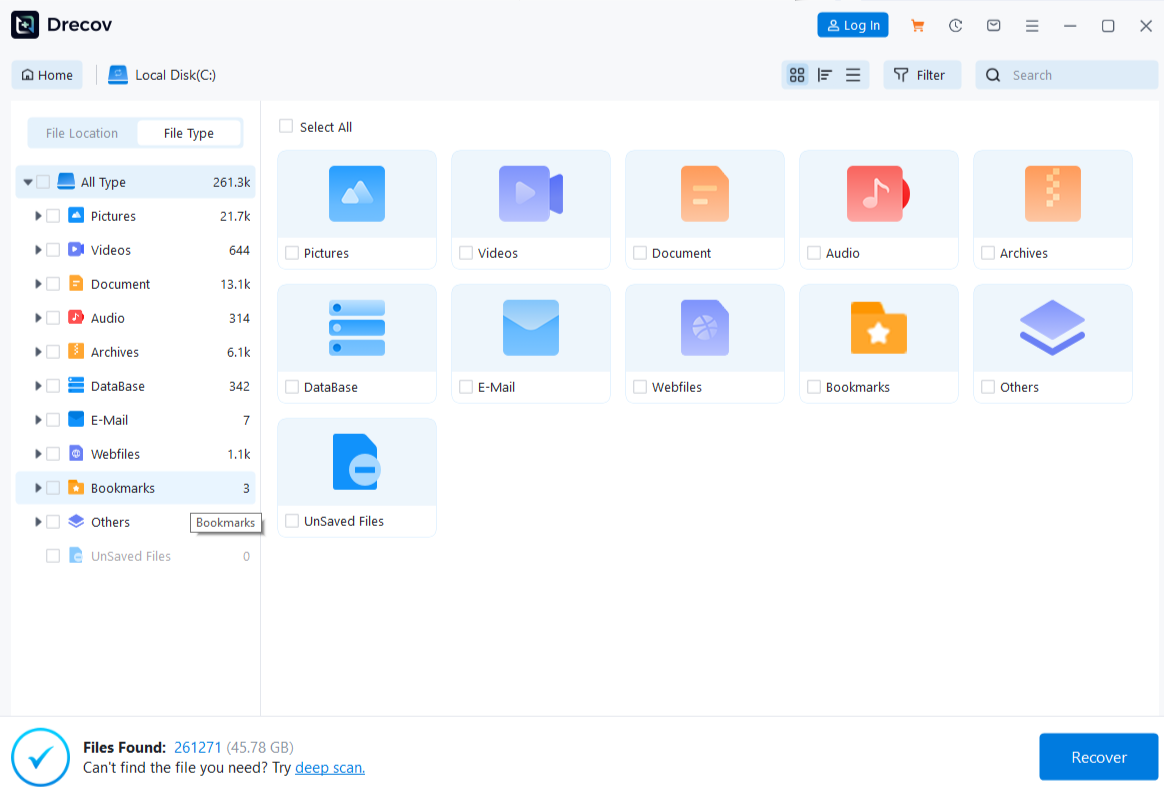
Start Quick Scan and examine the original path first. Look for deleted exported video files and associated metadata that the chosen source format exposes. Compare available names, dates, sizes, and folders with the evidence gathered earlier.
Step 3: Use Deep Scan Only While the Source Is Stable
If Quick Scan misses the needed files and the source remains stable, run Deep Scan. It can find older signatures whose original paths may be missing. Stop if new instability appears; no scan can reconstruct overwritten data.
Step 4: Filter and Preview the Most Plausible Candidates
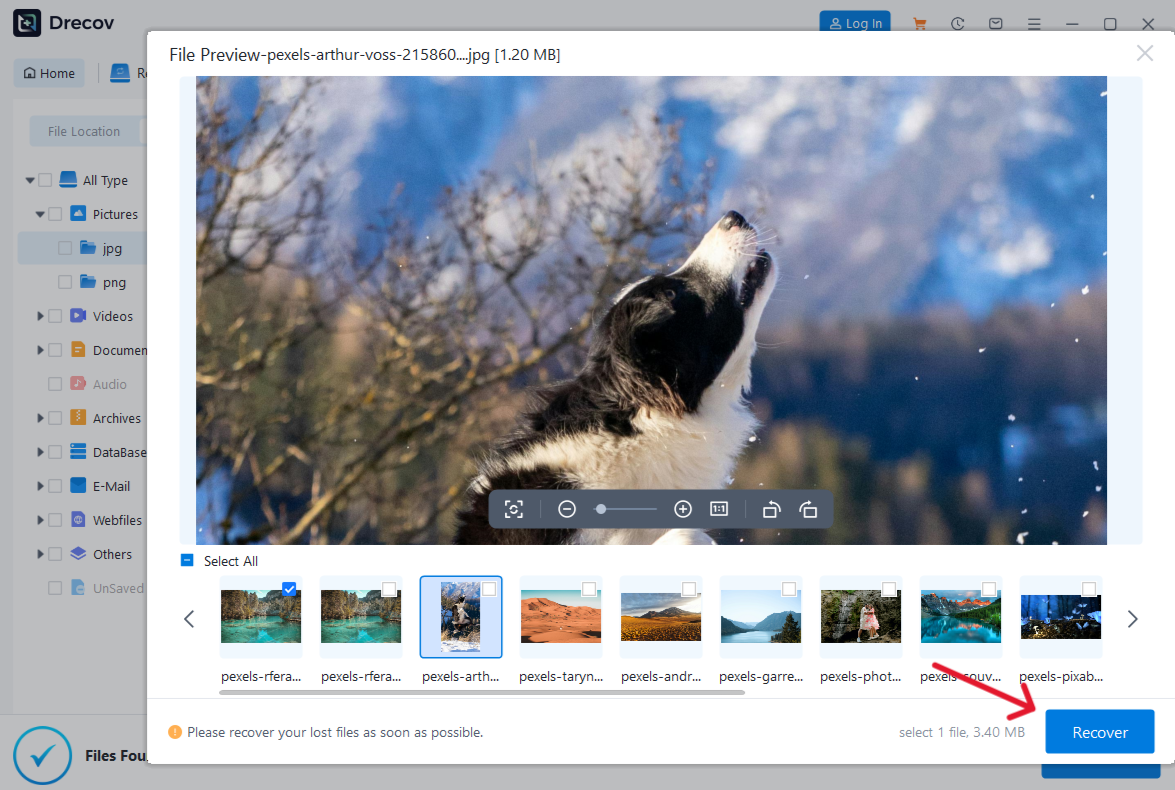
Narrow results using video type, channel or folder, date range, filename, size, and previewed event content. Preview several representative supported files. One successful preview supports that sample, not every page, frame, archive member, formula, or linked asset.
Step 5: Recover to Another Device and Verify
Restore selected files to the prepared healthy destination, never to the source. Check Drecov Folder or Recovery Folder if output is not where expected. Then review the complete event interval, channel, timestamp, audio, and hashes after recovery to controlled healthy storage. Complete that verification before CHKDSK, formatting, reset, partition work, reinstallation, or other source changes.
⚠ Warning: Install it on a drive different from the one where your data was lost to prevent overwriting.
Validate Recovered Footage as a Timeline
Check channel identity, date and time, frame continuity, audio, overlays, and the requested event from before through after the incident. Keep original exports and hashes. A playable clip with the wrong time zone or channel is not a validated result.
dvr recovery software — For the relevant documented behavior, consult the official technical guidance. Use that source for current interface or command details, and keep the protected original available while testing — dvr recovery software.
Choose a DVR workflow from the recorder’s storage state
If the recorder still detects its disk and can export the needed period, use its documented export process first. Preserve native exports, proprietary players, channel details, and timestamps. Removing a disk without documenting the recorder model, array order, or encryption settings can make later interpretation harder.
A Windows-readable USB export or ordinary video volume differs from a proprietary DVR disk. Before selecting software, confirm the recorder family, file system, number of disks, overwrite behavior, and whether the tool supports images. Avoid initializing an unfamiliar disk when Windows prompts; that action changes metadata without making the recordings readable.
Validate recovered footage against the actual incident. Check channel identity, time zone, overlays, frame continuity, audio, and video before and after the target moment. Retain originals and hashes where evidence matters. A clip that plays but belongs to the wrong channel or time is not a successful recovery.
Overwrite behavior is central to CCTV recovery. Many recorders reuse space continuously, so leaving the unit recording can destroy the requested time range. Photograph the status screen and power the system down through its supported procedure when preservation is authorized. For multi-disk recorders, label bay order and never allow Windows to initialize a removed member. A specialist should reconstruct arrays from images. Independent copies protect both the footage and the original disk order needed to interpret it.
Questions Readers Commonly Ask
Can Drecov recover every proprietary DVR disk?
No. Its verified role is Windows data recovery from supported, readable storage. Proprietary, encrypted, RAID, or damaged recorder media may need vendor or forensic tools.
Why must recording stop?
Circular DVR storage overwrites older blocks continuously. Continued recording can replace deleted footage.
Is a playable clip enough for evidence?
No. Validate channel, timestamps, continuity, metadata, and custody requirements.
Keep the diagnosis tied to observable evidence
Record the DVR or NVR model, channel count, date range, time zone. Export format, disk arrangement, and whether the system still plays footage internally. Exporting a clip and recovering deleted blocks from recorder storage are different tasks. Preserve logs and avoid changing the system clock.
Why one successful test is not enough
If footage may be evidence, maintain a written chain of custody and work from a forensic image under appropriate authority. Consumer recovery experiments can change metadata. Physical clicking, repeated disconnects, RAID degradation, or severe read errors require specialist imaging rather than repeated software scans.
Preserve the cleanest available version
For an ordinary MP4, AVI, or similar export deleted from a Windows-readable USB drive, general file-recovery software may be appropriate. A memory card from a compatible camera can also be scanned when stable. Proprietary DVR disks may use unfamiliar file systems, databases, segmentation, encryption, or multi-disk layouts.
Use the result to choose the next action
Vendor export and playback software is usually the first choice when the recorder still sees its footage. Specialist DVR forensic tools are relevant when they explicitly support the exact recorder family and storage scheme. Confirm supported models from current documentation rather than assuming every CCTV disk is readable.
Know when the source needs specialist handling
Ask whether the tool can work from an image, preserve the source. Identify channels and timestamps, preview recovered video, and export with auditable metadata. Verify licensing and evidentiary requirements. No single product can be declared universally best without the exact device and a documented test corpus.
Compare the protected copy with the working result
Drecov is a strong fit for Windows-readable logical loss involving exported clips or supported storage categories. Its read-only recovery mode, scans, filters, preview, and healthy-destination output help separate likely video candidates. It is not a DVR hardware repair tool and does not promise support for proprietary encrypted recorder volumes.
Document the point at which the symptom changed
Check channel identity, date and time, frame continuity, audio, overlays, and the requested event from before through after the incident. Keep original exports and hashes. A playable clip with the wrong time zone or channel is not a validated result.
Conclusion
DVR recovery software must match the recorder, storage layout, and evidence requirements. Prefer documented export or image-based specialist handling for proprietary systems. Drecov is appropriate for stable Windows-readable logical loss and exported clips. But it is not a hardware repair tool and cannot unlock proprietary encryption.
⚠ Warning: Install it on a drive different from the one where your data was lost to prevent overwriting.





