







Understanding Windows Server Migration Tools and Migration Services
What Are Windows Server Migration Tools?
Organizations often need to move workloads, settings, and business data from aging infrastructure to newer systems. Windows Server Migration Tools are Microsoft-provided utilities designed to simplify this process. They help administrators transfer server roles, configuration settings, file shares, user data, and operating system settings from one server to another. Microsoft includes these tools within supported Windows Server editions, making them accessible without additional licensing costs.
Unlike a complete operating system upgrade, migration creates a new environment and moves the necessary services into it. This approach minimizes legacy issues and allows organizations to deploy cleaner, more secure infrastructures. Businesses migrating from older platforms often choose migration over upgrading because it provides greater flexibility and fewer compatibility concerns.
The tools support a wide range of migration scenarios, including physical-to-physical, physical-to-virtual, and virtual-to-virtual transfers. Administrators can selectively migrate specific server functions instead of moving the entire operating system. This capability makes them valuable for organizations modernizing file servers, domain services, and application servers while maintaining operational continuity.
Key Features of Windows Migration Services
Modern windows migration services offer more than simple file transfers. They can move user accounts, permissions, shared folders, printer configurations, and selected server roles. These features reduce manual work and help maintain consistency across environments.
One major advantage is automation. Administrators can use PowerShell cmdlets to export and import settings efficiently. Automated migration minimizes human error and shortens deployment timelines. Organizations with multiple servers can standardize migration procedures and improve operational efficiency.
Another important capability is cross-version compatibility. Migration services often support transitions between different Windows Server generations. This allows businesses to replace aging hardware while adopting modern server platforms. Additionally, migration tools help preserve access permissions and security settings, ensuring users maintain uninterrupted access to critical resources after the transition is complete.
Supported Operating Systems and Migration Scenarios
Microsoft supports migration between many Windows Server versions. Depending on the source and destination systems, administrators can migrate file servers, print services, Active Directory components, and other supported workloads. The migration framework also supports transfers between physical and virtual environments.
Test Environment
- Source Server: Windows Server 2016 Standard
- Destination Server: Windows Server 2022 Standard
- Hardware: Intel Xeon CPU, 32GB RAM
- Storage: SSD-based RAID configuration
- Network: 1Gbps LAN connection
⚠️ Warning: Always create a complete backup before starting any migration project. Unexpected interruptions may cause service disruptions or data inconsistencies.
Older environments may also use windows 7 migration tools for workstation transitions, although Microsoft recommends upgrading to newer operating systems whenever possible. Proper planning and compatibility testing remain essential regardless of the migration method selected.
Why Businesses Need Server and Profile Migration Solutions
Challenges of Legacy Server Environments
Older servers often create operational challenges. Hardware failures become more common, software vendors discontinue support, and security vulnerabilities increase over time. These factors can negatively affect productivity and increase maintenance costs.
Legacy systems may also struggle to support modern workloads. Performance bottlenecks, storage limitations, and outdated network configurations can prevent businesses from scaling efficiently. As organizations grow, maintaining obsolete infrastructure becomes increasingly difficult and expensive.
Additionally, unsupported systems may not receive security updates. This increases exposure to cyber threats and compliance risks. Migrating to a modern server environment helps organizations improve reliability, security, and operational efficiency while reducing long-term support costs.
Benefits of Modern Migration Service Windows Solutions
A professional migration service windows strategy helps organizations modernize infrastructure with minimal disruption. Modern migration solutions streamline server replacement projects and reduce downtime during transitions.
One major advantage is improved performance. Newer servers typically provide faster processors, larger memory capacities, and more efficient storage technologies. Migrated workloads often benefit immediately from these enhancements.
Another benefit is enhanced security. Modern Windows Server releases include advanced security features that protect data and user accounts more effectively. Organizations can also implement updated compliance controls more easily after migration.
By leveraging migration services, businesses gain flexibility to redesign infrastructure, consolidate workloads, and improve disaster recovery capabilities while maintaining access to mission-critical applications.
When to Use Server Migration Tools Instead of In-Place Upgrades
Microsoft supports both migration and in-place upgrades, but each serves different needs. Migration is generally preferred when moving to new hardware or restructuring server roles. In-place upgrades are typically used when retaining existing hardware.
Migration offers greater control because administrators can selectively move workloads. It also reduces the risk of carrying over years of accumulated configuration issues. Many IT professionals favor migration for production environments because it creates a cleaner deployment.
Test Environment
- Source: Windows Server 2012 R2
- Destination: Windows Server 2022
- Migration Type: File Server Role Migration
- Data Volume: 500GB
⚠️ Warning: Verify application compatibility before migrating production workloads. Unsupported applications may require additional configuration after migration.
Method 1: Prepare the Source and Destination Servers
Proper preparation is the foundation of every successful migration project. Before installing windows server migration tools, administrators should evaluate both the existing server and the target environment. This assessment helps identify compatibility issues, unsupported applications, and storage requirements.
Begin by documenting server roles, network settings, user permissions, shared folders, and installed applications. Create an inventory of all workloads that need to be transferred. Administrators should also install the latest updates on both servers to minimize compatibility problems during migration.
Next, verify connectivity between the source and destination systems. Ensure firewall rules allow communication and that both servers can resolve each other’s hostnames. Adequate storage capacity should be available on the destination server before migration begins.
Test Environment
- Source Server: Windows Server 2016
- Destination Server: Windows Server 2022
- CPU: Intel Xeon Silver
- Memory: 32GB RAM
- Storage: 1TB SSD
- Network: Gigabit Ethernet
Migration planning should also include a rollback strategy. If unexpected issues occur, administrators need a documented recovery procedure that allows services to be restored quickly.
⚠️ Warning: Never begin a production migration without validating backups and testing restoration procedures.
Method 2: Install and Configure Windows Server Migration Tools
After preparation is complete, the next step is installing the migration utilities on the destination server. Microsoft provides the feature through Server Manager, allowing administrators to add it as part of the Windows Server feature set.
Open Server Manager and select the option to add features. Locate the migration tools component and complete the installation wizard. Once installed, PowerShell cmdlets become available for migration operations.
Administrators then create deployment packages for source servers when necessary. These packages allow older systems to communicate with the newer destination environment. After deployment, PowerShell can be used to collect server configuration information and prepare workloads for transfer.
The migration toolkit supports exporting settings from the source machine and importing them to the destination server. This approach simplifies transfers while preserving important configuration details.
Test Environment
- Source Server: Windows Server 2012 R2
- Destination Server: Windows Server 2022
- Migration Type: Role and Configuration Migration
- Deployment Package: PowerShell Generated
Organizations should perform initial testing in a non-production environment before modifying critical systems. Testing helps identify permission issues and configuration conflicts before the final migration window.
Method 3: Migrate Server Roles, Settings, and Data
Once the migration framework is configured, administrators can begin moving workloads. Depending on the server role, the migration process may include files, shared folders, security settings, printer configurations, or other supported services.
Typically, administrators export configuration data from the source server and import it into the destination system. File data can then be copied using migration utilities or other supported transfer methods. Throughout the process, permissions should be preserved to maintain user access after migration.
For file servers, shared folders and access control lists should be migrated together. For infrastructure services, administrators should verify that role-specific settings are successfully transferred and functioning correctly.
Large data sets may require phased migrations to reduce downtime. Many organizations transfer data before the final cutover and synchronize changes during a maintenance window.
Test Environment
- Source Data Size: 800GB
- Shared Folders: 25
- User Accounts: 300+
- Migration Duration: Approximately 4 Hours
Careful monitoring during migration helps identify transfer errors before users are affected. Event logs and migration reports should be reviewed after every migration phase.
Method 4: Verify and Complete the Migration Process
The final stage focuses on validation. Even if the migration appears successful, administrators must verify that all services operate correctly on the destination server.
Start by testing user access to shared resources. Confirm that permissions remain intact and that applications can communicate with migrated services. Administrators should compare migrated settings against documented baseline configurations to identify discrepancies.
Performance testing is equally important. Evaluate CPU utilization, memory consumption, storage performance, and network throughput to ensure the new environment meets expectations.
After verification is complete, update DNS records, redirect users to the new server, and decommission the old system according to organizational policies.
Test Environment
- Validation Period: 48 Hours
- Concurrent Users: 150
- File Access Testing: Passed
- Permission Verification: Passed
⚠️ Warning: Do not decommission the original server until all migrated services have been validated and users report normal operation.
Alternative Migration Methods for Windows Environments
Using Storage Migration Service
Microsoft introduced Storage Migration Service to simplify file server modernization. Unlike traditional migration methods, this service can inventory servers, transfer data, and automatically redirect users to the new environment.
The service is especially useful for organizations managing large file servers. It can migrate files, shares, permissions, and network identities with minimal disruption. Administrators gain centralized control through Windows Admin Center, reducing the complexity of migration projects.
Storage Migration Service is particularly valuable when replacing legacy file servers that contain large volumes of business-critical information. Because it automates many migration tasks, the risk of human error is significantly reduced.
Test Environment
- Source: Windows Server 2012
- Destination: Windows Server 2022
- Data Size: 2TB
- Migration Tool: Storage Migration Service
Many businesses adopt this approach when modernizing infrastructure because it minimizes downtime and simplifies administration.
Using Pandaoffice Drecov for Data Protection Before Migration
Before performing any server migration, protecting data should be a top priority. While migration utilities are designed to transfer information safely, unexpected events such as hardware failures, power interruptions, or user mistakes can still result in data loss.
A practical approach is creating a complete backup and recovery plan before beginning migration activities. Pandaoffice Drecov can help administrators recover lost or inaccessible files if unforeseen issues occur during migration. The software supports recovery of documents, images, videos, archives, and other business-critical files from various storage devices.
Using a recovery solution before migration provides an additional safety layer. If files are accidentally deleted or become inaccessible during transfer, administrators can attempt recovery without significantly delaying the migration project.
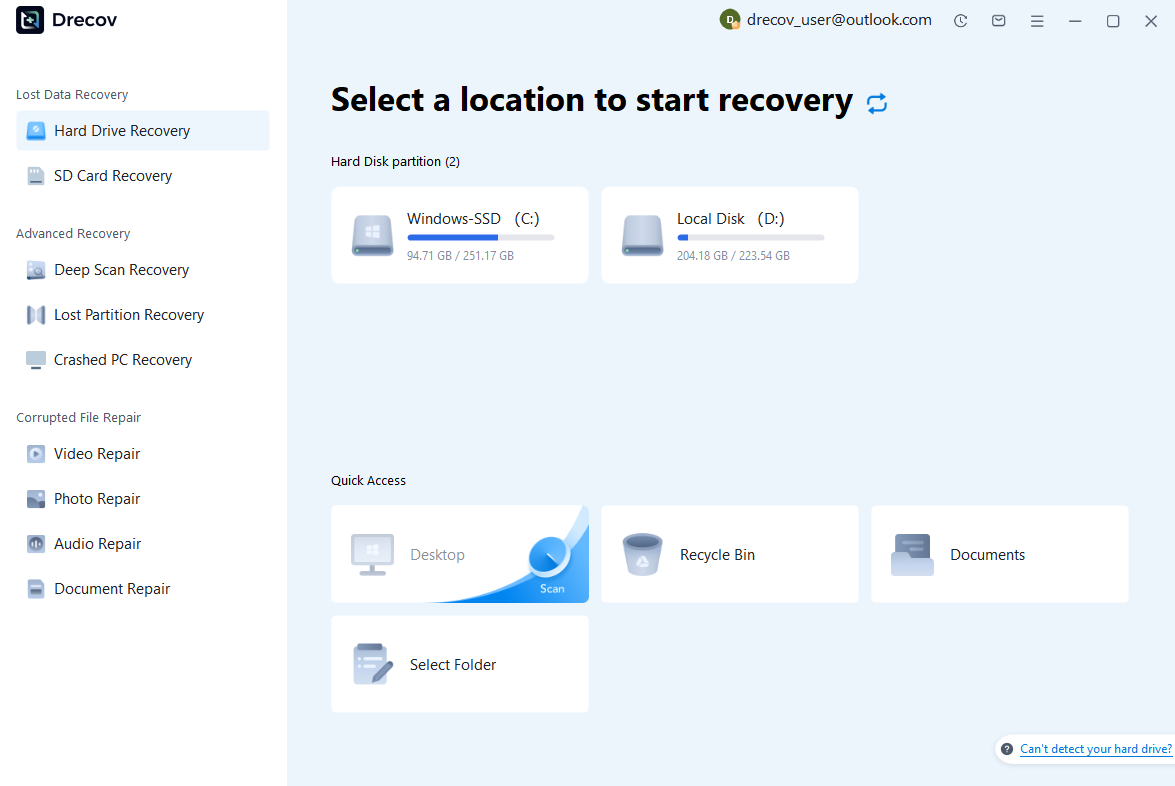
Step 1: Connect the Drive / USB)
Connect your device (SD card, HDD/SSD, or USB drive) to your computer and launch PandaOffice Drecov. Select the target device and start the scan. The software will perform a quick scan and deep scan to detect lost or deleted data.
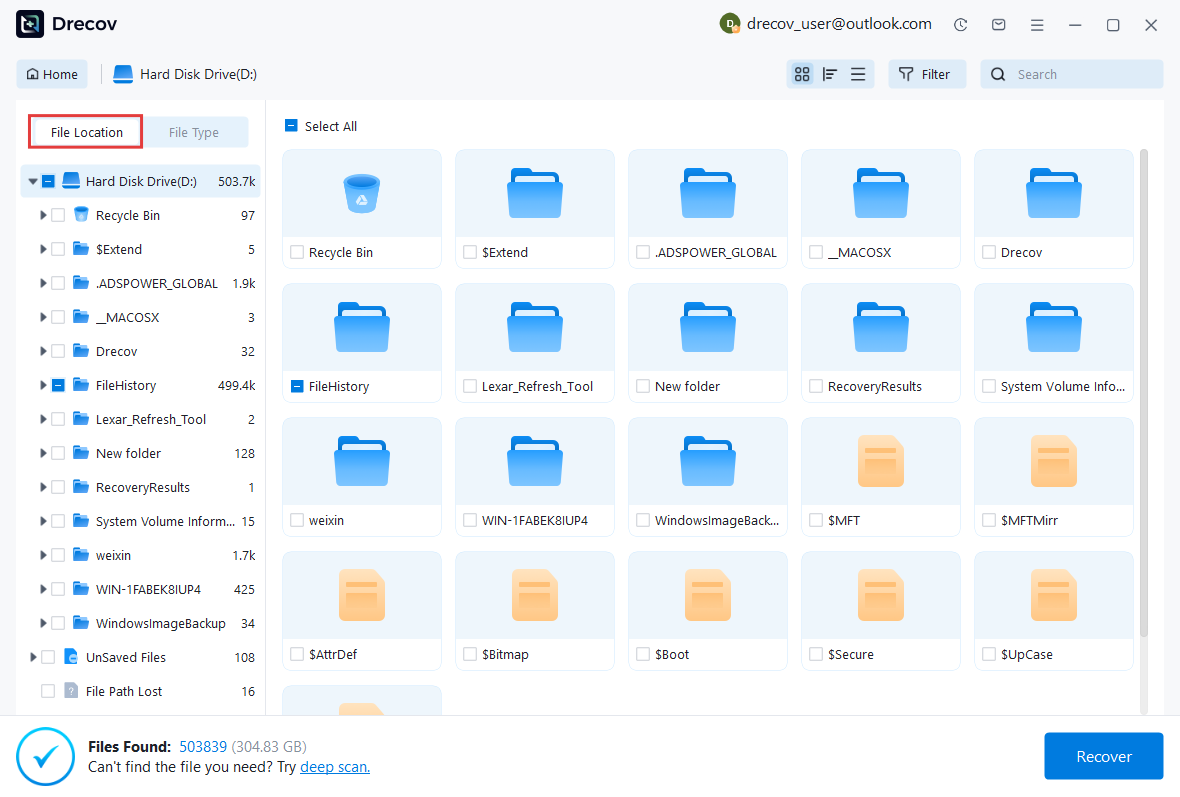
Step 2: Locate and Preview Lost Files
After scanning, browse the detected files and use the preview feature to check recoverable data. You can preview documents (Word, Excel, PDF), photos, and videos to ensure file integrity before recovery.
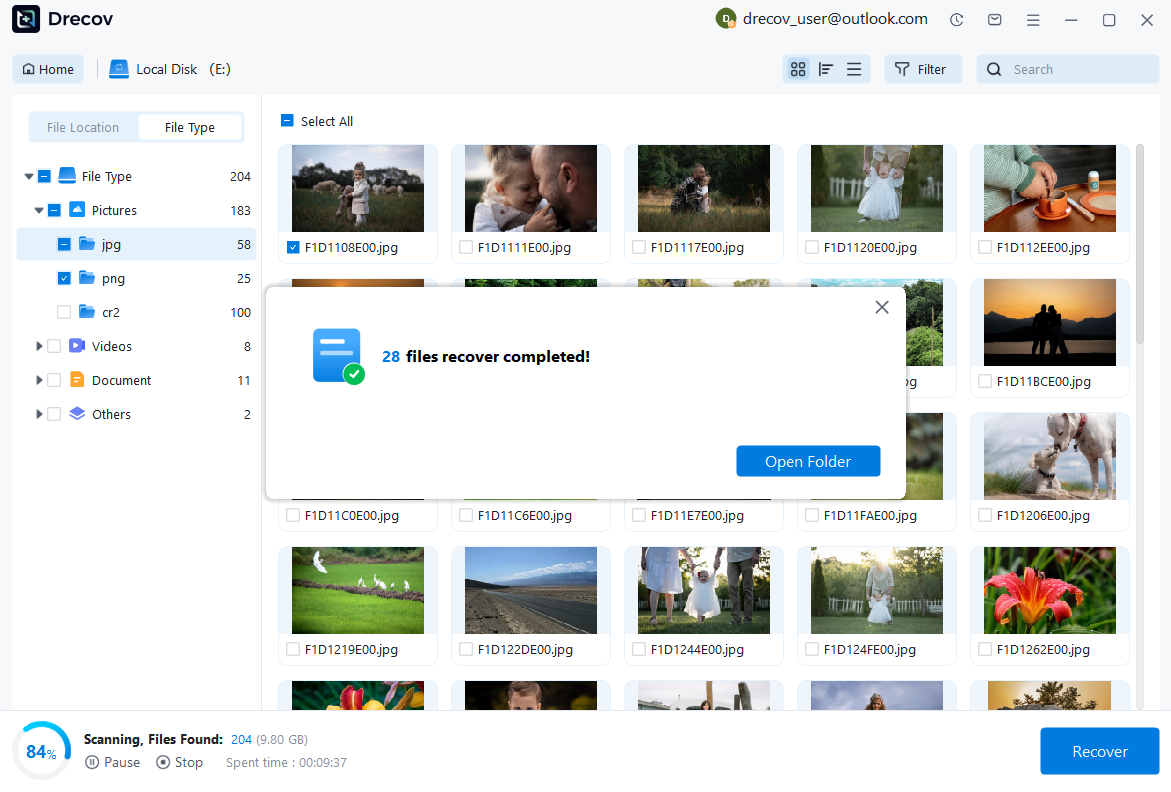
Step 3: Recover and Save to a New Location
Select the files you want to restore and click recover. Save all recovered data to a different drive or location (not the original device) to avoid overwriting lost data.
Why Choose PandaOffice Drecov Recovery Software?
PandaOffice Drecov offers a fast, secure, and user-friendly solution for recovering lost files across multiple scenarios. Whether you need email recovery, ZIP File Recovery, format data recovery, or help to recover deleted drafts Outlook, the software provides reliable recovery performance for both personal and business users.
PandaOffice Drecov supports recovery from formatted hard drives, SSDs, USB drives, SD cards, and external storage devices. Its advanced scanning engine can locate deleted archives, damaged ZIP files, lost Outlook drafts, and accidentally removed documents with high accuracy. For users searching for how to find deleted messages in Teams, PandaOffice Drecov can also help recover exported chat files, attachments, and related local cache data when available.
After recovery, test the file again. If the audio stream was damaged because of storage issues, a recovered version may play normally.
This method is particularly useful when only a few files exhibit audio problems while VLC works correctly with all other media.
This method can help users recover files from floppy disk storage after accidental deletion, formatting, or logical corruption.
Test Environment
- Source Storage: RAID SSD Array
- Data Volume: 1TB
- File Types: Office Documents, Databases, Images
- Recovery Validation: Successful Sample Recovery
Rather than replacing migration tools, data recovery software serves as an emergency safeguard that complements a comprehensive backup strategy.
Using Profile Migration Tool Windows 10 Solutions
In addition to server migrations, organizations frequently migrate user profiles. A profile migration tool windows 10 solution allows administrators to transfer user settings, desktop configurations, application preferences, and personal files between devices.
These tools are particularly useful during workstation refresh projects. Instead of manually recreating user environments, administrators can automate profile transfers and reduce deployment time.
A modern windows 10 profile migration tool typically preserves browser settings, application preferences, network configurations, and user-specific data. This helps employees resume work quickly after receiving new devices.
Organizations upgrading from older operating systems may also use windows 7 migration tools during workstation replacement projects. Although Windows 7 is no longer supported, profile migration remains relevant when moving user data from legacy devices to newer systems.
Test Environment
- Source OS: Windows 7 Professional
- Destination OS: Windows 10 Pro
- Users Migrated: 50
- Profile Size: 10GB–30GB per User
Successful profile migration reduces help desk requests and improves the overall user experience during hardware refresh initiatives.
Frequently Asked Questions About Windows Migration Services
Can Windows 7 Migration Tools Still Be Used Today?
Some organizations continue to use windows 7 migration tools when transferring data from legacy computers. However, because Windows 7 has reached end-of-support status, migrating to a modern operating system should be a priority. Legacy tools may still assist with profile and data transfers, but organizations should avoid maintaining production environments on unsupported platforms.
What Is the Best Windows 10 Profile Migration Tool?
The best solution depends on organizational requirements. Businesses typically choose tools that can preserve user files, application settings, permissions, and personalization options. A reliable profile migration tool windows 10 solution should support automation, minimize downtime, and maintain data integrity throughout the transfer process.
Are Windows Server Migration Tools Free?
Yes. Windows Server Migration Tools are included as a Windows Server feature and can be installed through Server Manager. Organizations do not typically need separate licensing to use the migration utilities provided by Microsoft, although destination server licensing requirements still apply.
How Long Does a Server Migration Take?
Migration duration varies depending on several factors:
- Total data volume
- Network speed
- Server roles being migrated
- Number of users
- Storage performance
- Validation requirements
Small migrations may finish within a few hours, while enterprise projects involving multiple servers and terabytes of data can require several days or weeks of planning and execution.
Final Thoughts on Server Migration Tools
Best Practices for Successful Migration Projects
A well-planned migration strategy significantly improves the likelihood of success. Organizations should begin with a comprehensive assessment of existing infrastructure, document all critical services, and establish a clear migration timeline.
Using server migration tools helps reduce manual effort and improves consistency when transferring workloads. Modern windows migration services simplify the movement of server roles, data, and configurations while minimizing operational disruption.
Administrators should always test migration procedures in a controlled environment before touching production systems. Backups, recovery plans, and validation testing remain essential components of every migration project. Combining proper planning with reliable migration technology allows organizations to modernize infrastructure confidently while maintaining business continuity.
By following structured migration practices and leveraging the appropriate tools, businesses can transition from legacy environments to modern Windows Server platforms with greater efficiency, improved security, and reduced downtime.






