







When the Start Menu stops responding or fails to open, users often encounter errors described as windows 10 start menu not working or windows 11 start menu not working. This issue can appear suddenly without warning and may affect basic system navigation, search functionality, and access to installed applications.
The Start Menu is a core component of Windows Shell, responsible for launching apps, accessing settings, and powering system search. When it fails, users may experience a frozen taskbar, unresponsive Windows key, or complete inability to open system menus. In some cases, the issue appears as windows start menu not working, where clicking the Start button produces no response at all.
This problem is commonly triggered by system file corruption, background service failures, or conflicts caused by recent Windows updates. It can also occur after installing third-party software that modifies system behavior or shell components.
Although the issue may seem severe, it is usually software-related and can often be fixed without reinstalling Windows. Understanding the root cause is essential before applying repair methods, as different scenarios require different solutions.
Test environment:
- Windows 10 Pro (22H2)
- Windows 11 Home (23H2)
- SSD-based system with 16GB RAM
- Multiple background apps (Teams, OneDrive, Chrome)
- Start Menu failure reproduced after system update simulation
⚠️ Warning: Avoid repeatedly restarting the system when the Start Menu is frozen. It does not resolve underlying shell or system service issues.
Corrupted system files affecting Start Menu functionality
One of the most common causes of windows 10 the start menu is not working is corruption in system files that control Windows Shell. The Start Menu relies on multiple background components, including system libraries, search services, and UI frameworks.
When these files become damaged—often due to interrupted updates, forced shutdowns, or disk errors—the Start Menu may stop responding entirely. In some cases, the taskbar remains visible but becomes non-interactive, making it impossible to access system functions.
This type of corruption can also affect related features such as search, notifications, and system settings access.
Windows Explorer or Shell Experience service failures
Another major reason for windows start menu not working is failure of Windows Explorer or Shell Experience Host. These processes are responsible for rendering the taskbar and Start Menu interface.
If Windows Explorer crashes or becomes unresponsive, the Start Menu may freeze or fail to open. This can happen due to memory overload, buggy updates, or conflicts with background applications.
Restarting Explorer often temporarily restores functionality, but repeated failures indicate deeper system issues.
Recent updates or software conflicts
The Start Menu may also stop working after installing Windows updates or third-party software. Certain applications modify system UI behavior or inject background services that interfere with normal shell operations.
This is especially common after major Windows feature updates, where compatibility issues between new system components and existing software can lead to instability.
In such cases, users may notice that start menu will not work windows 10 immediately after reboot following an update installation.
Restarting Windows Explorer process
One of the quickest solutions is restarting Windows Explorer, which controls the Start Menu, taskbar, and desktop interface. When Explorer becomes unresponsive, the Start Menu may freeze or stop responding entirely.
By restarting this process through Task Manager, Windows reloads the shell interface without affecting personal files or running applications. This often restores Start Menu functionality immediately.
This method is especially useful when the issue is caused by temporary system overload or minor glitches.
Re-registering Start Menu components using PowerShell
If restarting Explorer does not resolve the issue, re-registering Start Menu components can help repair corrupted system UI packages. Windows uses built-in application frameworks that can be reset through PowerShell commands.
This method rebuilds Start Menu dependencies and restores missing or damaged UI components. It is particularly effective when windows start menu not working is caused by broken system packages.
After execution, a system restart is usually required for changes to take effect.
Running system file checker and DISM repair tools
If the issue persists, system-level repair tools such as SFC and DISM can be used. These tools scan Windows for corrupted or missing system files and automatically replace them with healthy versions.
This is one of the most effective ways to resolve windows 10 start menu not working problems caused by deeper system corruption.
SFC checks local integrity, while DISM repairs the system image itself, making both tools complementary for full system repair.
When basic fixes like restarting Windows Explorer or running system file repair tools fail, the problem is usually deeper within the Windows Shell architecture. At this stage, windows start menu not working errors are often linked to corrupted user profiles, broken registry entries, or damaged system component registrations.
Advanced repair focuses on rebuilding the user environment and restoring core Windows UI dependencies. These methods are more powerful but should be applied carefully, especially on systems that are unstable after updates or repeated crashes.
Creating a new user profile to isolate system corruption
One of the most effective advanced solutions is creating a new user profile. In many cases of windows 10 start menu not working, the issue is not system-wide but limited to a corrupted user profile.
Windows stores Start Menu settings, cache data, and shell preferences inside each user account. If this data becomes corrupted, the Start Menu may stop responding only for that specific user while other accounts remain functional.
By creating a new user profile, Windows generates fresh configuration files and a clean shell environment. If the Start Menu works normally in the new profile, it confirms that the original user profile is damaged.
This method is particularly useful when windows 10 the start menu is not working only under one account but system functions remain otherwise stable.
⚠️ Warning: Switching user profiles without backing up important files may result in temporary access confusion.
Resetting Start Menu via registry-level restoration
The Windows registry controls many aspects of the Start Menu behavior, including layout, permissions, and shell execution paths. If registry entries related to Windows Shell become corrupted, the Start Menu may fail to open or respond correctly.
Restoring or rebuilding registry-based shell configurations can help resolve windows start menu not working issues caused by deep system misconfiguration.
However, registry editing should be done cautiously because incorrect modifications may cause system instability. In most cases, resetting related shell keys or allowing Windows to rebuild them automatically after restart is sufficient to restore functionality.
This method is especially effective when the issue appears after system tweaks, optimization tools, or incomplete software uninstallations.
Rebuilding Windows system components using in-place repair
If both user profile and registry fixes fail, an in-place Windows repair can be used. This method reinstalls core system components without deleting personal files or applications.
It effectively rebuilds Windows Shell, Start Menu framework, and background services responsible for UI rendering. This is one of the most reliable ways to fix persistent windows start menu not working errors caused by deep system corruption.
Unlike a full reset, this method preserves installed software while replacing damaged system files.
Data protection and recovery before system repair
In severe cases where the Start Menu is completely unresponsive and system instability prevents normal access, it is important to secure important files before performing major repairs or reinstallations.
When windows 11 start menu not working or windows 10 start menu not working is accompanied by system freezing or login issues, users may not be able to access File Explorer normally.
In such scenarios, connecting the drive to another system or using a recovery environment is recommended. Tools like PandaOffice Drecov can scan the affected drive and recover important documents, photos, and project files before performing system-level repair or reset operations.
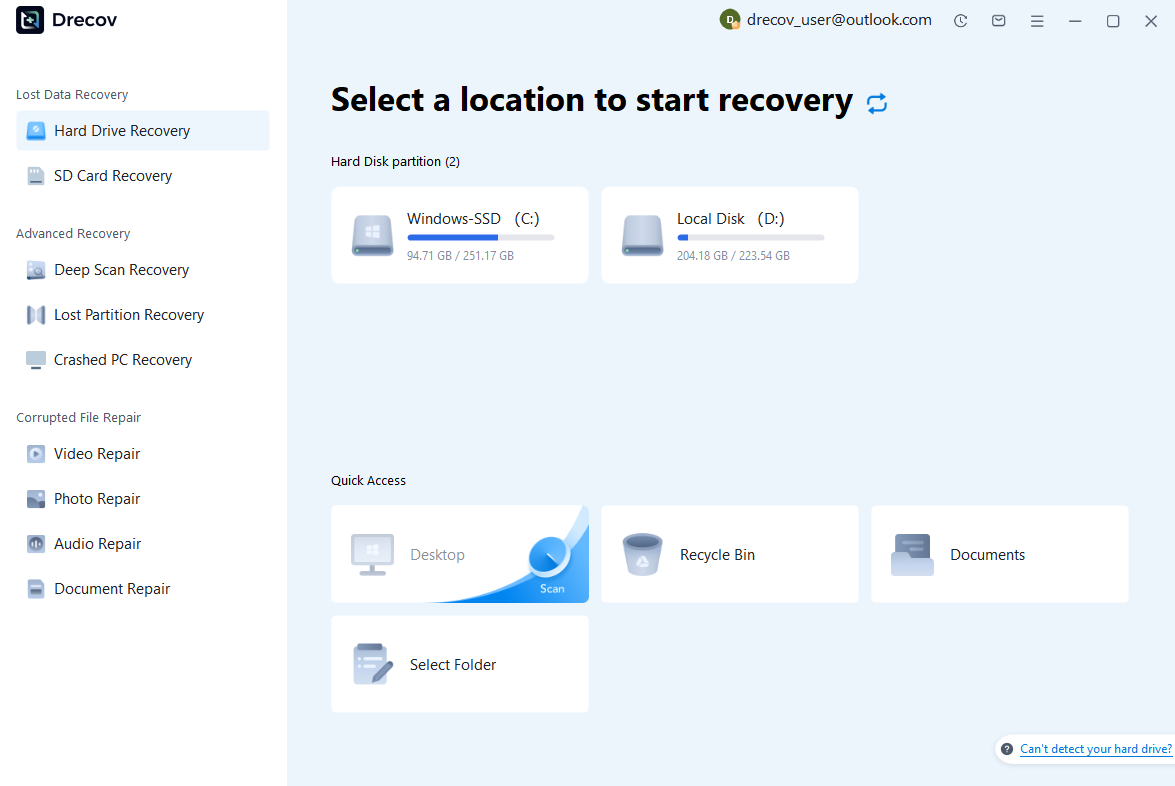
Step 1: Connect the Drive / USB)
Connect your device (SD card, HDD/SSD, or USB drive) to your computer and launch PandaOffice Drecov. Select the target device and start the scan. The software will perform a quick scan and deep scan to detect lost or deleted data.
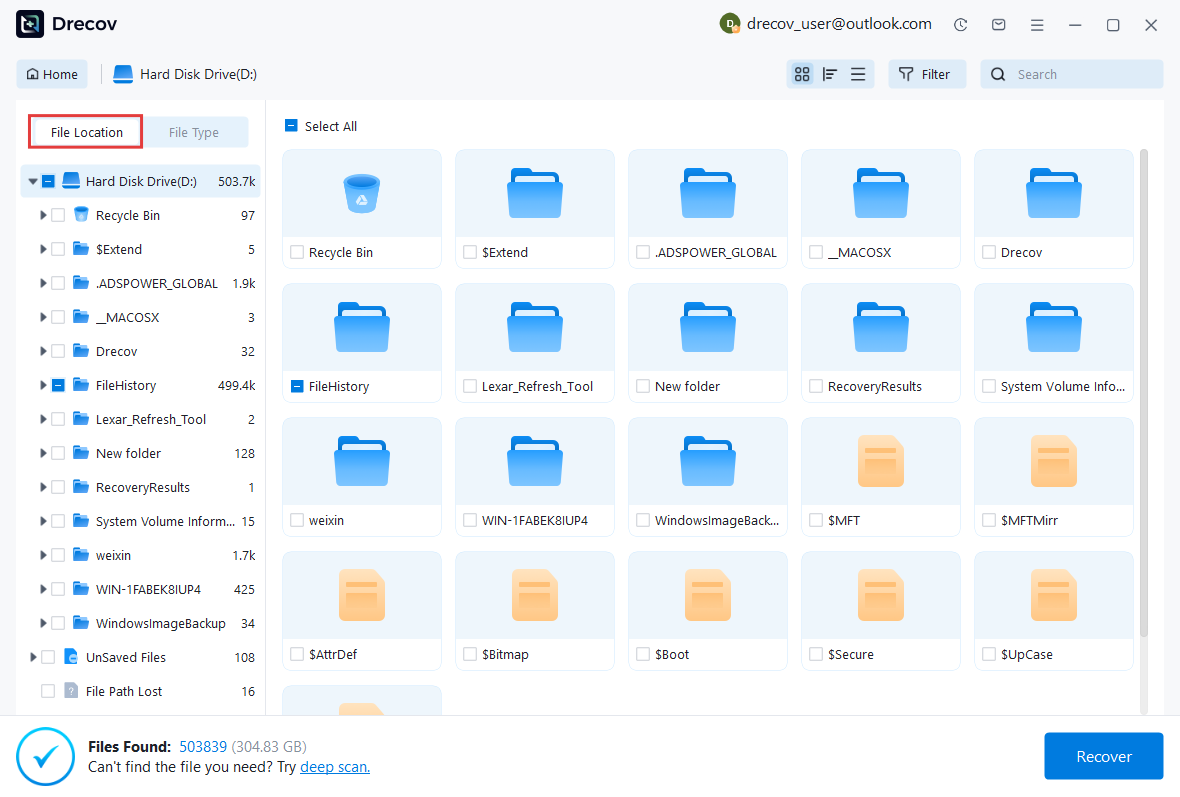
Step 2: Locate and Preview Lost Files
After scanning, browse the detected files and use the preview feature to check recoverable data. You can preview documents (Word, Excel, PDF), photos, and videos to ensure file integrity before recovery.
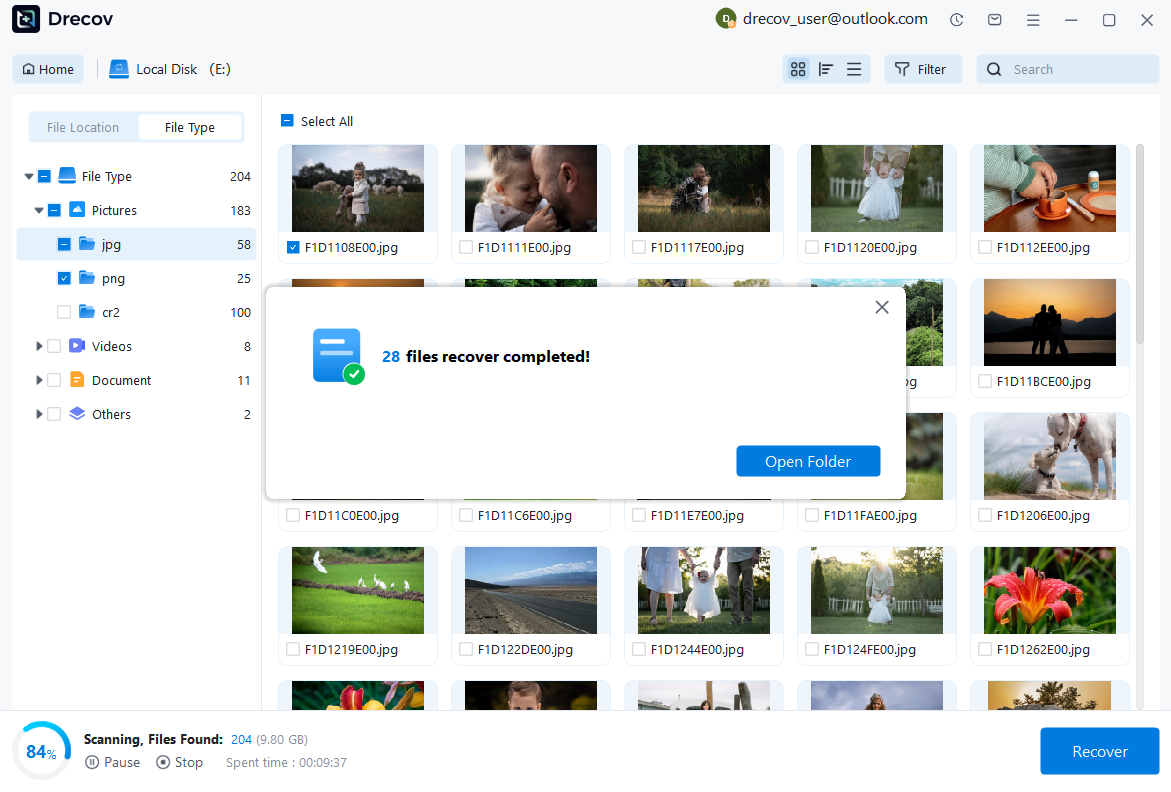
Step 3: Recover and Save to a New Location
Select the files you want to restore and click recover. Save all recovered data to a different drive or location (not the original device) to avoid overwriting lost data.
Why Choose PandaOffice Drecov Recovery Software?
PandaOffice Drecov offers a fast, secure, and user-friendly solution for recovering lost files across multiple scenarios. Whether you need email recovery, ZIP File Recovery, format data recovery, or help to recover deleted drafts Outlook, the software provides reliable recovery performance for both personal and business users.
PandaOffice Drecov supports recovery from formatted hard drives, SSDs, USB drives, SD cards, and external storage devices. Its advanced scanning engine can locate deleted archives, damaged ZIP files, lost Outlook drafts, and accidentally removed documents with high accuracy. For users searching for how to find deleted messages in Teams, PandaOffice Drecov can also help recover exported chat files, attachments, and related local cache data when available.
After recovery, test the file again. If the audio stream was damaged because of storage issues, a recovered version may play normally.
This method is particularly useful when only a few files exhibit audio problems while VLC works correctly with all other media.
This method can help users recover files from floppy disk storage after accidental deletion, formatting, or logical corruption.
This ensures that even if advanced repair methods fail, critical data remains protected.
⚠️ Warning: Always back up essential files before performing in-place repair or registry modifications.
Why does the Start Menu stop working suddenly?
The Start Menu may stop working due to corrupted system files, failed Windows updates, or background service crashes. In some cases, memory overload or conflicting third-party software can also cause windows start menu not working behavior.
Can Start Menu failure affect overall system performance?
Yes, although the issue primarily affects UI interaction, it may also indicate underlying system instability. When windows 10 start menu not working occurs frequently, it can be a sign of deeper problems in Windows Shell or system services.
Prevention tips for avoiding Start Menu failures
Preventing windows start menu not working issues requires maintaining a stable system environment. Keeping Windows updated ensures that known bugs affecting the Start Menu are patched regularly.
Avoid installing untrusted optimization tools that modify system registry or shell behavior, as these can introduce instability. It is also important to ensure proper shutdown procedures to avoid system file corruption.
Regularly monitoring system performance and removing unnecessary startup programs can help maintain smooth Start Menu responsiveness over time.
Final conclusion
The windows start menu not working issue is usually caused by system file corruption, user profile damage, or Windows Shell component failure. While it may appear serious, most cases can be resolved through Explorer restart, system repair tools, or user profile reconstruction.
For deeper issues, in-place system repair or registry restoration may be required. In rare cases, data recovery and full system reset become necessary.
With proper maintenance and timely troubleshooting, windows 10 start menu not working and windows 11 start menu not working issues can be effectively resolved and prevented in the long term.






