







Losing important documents, irreplaceable family photos, or critical work spreadsheets in an instant is incredibly stressful. Whether you accidentally emptied the Recycle Bin, experienced a sudden power outage, or suffered a system crash, data loss happens to everyone. Fortunately, data is rarely fully erased from your storage drive immediately; instead, the operating system simply marks the space as available for new data. To retrieve these hidden assets before they are overwritten, you need a reliable program to recover deleted files. In this comprehensive guide, we will explore how file restoration works and why PandaOffice Drecov data recovery software stands out as the premier solution for safeguarding your digital life.
Understanding the Basics of a Program to Recover Deleted Files
When you delete a file on your computer, the operating system removes its pointer and changes the file allocation status to “free space.” However, the actual binary data remains intact on your magnetic platter or flash cells. A dedicated program to recover deleted files scans these unallocated sectors, pieces the fragmented fragments back together, and reconstructs the original directory structure.
Common Data Loss Challenges
Data recovery can become complicated due to several common technical issues:
- Data Overwriting: Using your PC after data loss writes new temporary files to the drive, which can permanently replace your deleted data.
- File Fragmentation: Large files are often scattered across non-contiguous sectors, making reassembly difficult for basic utilities.
- File System Corruption: If a drive’s RAW format or Master File Table (MFT) becomes corrupted, standard operating systems will fail to read the directory path.
To overcome these hurdles seamlessly, a specialized data recovery program for pc is required. This is where PandaOffice Drecov data recovery software excels. It bypasses operating system limitations by interacting directly with the storage hardware storage architecture.
Why Choose PandaOffice Drecov Data Recovery Software?
PandaOffice Drecov is engineered with deep-scanning algorithms that reconstruct over 1,000 file formats including NTFS, FAT32, exFAT, and APFS. It provides a safe, read-only recovery environment, ensuring that your lost data is never modified during the scanning process. You can utilize this versatile tool across multiple real-world data loss scenarios:
- Accidental Emptied Recycle Bin: Safely pull back items deleted via
Shift + Delete. For platform-specific steps, you can read about how to go to recently deleted recover files on all devices. - System Optimization Glitches: Sometimes, system cleaning or cloud detachment can trigger unexpected file disappearance. For instance, cleaning up cloud storage integration might result in local sync issues; if you run into this, learn how to remove OneDrive from File Explorer step-by-step guide.
- Lost Browser Downloads: Cached data or interrupted downloads can vanish from your browser directory. If you are struggling with media capture or offline saves, look into this how to download video from browser Firefox 2026 guide.
⚠ Warning: Install it on a drive different from the one where your data was lost to prevent overwriting.
Step-by-Step Guide: Your Program to Recover Deleted Files
To fix your data loss problems, choose the solution below that best matches your technical comfort level.
Method 1: Native Windows Recycle Bin Recovery
Before deploying a dedicated program for data recovery, always check the default operating system safety nets.
- Double-click the Recycle Bin icon on your Desktop.
- Locate your deleted file by using the search bar in the top-right corner.
- Right-click the file and select Restore. The file will instantly return to its original folder directory.
Method 2: Comprehensive Recovery via PandaOffice Drecov
Beyond its user-friendly interface, PandaOffice Drecov runs on an advanced, proprietary multi-threaded scanning engine designed specifically for modern high-capacity storage environments. Traditional recovery utilities often struggle with modern Solid-State Drives (SSDs) due to the background operation of the TRIM command, which actively purges unallocated blocks. However, Drecov integrates a specialized low-level hardware communication layer. This layer can occasionally intercept raw block data before the flash memory controller fully overwrites the remnants of deleted structures.
When files bypass the Recycle Bin completely, deploying the PandaOffice Drecov data recovery software is the most reliable way to retrieve your lost assets.
Crucial Warning: Do not download or install the software onto the exact same drive partition where your deleted files were located. Doing so will overwrite the data sectors you are trying to save. If you lost files on your C: drive, install the software on an external USB flash drive or a secondary D: partition.
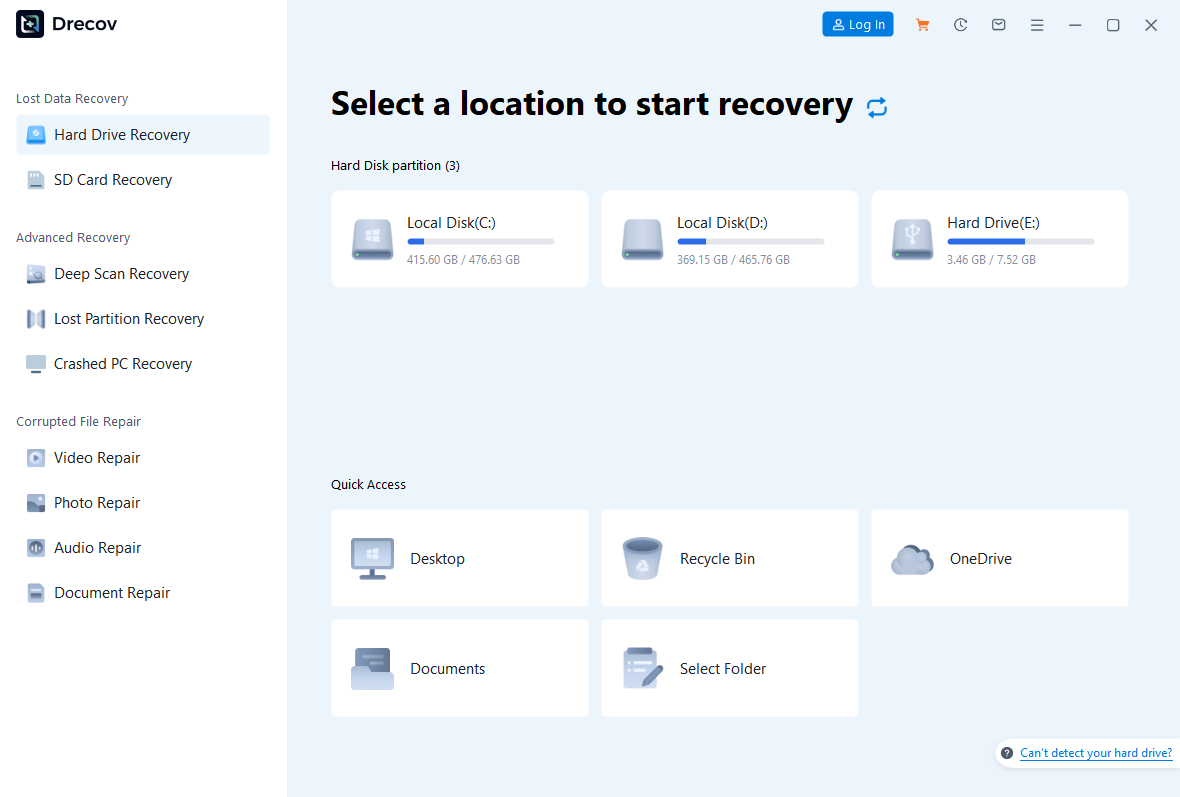
Step 1: Select the Target Location
Launch the application. On the main dashboard, you will see a clean layout of your Connected Hard Disk Drives, External Devices, and Common Locations. Select the specific drive letter (e.g., C:) or the specific folder path where the files were last seen.
Step 2: Scan
Click the Scan button to initiate a simultaneous Quick Scan and Deep Scan of the storage blocks.
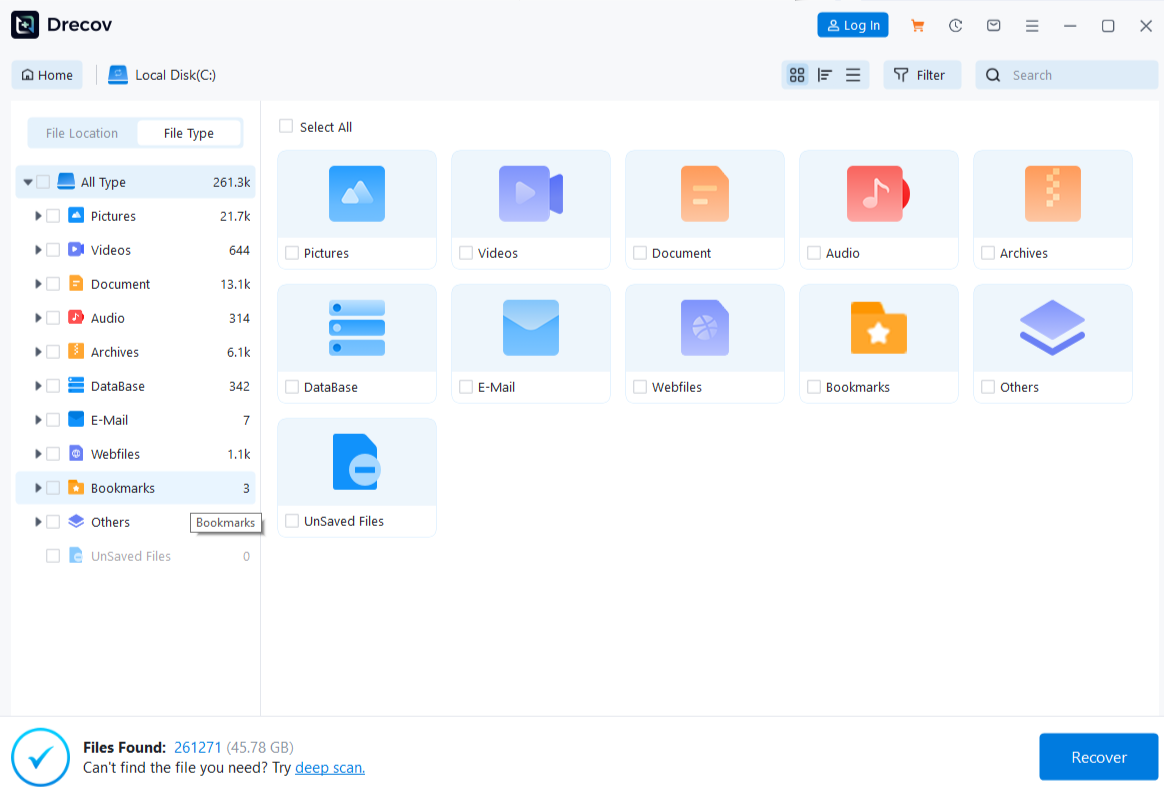
Step 3: Filter and Preview
Meanwhile, the software will dynamically populate files on your screen as it finds them. Use the file-type filter sidebar to isolate specific extensions. Select a file to view its real-time preview thumbnail. This confirms the integrity of the file before recovery.
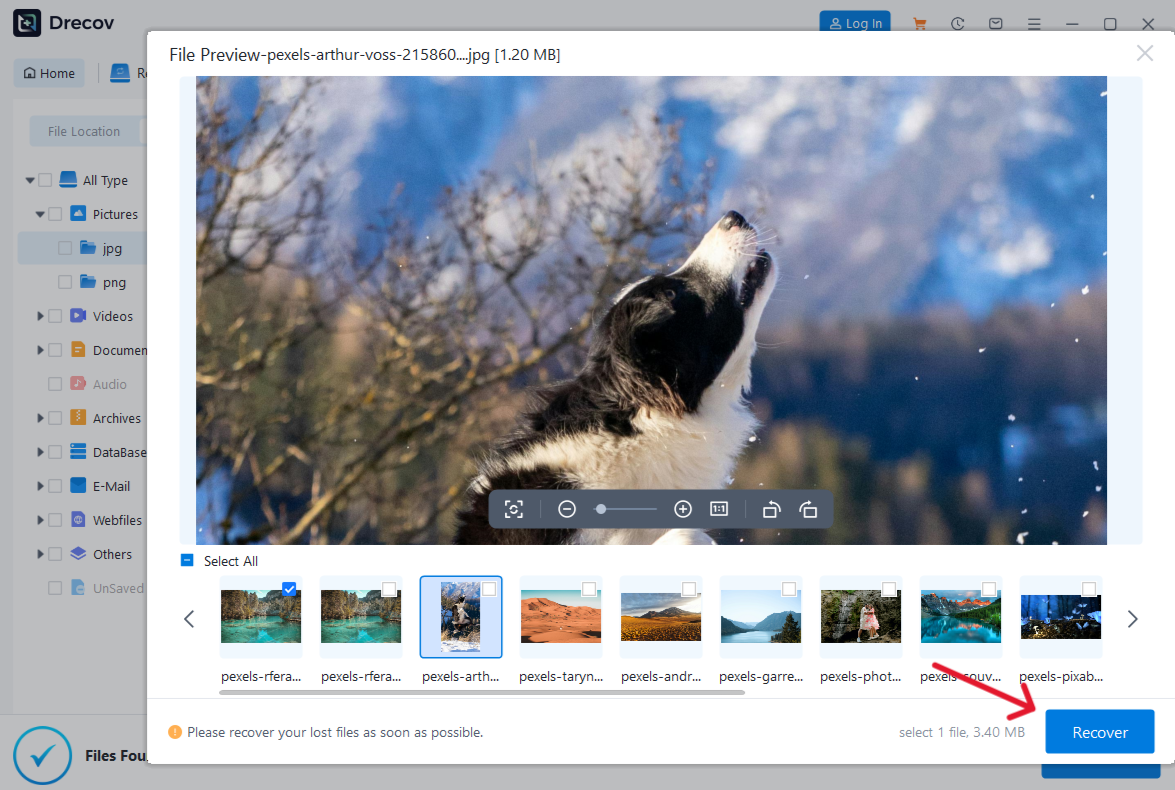
Step 4: Recovery
Check the checkboxes next to your target files, click Recover, and choose a secure destination folder on a separate, healthy drive.
Method 3: Command-Line File Restoration
For advanced IT users, Microsoft provides a command-line tool known as Windows File Recovery (winfr), available on Windows 10 (build 19041 and later) and Windows 11.
- Open the Start menu, type
cmd, right-click Command Prompt, and select Run as administrator. - Type the following command structure to scan your source drive and output to a safe destination drive:
winfr C: E: /regular /n \Users\<username>\Documents\ - Press
Enterand wait for the tool to reconstruct the sector clusters.
Alternative or Complementary Methods
Aside from running a dedicated program to recover deleted files, users can attempt manual system rollbacks or integrated operating system features to reclaim their information.
| Recovery Method | Pros | Cons |
| PandaOffice Drecov Software | Highest success rate; previews files; recovers raw partitioned data; incredibly user-friendly. | Requires a software download; deep scans on massive multi-terabyte drives take time. |
| Windows System Image Backup | Restores entire OS states; built natively into Windows; requires no external web downloads. | Overwrites all files modified after the backup point; requires proactive configuration. |
| Previous Versions | Fast recovery of localized files; accessible directly via File Explorer properties. | Relies entirely on Volume Shadow Copy Service (VSS); often disabled by default to save storage space. |
To restore a file via Shadow Copies, navigate to the folder that previously contained the deleted item. Right-click inside the directory, choose Properties, and select the Previous Versions tab. If a snapshot exists, select it and click Restore. However, if no shadow copy is available, running a specialized data recovery program for pc remains your only viable alternative.
Tips & Best Practices for Maximizing Data Recovery Success
Data recovery relies heavily on drive physics and timing. To ensure that your chosen program for data recovery yields the absolute best results, incorporate these vital operational habits:
- Cease All Drive Operations Immediately: The moment you realize a file is missing, stop downloading files, close all active browser tabs, and do not update any software applications. This minimizes the risk of random background write cycles.
- Recover to a Separate Storage Device: Always export recovered files to an external hard drive, network-attached storage (NAS), or secondary flash drive. Saving them back to the source drive can corrupt the remaining unrecovered file fragments during the process.
- Keep an Eye on Drive Health: Regularly check your hard drive’s S.M.A.R.T. attributes. If a hard drive is physically failing, software scanning can cause total disk failure. In these rare cases, clone the drive to an image file first, then run your program to recover deleted files against that virtual image file.
Frequently Asked Questions
Can a program to recover deleted files restore data from a formatted drive?
Furthermore, yes. A quick format re-creates the file system control structures but leaves the data sectors untouched. Advanced tools like PandaOffice Drecov data recovery software can read these raw data clusters and perfectly rebuild the missing directory trees.
Is it possible to recover files that were deleted a long time ago?
It depends entirely on your drive usage. If the sectors where the old files resided have not been overwritten by new data, a high-quality data recovery program for pc can successfully retrieve them, even months later.
What is the difference between Quick Scan and Deep Scan?
A Quick Scan looks at the file system’s current index tables for rapid discovery of recently emptied files. In contrast, a Deep Scan executes a sector-by-sector search across the entire storage media, identifying files based on known file headers even if the directory structure is completely gone.
Why do recovered files sometimes refuse to open or appear corrupted?
This issue occurs when a portion of the original file’s storage clusters has been overwritten by new system data before the recovery process was started. Using a reliable program for data recovery early on minimizes this risk.
Conclusion
Losing critical data is an incredibly frustrating event, but it does not have to be permanent. By understanding how file systems store data and acting quickly, you can reverse accidental losses with ease. Utilizing a specialized program to recover deleted files bridges the gap between complex drive storage architecture and everyday user needs.
Consequently, keeping a dependable tool like PandaOffice Drecov data recovery software installed and ready on your computer provides a reliable safety net against unexpected formatting issues, partition errors, or sudden file deletions. Pair this software with consistent cloud backups and healthy drive habits to ensure your digital files remain safe, secure, and always within reach.






