







Understanding Deleted File Recovery in Ubuntu
How File Deletion Works in Ubuntu Systems
Ubuntu is widely recognized for its stability, security, and flexibility. However, accidental file deletion can still occur regardless of how carefully a system is managed. Whether a user mistakenly removes an important document, deletes a project folder through the terminal, or loses files during a system update, file loss can be frustrating.
Unlike Windows, Ubuntu handles deleted files differently depending on how they are removed. Files deleted through the graphical file manager are usually moved to the Trash folder, making recovery relatively simple. However, files removed using terminal commands such as rm typically bypass the Trash entirely. In these situations, users often need specialized tools and recovery procedures.
The good news is that deleted data is not always permanently erased immediately. In many cases, the operating system simply marks the storage space as available for reuse. Until new data overwrites that location, there may still be an opportunity to perform deleted file recovery Ubuntu successfully.
Understanding how Ubuntu manages deleted files is the first step toward improving recovery success. The sooner recovery efforts begin, the better the chances of retrieving important information.
⚠️Warning: Stop using the affected drive immediately after discovering data loss. Continued disk activity may overwrite recoverable files.
Can Deleted Files Be Recovered After Removal?
Many users assume that deleted files disappear forever. In reality, the answer depends on several factors, including the storage device, file system, deletion method, and how much activity occurs afterward.
When a file is deleted, Ubuntu usually removes references to the file from the file system rather than erasing the actual content instantly. As a result, recovery software may still locate and reconstruct the lost data.
Several factors influence recovery success:
- The amount of new data written after deletion.
- Whether the drive is an HDD or SSD.
- The file system being used.
- Whether TRIM is enabled on SSD devices.
- The recovery method selected.
Users attempting to recover deleted files on Ubuntu should act quickly and avoid installing software on the affected partition. Recovery tools should ideally be executed from another drive or a live Ubuntu environment.
While no recovery method guarantees success, many deleted files can be restored if proper steps are followed promptly. Learning how to ubuntu find deleted files effectively can significantly improve the likelihood of recovering valuable documents, photos, videos, and other data.
Why Files Get Deleted on Ubuntu
Common Causes of File Loss in Ubuntu
Data loss on Ubuntu can occur for a variety of reasons. Understanding these causes helps users choose the most appropriate recovery approach.
One of the most common causes is accidental deletion. Users may unintentionally remove files while cleaning directories or organizing projects. Terminal commands can be particularly risky because they often execute immediately without confirmation.
Another frequent cause involves software issues. System crashes, interrupted updates, application failures, and unexpected shutdowns can sometimes damage file structures or result in missing files.
Hardware failures also contribute to file loss. Bad sectors, failing SSDs, damaged external drives, and faulty storage controllers can all lead to inaccessible data.
Other common scenarios include:
- Formatting the wrong partition.
- Deleting important folders through scripts.
- Corrupted file systems.
- Malware attacks.
- Partition table damage.
- Failed dual-boot configurations.
Regardless of the cause, users attempting to recover deleted files Linux Ubuntu should first identify what happened. Understanding the source of the problem often determines which recovery technique is most likely to succeed.
Quick action is essential because storage activity after deletion may reduce recovery possibilities.
Factors That Affect Ubuntu File Recovery Success
Not every deleted file can be recovered successfully. Several technical factors determine whether recovery remains possible.
The most important factor is overwrite activity. When deleted storage sectors are reused by the operating system, original data may become permanently unrecoverable.
Storage technology also plays a significant role. Traditional hard drives generally offer higher recovery potential because deleted data often remains physically intact until overwritten. SSDs behave differently because TRIM commands may automatically clear deleted blocks.
File system type can also influence recovery results. Ubuntu commonly uses:
- ext4
- ext3
- ext2
- XFS
- Btrfs
Each file system stores metadata differently, affecting how recovery tools locate deleted information.
The timing of recovery is equally important. Users who begin recovering deleted files Ubuntu immediately after deletion generally achieve better results than those who continue using the drive for days or weeks.
To maximize success:
- Stop writing new data.
- Unmount the affected partition if possible.
- Use recovery software from another drive.
- Create a disk image before attempting advanced recovery.
These precautions help preserve recoverable information and improve the chances of restoring lost files.
How to Recover Deleted Files on Ubuntu
Method 1: Restore Deleted Files from the Trash Folder
Purpose: Recover recently deleted files that were moved to the Trash folder rather than permanently removed.
Test Environment
- Ubuntu 24.04 LTS
- GNOME Desktop Environment
- ext4 file system
- Local SSD storage
The easiest way to restore deleted files Linux Ubuntu is through the Trash folder. Files deleted using the graphical file manager are typically stored there until the Trash is emptied.
Instructions
1. Open the Files application.
2. Locate the Trash folder in the left navigation panel.
3. Browse through the deleted items.
4. Select the file or folder you want to recover.
5. Right-click the selected item.
6. Choose Restore.
7. Verify that the file returns to its original location.
If multiple files need to be recovered, users can select several items simultaneously and restore them together.
Result
The deleted files are returned to their original directories without requiring additional software.
This method is ideal for recently deleted documents, images, videos, and folders that have not yet been permanently removed.
⚠️Warning: Once the Trash folder is emptied, recovery becomes more difficult and usually requires specialized recovery tools.
Method 2: Recover Deleted Files Using TestDisk
Purpose: Recover deleted files and lost partitions using the open-source TestDisk utility.
Test Environment
- Ubuntu 24.04 LTS
- ext4 partition
- 500 GB SSD
- Terminal access available
TestDisk is one of the most popular recovery tools available for Linux systems. It is designed to repair partition tables and recover deleted files from various file systems.
Users who need to recover files from Ubuntu after accidental deletion often rely on TestDisk because it is free, actively maintained, and compatible with many storage configurations.
Instructions
1. Open Terminal.
2. Update package repositories.
sudo apt update
3. Install TestDisk.
sudo apt install testdisk
4. Launch the utility.
sudo testdisk
5. Create a new log file when prompted.
6. Select the affected disk.
7. Choose the appropriate partition table type.
8. Select Advanced from the available options.
9. Choose the partition containing the deleted files.
10. Access the file recovery menu.
11. Browse recoverable files.
12. Select files to restore.
13. Choose a separate destination for recovered data.
Result
TestDisk can recover deleted files, restore damaged partitions, and repair certain file system issues.
The tool is particularly effective when metadata remains intact and storage sectors have not been overwritten. Many users performing recovery files Ubuntu procedures rely on TestDisk as an initial recovery solution because it supports a wide range of Linux file systems.
Although the interface is text-based, the recovery process is straightforward once users become familiar with the available options.
How to Recover Deleted Files on Ubuntu
Method 3: Recover Lost Data with PhotoRec on Ubuntu
Purpose: Recover deleted files when file system information is damaged or unavailable.
Test Environment
- Ubuntu 24.04 LTS
- ext4 file system
- 512 GB SSD
- PhotoRec 7.x
PhotoRec is a companion utility to TestDisk and specializes in file carving. Instead of relying on file system metadata, it scans storage sectors directly and searches for recognizable file signatures. This approach makes it useful when traditional recovery methods cannot locate deleted files.
Users attempting ubuntu recover deleted files after formatting, partition corruption, or severe file system damage often turn to PhotoRec as a secondary recovery option.
Instructions
1. Open Terminal.
2. Install TestDisk if it is not already installed.
sudo apt update
sudo apt install testdisk
3. Launch PhotoRec.
sudo photorec
4. Select the affected storage device.
5. Choose the partition that contained the deleted files.
6. Select the file system type.
7. Specify a destination folder on another drive.
8. Start the scanning process.
9. Wait for PhotoRec to locate recoverable files.
10. Review recovered files in the destination directory.
Result
PhotoRec can recover thousands of file types, including documents, photos, videos, archives, and databases. Because it scans sectors directly, it remains effective even when partition metadata has been damaged.
One limitation is that recovered files may lose their original names and folder structures. Nevertheless, PhotoRec remains one of the most effective tools for recover deleted files Linux Ubuntu environments.
⚠️Warning: Always save recovered files to a different drive to prevent overwriting recoverable data.
Method 4: Recover Deleted Files from Linux Backups
Purpose: Restore deleted files from previously created backup copies.
Test Environment
- Ubuntu 24.04 LTS
- Deja Dup Backup
- External backup drive
- ext4 file system
Backups provide one of the safest and most reliable methods to recover deleted files on Ubuntu. Unlike recovery software, backups do not depend on whether storage sectors have been overwritten.
Ubuntu supports several backup solutions, including:
- Deja Dup
- rsync
- Timeshift
- External backup drives
- Cloud backup services
If a backup exists, recovery can often be completed within minutes.
Instructions
1. Open the backup application used to create backups.
2. Select the restore option.
3. Choose the backup version that contains the missing files.
4. Browse the available directories.
5. Select the files or folders you want to recover.
6. Choose a restore location.
7. Complete the restoration process.
Result
The selected files return to the chosen location with their original names, metadata, and directory structure intact.
Unlike advanced recovery software, backup restoration does not require scanning storage sectors. For this reason, maintaining regular backups remains one of the most effective ways to protect important data.
Organizations and power users often combine backups with recovery tools to create a comprehensive data protection strategy.
Method 5: Recover Deleted Files with Pandaoffice Drecov
Purpose: Restore deleted files using a dedicated data recovery solution.
Test Environment
- Ubuntu system with affected storage device
- Secondary Windows recovery environment
- NTFS and ext4 recovery testing
- External recovery destination drive
When built-in recovery options fail, dedicated recovery software may help retrieve files that are no longer accessible through standard methods.
Pandaoffice Drecov is designed to recover various types of lost data, including:
- Documents
- Photos
- Videos
- Emails
- Archives
- Audio files
The software can be useful for recovering deleted files Ubuntu scenarios involving accidental deletion, formatting, partition loss, or storage corruption.
Instructions
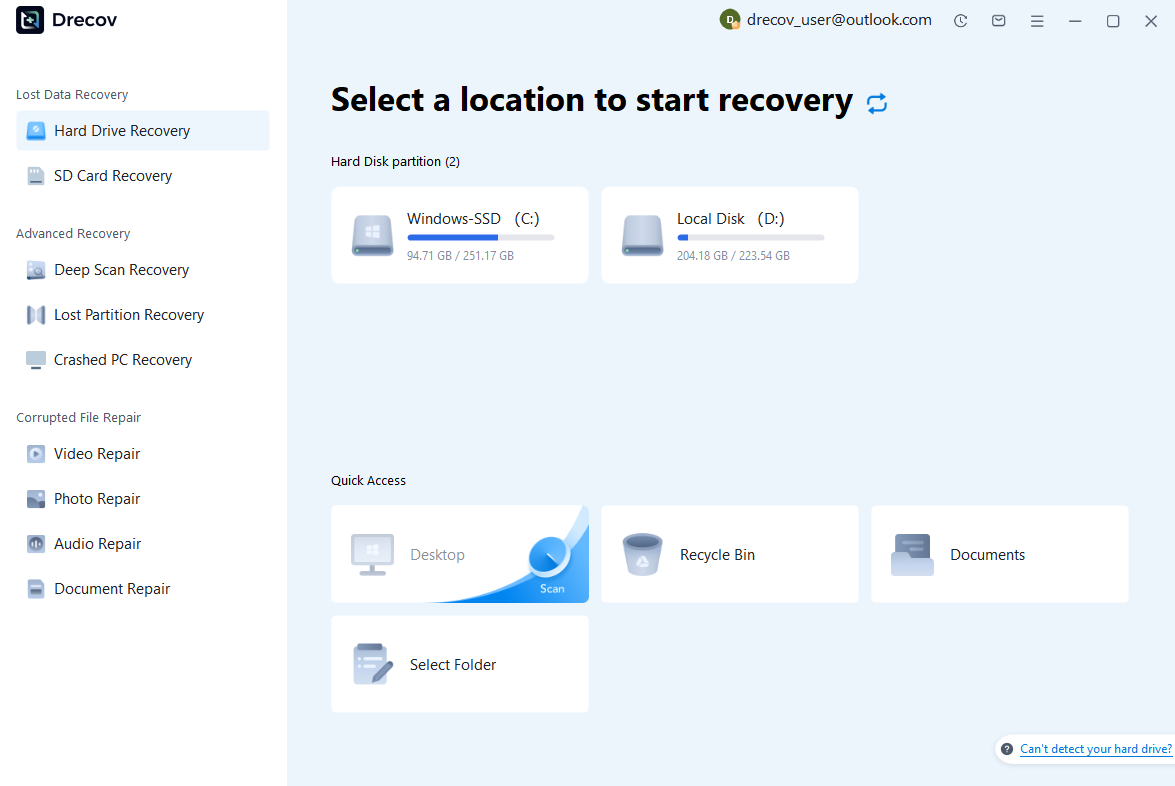
Step 1: Connect the Drive / USB)
Connect your device (SD card, HDD/SSD, or USB drive) to your computer and launch PandaOffice Drecov. Select the target device and start the scan. The software will perform a quick scan and deep scan to detect lost or deleted data.
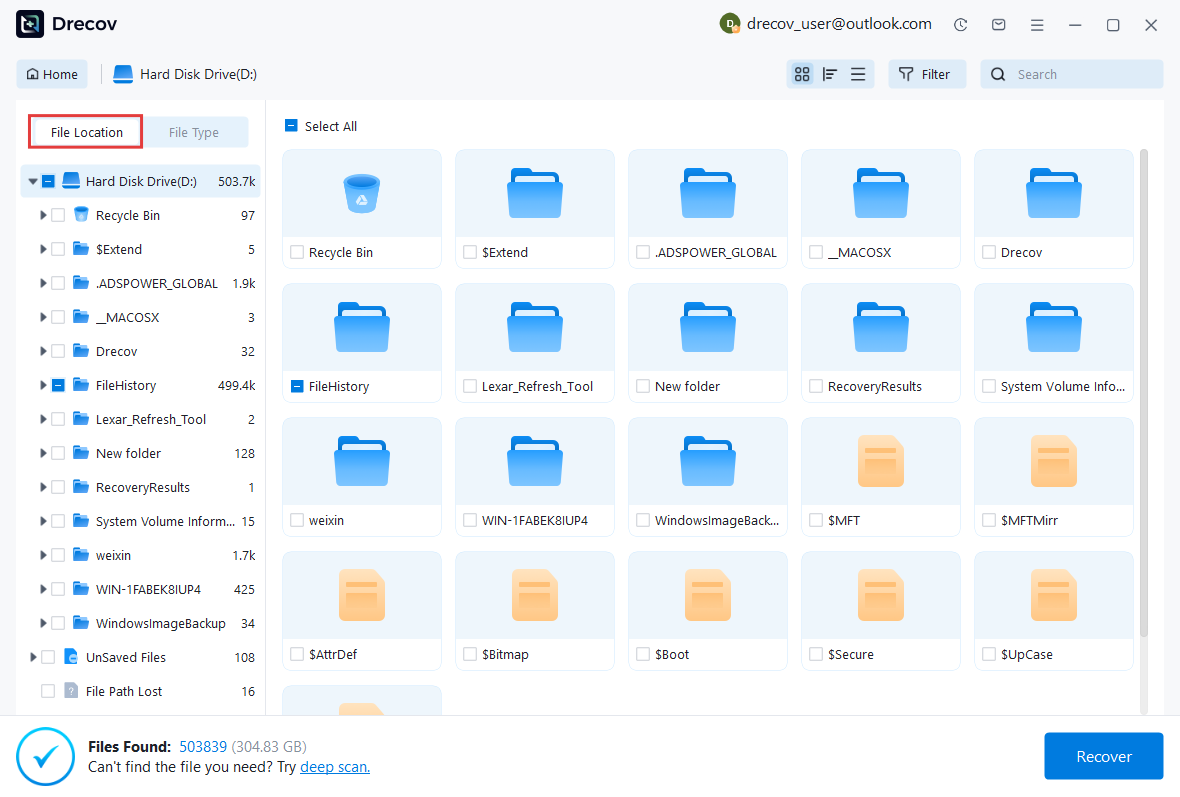
Step 2: Locate and Preview Lost Files
After scanning, browse the detected files and use the preview feature to check recoverable data. You can preview documents (Word, Excel, PDF), photos, and videos to ensure file integrity before recovery.
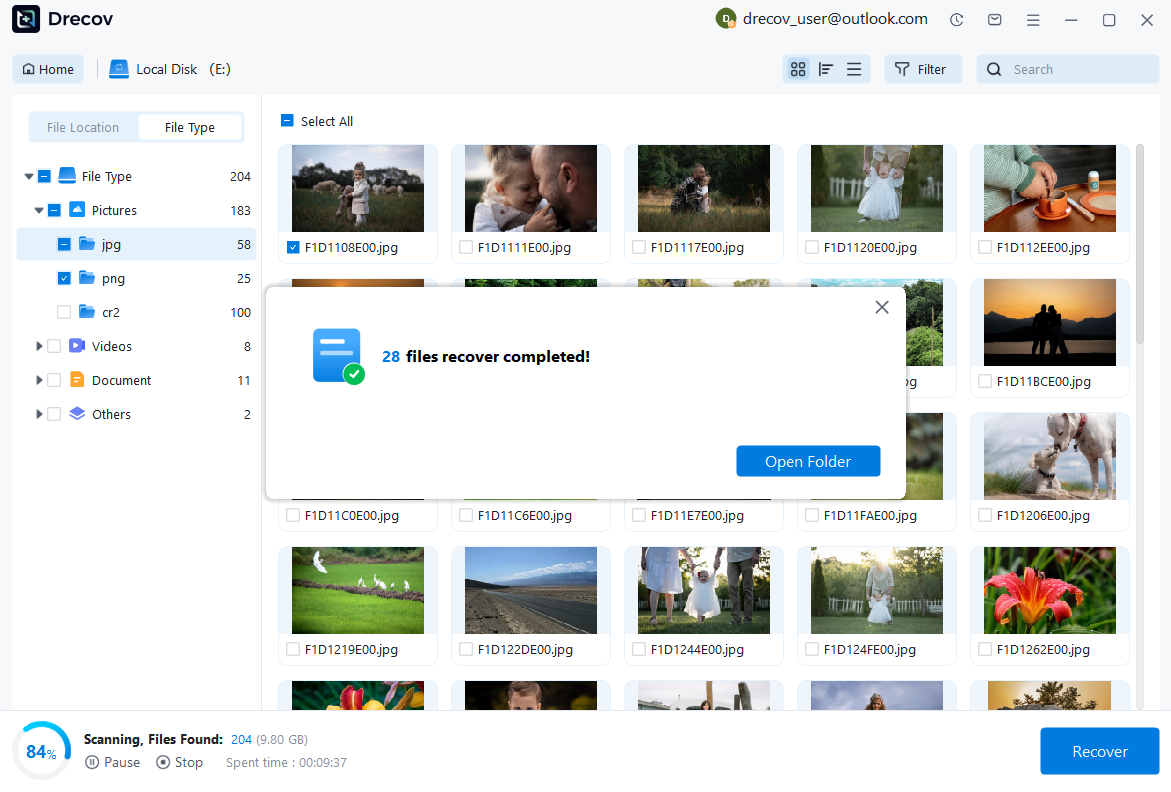
Step 3: Recover and Save to a New Location
Select the files you want to restore and click recover. Save all recovered data to a different drive or location (not the original device) to avoid overwriting lost data.
Why Choose PandaOffice Drecov Recovery Software?
PandaOffice Drecov offers a fast, secure, and user-friendly solution for recovering lost files across multiple scenarios. Whether you need email recovery, ZIP File Recovery, format data recovery, or help to recover deleted drafts Outlook, the software provides reliable recovery performance for both personal and business users.
PandaOffice Drecov supports recovery from formatted hard drives, SSDs, USB drives, SD cards, and external storage devices. Its advanced scanning engine can locate deleted archives, damaged ZIP files, lost Outlook drafts, and accidentally removed documents with high accuracy. For users searching for how to find deleted messages in Teams, PandaOffice Drecov can also help recover exported chat files, attachments, and related local cache data when available.
After recovery, test the file again. If the audio stream was damaged because of storage issues, a recovered version may play normally.
This method is particularly useful when only a few files exhibit audio problems while VLC works correctly with all other media.
This method can help users recover files from floppy disk storage after accidental deletion, formatting, or logical corruption.
Result
Pandaoffice Drecov may help recover files that standard recovery methods cannot locate. Early recovery attempts generally produce the best results because fewer sectors have been overwritten.
For users facing serious data loss incidents, combining careful recovery procedures with dedicated software can improve recovery success rates significantly.
Troubleshooting Ubuntu Recovery Problems
What to Do If Deleted Files Cannot Be Found
Sometimes recovery tools fail to locate deleted files immediately. This does not always mean recovery is impossible.
Common reasons include:
- Incorrect partition selection.
- Overwritten sectors.
- Unsupported file systems.
- SSD TRIM operations.
- Severe storage corruption.
If recovery attempts fail, consider the following actions:
1. Stop using the affected drive.
2. Create a sector-by-sector disk image.
3. Scan the image instead of the original drive.
4. Try multiple recovery tools.
5. Verify the correct partition is being scanned.
These steps may improve the chances of locating recoverable data.
How to Prevent Overwriting Lost Data
Preventing overwrites is one of the most important aspects of successful deleted file recovery Ubuntu procedures.
Every new file written to the affected storage device may occupy sectors previously used by deleted data.
To reduce risks:
- Avoid downloading files to the affected partition.
- Do not install recovery software on the damaged drive.
- Unmount the partition whenever possible.
- Use a live Ubuntu USB environment for recovery operations.
- Save recovered files elsewhere.
Following these recommendations helps preserve recoverable information until the recovery process is complete.
⚠️Warning: Continuing normal system usage after deletion can significantly reduce recovery success.
Common Recovery Mistakes to Avoid
Many recovery failures result from avoidable mistakes rather than technical limitations.
Common errors include:
- Saving recovered files back to the original drive.
- Running recovery software too late.
- Formatting partitions before attempting recovery.
- Ignoring backup availability.
- Selecting the wrong storage device.
Another frequent mistake involves repeatedly scanning the same drive without first creating a backup image. A disk image allows recovery attempts without risking additional data loss.
Users who understand these common pitfalls often achieve much better recovery results.
Frequently Asked Questions About Ubuntu File Recovery
Can Ubuntu Find Deleted Files After Emptying the Trash?
Yes, in many cases. Even after the Trash folder is emptied, deleted files may remain recoverable if their storage sectors have not been overwritten.
Recovery tools such as TestDisk and PhotoRec may help ubuntu find deleted files that no longer appear in the Trash folder.
The chances of success depend on storage activity after deletion.
How Long Do Deleted Files Remain Recoverable?
There is no fixed timeframe.
Deleted files remain recoverable until the operating system reuses their storage space. Some files may remain recoverable for months, while others may be overwritten within minutes.
Immediate action is always recommended when attempting restore deleted files Linux Ubuntu procedures.
What Is the Best Tool for Deleted File Recovery on Ubuntu?
The best recovery solution depends on the situation.
Common options include:
- TestDisk for partition and file recovery.
- PhotoRec for deep file carving.
- Backup restoration tools.
- Pandaoffice Drecov for advanced recovery scenarios.
Many users combine several tools to maximize recovery success.
Can SSD TRIM Affect Recovery Results?
Yes. SSD TRIM can significantly impact recovery.
When TRIM is enabled, deleted storage blocks may be cleared automatically, making recovery more difficult or impossible.
This is one reason why users should begin recovery files Ubuntu procedures immediately after discovering data loss.
Key Takeaways for Recovering Deleted Files on Ubuntu
Best Practices for Successful Recovery
Recovering deleted files successfully often depends on how quickly users respond.
Key recommendations include:
- Stop using the affected drive.
- Verify whether files exist in the Trash folder.
- Use TestDisk or PhotoRec when necessary.
- Recover files to another storage device.
- Create backups regularly.
Following these practices can greatly improve recovery outcomes.
How to Protect Important Files in the Future
The best recovery strategy is prevention.
Users can reduce future risks by:
- Maintaining automatic backups.
- Using cloud synchronization services.
- Monitoring drive health regularly.
- Creating system snapshots.
- Avoiding risky terminal commands.
A proactive approach minimizes downtime and reduces the impact of accidental deletion.
Conclusion
Losing important files on Ubuntu can be stressful, but recovery is often possible if the correct steps are taken quickly. Whether files were removed accidentally, deleted through terminal commands, lost due to corruption, or affected by partition issues, several recovery options are available.
This guide explored multiple ways to recover files from Ubuntu, including restoring data from the Trash folder, using TestDisk, scanning with PhotoRec, restoring backups, and utilizing Pandaoffice Drecov for advanced recovery situations. Understanding how file deletion works and avoiding overwriting affected storage devices can significantly improve recovery success.
By following the methods and best practices discussed above, users can increase their chances of recovering valuable files while also building stronger data protection habits for the future.






