







Finding the Cheapest Data Recovery Software for Your Needs
Why Affordable Data Recovery Tools Are in High Demand
Data loss can happen to anyone. Whether files disappear because of accidental deletion, formatting, virus attacks, or system crashes, recovering important information becomes a priority. However, professional recovery services are often expensive, leading many users to search for the cheapest data recovery software available.
Affordable recovery tools have become increasingly popular because they provide a balance between functionality and cost. Modern software can recover photos, videos, documents, archives, and other file types without requiring advanced technical skills.
For home users, students, freelancers, and small businesses, choosing a budget-friendly solution can significantly reduce recovery expenses while still delivering satisfactory results.
The key is understanding which features matter most and how to identify software that offers genuine value rather than simply the lowest price.
What Makes Recovery Software Worth Buying?
Price alone should not determine your decision. The best cheap file recovery software combines affordability with reliable recovery performance.
Important features include:
- Support for multiple file systems
- Deep scanning capabilities
- Preview before recovery
- User-friendly interface
- Fast scanning speeds
- Compatibility with Windows and external devices
Some inexpensive tools may appear attractive initially but lack essential recovery features. Therefore, evaluating recovery success rates and supported storage devices is just as important as comparing pricing.
When selecting software, users should also consider whether the product offers free scanning, customer support, and regular updates.
Common File Loss Scenarios
Most users seek recovery software after encountering situations such as:
- Accidental deletion
- Recycle Bin emptying
- Drive formatting
- Partition loss
- Operating system crashes
- Virus attacks
- Power failures
A capable recovery solution should address multiple scenarios rather than focusing on only one type of data loss.
How to Evaluate Cheap Recovery Software Before Purchasing
Recovery Success Rate Matters More Than Price
Many buyers focus exclusively on cost when searching for the cheapest recovery software, but recovery effectiveness should remain the primary factor.
A low-cost program that fails to recover important files ultimately becomes more expensive because users may need to purchase another solution or pay for professional services.
High-quality recovery software typically provides:
- Deep scan technology
- Signature-based recovery
- File preview options
- Recovery filtering tools
- Support for damaged partitions
Before purchasing any software, review independent user feedback and verify whether the application supports your file types.
Supported Devices and Storage Media
Different recovery tools support different devices.
Commonly supported devices include:
- Internal HDDs
- SSDs
- USB flash drives
- Memory cards
- External hard drives
- Digital cameras
Some budget products only support internal drives, limiting their usefulness.
The best cheap recovery software should handle both internal and external storage devices without additional licensing fees.
Free Trial Features
Many recovery applications offer free scanning before purchase.
A free trial allows users to:
- Confirm files are recoverable
- Estimate recovery quality
- Compare scan speeds
- Evaluate software usability
This approach reduces purchasing risk and helps identify the most suitable solution.
⚠️ Warning: Never save recovered files back to the same drive that experienced data loss, as doing so may overwrite recoverable information.
Best Affordable Ways to Recover Lost Files
Method 1: Check the Recycle Bin First
Before purchasing any software, users should verify whether deleted files remain in the Recycle Bin.
Steps
- Open Recycle Bin.
- Search for the missing files.
- Right-click the files.
- Select Restore.
Many accidental deletions can be reversed instantly using this method.
Test Environment
- Windows 11 Pro
- NTFS File System
- Local SSD Storage
- Office Documents and Images
This approach is free and should always be attempted before more advanced recovery methods.
Method 2: Restore Files from Backup
If backups exist, file recovery becomes significantly easier.
Potential backup sources include:
- Windows File History
- OneDrive
- Google Drive
- NAS devices
- External backup drives
Steps
- Locate your backup source.
- Browse previous versions.
- Select required files.
- Restore to a safe location.
Test Environment
- Windows 10 Pro
- OneDrive Synchronization Enabled
- 500GB SSD
- Microsoft Office Files
Backups often provide the fastest and most reliable recovery results.
Method 3: Recover Deleted Files Using PandaOffice Drecov
When deleted files are no longer available in backups or the Recycle Bin, dedicated recovery software becomes necessary.
PandaOffice Drecov provides an affordable solution for recovering deleted, formatted, corrupted, or lost files from various storage devices.
Steps
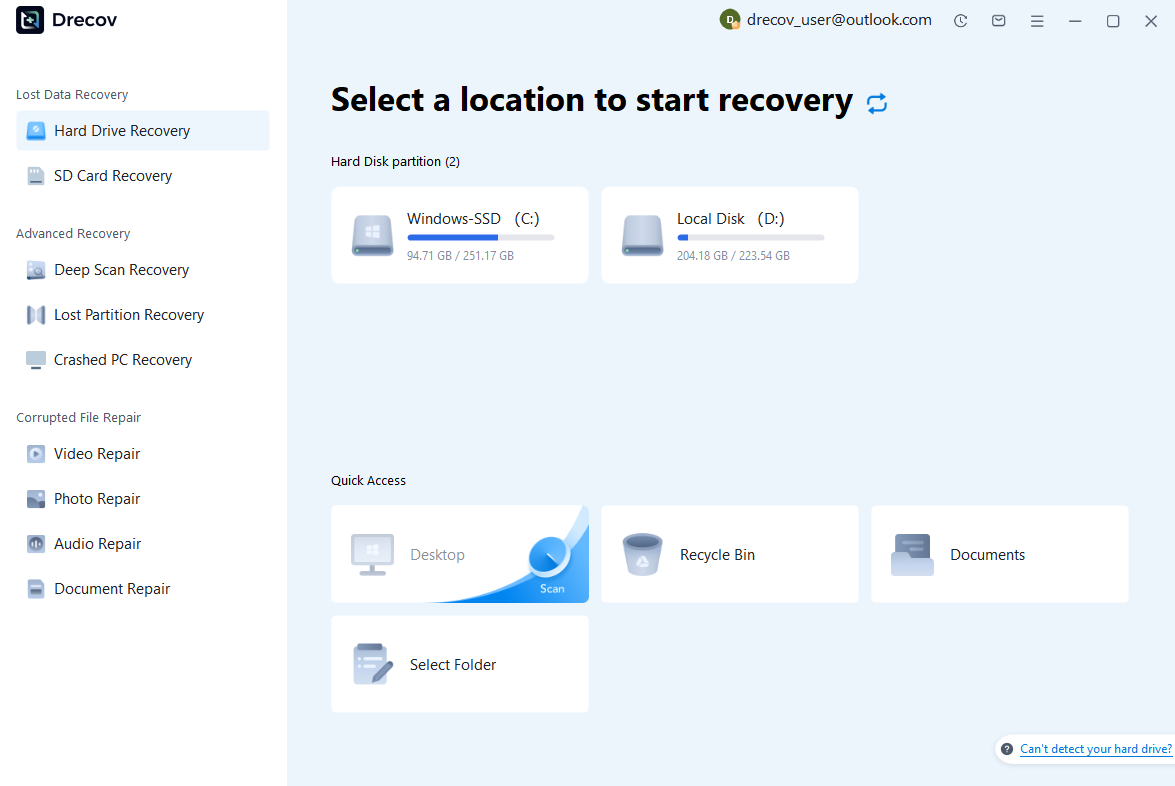
Step 1: Connect the Drive / USB)
Connect your device (SD card, HDD/SSD, or USB drive) to your computer and launch PandaOffice Drecov. Select the target device and start the scan. The software will perform a quick scan and deep scan to detect lost or deleted data.
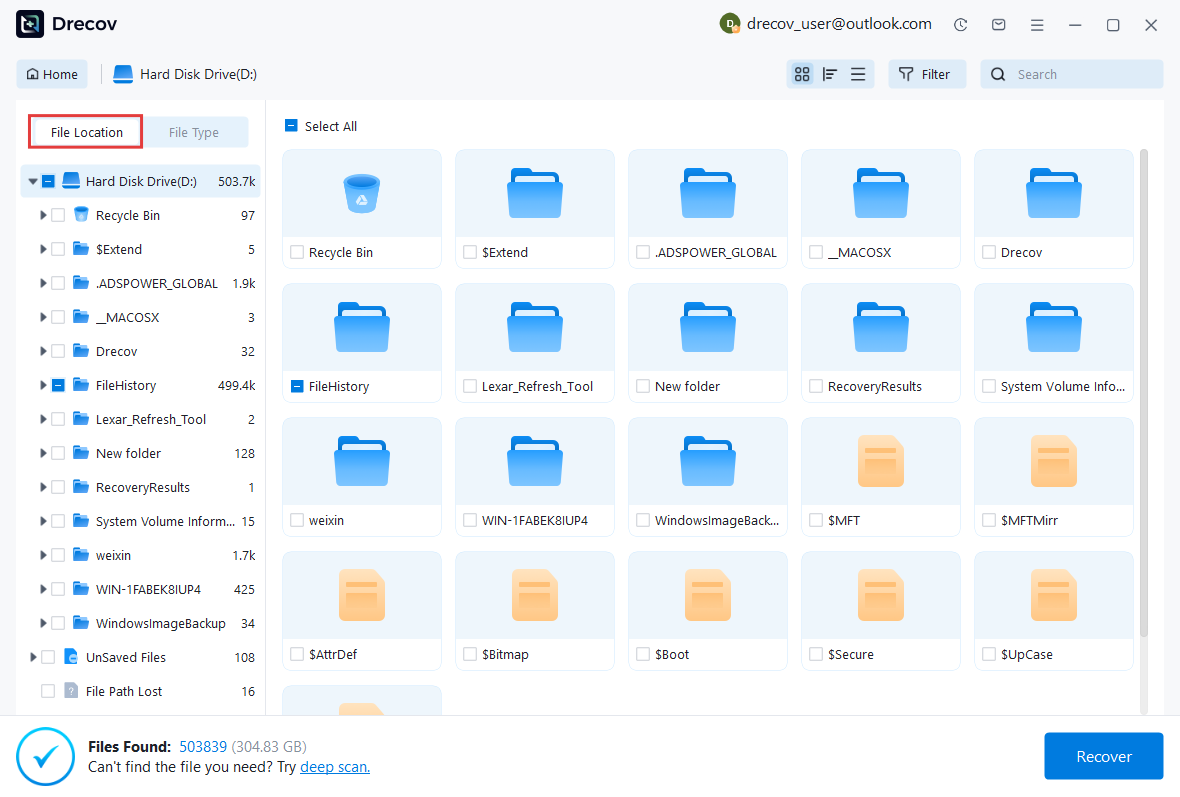
Step 2: Locate and Preview Lost Files
After scanning, browse the detected files and use the preview feature to check recoverable data. You can preview documents (Word, Excel, PDF), photos, and videos to ensure file integrity before recovery.
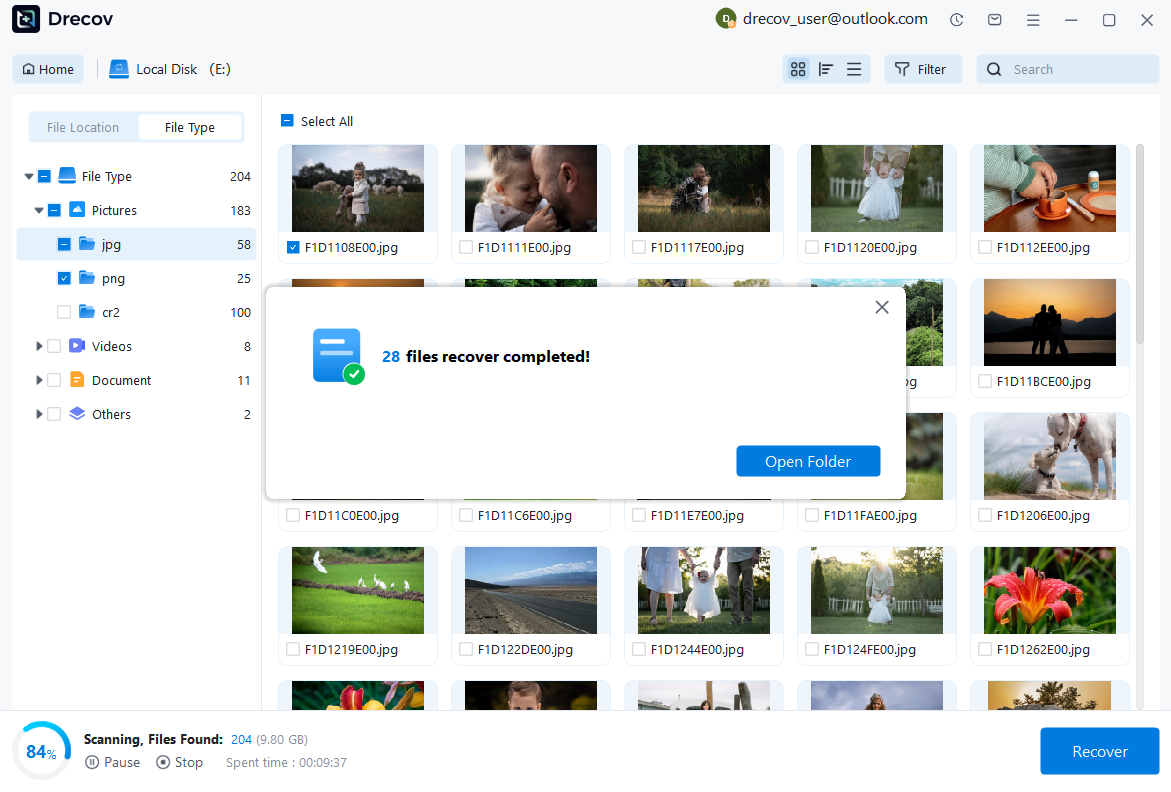
Step 3: Recover and Save to a New Location
Select the files you want to restore and click recover. Save all recovered data to a different drive or location (not the original device) to avoid overwriting lost data.
Why Choose PandaOffice Drecov Recovery Software?
PandaOffice Drecov offers a fast, secure, and user-friendly solution for recovering lost files across multiple scenarios. Whether you need email recovery, ZIP File Recovery, format data recovery, or help to recover deleted drafts Outlook, the software provides reliable recovery performance for both personal and business users.
PandaOffice Drecov supports recovery from formatted hard drives, SSDs, USB drives, SD cards, and external storage devices. Its advanced scanning engine can locate deleted archives, damaged ZIP files, lost Outlook drafts, and accidentally removed documents with high accuracy. For users searching for how to find deleted messages in Teams, PandaOffice Drecov can also help recover exported chat files, attachments, and related local cache data when available.
After recovery, test the file again. If the audio stream was damaged because of storage issues, a recovered version may play normally.
This method is particularly useful when only a few files exhibit audio problems while VLC works correctly with all other media.
This method can help users recover files from floppy disk storage after accidental deletion, formatting, or logical corruption.
Supported recoveries include:
- Photos
- Videos
- Documents
- Audio files
- Archives
- Email files
Test Environment
- Windows 11 Pro
- 1TB NVMe SSD
- NTFS Partition
- Mixed File Types
For users seeking the cheapest data recovery software, PandaOffice Drecov offers a practical combination of affordability and recovery functionality.
Method 4: Use Windows File History
Windows File History can restore previous versions of files and folders.
Steps
- Open Control Panel.
- Select File History.
- Choose Restore Personal Files.
- Browse available versions.
- Restore desired files.
Test Environment
- Windows 10 Home
- File History Enabled
- External Backup Drive
- NTFS Storage
This method works particularly well for recovering recently modified documents.
⚠️ Warning: File History only works if it was enabled before data loss occurred.
Method 5: Recover Previous Versions of Files
Windows includes a Previous Versions feature that can restore earlier copies of files and folders if System Protection or File History was enabled before the loss occurred.
This method is particularly useful when files have been accidentally overwritten, modified incorrectly, or deleted from a synchronized folder. Since it relies on snapshots created by Windows, recovery is often fast and does not require third-party tools.
Steps
- Navigate to the folder that previously contained the missing file.
- Right-click the folder.
- Select Properties.
- Open the Previous Versions tab.
- Review available restore points.
- Choose the version you need.
- Click Restore or copy files to another location.
Test Environment
- Windows 11 Pro 24H2
- System Protection Enabled
- NTFS SSD
- Local User Profile
This method works best when restore points are created regularly and sufficient disk space is allocated for system protection.
Method 6: Recover Data from a Formatted Drive
Formatting a drive does not always erase data immediately. In many situations, file records remain available until they are overwritten by new information.
Users often believe a formatted drive is permanently erased, but recovery is frequently possible if the drive has not been heavily used afterward.
Steps
- Stop using the formatted drive immediately.
- Connect the drive to a functioning computer.
- Launch recovery software.
- Perform a deep scan.
- Filter results by file type.
- Preview recoverable items.
- Save recovered files elsewhere.
Test Environment
- Windows 10 Pro
- 2TB External HDD
- Quick Format Performed
- NTFS File System
The sooner recovery begins after formatting, the higher the likelihood of restoring complete files successfully.
Method 7: Recover Lost Partitions
Partition issues can make entire drives appear empty even when data still exists physically on the storage device.
Partition loss may result from:
- Accidental deletion
- Corrupted partition tables
- Failed operating system installations
- Power interruptions
- Malware activity
Steps
- Connect the affected storage device.
- Run a partition recovery scan.
- Locate missing partitions.
- Preview detected files.
- Recover critical data first.
- Rebuild the partition if necessary.
Test Environment
- Windows 11 Home
- GPT Partition Table
- 1TB SSD
- Deleted Data Partition
Partition recovery is often more successful when performed before creating new partitions on the affected drive.
Method 8: Recover Data After a System Crash
Unexpected operating system crashes can corrupt files and interrupt active write operations. Documents being edited at the time of the crash are particularly vulnerable.
Recovery becomes more difficult when users repeatedly reboot or continue writing data to the affected drive.
Steps
- Shut down the system safely.
- Disconnect secondary storage devices if necessary.
- Scan the affected drive.
- Identify recently lost files.
- Recover data to another storage location.
- Verify file integrity after recovery.
Test Environment
- Windows 11 Pro
- NVMe SSD
- Office Documents
- Sudden Power Loss Scenario
⚠️ Warning: Continuing to use a crashed system extensively may reduce recovery success by overwriting recoverable sectors.
Comparing the Cheapest Data Recovery Software Options
Features That Provide the Best Value
When evaluating the cheapest data recovery software, users should compare features instead of focusing solely on purchase price.
The most valuable features include:
- Deep scanning technology
- Support for multiple file systems
- File preview functionality
- Fast scan performance
- External drive compatibility
- Partition recovery support
A product offering these capabilities often delivers a better long-term return on investment than software that is inexpensive but severely limited.
The ideal balance is affordability combined with reliable recovery performance.
One-Time Purchase vs Subscription Plans
Many recovery products now use subscription-based pricing models.
Common options include:
- Monthly subscriptions
- Annual subscriptions
- Lifetime licenses
- Per-device licensing
For occasional users, a one-time purchase may be more economical. Businesses performing frequent recoveries may benefit from annual licensing plans that include updates and technical support.
Before purchasing, calculate the long-term cost rather than focusing exclusively on introductory pricing.
Free Recovery Limits Explained
Some vendors advertise free recovery software but impose restrictions such as:
- Limited scan depth
- File size restrictions
- Recovery quotas
- Missing advanced features
Understanding these limitations helps users determine whether a free edition is sufficient or whether a paid solution offers better value.
The best cheap file recovery software generally provides enough functionality to recover important files without requiring expensive enterprise-level features.
How to Avoid Paying for Unnecessary Recovery Services
Create Regular Backups
The easiest way to reduce recovery expenses is preventing data loss from becoming a major problem.
Recommended backup methods include:
- External hard drives
- Cloud storage
- Network-attached storage
- Automated backup software
Regular backups significantly reduce the need for emergency recovery solutions.
Users who maintain current backups can often restore files within minutes rather than spending hours scanning drives.
Monitor Storage Device Health
Storage devices frequently show warning signs before complete failure occurs.
Common indicators include:
- Slower performance
- Frequent read errors
- Bad sectors
- Clicking sounds from HDDs
- Unexpected disconnections
Monitoring drive health allows users to replace aging hardware before severe data loss occurs.
Preventive maintenance is often far less expensive than recovery efforts after a catastrophic failure.
Act Quickly After Data Loss
Time plays a critical role in successful recovery.
Once files are deleted:
- Stop using the affected drive.
- Avoid installing new software.
- Avoid copying new files.
- Begin recovery procedures promptly.
These precautions help preserve recoverable data structures and increase recovery success rates.
⚠️ Warning: Installing recovery software directly onto the affected drive may overwrite the very files you are attempting to recover.
Frequently Asked Questions About Affordable Recovery Software
What Is the Cheapest Data Recovery Software Available?
The answer depends on current pricing, licensing models, and included features. The most affordable option is not always the best choice.
Users should evaluate:
- Recovery capabilities
- Supported devices
- Scan quality
- Customer support
- Update policies
A slightly higher-priced solution may provide significantly better recovery results.
Can Cheap Recovery Software Recover Formatted Drives?
Yes. Many modern recovery tools can recover files from formatted drives, especially if little new data has been written after formatting.
Success rates vary based on:
- File system condition
- Storage device health
- Type of format performed
- Amount of overwritten data
Starting recovery immediately generally improves outcomes.
Is Cheap Recovery Software Safe to Use?
Legitimate recovery applications are generally safe when downloaded from official sources.
To stay secure:
- Avoid unofficial download websites.
- Verify software authenticity.
- Use updated antivirus protection.
- Review user feedback before installation.
These precautions reduce the risk of malware and counterfeit software.
Can Recovery Software Restore Permanently Deleted Files?
In many situations, yes.
When files are permanently deleted, their data often remains on the drive until overwritten. Recovery software scans storage sectors and attempts to reconstruct recoverable files.
Recovery success depends largely on how much drive activity has occurred since deletion.
Should I Use Professional Recovery Services Instead?
Professional recovery laboratories may be necessary when:
- The drive is physically damaged.
- The storage device is not detected.
- Severe hardware failure has occurred.
- Critical business data is involved.
For common deletion, formatting, and partition-loss scenarios, software-based recovery is often sufficient and far more affordable.
Conclusion
Choosing the Right Affordable Recovery Solution
Finding the cheapest recovery software is not simply about selecting the lowest price. The best solution combines affordability, reliability, ease of use, and strong recovery performance.
Throughout this guide, we explored multiple recovery approaches ranging from Recycle Bin restoration and backups to partition recovery and crash-related file restoration. We also examined important evaluation criteria such as supported devices, recovery capabilities, licensing options, and free trial features.
Users searching for cheap recovery software should prioritize recovery quality, scanning depth, and compatibility with their storage devices. A dependable solution can often recover valuable files at a fraction of the cost of professional recovery services.
By maintaining regular backups, monitoring storage health, and acting quickly after data loss occurs, users can maximize recovery success while minimizing expenses. Whether recovering deleted documents, formatted drives, or lost partitions, choosing a reliable and cost-effective tool remains the most practical approach for protecting important data.






