







Understanding File Eraser Software and Why It Matters
What Is File Eraser Software?
Many computer users assume that deleting a file and emptying the Recycle Bin permanently removes data. In reality, standard deletion simply removes file references from the operating system while leaving the actual information on the storage device. Until those sectors are overwritten, the files can often be recovered using specialized recovery tools.
This is where file eraser software becomes essential. These applications overwrite existing data with random patterns, making recovery extremely difficult or impossible. Whether you are disposing of old hardware, protecting confidential documents, or safeguarding personal information, secure erasure tools provide an additional layer of privacy.
Modern windows eraser software supports a variety of deletion standards, including single-pass overwrites and multi-pass methods based on government or industry recommendations. The goal is to ensure sensitive information cannot be restored after deletion.
For businesses, secure file destruction can help satisfy privacy requirements and reduce the risk of data leaks. For individuals, it provides peace of mind when removing financial records, personal photos, and confidential files.
How Secure File Deletion Differs from Normal Deletion
Traditional deletion methods only mark storage space as available for future use. The file remains on the drive until new data occupies the same sectors.
Secure deletion works differently by actively overwriting file contents before removing references. Depending on the selected method, the software may overwrite data one or multiple times.
Common overwrite standards include:
- Single-pass overwrite
- Three-pass overwrite
- Seven-pass overwrite
- Custom overwrite patterns
These methods significantly reduce the possibility of recovering deleted information.
When You Need Windows Eraser Software
There are numerous situations where secure deletion is recommended:
- Selling or donating a computer
- Disposing of storage devices
- Removing business records
- Deleting financial documents
- Eliminating personal information
- Clearing confidential project files
In these cases, standard deletion methods may not provide sufficient protection.
Why Secure Data Erasure Is Important
Risks of Standard File Deletion
Many users underestimate how easily deleted files can be recovered. Even after emptying the Recycle Bin, data recovery software may successfully restore documents, images, videos, and databases.
Potential risks include:
- Identity theft
- Financial fraud
- Corporate espionage
- Privacy violations
- Accidental information disclosure
When devices change ownership, undeleted information can become accessible to unauthorized individuals.
For organizations, this may lead to compliance violations, legal issues, and reputational damage.
Data Privacy and Compliance Concerns
Various industries handle sensitive information that must be protected throughout its lifecycle.
Examples include:
- Customer records
- Healthcare information
- Legal documents
- Employee data
- Financial reports
Secure deletion practices help organizations maintain privacy standards and reduce exposure to data breaches.
Some regulations specifically require secure disposal procedures when information is no longer needed.
Common Scenarios Requiring Permanent File Removal
Users often need permanent deletion in situations such as:
- Upgrading computers
- Replacing hard drives
- Returning leased equipment
- Clearing confidential project folders
- Removing backup archives
Because sensitive data may remain accessible long after deletion, using dedicated eraser software is often the safest option.
⚠️ Warning: Once secure erasure has been completed, recovery may be impossible. Always verify that important files are backed up before proceeding.
Top File Eraser Software Solutions for Windows
Method 1: Use Built-In Windows Tools for Basic File Removal
Windows provides several native features that can help remove unwanted files, although these tools do not always guarantee complete data destruction.
Examples include:
- Recycle Bin
- Disk Cleanup
- Storage Sense
- Reset This PC
Steps
- Locate unwanted files.
- Delete the files normally.
- Empty the Recycle Bin.
- Run Disk Cleanup.
- Remove temporary data.
Although convenient, this method primarily focuses on freeing storage space rather than secure destruction.
Test Environment
- Windows 11 Pro 24H2
- 512GB SSD
- NTFS File System
- Local User Account
This approach is suitable for routine cleanup but should not be considered a comprehensive security solution.
Method 2: Permanently Erase Files with Eraser
One of the most recognized open-source tools for secure deletion is Eraser. Many users search for eraser software download options because the application supports scheduled overwrites and multiple data sanitization methods.
The software allows users to permanently remove individual files, folders, and even entire drives.
Steps
- Install the application.
- Launch the software.
- Create a new erase task.
- Select files or folders.
- Choose an overwrite method.
- Start the deletion process.
- Verify task completion.
Test Environment
- Windows 10 Pro
- 1TB HDD
- NTFS Storage
- Multiple Document Files
This method offers stronger protection than standard deletion and supports automated erasure workflows.
Method 3: Securely Wipe Free Disk Space
Even after files are deleted, remnants may remain in unused drive sectors. Wiping free space helps eliminate recoverable traces left behind by previous deletions.
This process does not affect active files but targets unallocated storage areas.
Steps
- Open a secure erasure utility.
- Select the target drive.
- Choose the free-space wipe option.
- Select an overwrite method.
- Start the operation.
- Wait for completion.
Test Environment
- Windows 11 Home
- 2TB HDD
- NTFS Partition
- Mixed User Data
Free-space wiping is especially useful before selling or donating a computer.
⚠️ Warning: Large drives may require several hours to complete a full free-space wipe.
Method 4: Use Command-Line Data Destruction Tools
Advanced users often prefer command-line utilities because they provide greater control over file deletion operations. Windows includes several commands that can help remove data, while third-party command-line tools can perform secure overwriting.
These tools are particularly useful for administrators managing multiple systems or automating data destruction tasks.
Steps
- Open Command Prompt as Administrator.
- Navigate to the target directory.
- Select the file or folder to remove.
- Execute the appropriate deletion command.
- Verify the file has been removed.
- Use a secure overwrite option when available.
Benefits include:
- Automation capabilities
- Batch processing
- Minimal system resources
- Flexible scripting options
Test Environment
- Windows 11 Enterprise
- 1TB NVMe SSD
- Administrator Account
- Command Prompt and PowerShell
While powerful, command-line deletion requires caution because incorrect commands may remove important files unintentionally.
Method 5: Protect Important Recoverable Files with PandaOffice Drecov Before Erasure
Before using any file eraser software, users should verify that no valuable files remain on the storage device. Once secure deletion begins, recovery may become impossible.
For this reason, it is wise to scan drives for accidentally deleted or misplaced files before initiating permanent erasure.
PandaOffice Drecov can help identify recoverable documents, photos, videos, archives, and other files that may still exist on the drive. Recovering critical information beforehand prevents accidental permanent loss.
Steps
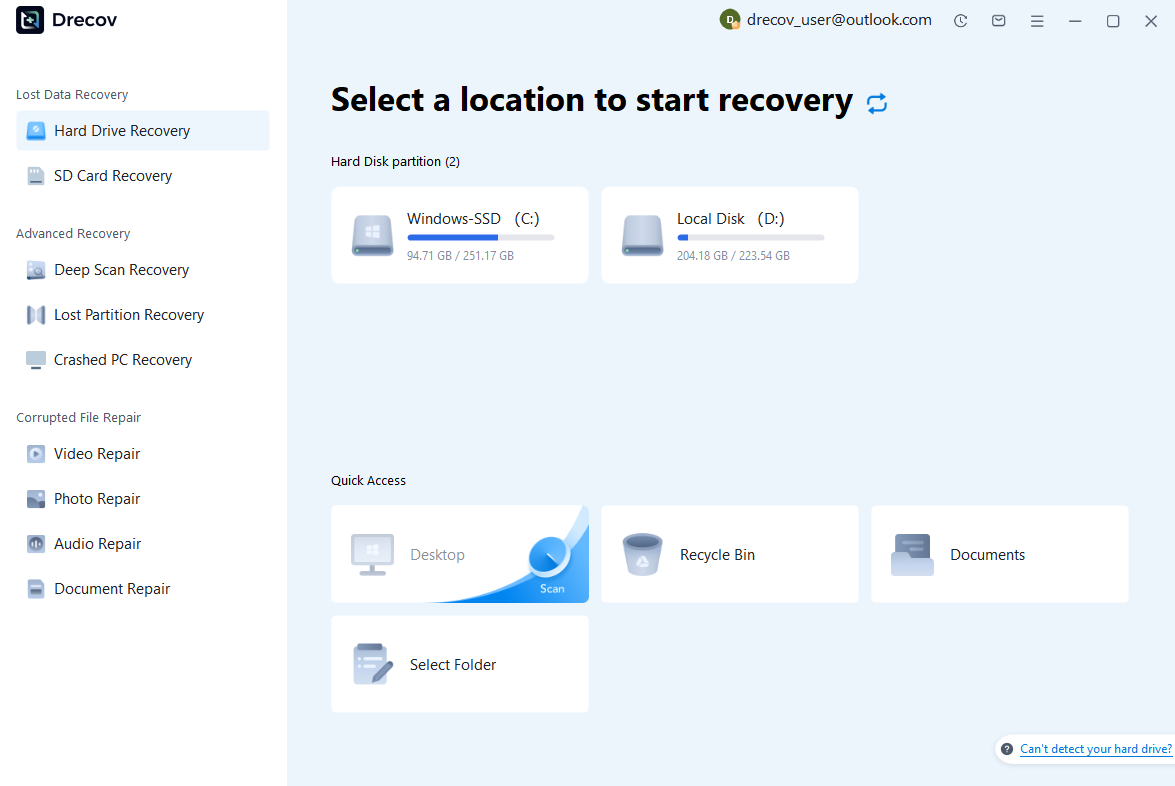
Step 1: Connect the Drive / USB)
Connect your device (SD card, HDD/SSD, or USB drive) to your computer and launch PandaOffice Drecov. Select the target device and start the scan. The software will perform a quick scan and deep scan to detect lost or deleted data.
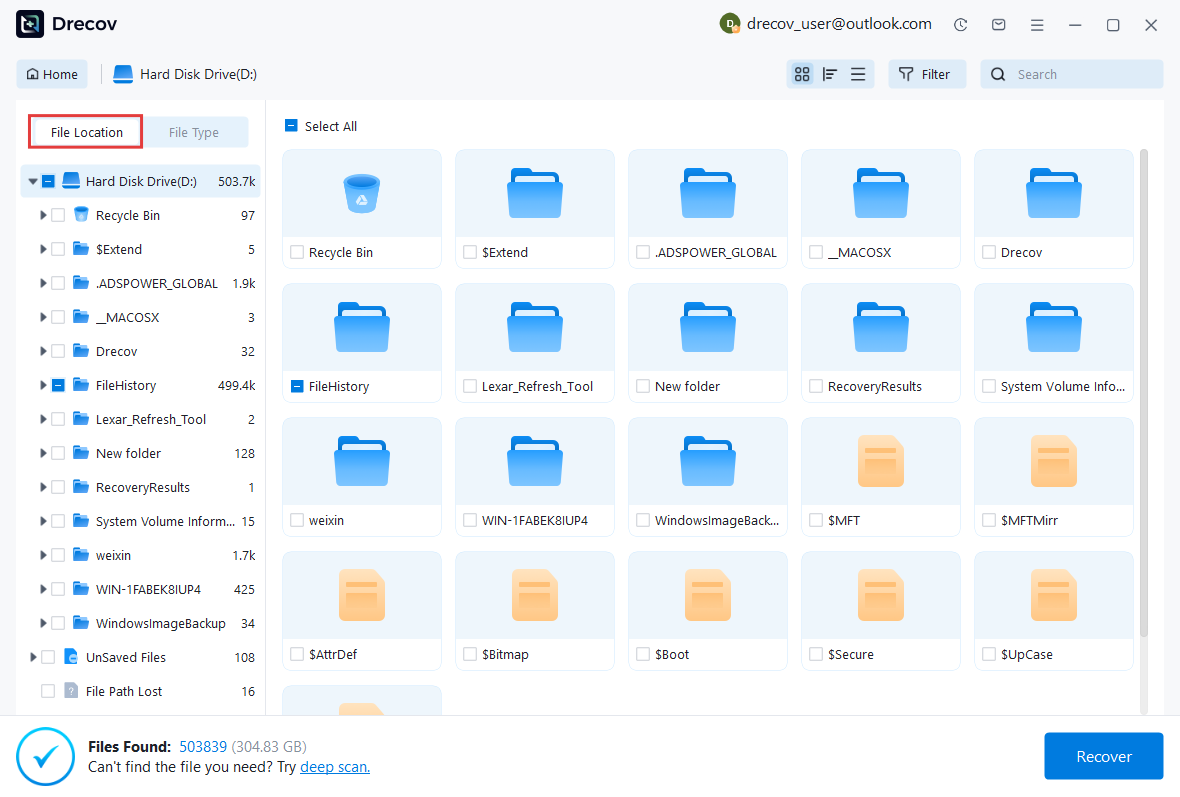
Step 2: Locate and Preview Lost Files
After scanning, browse the detected files and use the preview feature to check recoverable data. You can preview documents (Word, Excel, PDF), photos, and videos to ensure file integrity before recovery.
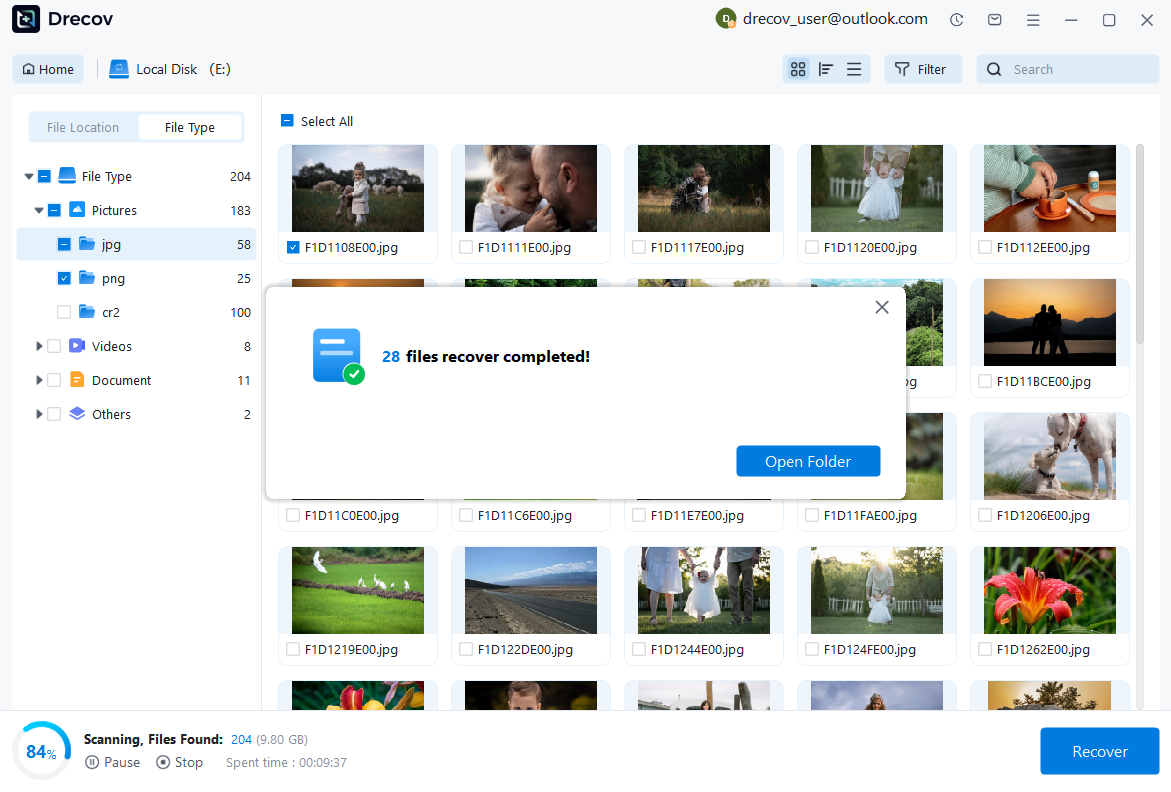
Step 3: Recover and Save to a New Location
Select the files you want to restore and click recover. Save all recovered data to a different drive or location (not the original device) to avoid overwriting lost data.
Why Choose PandaOffice Drecov Recovery Software?
PandaOffice Drecov offers a fast, secure, and user-friendly solution for recovering lost files across multiple scenarios. Whether you need email recovery, ZIP File Recovery, format data recovery, or help to recover deleted drafts Outlook, the software provides reliable recovery performance for both personal and business users.
PandaOffice Drecov supports recovery from formatted hard drives, SSDs, USB drives, SD cards, and external storage devices. Its advanced scanning engine can locate deleted archives, damaged ZIP files, lost Outlook drafts, and accidentally removed documents with high accuracy. For users searching for how to find deleted messages in Teams, PandaOffice Drecov can also help recover exported chat files, attachments, and related local cache data when available.
After recovery, test the file again. If the audio stream was damaged because of storage issues, a recovered version may play normally.
This method is particularly useful when only a few files exhibit audio problems while VLC works correctly with all other media.
This method can help users recover files from floppy disk storage after accidental deletion, formatting, or logical corruption.
Test Environment
- Windows 11 Pro
- 1TB SSD
- NTFS File System
- Mixed Business Documents
This precautionary step is especially useful when preparing a computer for resale, recycling, or hardware replacement.
Method 6: Factory Reset and Secure Drive Cleanup
When preparing a computer for transfer to another user, performing a factory reset can remove personal settings, applications, and files.
However, depending on the reset method selected, some data may remain recoverable. Combining a reset with secure drive cleanup improves privacy protection.
Steps
- Open Windows Settings.
- Navigate to Recovery options.
- Select Reset This PC.
- Choose Remove Everything.
- Enable drive cleaning if available.
- Confirm the operation.
- Wait for the reset process to complete.
Test Environment
- Windows 11 Home
- 512GB SSD
- Local User Profiles
- Personal Documents
This approach is commonly used before selling or donating a computer.
Method 7: Physically Destroy Sensitive Storage Devices
For highly confidential information, physical destruction remains the most definitive method of preventing data recovery.
Organizations handling classified, financial, healthcare, or legal records often adopt physical destruction procedures when retiring storage media.
Common methods include:
- Drive shredding
- Degaussing (for magnetic drives)
- Drilling through platters
- Industrial crushing
Steps
- Confirm data is no longer needed.
- Back up required files.
- Remove the storage device.
- Use an approved destruction method.
- Dispose of the hardware responsibly.
Test Environment
- SATA HDD
- Enterprise Storage Devices
- End-of-Life Hardware
Physical destruction is generally reserved for situations requiring the highest level of security.
⚠️ Warning: Physically destroyed drives cannot be recovered under normal circumstances. Always verify backups before proceeding.
Best Practices for Secure Data Deletion
Choosing the Right Erasure Method
The most appropriate deletion method depends on the type of storage device, sensitivity of the information, and intended future use of the hardware.
Consider the following:
- Individual file removal for daily privacy
- Free-space wiping for previously deleted files
- Drive cleaning before device resale
- Physical destruction for highly sensitive data
Selecting the correct approach helps balance convenience, security, and time requirements.
Users should also consider storage technology. HDDs and SSDs behave differently and may require specialized deletion techniques.
Verifying Deleted Data Cannot Be Recovered
After completing secure deletion, verification provides additional confidence.
Verification methods include:
- Running recovery scans
- Inspecting drive contents
- Reviewing deletion logs
- Confirming overwrite completion
A successful verification process helps ensure sensitive information has been removed as intended.
Organizations often document deletion activities for compliance and auditing purposes.
Managing SSD and HDD Data Removal
Traditional hard drives store information magnetically, while SSDs use flash memory cells. Because of these differences, deletion methods vary.
For HDDs:
- Overwrite-based deletion is highly effective.
- Multiple overwrite passes may be used.
For SSDs:
- Secure Erase commands are often preferred.
- TRIM functionality influences recoverability.
- Manufacturer-specific tools may be available.
Understanding storage technology helps users choose the most effective erasure strategy.
⚠️ Warning: Repeated overwrite operations on SSDs may contribute to unnecessary wear. Use SSD-appropriate tools whenever possible.
Frequently Asked Questions
Can Deleted Files Be Recovered After Erasure?
The answer depends on the deletion method used.
If files were deleted normally, recovery software may restore them successfully. However, when secure overwrite procedures are applied, recovery becomes significantly more difficult and often impossible.
The effectiveness of erasure depends on:
- Storage device type
- Overwrite method used
- Number of overwrite passes
- Subsequent drive activity
Secure deletion substantially reduces the chances of successful recovery.
What Is the Best Windows Eraser Software?
The ideal windows eraser software depends on individual requirements.
Users should evaluate:
- Ease of use
- Overwrite options
- Scheduling capabilities
- Device compatibility
- Performance
- Security standards
The best solution is one that provides reliable data destruction while remaining easy to manage.
Is Eraser Software Download Safe?
A legitimate eraser software download obtained from an official source is generally safe.
To avoid security risks:
- Download from trusted websites.
- Verify digital signatures when available.
- Avoid modified software packages.
- Keep security software updated.
These practices help reduce exposure to malware and counterfeit applications.
Do SSDs Require Different Erasure Methods?
Yes.
SSDs use wear-leveling technology that can make traditional overwrite techniques less predictable than on HDDs.
Many SSD manufacturers provide specialized Secure Erase utilities designed specifically for flash storage devices.
Using SSD-specific methods generally produces better results while minimizing unnecessary wear.
How Long Does Secure Deletion Take?
The duration depends on several factors:
- Drive capacity
- Storage type
- Overwrite method
- System performance
Deleting a few files may take seconds, while wiping an entire multi-terabyte drive can require several hours.
Users should plan accordingly when preparing devices for disposal or transfer.
Final Thoughts
Selecting the Right File Eraser Software
Protecting sensitive information requires more than simply deleting files and emptying the Recycle Bin. As storage technology continues to evolve, secure data removal has become increasingly important for both individuals and organizations.
Throughout this guide, we explored multiple approaches to secure deletion, including built-in Windows utilities, dedicated file eraser software, free-space wiping, command-line tools, factory resets, and physical destruction methods. Each option serves a different purpose and security requirement.
Users looking for reliable eraser software should focus on overwrite effectiveness, compatibility, ease of use, and support for modern storage devices. Additionally, recovering important files with PandaOffice Drecov before initiating permanent deletion can help prevent accidental data loss.
Whether you’re cleaning up personal files, preparing a device for resale, or complying with organizational security requirements, selecting the appropriate erasure strategy ensures that confidential information remains protected long after deletion.
By combining secure deletion practices with regular backups and responsible storage management, users can maintain both privacy and data security across all Windows systems.






