







A Windows update crashing computer search usually follows suspicious timing, but timing alone is not proof. Record the update, stop code, and first failed action. Check whether Safe Mode is stable. Copy important files during the next reliable boot before uninstalling updates, restoring Windows, resetting the PC, or making storage repairs.
windows update crashing computer: safe diagnosis
Open Settings > Windows Update > Update history after a successful boot. Record quality updates, driver updates, and their installation dates. Compare those times with Reliability Monitor. A failure beginning immediately after one installation is meaningful, but other software may have changed during the same restart.
Photograph any blue or black stop screen. Include the code and named driver. Note whether the PC crashes before sign-in, after sleep, while gaming, during file copies, or only when one application starts. A repeatable trigger narrows the investigation more than a general belief that “the update broke it.”
Look for evidence that weakens the update theory
- The same crashes occurred before the recorded installation date.
- Storage disconnects, clicking, overheating, or changing capacity appear.
- Crashes follow one application’s own update rather than Windows Update.
- Firmware, graphics, antivirus, or anti-cheat software changed at the same time.
- Stop codes vary across unrelated workloads and memory errors are reported.
Such evidence does not mean the update is innocent. It means rollback may hide the real fault temporarily. Preserve the timeline so each later test has a clear before-and-after comparison.
Check the update’s KB number against Microsoft’s release information and the PC manufacturer’s support notices. Match the Windows version and build exactly. A report about another build, processor family, or driver is not proof that your computer has the same issue. Treat community reports as leads that still require local evidence.
Use the Next Stable Window to Protect Important Files
If Windows reaches the desktop, copy current documents, photos, projects, local mail, browser exports, and unsynced application data to a healthy external drive. Start with small irreplaceable folders. Open representative files from the destination instead of trusting a completed progress bar.
If Windows retains a stable Safe Mode session, use it for data protection before diagnosis. Avoid large application installations or cleanup operations on the system drive. Repeated crashes can interrupt writes, and reset or clean installation can have a much wider effect than uninstalling one update.
BitLocker changes the preparation. Locate the recovery key before entering repair environments or altering firmware settings. A key may be stored in the associated Microsoft account, an organization directory, a printout, or an administrator’s records. Do not suspend or disable encryption without understanding the device’s management policy.
Related Drecov resources explain how to diagnose recurring computer crashes, recover files from a boot loop, and decide whether System Restore affects files.
Let Safe Mode Separate Drivers from a Broader Failure
Safe Mode loads a limited set of drivers and startup components. If the computer stays stable there, inspect recently updated graphics, storage, network, docking, and security drivers. A driver update delivered through Windows Update can arrive beside a quality update, so those items should not be treated as one change.
Open Device Manager and record the affected driver’s provider, version, and date. Use Roll Back Driver when available and when the problem began directly after that driver changed. Obtain replacements from the PC or device manufacturer. Avoid anonymous driver-download utilities.
Test clean startup interference separately
If Safe Mode works but no driver stands out, a third-party startup service may conflict with the updated Windows component. A clean boot can isolate that layer. Re-enable items in groups until the original crash returns. Do not leave security or required business services disabled as a permanent “fix.”
If Safe Mode also crashes, broaden the check. Review the consistent stop code, storage health, memory test results, temperature, and power. Do not uninstall several updates at once because that destroys the evidence needed to identify the responsible change.
Disconnect nonessential USB devices and docks for one test, but keep the keyboard, mouse, display, and required recovery destination. A faulty peripheral driver can be activated during an update restart. Reconnect devices one at a time after the system becomes stable. This test is especially useful when crashes begin only at docking, charging, or wake events.
⚠ Warning: Install it on a drive different from the one where your data was lost to prevent overwriting.
Choose the Narrowest Rollback That Matches the Evidence
This check is especially useful for windows update crashing computer. For a clearly implicated driver, roll back that driver first. When a quality update is the likely cause, Windows may let you remove it through Settings. If Windows cannot reach the desktop, Windows Recovery Environment can provide an Uninstall Updates option.
Microsoft’s official update removal instructions explain both Settings and Windows RE routes. Microsoft also warns that some updates cannot be uninstalled. Removing a security update has consequences, so install a corrected update promptly when it becomes available.
Know when System Restore, reset, and reinstall are too broad
It helps diagnose windows update crashing computer without changing the source data. System Restore rolls back system files and settings and may remove applications or drivers installed after the restore point. Reset reinstalls Windows and removes applications; its file-retention choice does not replace a backup. A clean installation can erase the selected system volume. Protect and verify local files before these options.
A firmware downgrade deserves extra caution. An interrupted firmware operation can make the computer unbootable. Follow only the manufacturer’s model-specific instructions, maintain reliable power, and do not use firmware rollback as a generic response to an ordinary Windows crash.
Create a restore point or fresh system image after stability returns, not while the machine is still crashing. Record which update or driver was removed and why. That note prevents another administrator from reinstalling the same component without the corrected prerequisite or replacement driver.
Recover Files with Drecov When the Updated PC Will Not Stay Open
PandaOffice Drecov is Windows data recovery software for logical loss and inaccessible local files. It can read supported PC storage, including internal disks, external drives, USB media, SD cards, and other memory cards. Its read-only recovery mode can locate documents, photos, videos, email data, audio, and archives. Quick Scan, Deep Scan, filtering, preview, and recovery to another healthy destination support a crash-loop case. Crashed PC Recovery applies when Windows cannot boot, while Lost Partition Recovery addresses a missing former partition. Drecov does not uninstall updates, repair physical hardware, remove malware, or guarantee overwritten data.
⚠ Warning: Install it on a drive different from the one where your data was lost to prevent overwriting.
Step 1: Open Drecov and Select the Inaccessible System Location
Stop repeated forced boots and prepare another healthy drive. If the system disk clicks, disconnects, or reports severe read errors, stop direct scanning and seek imaging or specialist recovery. Never install Drecov on the partition containing the missing files. Open Drecov and select their original volume, or use Crashed PC Recovery when Windows cannot start.

Step 2: Run Quick Scan and Check Current User Folders
Begin with Quick Scan. Browse Desktop, Documents, Pictures, Videos, and active project paths. Search for important filenames and compare dates and sizes. Give recent work priority because another successful boot or update attempt can create more writes.

Step 3: Use Deep Scan Only on Stable Storage
Run Deep Scan when Quick Scan misses the required files and the drive remains stable. Stop if reads slow around repeated errors, detection drops, or physical sounds appear. Continued scanning cannot repair hardware and may consume the remaining working time of a failing disk.
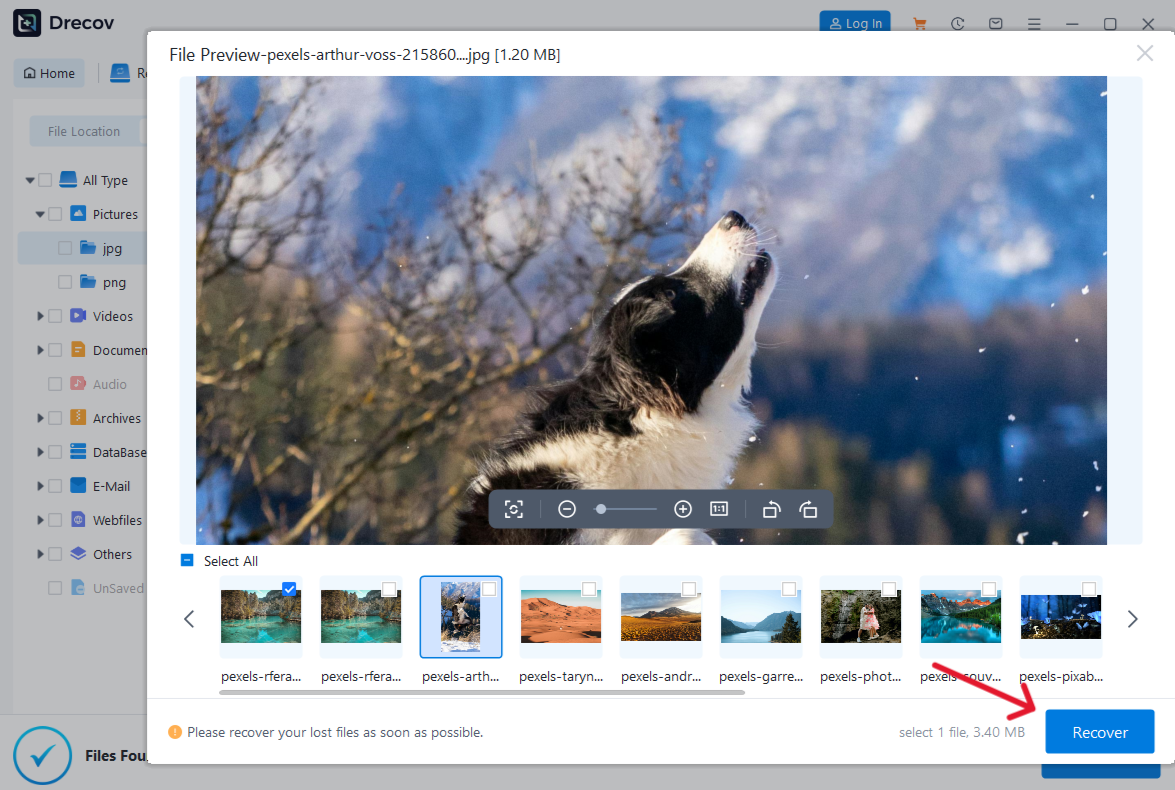
Step 4: Filter and Preview Representative Files
Narrow results by former path, file type, filename, size, and date. Preview supported samples from several important folders. A readable document supports that result, but it cannot prove an entire project, archive, or media collection is complete.
Step 5: Recover Elsewhere and Verify Before Rollback
Restore selected files to the prepared healthy drive, never to the source. If output is not where expected, inspect the Drecov Folder or Recovery Folder. Open samples and compare them with backups. Only after verification should you remove updates, run file-system repair, reset, repartition, or reinstall Windows.
Measure Stability Before Reinstalling the Update
Repeat the workload that originally caused the crash. Restart several times and test sleep, graphics load, network activity, or file copies when those actions mattered. Review Reliability Monitor after each test. A quiet hour is not enough when the old crash occurred once a day.
Pause the specific update only long enough to investigate an acknowledged problem or obtain a corrected release. Long-term avoidance of security updates creates another risk. Keep the device backed up, note the rollback performed, and check the PC manufacturer’s support page for related driver or firmware guidance.
If crashes return without the update, revisit storage, memory, temperature, power, and third-party software. Do not repeat reset and reinstall cycles without new evidence. A repair is credible when the original trigger succeeds, files remain accessible, and no fresh reliability event appears.
Conclusion
When a Windows update is crashing the computer, establish whether a quality update, driver, or unrelated change is responsible. Record the timing and stop evidence, use Safe Mode, and protect files before rollback. If the PC cannot stay open but its storage remains stable, Drecov can scan the original volume, preview important files, and recover them to another healthy drive. Remove only the change supported by evidence, then reproduce the original workload to verify stability.
⚠ Warning: Install it on a drive different from the one where your data was lost to prevent overwriting.





