







When Windows Search is not working, open File Explorer and navigate directly to a file you know exists. If the file opens by path, the data is present and the Search interface, index, scope, service, or permissions need repair. If the file is absent from its known folder and backups, treat that as a separate local-loss case before rebuilding Windows or writing heavily to the disk.
A Known-Path Test Prevents the Wrong Recovery Job
Do not rebuild Windows or delete user profiles merely because Search returns no retrieved set. Preserve missing data before resetting apps, profiles, or Windows. If the storage itself reports errors, pause indexing and assess the drive before scanning. Search-bar input troubleshooting For current vendor guidance, see the official support documentation.
| Observed condition | What it suggests | Next safe action |
|---|---|---|
| Search box will not accept typing | The interface or input process is failing | Restart Search-related processes and test keyboard input |
| Search opens but returns nothing | Index scope or database may be wrong | review indexed locations and status |
| File Explorer path opens the file | The file is not lost | Repair Search rather than scanning storage |
| Only one folder is omitted | Scope or permissions are specific | Add the known path or correct access |
| Search service is stopped | Index maintenance cannot proceed | Restore the service configuration |
| Known file is absent by direct path | Actual deletion, move, or sync loss is possible | review Recycle Bin and backups, then recover locally |
Prove the File Exists Outside the Search Index
Search box will not accept typing
The interface or input process is failing. Restart Search-related processes and test keyboard input.
Search opens but returns nothing
Index scope or database may be wrong. review indexed locations and status.
File Explorer path opens the file
The file is not lost. Repair Search rather than scanning storage.
Only one folder is omitted
Scope or permissions are specific. Add the known path or correct access.
Search service is stopped
Index maintenance cannot proceed. Restore the service configuration.
Known file is absent by direct path
Actual deletion, move, or sync loss is possible. review Recycle Bin and backups, then recover locally.
Recover Only Genuinely Missing Local Files with Drecov
Drecov belongs only to the branch where missing data are genuinely missing from their known local paths on a stable Windows drive. It does not repair the Search box, rebuild the index, change permissions, or restore cloud-only placeholders. PandaOffice Drecov offers a Windows recovery workflow for PC storage, HDDs, SSDs, external drives, USB drives, SD cards, and memory cards. Read-only recovery mode uses Quick Scan, Deep Scan when needed, filtering or known path tools, preview, and Lost Partition Recovery. It covers photos, videos, documents, emails, audio, and archives, and it saves chosen results to a alternate destination. Drecov cannot repair physical damage, reverse fully overwritten data, fix the application or operating-system fault, or guarantee recovery.
⚠ Warning: Install it on a drive different from the one where your data was lost to prevent overwriting.
Step 1: Stop New Writes and Test Storage Stability
Stop using the indexed known path for downloads, updates, synchronization, temporary missing data, and new installations. review backups without altering the file origin. If the destination storage clicks, repeatedly disconnects, freezes Windows, returns severe read errors, or cannot retain its correct identity and capacity, stop direct scans. Image it under controlled conditions or seek professional recovery.
Step 2: Prepare Another Physical Destination
Connect a alternate drive with enough free space for the retrieved set set. Drecov must run from a alternate Windows installation and must not be installed on the partition that held the lost data. The destination should be writable, stable, and separate from the file origin.
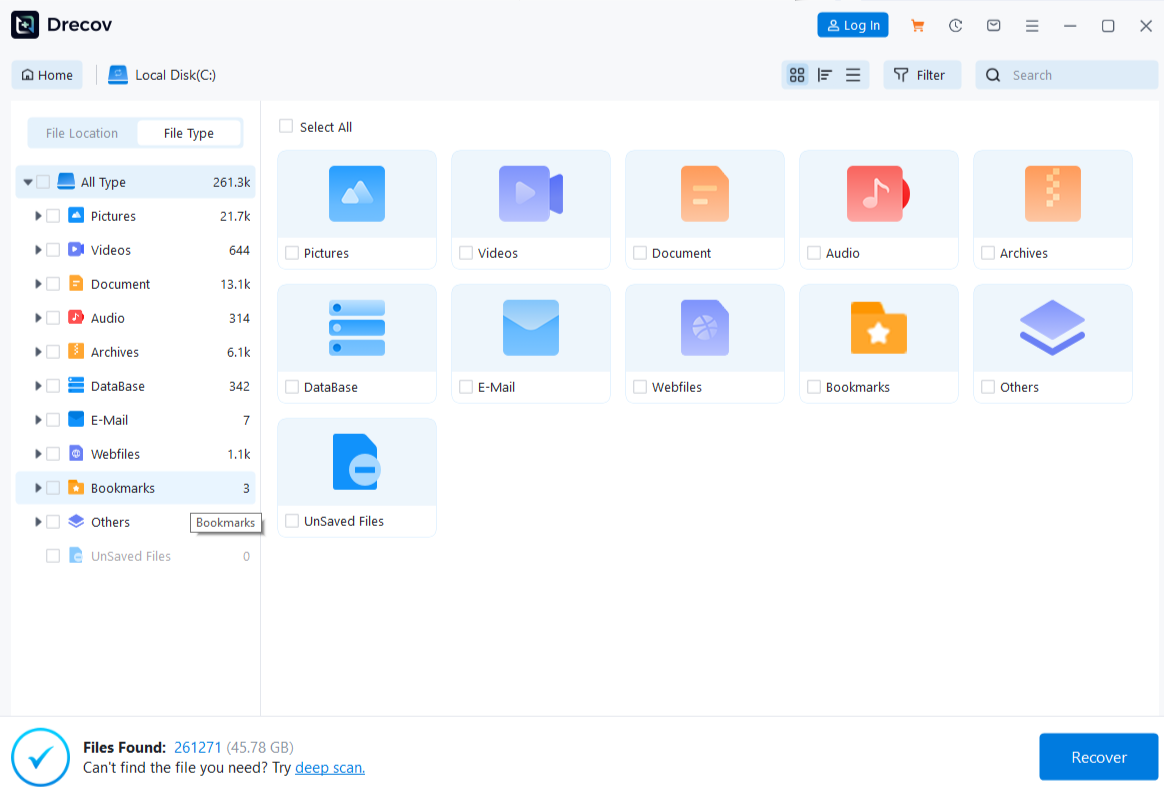
Step 3: Open Drecov for the Confirmed Local-Loss Branch and Select the known path
Open PandaOffice Drecov and select the stable Windows drive and known folder where the missing file previously existed. Confirm the disk identity, capacity, user account, former folder, and loss event before starting a search. If Windows cannot boot, connect a stable file origin drive to another working Windows PC rather than installing recovery software on that disk.

Step 4: Run Quick Scan Before Deep Scan
Start Quick Scan for a recent deletion or newly inaccessible path. If the target is not present and the file origin remains stable, continue with Deep Scan. Use Lost Partition Recovery when the volume entry itself disappeared; do not initialize, format, repartition, or create a replacement volume first.
Step 5: Filter and Preview the Right Candidates
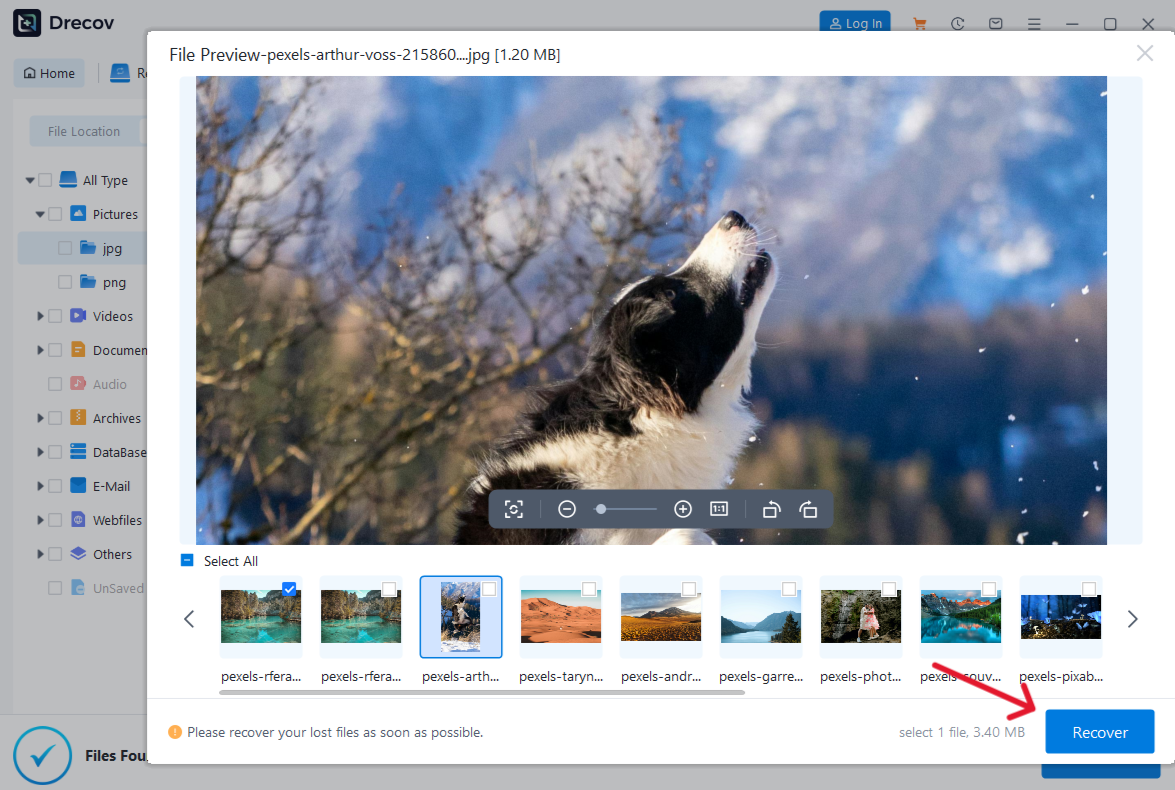
Filter by known path, filename fragments, file type, date, and user profile; compare results with Recycle Bin and sync history. Preview representative supported missing data before selecting the full set. A successful preview shows that the sample can be decoded, but it cannot certify every page, frame, archive member, linked asset, game state, or byte.
Step 6: Recover Elsewhere and Verify Before Repair
Recover chosen missing data to the prepared alternate drive, never to the source. If results are not in the expected destination path, inspect Drecov Folder or Recovery Folder. Open recovered documents, inspect media, test archives, and confirm the known folder context before rebuilding the index or profile. Complete that validation before index rebuilding, Search package repair, profile reset, Windows reset, CHKDSK, or reinstallation.
Repair the Search Surface, Scope, or Service
Test Search UI and File Explorer Separately
Search in Start, Settings, and File Explorer. A failure in one surface does not prove the same component failed everywhere.
Inspect Indexing Scope
Confirm the drive and folder are included and not excluded by policy, permissions, or power settings.
Restart the Windows Search Service
Restore the documented startup behavior and watch whether indexing resumes. A service restart should precede a full index rebuild.
Use the Search Troubleshooter or Rebuild Selectively
A rebuild discards and recreates index data; it should not delete documents, but it can take time and consume resources.
Investigate Genuine Missing Missing data Separately
review direct paths, Recycle Bin, version history, sync status, and backups. search storage only when the file truly disappeared.
Confirm the Retrieved set and Avoid a Second Loss
Open recovered documents, inspect media, test archives, and confirm the known folder context before rebuilding the index or profile. recent deletion recovery Keep the recovered copy and any disk image until the underlying problem has remained stable through several normal uses.
- Do not treat “Search box will not accept typing” as proof of a different cause without completing its related review.
- Do not treat “Search opens but returns nothing” as proof of a different cause without completing its related review.
- Do not treat “File Explorer path opens the file” as proof of a different cause without completing its related review.
- Do not treat “Only one folder is omitted” as proof of a different cause without completing its related review.
- Do not treat “Search service is stopped” as proof of a different cause without completing its related review.
Windows search not working FAQs
Does rebuilding the index delete missing data?
It rebuilds search metadata, not document content, though a backup remains prudent before major repair.
Why can Explorer find a file but Start cannot?
The two search surfaces can use different scopes and providers.
Should I reset Windows Search immediately?
No. Start with known-path, scope, service, and troubleshooter checks.
Can Drecov fix Windows Search?
No. It recovers genuinely missing local missing data from stable storage.
What if only cloud missing data are missing?
review the cloud account, sync mode, and online status before local recovery. For additional context, see validating recovered missing data.
Conclusion
If Windows Search is not working, prove whether the file exists by direct path before rebuilding anything. Repair the interface, service, scope, permissions, or index according to that evidence. When a local file is truly missing, Drecov can recover it from stable storage to another destination storage before profile reset or Windows repair.






