
An ntfs.sys failure names the NTFS path but not necessarily the root cause. File-system damage, controller drivers, bad sectors, memory, or failing media can surface there. Protect readable data before any file-system repair. For this NTFS-crash protection, preserve the current state, gather one decisive observation, and verify the result under the conditions that exposed the problem.
Capture the Stop Code and Context
Photograph the stop code, parameters, module, and preceding action. Treat ntfs.sys as the detection path rather than proof of a bad microsoft file. Together, those observations supply the evidence needed for capture the stop code and context while leaving unrelated settings untouched. Write down the NTFS-crash protection result before moving to the next branch. The practical question at this stage is whether the evidence supports capture the stop code and context, not whether a broad reset happens to hide the symptom once.
Consider file-system damage, bad sectors, storage drivers, memory, and hardware. Stop direct work when a drive clicks, disconnects, or changes capacity. Use the difference between the expected and observed result to choose the smallest defensible action under capture the stop code and context. If the NTFS-crash protection test changes access or stability, return to the protected baseline. Recreate the original trigger while evaluating capture the stop code and context; an outcome that cannot be repeated should not justify a destructive repair.
Judge Storage Stability
Copy readable critical files before repair when the device remains stable. Image unstable media or seek professional recovery. Together, those observations supply the evidence needed for judge storage stability while leaving unrelated settings untouched. Write down the NTFS-crash protection result before moving to the next branch. The practical question at this stage is whether the evidence supports judge storage stability, not whether a broad reset happens to hide the symptom once.
Remember that chkdsk writes file-system changes and does not recover files. Use smart and manufacturer diagnostics as evidence rather than guarantees. Use the difference between the expected and observed result to choose the smallest defensible action under judge storage stability. If the NTFS-crash protection test changes access or stability, return to the protected baseline. Recreate the original trigger while evaluating judge storage stability; an outcome that cannot be repeated should not justify a destructive repair.
| Observed evidence | Decision it supports |
|---|---|
| Photograph the stop code, parameters, module, and preceding action | Verify directly |
| Treat ntfs.sys as the detection path rather than proof of a bad microsoft file | Compare with a control |
| Consider file-system damage, bad sectors, storage drivers, memory, and hardware | Protect the current state |
Protect Data Before CHKDSK
Review recent storage, chipset, filter, antivirus, or encryption drivers. Test memory because corrupted ram data can surface in storage operations. Together, those observations supply the evidence needed for protect data before chkdsk while leaving unrelated settings untouched. Write down the NTFS-crash protection result before moving to the next branch. The practical question at this stage is whether the evidence supports protect data before chkdsk, not whether a broad reset happens to hide the symptom once.
Use safe mode to compare the normal driver stack. Install windows and storage updates from official sources. Use the difference between the expected and observed result to choose the smallest defensible action under protect data before chkdsk. If the NTFS-crash protection test changes access or stability, return to the protected baseline. Recreate the original trigger while evaluating protect data before chkdsk; an outcome that cannot be repeated should not justify a destructive repair.
For a neighboring but different symptom, see chkdsk cannot continue in read only mode only when its diagnostic boundary matches what you observed.
Test Drivers, Memory, and Windows
Run dism and sfc only when the storage source is stable. Preserve repair logs and verify cold boots, file reads, and backups. Together, those observations supply the evidence needed for test drivers, memory, and windows while leaving unrelated settings untouched. Write down the NTFS-crash protection result before moving to the next branch. The practical question at this stage is whether the evidence supports test drivers, memory, and windows, not whether a broad reset happens to hide the symptom once.
Photograph the stop code, parameters, module, and preceding action. Treat ntfs.sys as the detection path rather than proof of a bad microsoft file. Use the difference between the expected and observed result to choose the smallest defensible action under test drivers, memory, and windows. If the NTFS-crash protection test changes access or stability, return to the protected baseline. Recreate the original trigger while evaluating test drivers, memory, and windows; an outcome that cannot be repeated should not justify a destructive repair.
Repair the File System Only Later
Consider file-system damage, bad sectors, storage drivers, memory, and hardware. Stop direct work when a drive clicks, disconnects, or changes capacity. Together, those observations supply the evidence needed for repair the file system only later while leaving unrelated settings untouched. Write down the NTFS-crash protection result before moving to the next branch. The practical question at this stage is whether the evidence supports repair the file system only later, not whether a broad reset happens to hide the symptom once.
Copy readable critical files before repair when the device remains stable. Image unstable media or seek professional recovery. Use the difference between the expected and observed result to choose the smallest defensible action under repair the file system only later. If the NTFS-crash protection test changes access or stability, return to the protected baseline. Recreate the original trigger while evaluating repair the file system only later; an outcome that cannot be repeated should not justify a destructive repair.
For a neighboring but different symptom, see system service exception only when its diagnostic boundary matches what you observed.
Verify Storage Beyond One Boot
Remember that chkdsk writes file-system changes and does not recover files. Use smart and manufacturer diagnostics as evidence rather than guarantees. Together, those observations supply the evidence needed for verify storage beyond one boot while leaving unrelated settings untouched. Write down the NTFS-crash protection result before moving to the next branch. The practical question at this stage is whether the evidence supports verify storage beyond one boot, not whether a broad reset happens to hide the symptom once.
Review recent storage, chipset, filter, antivirus, or encryption drivers. Test memory because corrupted ram data can surface in storage operations. Use the difference between the expected and observed result to choose the smallest defensible action under verify storage beyond one boot. If the NTFS-crash protection test changes access or stability, return to the protected baseline. Recreate the original trigger while evaluating verify storage beyond one boot; an outcome that cannot be repeated should not justify a destructive repair.
Recover Missing Local Files Before Risky Changes
If ntfs.sys failed has already left local files missing or inaccessible, protect them before changing the system. PandaOffice Drecov supports the NTFS-crash protection by recovering data in Windows from PCs, HDDs, SSDs, external drives, USB drives, SD cards, and memory cards. For this NTFS-crash protection, its read-only recovery mode can locate documents, photos, videos, email data, audio, and archives. On stable recognized storage, the NTFS-crash protection workflow includes Quick Scan, Deep Scan, filters, preview, and Lost Partition Recovery. For the NTFS-crash protection, Drecov cannot repair the underlying application, driver, firmware, physical damage, or overwritten sectors.
⚠ Warning: Install it on a drive different from the one where your data was lost to prevent overwriting.
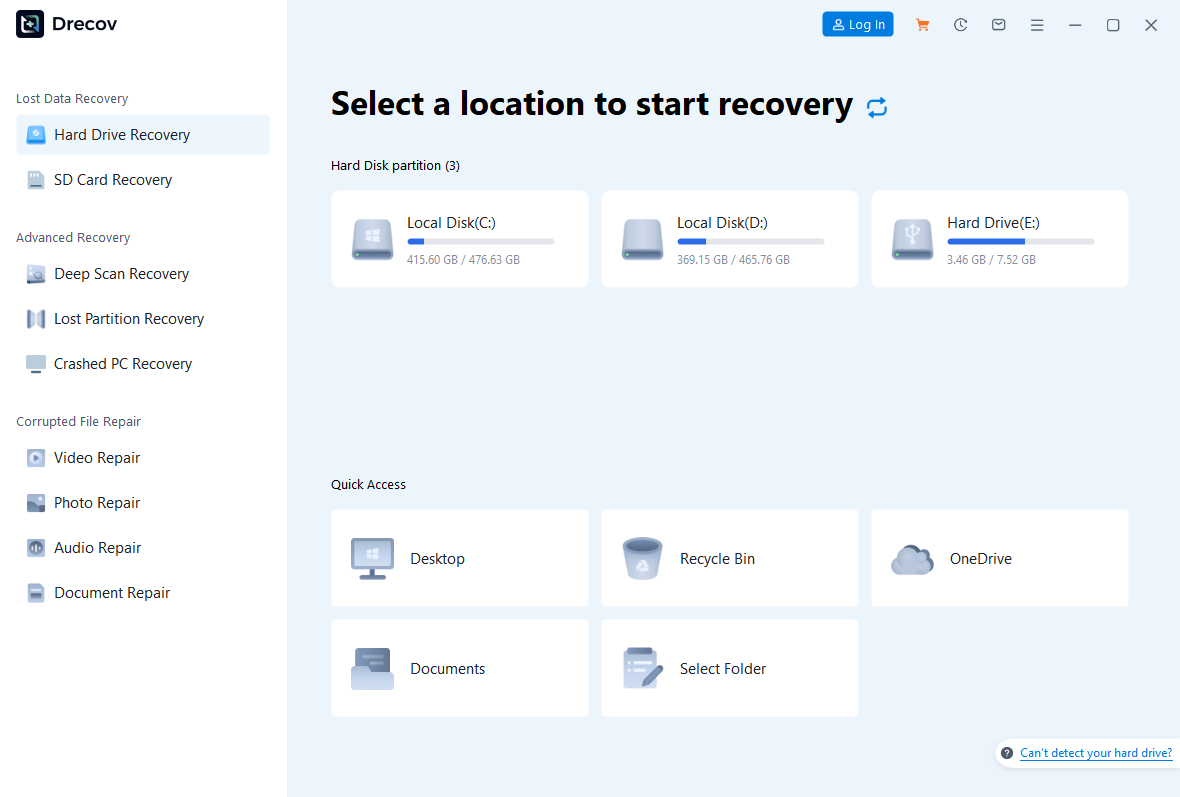
Step 1: Select the original location
Stop writes connected with ntfs.sys failed and prepare a healthy destination on another device. Install Drecov away from the lost data, open it, and select the original partition or device. During this NTFS-crash protection, stop scanning if the source clicks, disconnects, changes capacity, or reports severe read errors; imaging or professional service is then safer.
Step 2: Check Quick Scan results
Run Quick Scan first for the NTFS-crash protection, then inspect the former folder and likely paths. Filter by filename, location, type, date, or size when those details are known. Do not format, repartition, reinstall, or run a writing repair while the important result remains unprotected.
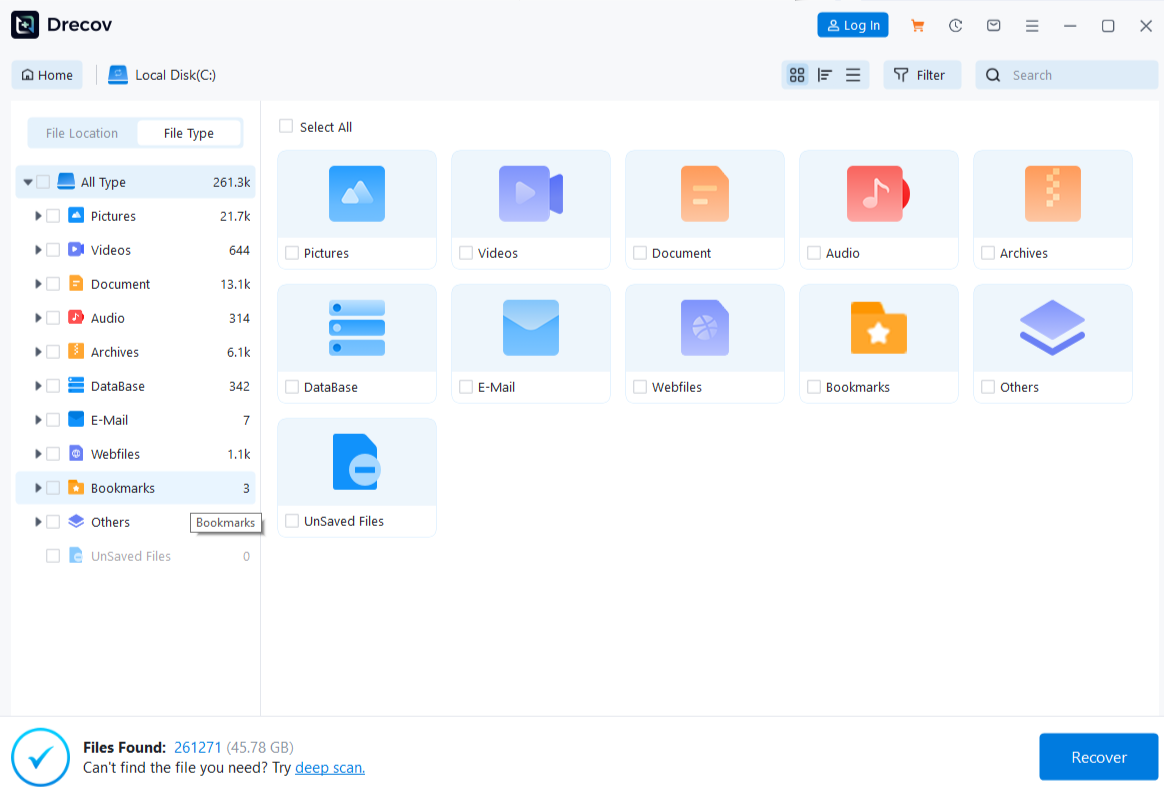
Step 3: Escalate to Deep Scan carefully
Use Deep Scan only if Quick Scan misses the target and the source remains stable throughout this NTFS-crash protection. A deeper search can find additional file records, but it cannot recreate overwritten content. Stop immediately if device behavior deteriorates.
Step 4: Preview meaningful samples
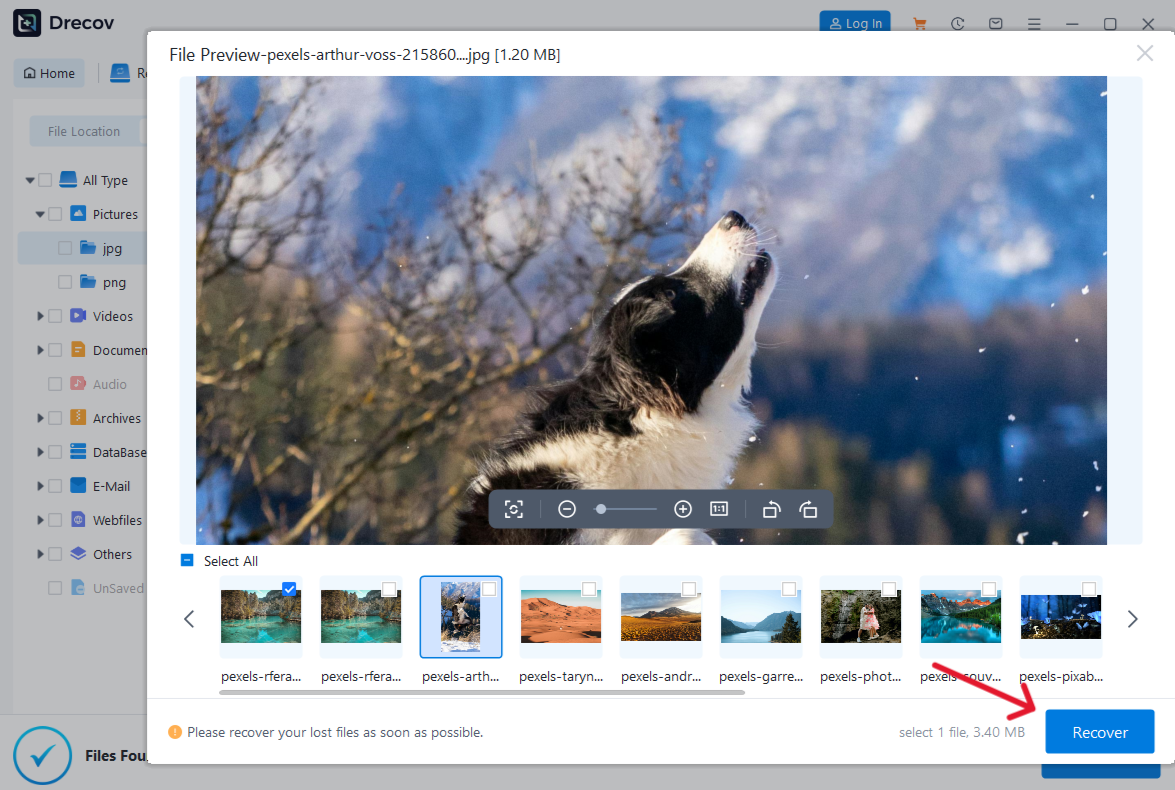
Narrow the candidates related to ntfs.sys failed and preview several supported files, not just one convenient example. A readable preview supports the NTFS-crash protection decision, yet it cannot certify every page, formula, frame, archive member, linked asset, or game state.
Step 5: Restore away from the source
Save selected files to the prepared healthy destination so the NTFS-crash protection does not overwrite recoverable space. Never restore onto the NTFS-crash protection source device. If the output is not in the expected directory, inspect the Drecov Folder or Recovery Folder.
Step 6: Validate before continuing repairs
Open representative restored files and compare their names, sizes, contents, and application behavior. Finish this NTFS-crash protection by confirming that the recovered copy is usable. Only then resume repair commands, partition work, reset, formatting, or reinstallation.
⚠ Warning: Install it on a drive different from the one where your data was lost to prevent overwriting.
For current platform behavior, consult Microsoft stop-error troubleshooting. A complementary prevention path is available in external drive repair.
Ntfs.sys failed FAQs
Does NTFS.sys prove the SSD is dead?
No. Several storage and memory layers can cause it. Apply that NTFS-crash protection answer to the recorded evidence, and retain the protected source until the outcome has been verified.
Should I run CHKDSK immediately?
Not before important data is protected. Apply that NTFS-crash protection answer to the recorded evidence, and retain the protected source until the outcome has been verified.
Can SFC repair it?
SFC repairs Windows files, not physical media. Apply that NTFS-crash protection answer to the recorded evidence, and retain the protected source until the outcome has been verified.
What if Windows cannot boot?
Use a stable recovery environment and protect files first. Apply that NTFS-crash protection answer to the recorded evidence, and retain the protected source until the outcome has been verified.
Can Drecov fix NTFS?
It recovers files; it does not repair hardware or guarantee reconstruction. Apply that NTFS-crash protection answer to the recorded evidence, and retain the protected source until the outcome has been verified.
Conclusion
For this NTFS-crash protection, keep diagnosis, data protection, and verification separate. Follow the NTFS-crash protection evidence and make one narrow change instead of stacking generic fixes. If the NTFS-crash protection leaves local files missing on stable Windows storage, Drecov can scan the original location, preview candidates, and recover selected data to another healthy device. Drecov cannot replace the application, driver, firmware, file-system, or hardware repair required by the NTFS-crash protection.
⚠ Warning: Install it on a drive different from the one where your data was lost to prevent overwriting.