
If Excel found a problem with formula references, save a copy before editing. The warning does not automatically mean the entire workbook is corrupt. A formula may point to a deleted cell range, a renamed worksheet, a broken defined name, a changed table column, or an external workbook that moved. Find the reference type first, repair it in a duplicate file, and verify calculated results before replacing the original.
What should you preserve before changing formulas?
Close the workbook if you have already made uncertain edits. In File Explorer, copy the file to a separate working folder and add a date or “reference-repair” label. Keep the original untouched. If the file is stored in OneDrive, SharePoint, or another versioned service, inspect version history before overwriting anything. A previous version may show the reference before a sheet, name, or source file changed.
Open the duplicate and note the exact warning, affected sheet, and any visible #REF! cells. Confirm whether formulas calculate automatically under Formulas > Calculation Options. Do not enable or disable external content casually. A workbook from an untrusted source may contain links or macros that require security review.
This task is different from Excel reporting a general content-repair message. If the file will not open, repairs itself on launch, or removes records, follow the Excel content-error workflow instead. A formula-reference warning in an otherwise readable workbook calls for dependency tracing.
Which kind of reference is broken?
| Clue | Likely reference type | Where to inspect |
|---|---|---|
| A cell displays #REF! | Deleted or invalid cell, row, column, or sheet reference | Formula bar, Find, Trace Precedents |
| A formula contains a name rather than A1-style coordinates | Defined name has an invalid Refers to value | Formulas > Name Manager |
| Prompt asks to update values or locate another workbook | External workbook link moved or is unavailable | Data > Workbook Links or Edit Links |
| Structured formula shows an unfamiliar column label | Excel table column was renamed or removed | Table headers and Table Design |
| Charts, validation lists, or conditional formats behave incorrectly | Reference is outside ordinary worksheet formulas | Chart series, Data Validation, conditional formatting rules |
Use Home > Find & Select > Find, search within the workbook for #REF!, and set Look in to Formulas when available. Search formulas rather than displayed values. Record each location before editing; the same broken token may appear in totals, names, charts, and validation rules.
How do you repair a direct #REF! formula?
Select one affected cell and read the entire formula in the formula bar. A formula such as =SUM(#REF!) has lost the original range, while =Sheet2!#REF! shows that the worksheet still exists but its referenced cells do not. Do not guess a range from the nearest numbers. Compare an intact formula above or beside it, a previous workbook version, a printed report, or the business rule that the calculation implements.
When neighboring formulas follow a pattern, copy the correct formula only after confirming relative and absolute references. Dollar signs in $A$1, A$1, and $A1 change how a formula moves. After repair, use Formulas > Trace Precedents and Trace Dependents to see which cells feed the result and which outputs use it. Microsoft explains the causes and repair limits in its official #REF! error guidance.
Success means the error token disappears for the right reason and the output agrees with an independent expected value. Replacing #REF! with zero may silence the warning but changes the model. If the intended source cannot be established, label the result unresolved instead of inventing a reference.
How do names, tables, and deleted sheets change the repair?
Defined names
Open Formulas > Name Manager and inspect the Refers to column. Filter or scan for names containing #REF!. Determine whether each name should point to a workbook-level range, a sheet-level range, a constant, or a formula. Correct the range on the duplicate workbook, then use Find to locate formulas, charts, or validation rules that consume the name.
Excel tables
Click inside the table and compare its headers with structured formulas. Restoring the exact former header may repair references if the underlying column remains. If the column was deleted, insert a replacement only when you know the data source and calculation. Expanding the table range without checking totals or adjacent data can introduce unrelated cells.
Deleted or renamed worksheets
A formula referring to a renamed sheet usually updates automatically when Excel performs the rename. A deleted sheet cannot be recreated by typing the old tab name. Check version history, backup copies, or a colleague’s copy. If the missing worksheet itself must be restored, the separate guide to recover deleted Excel sheets covers workbook-version options. Drecov cannot scan inside a current workbook for one deleted worksheet.
⚠ Warning: Install it on a drive different from the one where your data was lost to prevent overwriting.
How do you repair an external workbook link?
Open Data > Workbook Links or Edit Links, depending on the Excel version. Identify the source path and ask whether the linked workbook was moved, renamed, deleted, or intentionally retired. If it still exists, use Change Source to select the verified file. Do not point the link at a workbook merely because it has a similar name.
Open the source workbook and confirm that the referenced sheet, range, table, or name still exists. Recalculate the dependent workbook and compare key outputs with a trusted prior report. Breaking a link converts formulas to their current values and removes the live dependency; use it only when that is the intended permanent design. Keep the pre-change copy because breaking links is difficult to reverse completely.
If Excel says the workbook is locked while another editor or stale owner file controls it, resolve the ownership and synchronization state before saving repairs. The locked-for-editing checks explain how to avoid producing competing copies.
What if the referenced workbook was actually deleted?
Check the source folder, Recycle Bin, OneDrive or SharePoint recycle area, version history, File History, and organizational backups first. Restore the source under a new name or separate folder, open it, and verify the sheets and ranges before repointing formulas. This preserves the current broken-link evidence until you know the recovered source is correct.
If the local source workbook was deleted from a Windows drive and no usable backup exists, Drecov can search for the workbook file. It is Windows data recovery software, not an Excel formula editor. It cannot reconstruct a worksheet deleted inside an otherwise existing XLSX file, infer the intended formula, or guarantee an overwritten workbook. Use it only when a complete local workbook or backup copy is missing and the source storage remains stable.
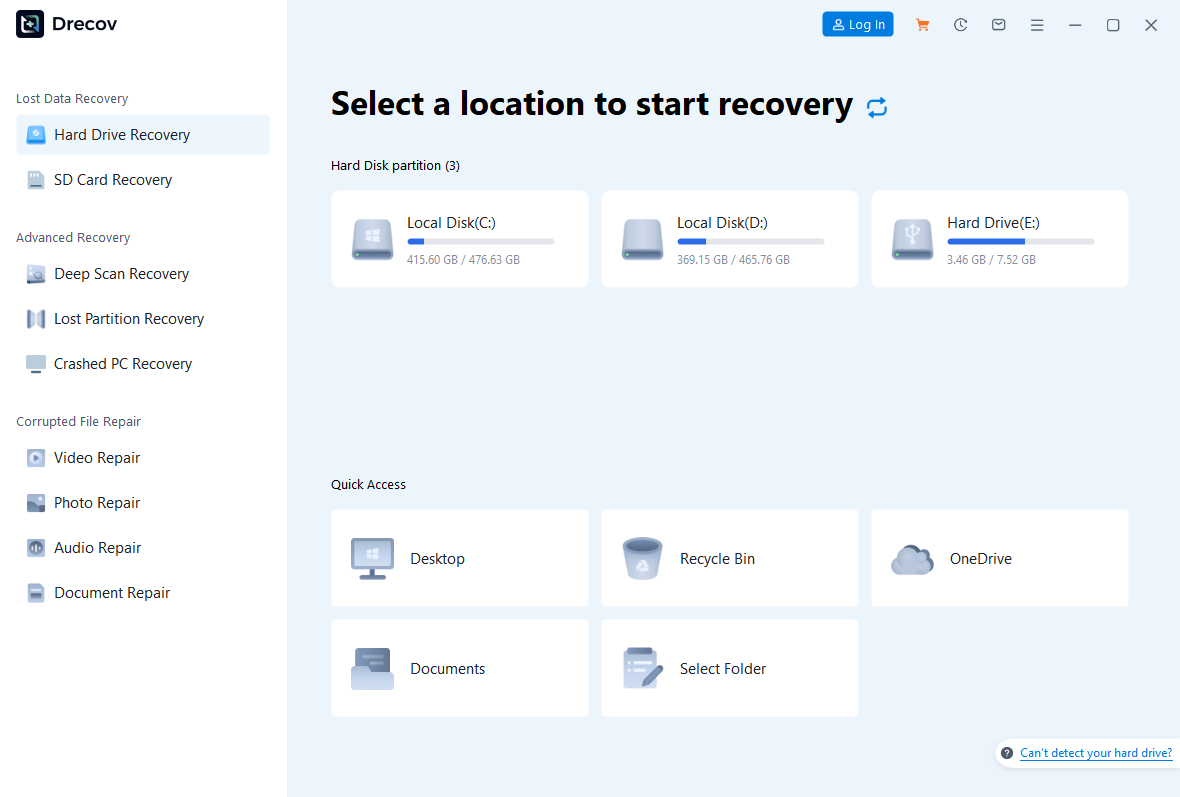
Step 1: Open Drecov and select the original workbook location
Stop writing to the drive that held the missing source. Prepare another healthy device for recovered output and do not install Drecov on the source partition. Open Drecov and choose the original drive or partition, such as the Windows volume that held a Documents project folder or the stable external disk that held the linked workbook.
Step 2: Run Quick Scan, then Deep Scan if needed
Start Quick Scan and look for the former folder and workbook name. If the file is absent and the device remains responsive, run Deep Scan. Stop if an external source disconnects, changes capacity, freezes reads, or reports repeated I/O errors; unstable media should be imaged or handled professionally rather than scanned repeatedly.
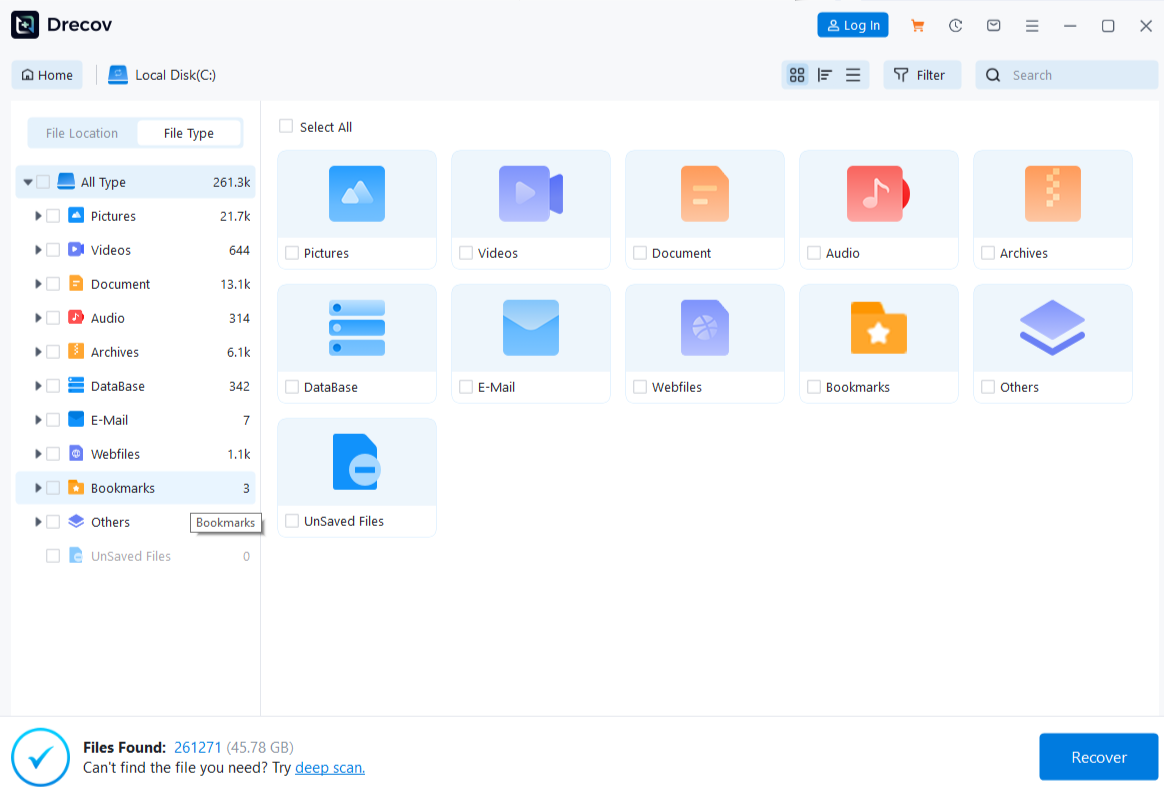
Step 3: Filter and preview workbook candidates
Filter by filename, former path, date, and spreadsheet file type. Preview supported candidates where available, but remember that a preview may not exercise every sheet, formula, external connection, macro, or embedded object. Recover more than one plausible version when timestamps or names are ambiguous.
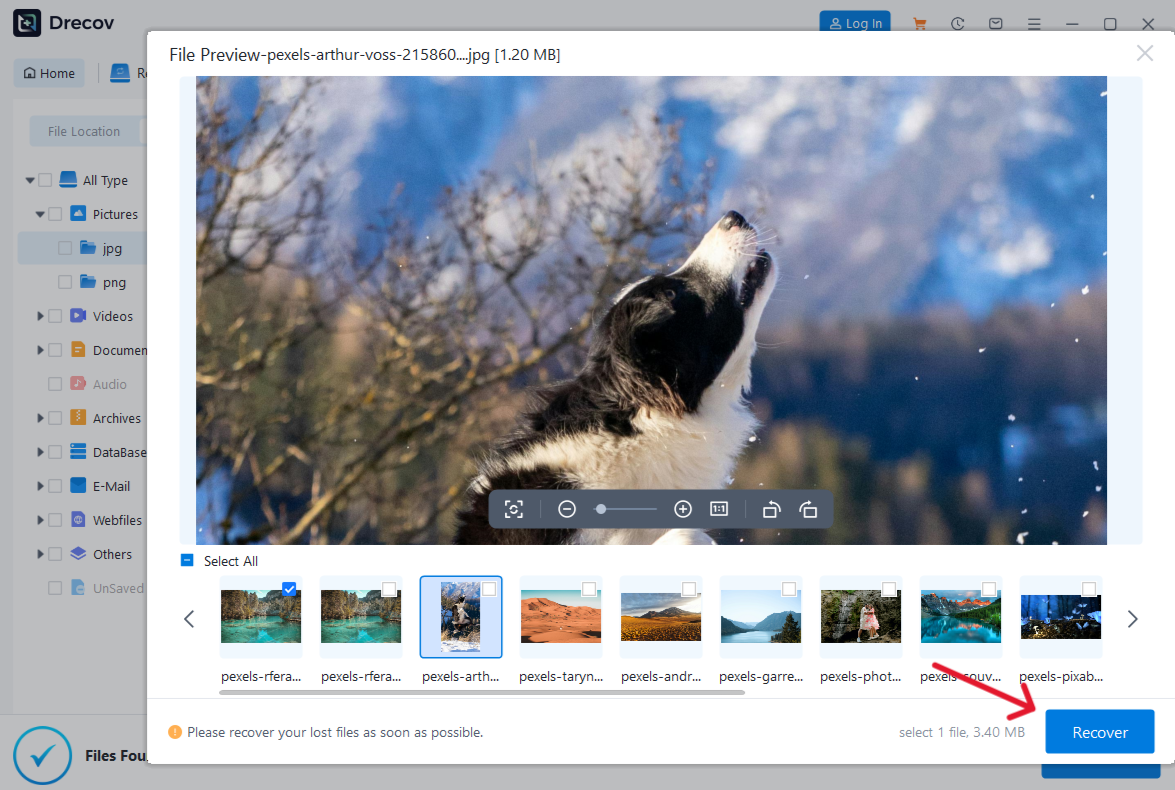
Step 4: Recover elsewhere and test the dependency
Save candidates to the separate healthy device, never back to the source. If output is not where expected, inspect the Drecov Folder or Recovery Folder. Open each candidate with macros disabled when appropriate, verify its required sheet and range, then point a copy of the dependent workbook to it. The broader Excel workbook recovery guide explains other deleted, unsaved, and corrupted-file branches.
⚠ Warning: Install it on a drive different from the one where your data was lost to prevent overwriting.
How do you verify that the workbook is correct?
Press Ctrl + Alt + F9 only when a full recalculation is appropriate for the workbook and its data connections. Otherwise use the workbook’s normal calculation process. Search formulas again for #REF!, review Name Manager, and refresh only trusted external links. Inspect charts, PivotTables, conditional formatting, and validation lists that rely on the repaired area.
Choose several business-critical outputs and calculate them independently from source values. Compare totals with an earlier approved report, not merely with the workbook’s own neighboring cells. Save the repaired copy under a new name, close Excel, reopen it, and confirm that no reference prompt returns. Only then decide whether to replace the production workbook.
Questions about Excel reference warnings
Why can Excel show no #REF! cells but still warn about references?
The invalid reference may live in a defined name, chart series, validation list, conditional-format rule, PivotTable source, print area, or hidden sheet. Inspect those objects instead of searching visible cell values alone.
Can Open and Repair fix formula references?
It may help a structurally damaged workbook open, but it cannot know the intended business range after a sheet or column was deleted. Preserve the repair log and compare any removed records. Reference correction still requires evidence.
Should I break all external links?
No. Breaking links replaces formulas with values and removes future updates. Use it only when the dependency is intentionally retired and a verified snapshot is the desired result.
Can Drecov restore one deleted sheet?
No. A worksheet is content inside the workbook container, not a separate disk file. Use version history, backups, AutoRecover copies, or another workbook copy. Drecov applies when the entire local workbook or backup file was deleted.
How do I prevent the warning from returning?
Keep linked workbooks in controlled locations, avoid casual sheet and table renames, use documented defined names, and test dependent files before removing a source. Versioned storage makes accidental structural edits easier to reverse.
The reliable response to an Excel formula-reference problem is an audit, not a blanket repair. Preserve a copy, locate the dependency, restore the intended source from evidence, and verify calculated outcomes outside the workbook before accepting the result.
⚠ Warning: Install it on a drive different from the one where your data was lost to prevent overwriting.