







Exception code: 0xc0000005 means a process attempted an invalid read, write, or execute operation in memory. The code identifies an access violation, but not the responsible component. A single application crash points toward that program, its plug-ins, or its working files. Repeated crashes across unrelated software raise the importance of drivers, RAM, storage, security software, and Windows integrity. Save open work and preserve project files before reinstalling applications or Windows. This guide explains “exception code 0xc0000005” with practical checks that protect important files before system or storage changes.
Confirm What Media Creation Changed
Start with the current state, not the most dramatic possible cause for this Media Creation Tool erased prior USB contents case. Protect irreplaceable files, note exact messages and recent changes, and confirm which disk or folder is involved for this Media Creation Tool erased prior USB contents case. corrupted-file diagnosis To confirm the platform behavior for Media Creation Tool erased prior USB contents, consult the official documentation.
| What you observe | What it means | Safest next move |
|---|---|---|
| Only one program crashes | Application, plug-in, or working-file fault | Test a clean launch and another file |
| Many unrelated apps fail | Shared driver, RAM, security, or Windows issue | Review system-wide evidence |
| Crash follows one project file | That file or linked asset may be damaged | Preserve it and test a copy |
| Errors increase under load | Heat or memory instability is plausible | Protect data before diagnostics |
| Files vanished after crashes | A local-loss branch exists | Stop writes and recover to another disk |
Use Event Viewer to Name the Crashing Component
Open Reliability Monitor or Event Viewer and record the faulting application, module, exception code, and timestamp. A module name is a lead, not automatic proof. Match it with the exact action that crashes and check whether the same file opens in another trusted application.
Write down the result and compare it with the previous state before proceeding for this Media Creation Tool erased prior USB contents case.
Compare One-App and System-Wide Failure Patterns
Disable optional plug-ins or overlays for one controlled test and update the application from its official source. If browsers, games, editors, and Windows tools all fail, stop treating the incident as an isolated application problem. Review recent drivers, memory symptoms, overheating, malware findings, and storage health.
Use that evidence to stay on this branch; do not combine unrelated repairs in one attempt for this Media Creation Tool erased prior USB contents case.
Protect Project Files Before Reinstallation
A repair install or application reinstall can delete preferences, plug-ins, caches, and unsaved local work. Export settings where possible and copy project folders to another device. If files have already disappeared or the source directory is inaccessible, minimize writes to that volume before recovery.
Choose a reversible check where possible and define what a successful result should look like for this Media Creation Tool erased prior USB contents case.
Test Software Changes Before Hardware Stress
Return overclocking to supported defaults and use built-in memory diagnostics only after data is safe. Avoid running many benchmarks merely to reproduce the crash. One clean boot test can separate third-party services from core Windows without changing every component at once.
Keep the source and the verified backup separate so a later action cannot overwrite both for this Media Creation Tool erased prior USB contents case.
Use DISM and SFC when evidence points to shared Windows corruption, and record their results. Do not expect these tools to repair an application-specific bug or damaged user document. Reset or clean installation belongs after backups, recovery, malware assessment, and narrower repairs.
Retest the original symptom once, then stop if the device becomes less stable for this Media Creation Tool erased prior USB contents case.
Protect the Former USB Contents
The trigger action is often more useful than the hexadecimal code. A crash on opening one document can involve a parser or corrupted asset. a crash on startup can involve injected modules, plug-ins, or preferences; a crash during heavy rendering can expose memory or driver instability. Reproduce the issue once with a safe copy and minimal optional components. Avoid repeated crashes against the only project file because autosave and recovery copies can also be replaced.
Security software may block behavior that resembles an access violation, but disabling protection globally removes useful evidence and increases risk. Review the exact event, quarantine record, signature, and source of the program. Restore a quarantined item only when its legitimacy is established. For business systems, preserve logs and follow organizational response procedures instead of changing exclusions locally. A clean boot is a diagnostic separation, not proof that every disabled service is malicious or defective.
Verification should match the original failure. Launch the same supported application, open a copied project, perform the smallest action that previously failed, and watch Reliability Monitor for a new event. Then test a different known-good file to ensure the repair did not merely bypass one damaged document. Keep recovered projects outside the repaired application directory. If crashes continue across programs, return to shared drivers, RAM, Windows integrity, and storage rather than reinstalling the same application repeatedly.
A Practical Checkpoint
For software supplied by an employer or developer, preserve the application version, plug-in list, crash event, and a minimal reproduction file. Those details let support distinguish a product defect from a damaged project or local environment. Do not upload confidential documents or dump files to public services without authorization; memory dumps can contain fragments of user data. A privacy-aware diagnostic package is more valuable than screenshots of many speculative repairs.
- Test a clean launch and another file; confirm the observed condition was only one program crashes before using that action.
- Review system-wide evidence; confirm the observed condition was many unrelated apps fail before using that action.
- Preserve it and test a copy; confirm the observed condition was crash follows one project file before using that action.
- Protect data before diagnostics; confirm the observed condition was errors increase under load before using that action.
- Stop writes and recover to another disk; confirm the observed condition was files vanished after crashes before using that action.
When a Real Local File Has Been Lost
Drecov belongs only to the local-loss branch, such as deleted projects, inaccessible folders, or files lost during a failed reinstall. It supports read-only recovery from stable Windows storage but does not debug application code, fix RAM, remove malware, or repair an access violation. When Media Creation Tool erased prior USB contents, PandaOffice Drecov provides Windows data recovery for PCs, HDDs, SSDs, external disks, USB drives, SD cards, and memory cards. For Media Creation Tool erased prior USB contents, the supported recovery set includes photos, video, documents, email data, audio, and archives. That Media Creation Tool erased prior USB contents recovery path combines Quick Scan, Deep Scan, filters, preview, a healthy destination, and Lost Partition Recovery.
⚠ Warning: Install it on a drive different from the one where your data was lost to prevent overwriting.
Step 1: Stabilize the Source and Select the Original Location
Do not write another installer or file to the ESD-USB. Wrong capacity, disconnects, or controller errors mean the USB needs hardware-aware recovery. Prepare a separate healthy target for Media Creation Tool erased prior USB contents, keep the Drecov installation off the loss volume, then open PandaOffice Drecov. Also, select the stable drive and original project or user folder where the missing files existed.
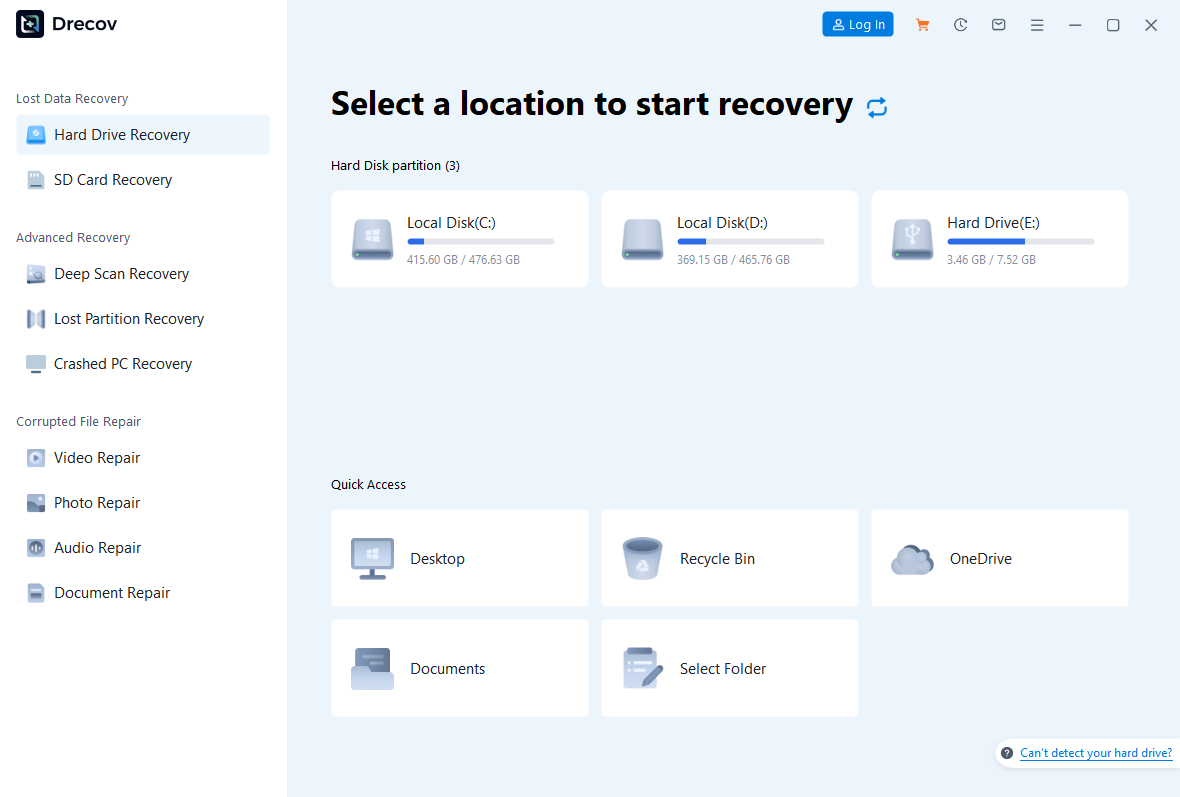
Step 2: Start With Quick Scan
Scan the recognized ESD-USB with Quick Scan before using Deep Scan for older data that survived the media write. Do not initialize, format, repartition, or create a replacement volume for this Media Creation Tool erased prior USB contents case. If the required files are absent and the source remains stable, continue with Deep Scan for this Media Creation Tool erased prior USB contents case. Use Lost Partition Recovery when the partition entry itself has disappeared rather than treating formatting as a recovery method for this Media Creation Tool erased prior USB contents case.
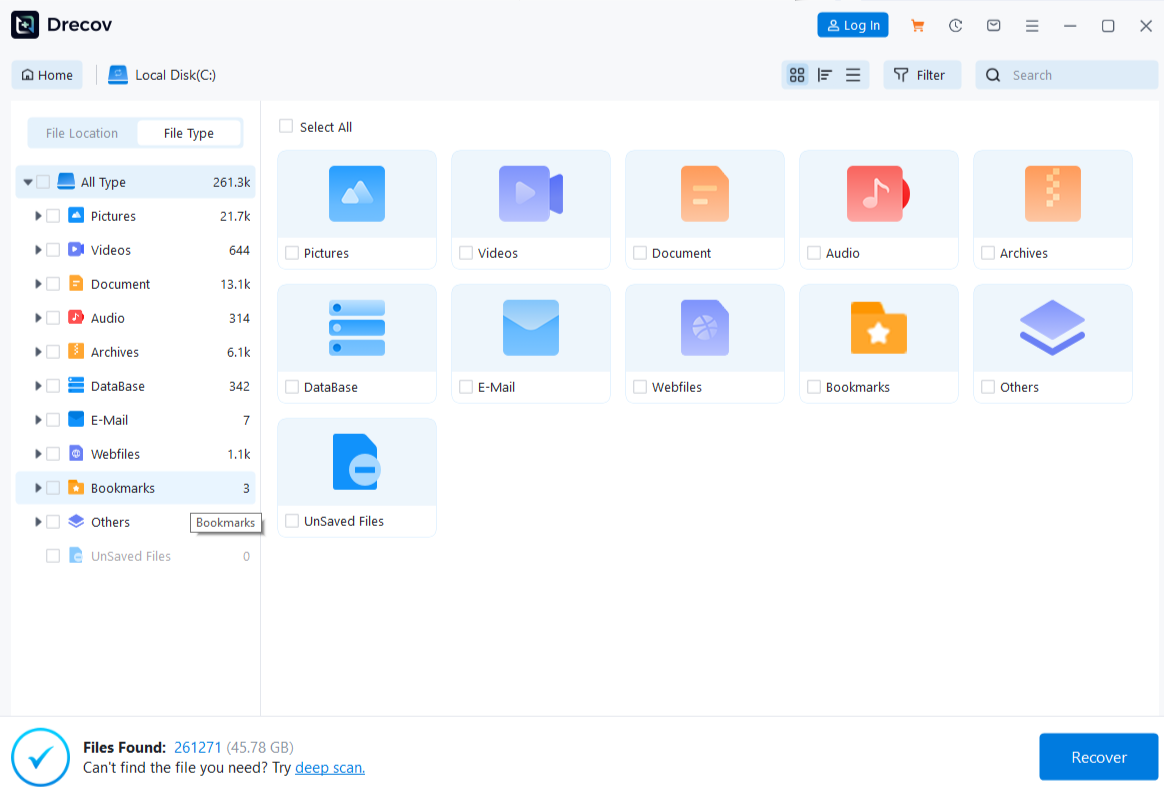
Step 3: Filter, Locate, and Preview Candidates
Filter by project extension, filename, former path, modified date, documents, images, video, email data, audio, or archives. Preview representative supported files before selecting the entire set for this Media Creation Tool erased prior USB contents case. A preview is evidence for that sample, not a promise that every page, frame, archive member, or related project asset is intact for this Media Creation Tool erased prior USB contents case.
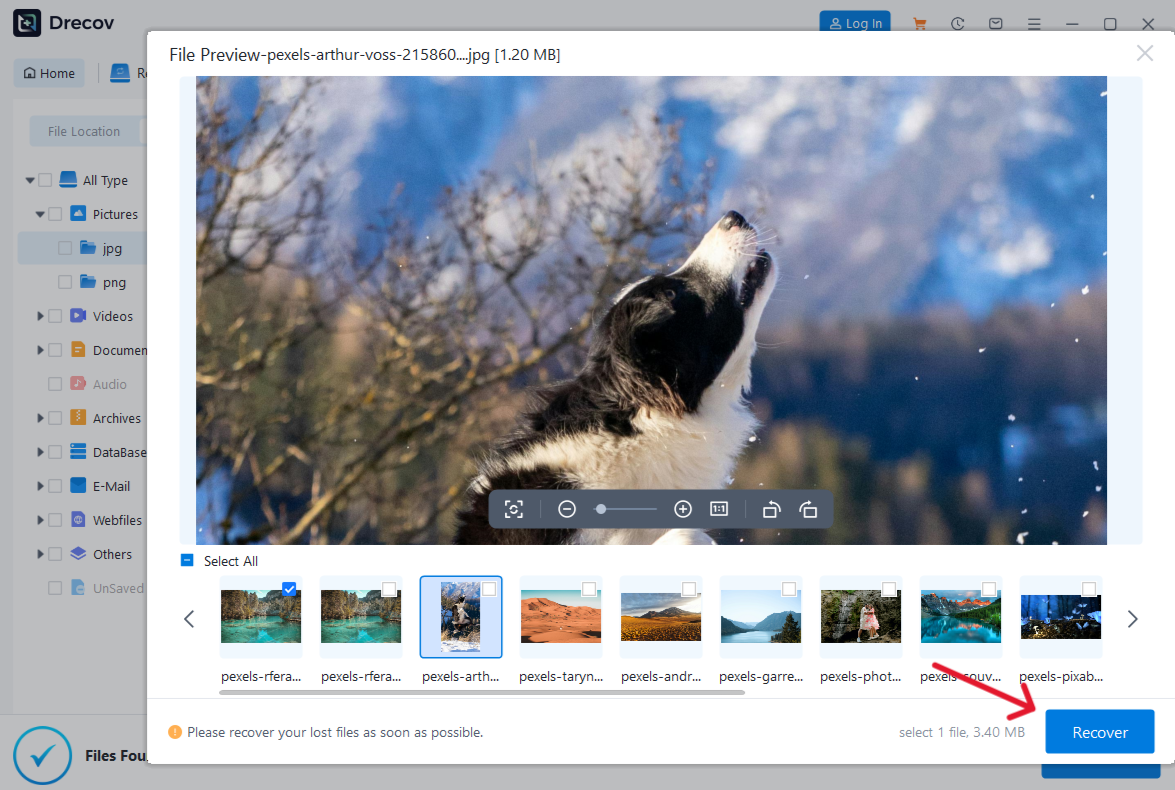
Step 4: Recover Elsewhere and Confirm the Output
Recover former USB contents to the separate healthy device instead of the ESD-USB. If the output for this Media Creation Tool erased prior USB contents case is not where expected, inspect Drecov Folder or Recovery Folder before scanning again. Open several projects in the appropriate application, inspect linked assets, test archives, and compare modification times with backups. Keep the original source unchanged until the Media Creation Tool erased prior USB contents checks pass and the result has a second verified copy.
Step 5: Repair Only After Verification
Complete recovery and verification before application reinstall, plug-in removal, DISM, SFC, driver rollback, memory testing, Windows reset, or reinstallation. Drecov does not repair physical damage, remove malware, fix Windows or applications, or guarantee recovery of overwritten data for this Media Creation Tool erased prior USB contents case. Those boundaries determine when repair tools or a specialist should take over for this Media Creation Tool erased prior USB contents case.
Test the USB After Recovery or Reformatting
Open several projects in the appropriate application, inspect linked assets, test archives, and compare modification times with backups. Use recent file recovery when exact identity matters. Retain the recovered set and any disk image until the original problem has remained stable through normal use for this Media Creation Tool erased prior USB contents case.
ESD-USB Questions
Is 0xc0000005 always bad RAM?
No. Software defects, plug-ins, drivers, security tools, corrupted data, and RAM can all be involved.
Can I fix it by changing permissions?
Only when evidence shows an access or security configuration problem; broad permission changes are unsafe.
Should I reinstall the application first?
Preserve projects and settings, then use a clean reinstall for a clearly isolated app fault.
Can Drecov repair 0xc0000005?
No. It recovers missing local files before troubleshooting continues.
What evidence is most useful?
The faulting application, module, timestamp, trigger action, and whether other programs fail.
For a related safeguard in the Media Creation Tool erased prior USB contents branch, review validate recovered files.
When troubleshooting “exception code 0xc0000005”, begin with the least invasive step and verify recovered files before attempting repairs.
Conclusion
Exception code: 0xc0000005 means a process attempted an invalid read, write, or execute operation in memory. Protect important local data before broad repair, follow the evidence toward the narrowest suitable action, and verify the outcome for this Media Creation Tool erased prior USB contents case. When files are genuinely missing while Media Creation Tool erased prior USB contents, Drecov supplies Quick Scan, Deep Scan, preview, and Lost Partition Recovery. Also, recovery to another healthy destination.






