







When a file error has occurred in Word, the safest response depends on when it appeared. An error while opening points toward file access, blocking, format, or document damage. An error while saving may involve the destination, permissions, synchronization, free space, or the live Word session. Do not overwrite the original. Copy every existing version to another healthy location, then work on duplicates.
Use the Error Moment to Choose the Right Branch
The same short message can conceal different tasks. Record the full wording, document name, location, and action. Note whether Word already displayed the document. That observation tells you whether the immediate priority is rescuing unsaved edits or making a stored copy readable.
| When the error appears | What remains at risk | First safe action |
|---|---|---|
| Before the document opens | The stored file or access path | Duplicate the file and test the copy from a short local path |
| While using Save | Current unsaved edits | Use Save As with a new name on a healthy local disk |
| While saving to cloud or network storage | Local session plus synchronized versions | Save a local rescue copy before troubleshooting sync |
| After a crash or power loss | AutoRecover and temporary candidates | Preserve recovery files before restarting cleanup |
| Several documents fail | Word configuration or Office installation | Test Word Safe Mode after files are secured |
If the document is still open
Do not close Word. Choose Save As and write a new filename to a local folder with free space. Avoid the original directory if it is synchronized, remote, encrypted, or showing access errors. If DOCX saving fails, try another DOCX name first. A PDF or plain-text export can preserve visible content, but it is not a complete substitute for fields, comments, tracked changes, macros, or embedded objects.
If Word fails before showing content
Copy the file without opening it. Record its byte size and modified date. A zero-byte file has no document payload to repair. A normal-sized file deserves access and structure tests. Keep the original untouched, because Open and Repair and format conversions can change the working copy.
If the file came from email or a browser
Confirm that the attachment finished downloading. Save a fresh copy with its intended extension. Right-click the duplicate, open Properties, and check for an Unblock option only when you trust the source. Protected View is a security boundary. Do not disable it globally merely to open one uncertain document.
Test Location and Access Before Calling the File Corrupt
A healthy document can fail from a bad path. Move a duplicate to a simple local folder such as Documents. Shorten the filename and remove unusual trailing characters. Confirm that the account can create and delete a harmless test file in the same destination.
Separate sync trouble from document trouble
Cloud placeholders may show a filename without storing a complete local copy. Ensure the document is available offline, then duplicate it outside the synchronized folder. If the local duplicate opens, investigate sync status and version history. Do not replace the cloud copy until you have compared its versions.
Check free space and destination permissions
Word needs room for temporary and replacement files during saving. Verify free space on the system and destination volumes. Test Save As in a folder owned by the current user. A successful local save suggests the original network share, removable disk, or protected folder is the failing layer.
Keep encryption and ownership visible
If EFS, BitLocker, organizational rights management, or another account protects the file, preserve the relevant keys and credentials. Taking ownership does not decrypt content. Copying files out of an encrypted environment without planning can leave unusable duplicates. Ask the administrator before changing permissions on business documents.
Use Word’s Built-In Recovery Options on a Duplicate
Microsoft describes document troubleshooting and the Open and Repair method for files Word recognizes as damaged. These methods modify or reinterpret content, so the source copy should remain protected.
Try Open and Repair once
In Word, choose File, Open, Browse, select the duplicated document, open the arrow beside Open, and choose Open and Repair. Save successful output with a new name. Reopen it before declaring success. Review page count, headings, tables, images, footnotes, comments, tracked changes, fields, and embedded objects.
Recover text only when layout is no longer the priority
Word’s Recover Text from Any File option may extract readable text from a damaged file. It can lose formatting, images, objects, and document structure. Use it on a duplicate and label the result clearly. The text converter is a salvage path, not proof that the original document has been repaired.
Insert readable content into a blank document
If a duplicate opens partially or can be inserted, create a blank document and use Insert, Object, Text from File. Large or complex documents may need section-by-section rescue. Save each successful stage under a new name. Stop when a particular section triggers failure, then isolate that content rather than repeating the whole import.
If the document opens but shows blank pages, follow the site’s blank Word document checks. A display problem, empty saved file, and corrupt content require different responses.
Isolate Word Without Sacrificing Documents
When multiple known-good files fail, test the application. Press Windows+R and enter winword /safe. Open a duplicated document. If Safe Mode works, add-ins, templates, or startup customizations deserve attention. If it also fails, the problem may lie in Office, Windows, the user profile, or storage.
Test add-ins one at a time
Disable COM add-ins, restart Word normally, then re-enable them individually. Record which change brings the error back. Avoid deleting templates or registry branches as a first move. Controlled reversal preserves evidence and makes the fix repeatable.
Rename Normal.dotm only after making a copy
A damaged global template can affect every document. Close Word, back up Normal.dotm, then rename the working copy so Word can create a fresh template. This test can remove custom styles, macros, and AutoText from the active template. Keep the backup until those items are accounted for.
Repair Office after local files are safe
Use Microsoft 365 or Office repair only after important documents and templates are backed up. An application repair can replace program components. It cannot restore a deleted DOCX or recreate edits that were never saved. Continue to keep the original document evidence separate from the repaired application.
Use Drecov When the Best Document Version Is Missing
Drecov belongs in this workflow when a DOCX, DOC, RTF, temporary file, AutoRecover copy, or export has disappeared from its readable source. It does not correct Word settings or rebuild malformed document XML. Inspect Document Recovery, AutoRecover folders, cloud history, Recycle Bin, and backups first. The site’s previous Word version workflow may provide a cleaner copy than raw recovery.
⚠ Warning: Install it on a drive different from the one where your data was lost to prevent overwriting.
On Windows, PandaOffice Drecov can search PCs and stable storage such as HDDs, SSDs, external disks, USB devices, SD cards, and memory cards. It operates in read-only recovery mode. Quick Scan supplies the initial result set, while Deep Scan can search more thoroughly when the source remains stable. Filters, former paths, names, dates, and preview help locate documents and related archives before recovery to a separate healthy destination.
Lost Partition Recovery can search when the partition that held the document disappears. Drecov cannot repair Word, remove malware, fix physical storage, or guarantee overwritten data. SSD TRIM may reduce recovery prospects. Stop scanning if a drive clicks, disconnects repeatedly, freezes the PC, or reports severe read errors. Controlled imaging or professional recovery is safer for unstable media.
Recover a Missing Word Copy With Drecov
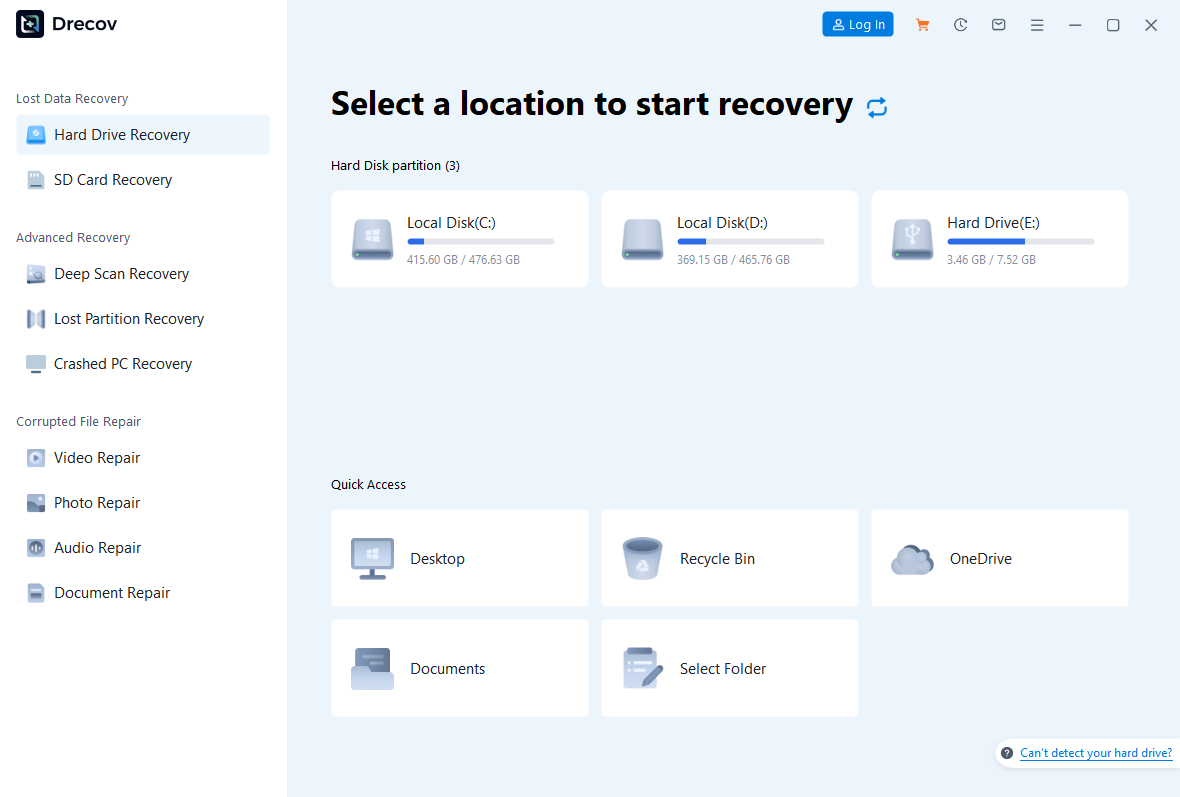
Step 1: Open Drecov and select the document’s original location
Make a healthy second disk the recovery destination. Keep the installation away from the document’s old partition. After opening Drecov, select its former folder or a consistently readable removable source. If the entire volume is absent, use Lost Partition Recovery and decline any request to initialize, format, or create a new volume.
Step 2: Run Quick Scan and search around the error time
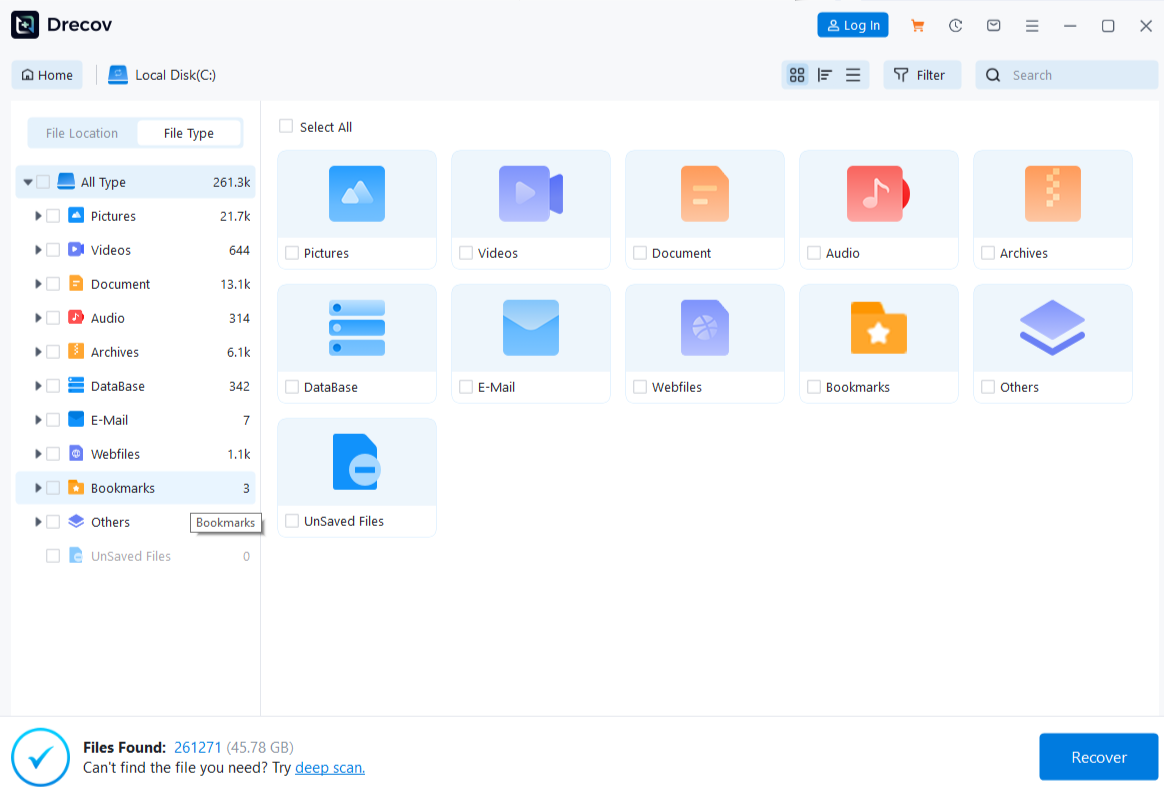
Start Quick Scan. Filter by DOCX, DOC, RTF, temporary candidates, former path, filename, and modification date. Search the original folder and Word recovery locations. Keep several candidates when an interrupted save produced similar names or uncertain timestamps.
Step 3: Continue with Deep Scan only on stable storage
Escalate to Deep Scan only when the first pass misses the required version and the source still reads normally. End scanning after a fresh I/O fault, dropout, or serious stall. The expanded logical search does not make unstable hardware safe.
Step 4: Preview candidates and recover to the healthy disk
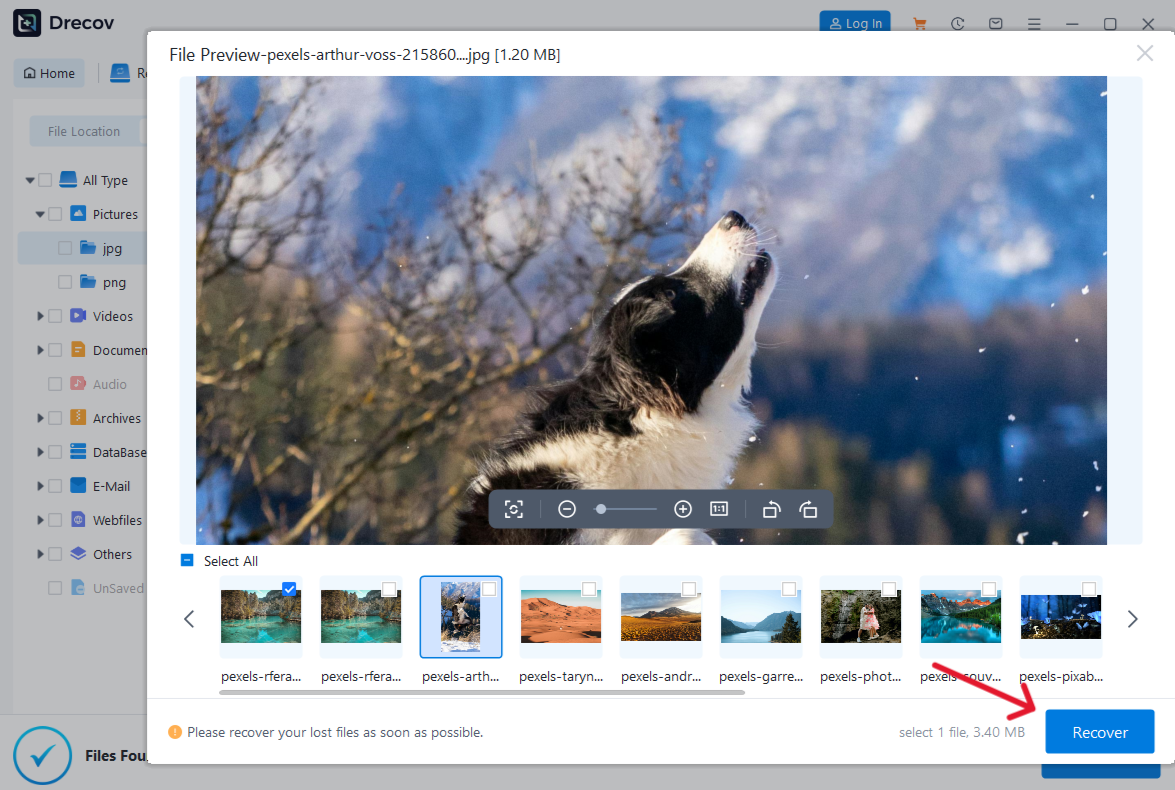
Use path, type, name, size, and date together. Preview representative supported documents, but remember that preview cannot prove every page, field, comment, object, or embedded file is intact. Recover the strongest candidates to the other disk, never to the source. When output does not appear at the chosen destination, inspect Drecov Folder or Recovery Folder before repeating the job.
Step 5: Verify documents before changing the source
Preserve recovered originals and open duplicates. Compare page count, headings, tables, images, tracked changes, comments, fields, links, and the newest known paragraph. Save any repaired copy under another name. Only after this review should you run disk repair, reset Word, delete temporary data, format storage, or replace the source version.
If Word never saved the latest work, review the site’s unsaved Word document sources before assuming the edits existed as a recoverable standalone file.
Conclusion
When a file error has occurred in Word, let the failure moment guide the response. Preserve open edits with Save As, protect stored originals, and test local duplicates before changing permissions or running repair. Use Open and Repair or text extraction only on copies, then verify the full document. If the best version was genuinely deleted from stable Windows storage, Drecov can search the original location and recover candidates to another healthy disk. Word troubleshooting restores access; careful recovery protects the document evidence.
⚠ Warning: Install it on a drive different from the one where your data was lost to prevent overwriting.






