







Recovery outlook: Yes, some wiped PC storage can be recovered, but the word wiped covers very different events. Windows Reset with Keep my files is unlike Remove everything. A quick format differs from a cleaning pass, a manufacturer restore, or an SSD secure erase. If you need to recover storage wiped pc data, write down the exact option used and whether Windows was reinstalled before doing anything else. What happened during and after the wipe matters more than a generic recovery promise.
Reconstruct what ‘wiped’ meant on this PC
Subsequent use matters as much as the original event. Windows setup, updates, browser caches, downloads, and recovery-software installation all write to the system drive. Those writes may reuse clusters that held deleted files, making it significantly harder to recover storage wiped PC drives. On an SSD, TRIM and internal garbage collection can make deleted content unavailable even when little new work is visible.
Encryption changes the boundary. A reset that discards encryption keys can leave old sectors unreadable even if they were not overwritten. Likewise, a cleaning or secure-erase procedure is designed to defeat ordinary recovery. No responsible tool can promise recovery from fully overwritten, cryptographically inaccessible, or securely erased content. Microsoft’s reset documentation distinguishes Keep my files, Remove everything, and drive cleaning. See the official documentation before relying on menus or behavior that may vary by Windows or Office release in the erased-PC assessment.
Estimate overwrite risk without false promises
| What you observe | What it changes | Safest response |
|---|---|---|
| A stable, readable source | Disconnect the wiped drive when it is a secondary device. | Disconnect the wiped drive when it is a secondary device. If it is the only system drive, shut down and plan recovery from another Windows PC or a supported recovery environment rather than continuing to work on it. |
| A limited or file-specific failure | Check OneDrive, other cloud accounts, File History, external backups, email attachments, shared workspaces, phone copies, and application exports. | Check OneDrive, other cloud accounts, File History, external backups, email attachments, shared workspaces, phone copies, and application exports. A complete backup is preferable to a carved file with lost names or folders. |
| Instability or a destructive next step | Record whether the storage is HDD or SSD, whether BitLocker was enabled, the reset choice, the elapsed use after the wipe, and whether the drive stays detected. | Record whether the storage is HDD or SSD, whether BitLocker was enabled, the reset choice, the elapsed use after the wipe, and whether the drive stays detected. Those facts produce a more honest recovery estimate than a generic percentage. |
Freeze the story of the wipe before a new Windows session changes it. Record the starting condition and the outcome in the erased-PC assessment. If a test reduces access or introduces instability, return to protection instead of stacking another change on top in the erased-PC assessment.
Check copies that do not depend on the wiped drive
Disconnect the wiped drive when it is a secondary device. If it is the only system drive, shut down and plan recovery from another Windows PC or a supported recovery environment rather than continuing to work on it.
Check OneDrive, other cloud accounts, File History, external backups, email attachments, shared workspaces, phone copies, and application exports. A complete backup is preferable to a carved file with lost names or folders.
Record whether the storage is HDD or SSD, whether BitLocker was enabled, the reset choice, the elapsed use after the wipe, and whether the drive stays detected. Those facts produce a more honest recovery estimate than a generic percentage.
The wipe decision connects naturally to this related Drecov article, a second task-specific resource, and this recovery-safety reference.
⚠ Warning: Install it on a drive different from the one where your data was lost to prevent overwriting.
Use Drecov only while the source remains stable
Drecov fits this wiped-PC case only when the storage is stable and old data has not been securely erased, cryptographically lost, or overwritten. If you need to recover storage wiped pc drives, the Windows program reads supported PC and removable storage in recovery mode, offers Quick and Deep scans, lets you narrow and preview results, and writes selected files to a separate destination. Lost Partition Recovery helps when the wipe removed a partition entry, but it cannot reverse SSD TRIM or a cleaning pass. Begin at the Drecov Windows recovery page when that precise loss branch applies to the erased-PC assessment.
Step 1: Point Drecov at the storage that was wiped
Run Drecov from another healthy Windows environment whenever possible. Select the erased partition, physical disk, or Lost Partition Recovery view without recreating the old layout.

Step 2: Let Quick Scan establish the first result set
Review recent and path-based results first. A sparse result after a reset is evidence, not permission to reinstall Windows or copy tools onto the source.

Step 3: Broaden the search only when the wiped device is stable
Use Deep Scan when Quick Scan misses priorities and reads remain normal. Stop on disconnects, severe delays, or changing capacity; SSD TRIM and overwritten sectors cannot be reversed by scanning harder.
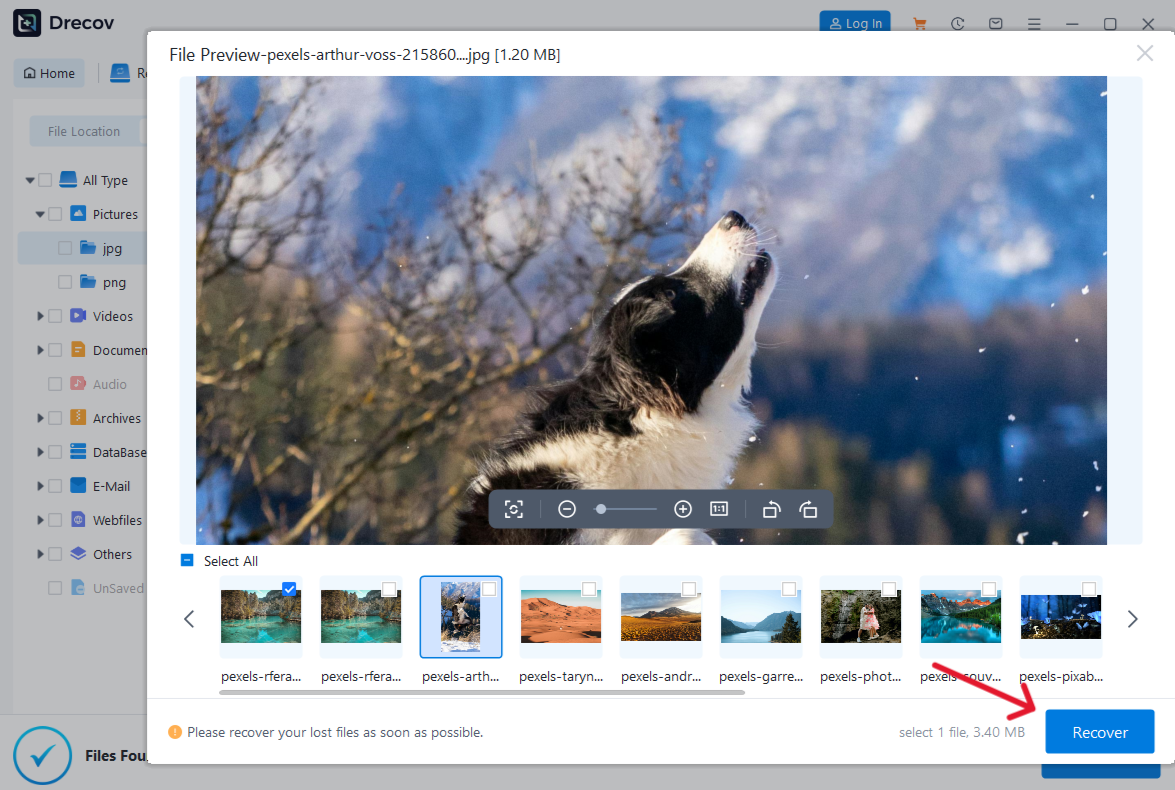
Step 4: Separate recognizable files from plausible fragments
Use names, former directories, dates, and file categories. Preview several candidates and expect that carving may lose original folder structure after a destructive wipe.
Step 5: Write the rescued set to untouched storage
Choose a different physical disk with enough capacity. Review Drecov Folder or Recovery Folder, open large and small samples, and duplicate the accepted result before reusing the wiped PC.
What the scan results can and cannot prove
Prevent a second wave of overwrites
Do not reinstall Windows again, create partitions, format, initialize, or run cleanup utilities. Each action adds writes without recovering a file.
Recognize physical-failure signals
If the drive clicks, disconnects, freezes the host, or reports the wrong size, stop. Imaging or professional recovery is safer than a direct Deep Scan.
Read previews conservatively
Treat successful preview as evidence for that file only. It does not prove that every page, frame, archive member, or database record is intact.
Back up the accepted result twice
After recovery, open samples from every important file type, compare folder counts, and keep two healthy copies before repurposing the wiped drive.
A recognizable preview is encouraging but cannot restore sectors that the wipe or later use replaced.
Decide when to stop software recovery
Compare restored folder counts with backup inventories, open representative large files, and restart the destination computer before accepting the recovery set.
Do not repurpose the wiped storage until two verified copies exist.
Translate the wipe history into realistic expectations
A reset using Keep my files should preserve personal files by design, though applications and settings change. Remove everything intentionally removes personal data. The additional clean-data choice performs more work to make removed files harder to recover. A manufacturer recovery image may repartition the disk, while a quick format typically replaces file-system structures without writing every data area immediately. Secure erase and cryptographic erase set much stronger limits. Identify the actual event rather than calling all of them a factory reset.
Later activity must be included in the estimate. A completed Windows installation can occupy many gigabytes. Updates, paging, indexing, browser use, and cloud synchronization add more writes. An HDD may retain untouched regions, while an SSD can process deallocated blocks through TRIM and internal cleanup. Neither device type justifies a promise. The useful question is whether required files can be found, previewed, restored elsewhere, and opened—not whether a marketing percentage sounds encouraging when attempting to recover storage wiped pc data.
Sort the restored output by priority instead of extension alone. Family photos, tax records, project databases, mail stores, and application exports need different checks. Open them from another healthy device. Large media should play beyond the first seconds. Archives should pass a member test. Databases should open in the application that created them. Record what is absent. That list guides a second scan or professional escalation better than scanning the entire disk repeatedly. Keep the wiped source unchanged until the accepted set exists in two locations.
Measure recovery by usable content, not filenames
A recovered filename is only a pointer. Judge the result by opening the content and checking the parts that matter to the application. Documents need more than a visible first page. Media needs playback beyond the opening seconds. Archives need member tests, and project files need their linked assets.
Sample files across sizes and dates. Small files can preview successfully while large files cross overwritten or unreadable regions. Select examples from several folders rather than checking only the first result group. Record failures instead of deleting them; their pattern may reveal whether damage is localized or widespread.
Preserve the raw recovery output. Do not rename, reorganize, or deduplicate the only copy during the first review. Work from a duplicate on another healthy device. That separation allows later tools or a specialist to reassess the original result without changes introduced during manual cleanup.
Define acceptance before repair continues. A useful standard may include a folder count, a list of priority files, an exported report, and successful opening in the intended applications. A green preview icon or completed progress bar is not an adequate substitute for that content-based test.
Before accepting a wipe-recovery result
Record the reset option, cleaning choice, drive type, encryption state, and every hour of later PC use. Shut the system down. Prepare recovery from another environment and reserve a destination large enough for all priority data.
Estimate success by the required files, not by a percentage. Preview across folders and sizes. Restore outside the wiped device. If TRIM, overwrite, or key loss blocks content, further scans cannot manufacture it.
Conclusion
A wiped PC may still contain recoverable records, but the wipe method, later writes, encryption, and SSD behavior set hard limits. If you need to recover storage wiped pc systems, stop using the source drive immediately and exhaust independent backups first. On stable storage, Drecov can look for remaining files and restore previews elsewhere without promising what overwrite or secure erasure removed.






