







Understanding Gmail to PST Export Process
What PST Files Are and Why Gmail Users Need Conversion
Learning how to export gmail to pst file is essential for users who want to move their Gmail data into Microsoft Outlook. PST (Personal Storage Table) files are the standard format used by Outlook to store emails, contacts, and calendar data.
Since Gmail uses cloud-based storage, while Outlook relies on local or hybrid storage systems, conversion between these formats is often required. Users searching for gmail export to pst usually want to either back up their Gmail emails or migrate to Outlook for better desktop-based email management.
In many cases, organizations or individuals also need to export emails from gmail to pst file for compliance, archiving, or system migration purposes. Understanding this process ensures safe and structured email transfer without data loss.
Why Export Gmail Emails to PST Format
Key Reasons for Gmail to PST Migration
There are several practical reasons why users need to export gmail to pst instead of keeping emails in Gmail only.
Common scenarios include:
- Migrating from Gmail to Microsoft Outlook
- Creating offline email backups
- Business email archiving requirements
- Switching email platforms for organizational needs
- Improving email portability and accessibility
Users often search export email from gmail to pst when they want a local backup that can be accessed even without internet connection.
In enterprise environments, PST files are widely used because they are compatible with Outlook systems and can be easily managed or transferred between devices.
⚠️ Warning: Gmail exports may include large datasets; always ensure sufficient storage before conversion.
Methods to Export Gmail to PST File
Method 1: Configure Gmail in Outlook Using IMAP
Test Environment: Outlook 365 on Windows 11 with Gmail IMAP enabled
One of the most common ways to export gmail to pst file is by connecting Gmail to Outlook using IMAP settings. Once synced, Outlook can export all Gmail data into PST format.
Steps:
- Enable IMAP in Gmail settings
- Open Outlook
- Add Gmail account via IMAP
- Wait for full synchronization
- Use Outlook export tool to save PST file
This method is widely used because it allows real-time synchronization before export.
Method 2: Use Google Takeout and Convert to PST
Test Environment: Windows 10 with Google Takeout ZIP export
Google Takeout allows users to download Gmail data in MBOX format, which can later be converted to PST.
Steps:
- Go to Google Takeout
- Select Gmail data export
- Download MBOX file
- Import into Outlook using conversion tool
- Save as PST file
This method is useful for users looking for export gmail to pst without directly using Outlook sync.
Method 3: Manual Email Migration from Gmail to PST
Test Environment: Outlook 2019 with drag-and-drop email import
This method involves manually transferring emails after syncing Gmail.
Steps:
- Connect Gmail to Outlook via IMAP
- Allow email synchronization
- Select Gmail emails
- Drag emails into Outlook folders
- Export folders as PST
This approach works for smaller mailboxes or selective migration.
Method 4: Sync Gmail with Outlook and Export PST
Test Environment: Outlook 365 with large Gmail mailbox (>10GB)
This method is similar to IMAP setup but focuses on full mailbox export.
Steps:
- Add Gmail account to Outlook
- Wait for complete sync
- Go to File > Export
- Choose PST format
- Save exported file locally
This is one of the most stable ways to export emails from gmail to pst file for long-term backup.
Method 5: Advanced Gmail to PST Export Using PandaOffice Drecov
Test Environment: Windows 10 with corrupted or incomplete Gmail export data
In some cases, Gmail exports fail or become corrupted during conversion. PandaOffice Drecov can help reconstruct email data before exporting to PST.
Steps:
- Launch PandaOffice Drecov
- Load Gmail exported data (MBOX or IMAP sync)
- Scan for recoverable email structure
- Rebuild mailbox hierarchy
- Export clean PST file
This method is especially useful when users face broken exports while trying to export gmail to pst file.
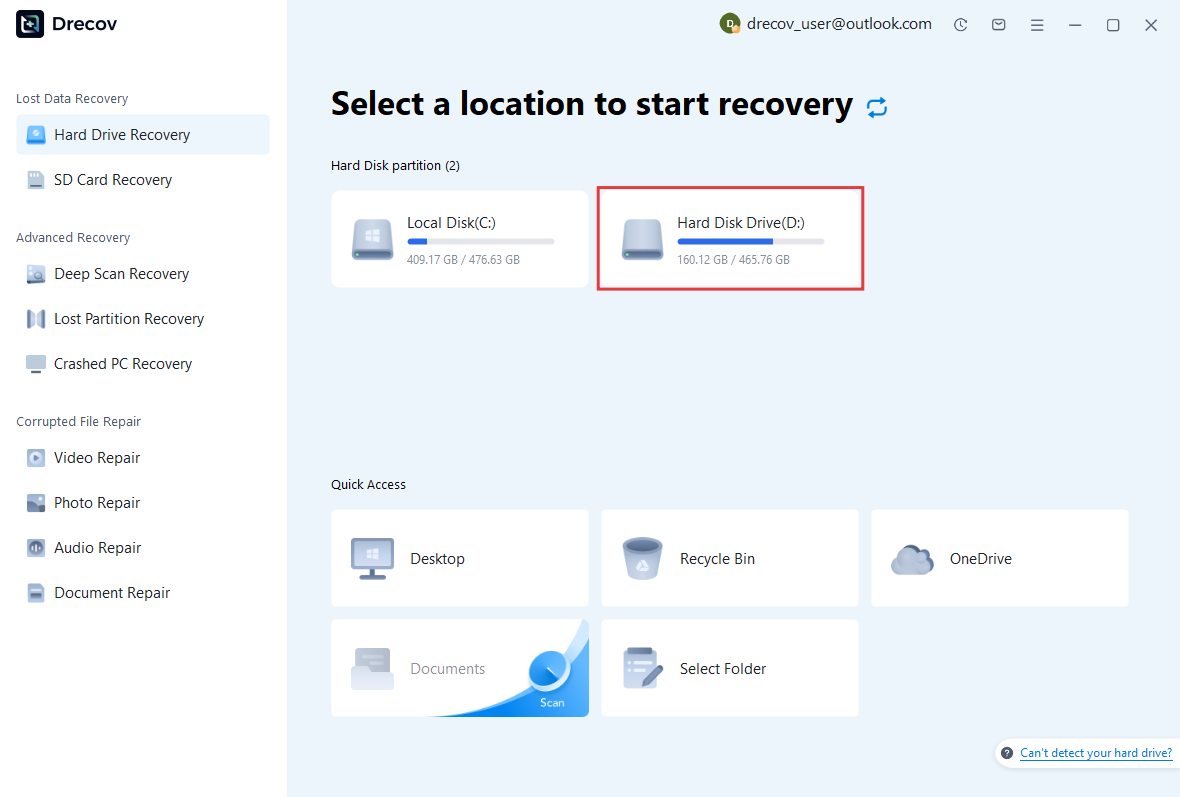
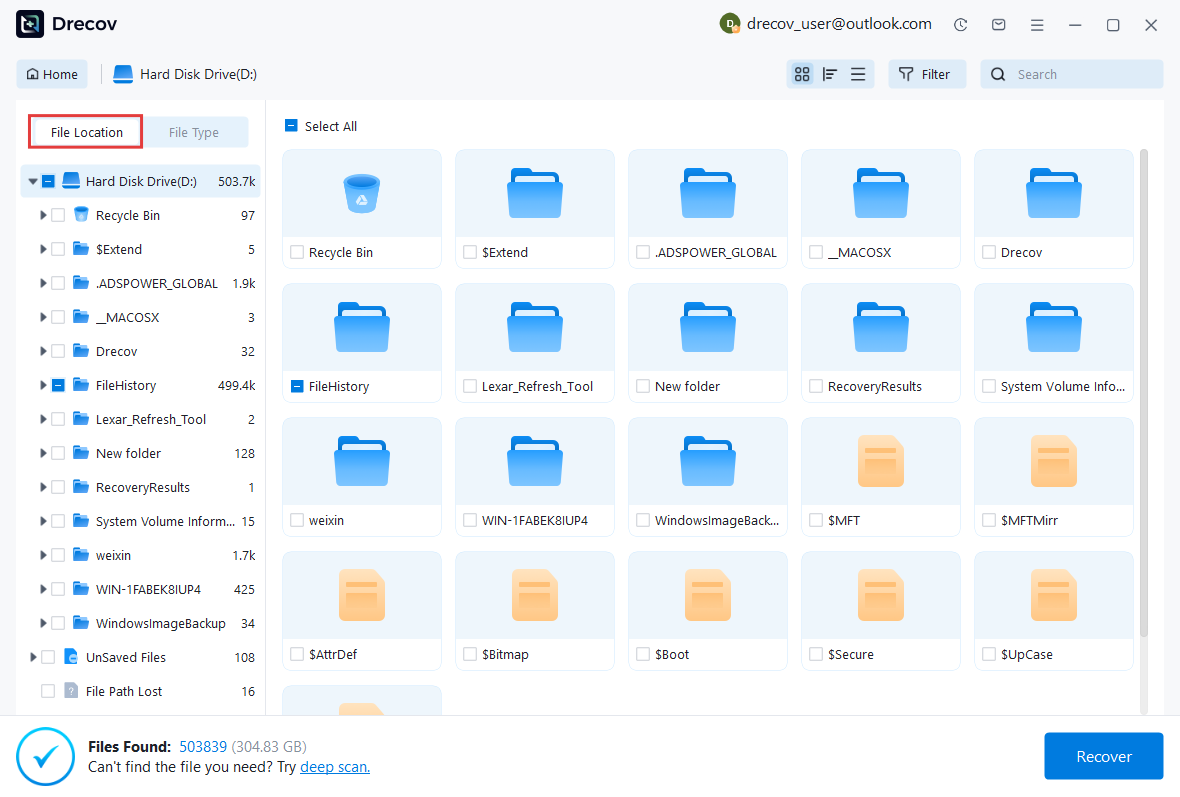
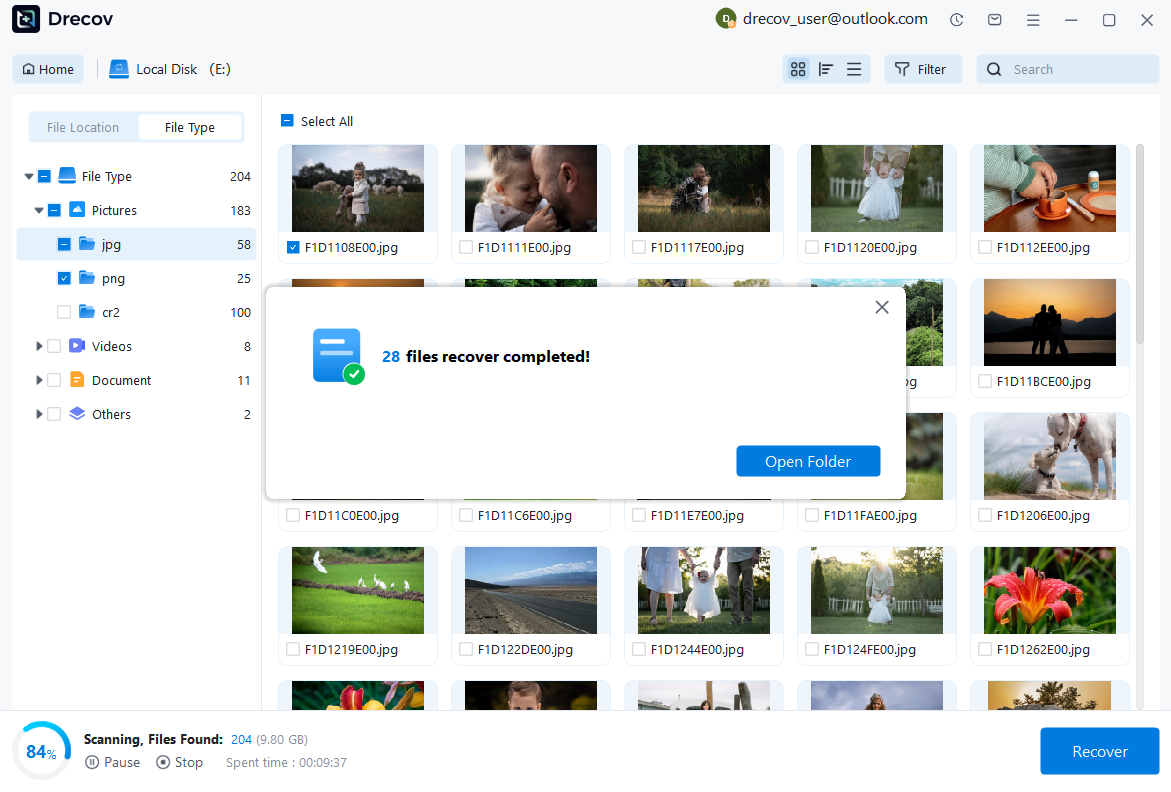
Why Choose PandaOffice Drecov Data Recovery Software?
When it comes to reliable data recovery, PandaOffice Drecov stands out as a powerful, all-in-one solution designed to handle a wide range of data loss scenarios. Whether you’re trying to perform TikTok deleted video recovery, restore files after formatting, or recover important documents, Drecov delivers fast and dependable results.
One of its biggest advantages is versatility. From format data recovery to lost partition recovery, the software can scan deeply and accurately locate files that other tools often miss. Even if your drive has been accidentally formatted or a partition has disappeared, Drecov uses advanced algorithms to reconstruct and retrieve your data with high success rates.
Drecov also supports specialized recovery needs. If you’ve lost important documents, its PDF recovery tool ensures that files retain their original structure and quality. For media users, the audio recovery feature helps restore music, recordings, and other sound files without corruption, making it ideal for both personal and professional use.
Ease of use is another key benefit. The intuitive interface allows beginners to recover files in just a few clicks, while still offering advanced options for more experienced users. Plus, it supports a wide range of storage devices, including HDDs, SSDs, USB drives, and memory cards.
In short, PandaOffice Drecov combines powerful recovery capabilities with user-friendly design, making it a trusted choice for anyone facing data loss.
Method 6: Export Gmail to PST via Microsoft Outlook Data Import Wizard
Test Environment: Outlook 365 on Windows 11 with synchronized Gmail IMAP account
After Gmail is connected to Outlook, users can use Outlook’s built-in import/export wizard to finalize the export gmail to pst file process.
This method is widely used in corporate environments where structured migration is required.
Steps:
- Open Outlook
- Go to File > Open & Export
- Select Import/Export Wizard
- Choose Export to a file
- Select PST format
- Choose Gmail folder structure
- Save PST file locally
This ensures full mailbox hierarchy is preserved during gmail export to pst operations.
⚠️ Warning: Large Gmail accounts may take significant time to sync before export.
Method 7: Selective Gmail Email Export to PST
Test Environment: Outlook 2019 with filtered Gmail sync
Instead of exporting the entire mailbox, users can selectively export specific emails or folders.
This is useful when only partial migration is needed.
Steps:
- Sync Gmail with Outlook via IMAP
- Create new Outlook folder
- Filter emails by date or sender
- Move selected emails
- Export only selected folder as PST
This method helps users manage targeted export emails from gmail to pst file workflows efficiently.
Method 8: Offline Gmail Export via MBOX to PST Conversion Pipeline
Test Environment: Windows 10 with Google Takeout MBOX file
This method is fully offline and does not require continuous Gmail sync.
Steps:
- Export Gmail using Google Takeout
- Download MBOX file
- Import MBOX into conversion tool
- Convert to PST format
- Verify Outlook compatibility
This method is frequently used for archival purposes and long-term storage planning.
Method 9: Enterprise-Level Gmail to PST Migration Strategy
Test Environment: Microsoft 365 enterprise environment with admin control
Large organizations often need structured migration systems rather than manual exports.
Enterprise workflow includes:
- Centralized Gmail account syncing
- Bulk PST export via Outlook admin tools
- Policy-based email retention
- Server-side archiving
This ensures consistent export gmail to pst execution across all employees.
Method 10: PST File Validation and Recovery After Gmail Export
Test Environment: Windows 11 with partially corrupted PST export
After exporting Gmail to PST, file integrity must be verified. Corruption during migration is common in large datasets.
Steps:
- Open PST in Outlook test profile
- Check folder structure integrity
- Verify email attachments
- Repair PST if errors occur
- Re-export if necessary
In advanced cases, PandaOffice Drecov can be used to repair broken PST files and restore missing Gmail data before final archiving.
This ensures a safe and complete export gmail to pst file process.
Advanced Email Migration Architecture
Hybrid Migration Model (IMAP + Export + Backup)
Test Environment: Windows 11 with Outlook + Gmail + cloud backup
Professional users no longer rely on single-method migration. Instead, they use a hybrid model:
- IMAP sync for real-time data
- PST export for offline backup
- Cloud storage for redundancy
This ensures stable and flexible gmail export to pst workflows.
Performance Optimization During Large Gmail Exports
Test Environment: Gmail account with 50GB+ email data
Large Gmail accounts can slow down Outlook sync and export processes.
Optimization techniques:
- Sync only required folders
- Disable heavy attachments during migration
- Export in batches instead of full mailbox
- Use SSD storage for PST writing
These steps significantly improve export emails from gmail to pst file performance.
Security Considerations for PST Export
Test Environment: Windows 10 with encrypted storage
Gmail exports may contain sensitive data, so security is critical.
Best practices:
- Encrypt PST files
- Store backups in secure drives
- Avoid public cloud uploads without encryption
- Use password-protected archives
FAQ: Gmail to PST Export
How to export emails from Gmail to PST file safely?
The safest method is syncing Gmail with Outlook via IMAP and then exporting PST using Outlook’s built-in tools.
Can I directly export Gmail to PST format?
No direct export exists. Gmail must be synced or converted through Outlook or MBOX conversion tools.
Why is my Gmail export to PST taking so long?
Large mailbox size, slow internet sync, and attachment volume can significantly slow the process.
Is PST format better than Gmail storage?
PST is better for offline storage and Outlook integration, while Gmail is better for cloud accessibility.
Conclusion: Best Gmail to PST Export Strategy
Final Summary of Migration Approach
Learning how to export gmail to pst file is essential for users who want secure backup, migration, or offline access to Gmail data.
To ensure success:
- Use IMAP sync for full mailbox migration
- Use Google Takeout for offline exports
- Apply selective export for smaller datasets
- Validate PST files after conversion
- Use recovery tools like PandaOffice Drecov when errors occur
Whether for personal backup or enterprise migration, a structured approach ensures reliable gmail export to pst without data loss.





