







Compatibility baseline: Windows 11 Arm runs on Arm64 processors rather than the x64 processors common in traditional PCs. Native Arm64 applications generally provide the cleanest experience. Windows 11 can also emulate many x86 and x64 applications, but emulation does not convert every dependency into an Arm-compatible one. App emulation helps broadly, yet a missing Arm64 driver can still block an otherwise compatible workflow.
Start with architecture, not the Arm label
Drivers are the hard boundary. A printer utility, VPN, storage filter, antivirus component, audio interface, accessibility tool, virtualization product, or game anti-cheat system may depend on a kernel driver. That driver must support Windows 11 Arm. An application’s executable may launch while its driver-based feature remains unavailable.
Microsoft’s current FAQ notes that Windows 11 version 24H2 includes Prism for improved emulated-application performance and lists limitations around drivers, some games, customization tools, and third-party security software. Treat compatibility as product-specific and version-specific rather than assuming every legacy program works. Microsoft’s Arm PC FAQ describes emulation and the driver limitations that remain architecture-specific. See the official documentation before relying on menus or behavior that may vary by Windows or Office release in the Arm migration trial.
Separate application emulation from driver compatibility
| What you observe | What it changes | Safest response |
|---|---|---|
| A stable, readable source | Inventory applications by business importance, architecture, plug-ins, license method, macros, and hardware dependencies. | Inventory applications by business importance, architecture, plug-ins, license method, macros, and hardware dependencies. Ask each vendor for current Windows 11 Arm support rather than relying only on a store listing. |
| A limited or file-specific failure | Test peripherals on the exact model when possible. | Test peripherals on the exact model when possible. Built-in class drivers may provide basic printing or storage access while vendor scanning, color, calibration, or management features remain absent. |
| Instability or a destructive next step | For games and creative tools, check anti-cheat, capture hardware, codecs, plug-ins, and GPU requirements. | For games and creative tools, check anti-cheat, capture hardware, codecs, plug-ins, and GPU requirements. A launcher running under emulation does not establish that the complete workflow works. |
Run a real compatibility task rather than relying on an application’s launch screen. Record the starting condition and the outcome in the Arm migration trial. If a test reduces access or introduces instability, return to protection instead of stacking another change on top in the Arm migration trial.
Audit peripherals, security tools, and games
Inventory applications by business importance, architecture, plug-ins, license method, macros, and hardware dependencies. Ask each vendor for current Windows 11 Arm support rather than relying only on a store listing.
Test peripherals on the exact model when possible. Built-in class drivers may provide basic printing or storage access while vendor scanning, color, calibration, or management features remain absent.
For games and creative tools, check anti-cheat, capture hardware, codecs, plug-ins, and GPU requirements. A launcher running under emulation does not establish that the complete workflow works.
Migration planning should also consider this related Drecov article, a second task-specific resource, and this recovery-safety reference.
⚠ Warning: Install it on a drive different from the one where your data was lost to prevent overwriting.
Recover Migration Files With Drecov Only After Real Loss
A Windows 11 Arm compatibility problem is not a data-recovery problem. Drecov applies only if migration deletes or strands local files on stable Windows-readable storage. Its read-only workflow can scan supported internal and removable media, filter and preview results, and restore them elsewhere. It cannot add Arm64 drivers, make an x64 boot utility run on Arm, or guarantee recovery after overwrite or encryption-key loss. Begin at the Drecov Windows recovery page when that precise loss branch applies to the Arm migration trial.
Step 1: Choose the pre-migration source, not the new Arm PC
When files were deleted during a move, open Drecov in a compatible healthy Windows environment and select the old disk or folder. Do not erase the old x64 device merely because the Arm setup appears complete.

Step 2: Run Quick Scan for the recently missing migration set
Filter for the project folders and file types that failed to arrive. Keep new application installations and synchronization writes away from the source.
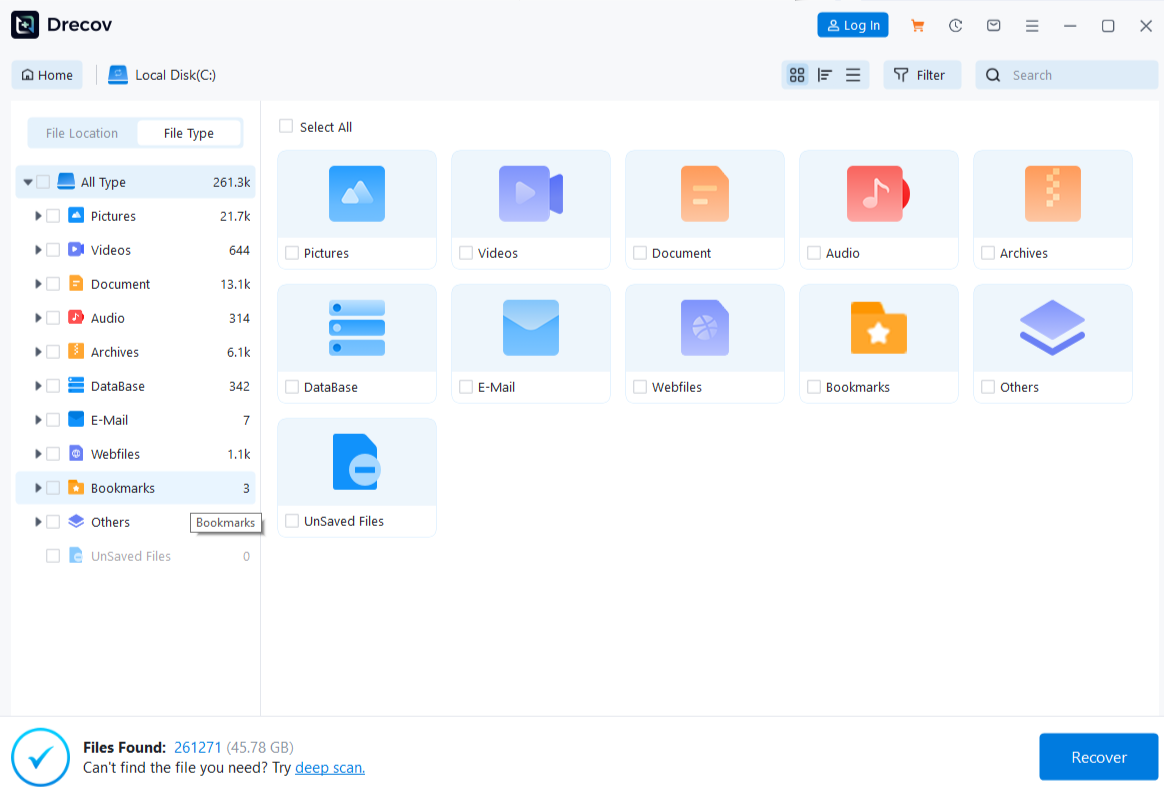
Step 3: Use Deep Scan when stable storage needs a wider search
Continue only if Quick Scan misses priorities and the old device remains dependable. Encryption-key loss, overwrite, and unsupported hardware access remain outside a deeper scan’s reach.
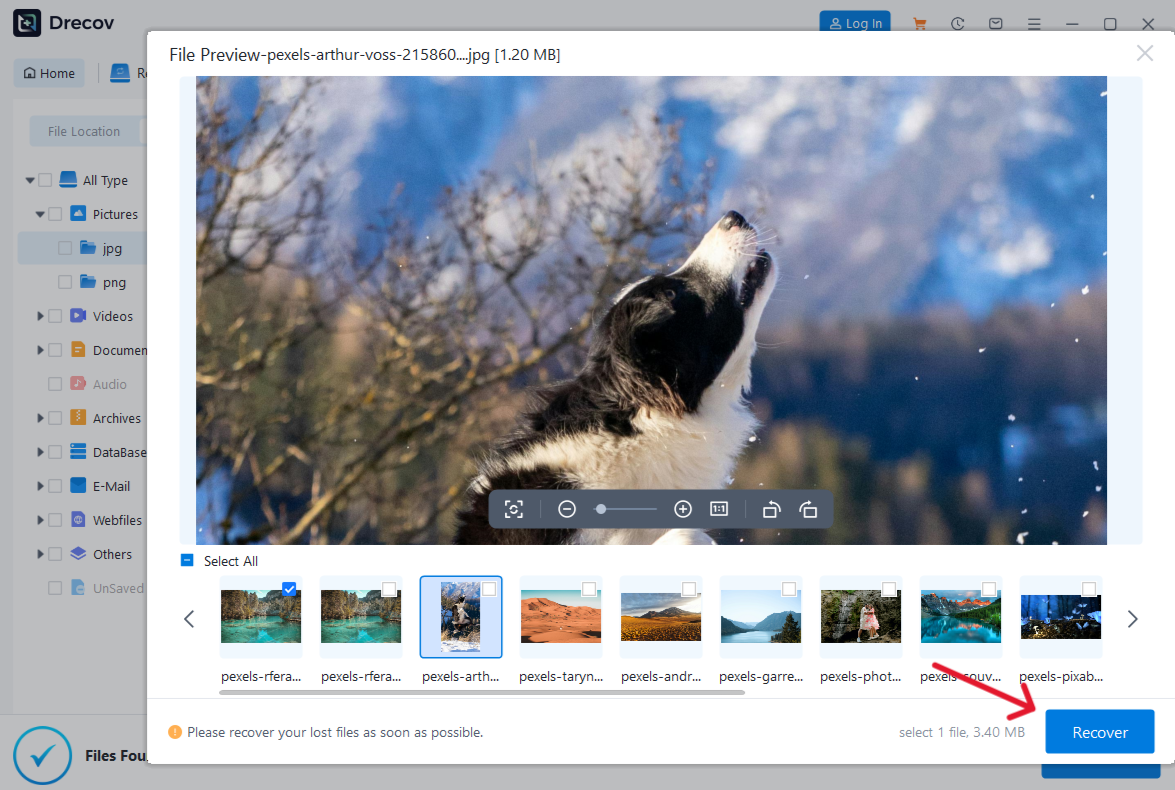
Step 4: Preview content across the migrated workload
Use names, paths, dates, and types. Check documents, media, archives, and other representative files; an app launching under emulation does not validate the data inside every project.
Step 5: Restore to independent storage before resuming sync
Recover to a healthy external destination, inspect Drecov Folder or Recovery Folder, and verify files with their intended applications. Preserve that copy before reconnecting two-way synchronization.
Plan a Reversible Migration and Protect the Old PC
Keep the x64 fallback available
Keep the old PC or a verified system image until the Arm device completes real work. Copy data rather than erasing the old disk during the first migration.
Prevent sync from becoming deletion
Use cloud synchronization carefully: confirm that all files are available offline where needed and that deletions do not propagate before the migration is accepted.
Prepare device-specific recovery media
Create recovery media supported by the device maker and store BitLocker recovery information separately. Generic x64 boot utilities may not start on Arm hardware.
Separate compatibility from lost-file recovery
If local files are accidentally deleted during migration, stop writing to the affected source. Recovery software must itself be compatible with the Windows environment and cannot repair missing Arm drivers.
An emulated application launch says nothing about an unavailable kernel driver or specialized peripheral feature.
Decide whether Arm fits the workload
Complete a representative workday: open projects, print or scan, connect every critical peripheral, use VPN and security software, run plug-ins, sleep and resume, and restore a test file from backup.
Retain the former PC or image through a complete Arm-based work cycle.
Build an Arm compatibility proof, not a shopping list
Create a test matrix with one row per critical workflow. Record the application, native Arm64 availability, emulation status, plug-ins, kernel drivers, peripheral, and a real task that proves success. A browser may be native while its enterprise security extension is not. A printer may produce basic output through an inbox driver while its scanner or color-management package remains unavailable. The matrix should describe complete work, not just install success.
Recovery and deployment tools deserve their own row. Boot media must match the architecture supported by the Arm device. Disk encryption, imaging agents, VPN clients, antivirus filters, virtualization software, and anti-cheat systems can depend on drivers that emulation cannot supply. Confirm the current vendor statement for the exact version. Keep a platform-neutral backup of user files, and test restoration on the new PC before the former system is erased or traded in.
Copy migration-critical documents to another healthy device before the old PC is reset, sold, or recycled. Use a file format the destination applications can open. Export settings and license information separately. On the Arm PC, create a standard user account and repeat core tasks there. Test external displays, printers, scanners, storage, audio, VPN, and accessibility devices. Restart after driver installation. Confirm Windows Update remains healthy. Restore one sample from backup. Keep the previous computer available until this checklist succeeds without workarounds that depend on unsupported drivers.
Turn this incident into a reversible next decision
An architecture migration should remain reversible until the workload is proven. Record native applications, emulated programs, Arm64 drivers, peripheral models, license dependencies, and the old computer’s backup state. Put that record on separate storage in the Arm migration trial. It gives each later action a defined target and prevents a successful-looking workaround from hiding an unresolved dependency in the Arm migration trial.
Preserve the earliest available copy before testing in the Arm migration trial. Create a working duplicate for commands, extraction, conversion, or application checks in the Arm migration trial. When a test changes the duplicate, keep the changed version under a new name in the Arm migration trial. This makes comparison possible and leaves the starting evidence available in the Arm migration trial.
Use complete a representative workday: open projects, print or scan, connect every critical peripheral, use vpn and security software, run plug-ins, sleep and resume, and restore a test file from backup as the acceptance test. Repeat it after a restart or reconnect in the Arm migration trial. Also inspect a second representative item that exercises a different part of the workflow in the Arm migration trial. A single successful launch cannot establish that every dependency or file is sound in the Arm migration trial.
End the current path when synchronization begins deleting the old copy, a required driver has no Arm64 release, or recovery media cannot boot. Preserve logs and recovered copies at that point in the Arm migration trial. A specialist can work more effectively from a clear device history and untouched evidence than from a source changed by several undocumented repairs in the Arm migration trial.
Before retiring the old x64 PC
Inventory critical apps, plug-ins, drivers, peripherals, licenses, and local folders. Keep the old PC intact. Export BitLocker keys and prepare device-maker recovery media before transferring responsibility to the Arm system.
Complete real tasks on the new PC before sync or erasure. Test printing, VPN, security, media, and sleep. Restore a sample backup. Only then decide which old files and hardware can be retired.
Protect local files before replacing a PC
Maintain platform-neutral file backups and a tested x64 fallback for irreplaceable tools. A backup earns trust only after representative files open from the restored copy in the Arm migration trial. Store the recovery instructions somewhere that does not depend on the affected computer in the Arm migration trial.
Check the app publisher. Check the driver publisher. Name the exact peripheral. Test one real task. Restart after installation. Verify VPN access. Print a sample. Restore a backup file. Run every required plug-in. Keep the old PC intact. Record each workaround. A short architecture checklist prevents a successful installer from being mistaken for complete Windows 11 Arm compatibility.
Conclusion
Windows 11 Arm can run native and many emulated applications, but drivers and specialized dependencies still decide compatibility. Keep migration reversible until a real work cycle succeeds. If files are deleted from stable old storage, Drecov can recover them separately; it cannot supply an Arm64 driver or convert incompatible recovery media.





