







Managing storage space on Windows often leads users to the command-line interface. When system administrators or advanced users need precise control over storage drives, they rely on diskpart commands to partition, format, or clean storage volumes. However, running a diskpart command improperly can instantly erase critical storage data. If you have mistakenly executed a wipe command on a drive containing critical business documents or family photos, you know the immediate dread it causes. Fortunately, specialized utility options such as PandaOffice Drecov data recovery software exist to rescue your missing files. This guide details how to resolve storage wipe problems and restore your files safely.
Understanding the Basics of diskpart commands
The diskpart command-line tool is a built-in disk partitioning utility developed by Microsoft to replace the older fdisk application. This cmd diskpart utility operates at a low level, meaning it interacts directly with the master boot record or GUID partition table of your storage hardware.
While executing a diskpart command provides deep administrative flexibility, it poses massive risks for users who are unfamiliar with technical syntax. A single mistake, such as selecting disk 1 instead of disk 2, can wipe out an entire secondary hard drive without prompting a secondary confirmation.
Common Data Loss Scenarios
- Accidental Clean Command: The clean parameter deletes all partition formatting from the selected storage unit, transforming it into unallocated space.
- Wrong Drive Focus: Users often type list disk cmd and accidentally select the primary storage device instead of an external flash drive.
- Incorrect Volume Deletion: Removing an active dynamic volume instead of an empty logical drive.
To eliminate the risks of permanent data loss, PandaOffice Drecov data recovery software serves as an essential safety net. This application provides automated scanning systems capable of parsing unallocated drives, restoring deleted master file tables, and rebuilding original directory trees. Whether a hard drive displays a raw file system status or appears completely unallocated after using a diskpart command-line tool, this utility can extract the original files.
- To fix browser data storage issues, see our guide on where Firefox bookmarks are stored on your PC.
- If you encounter removable storage problems, read how to repair a corrupted USB flash drive without losing data.
- For specialized storage hardware issues, view our complete guide to Toshiba hard disk data recovery.
Solutions to diskpart commands issues
When storage drives become inaccessible or empty due to a wrong cmd diskpart execution, you have two primary recovery pathways depending on the current state of your drive.
Method 1: Reassigning a Missing Drive Letter via CMD
Sometimes, the partition structure remains intact, but the operating system drops the drive identifier. You can restore access via the command prompt if the volume data was not completely wiped.
- Press the Windows Key + R to open the Run dialogue box.
- Type cmd and press Ctrl + Shift + Enter to open an elevated command prompt.
- Type diskpart and press Enter.
- Type list disk cmd to view all connected storage media.
- Type select disk X, substituting X with your affected drive number.
- Type list volume to view the hidden structures.
- Type select volume Y, substituting Y with the number of the missing partition.
- Type assign letter=Z to mount the partition back into Windows File Explorer.
Method 2: Recovery Using PandaOffice Drecov Data Recovery Software
If you executed the clean parameter using destructive diskpart commands, the partition table is gone, and the drive shows up as unallocated space. In this scenario, manual terminal tools cannot restore your files. You must use professional file carving software to scan the physical sectors.
⚠ Warning: Install it on a drive different from the one where your data was lost to prevent overwriting.
Detailed Step-by-Step Instructions
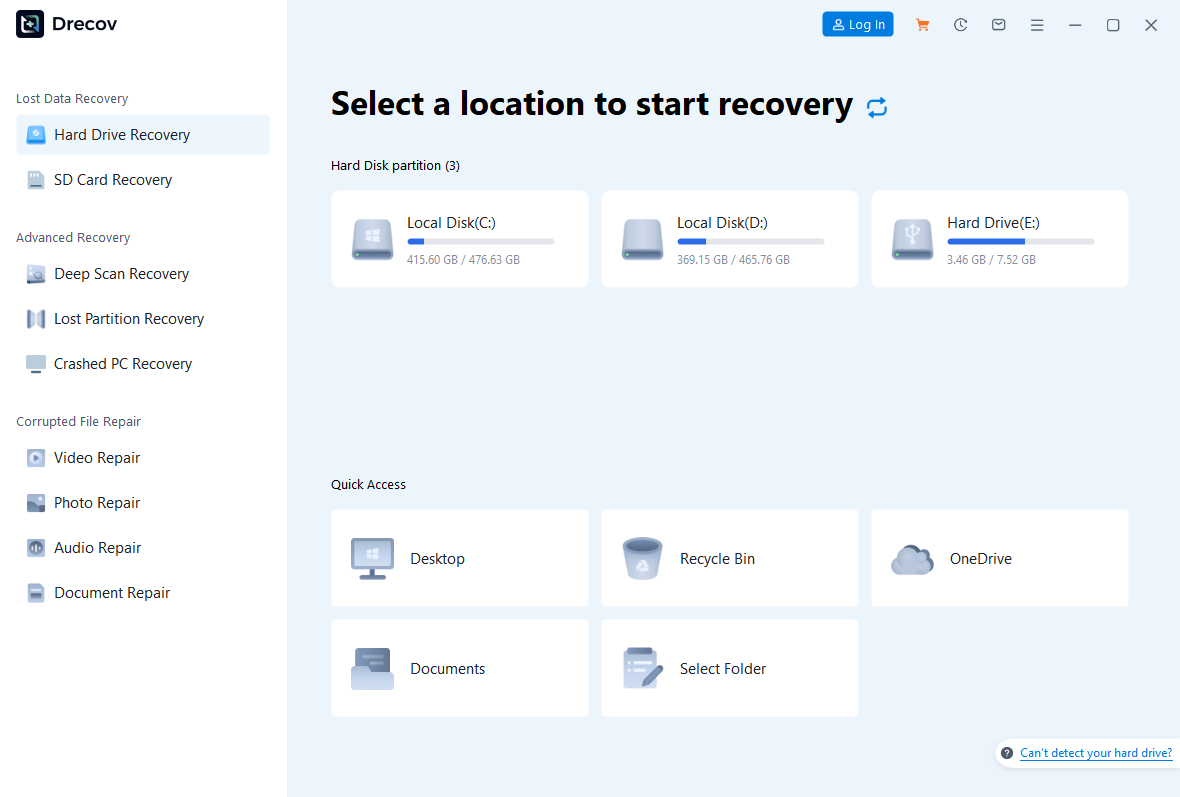
Step 1: Connect and Target the Affected Storage Unit
Connect your cleared storage media to the computer system. The user interface will display a comprehensive list of all local hard drives, external solid-state drives, and flash storage cards. Navigate to the physical disks section and highlight the target storage unit.
Step 2: Execute a Full Deep Scan
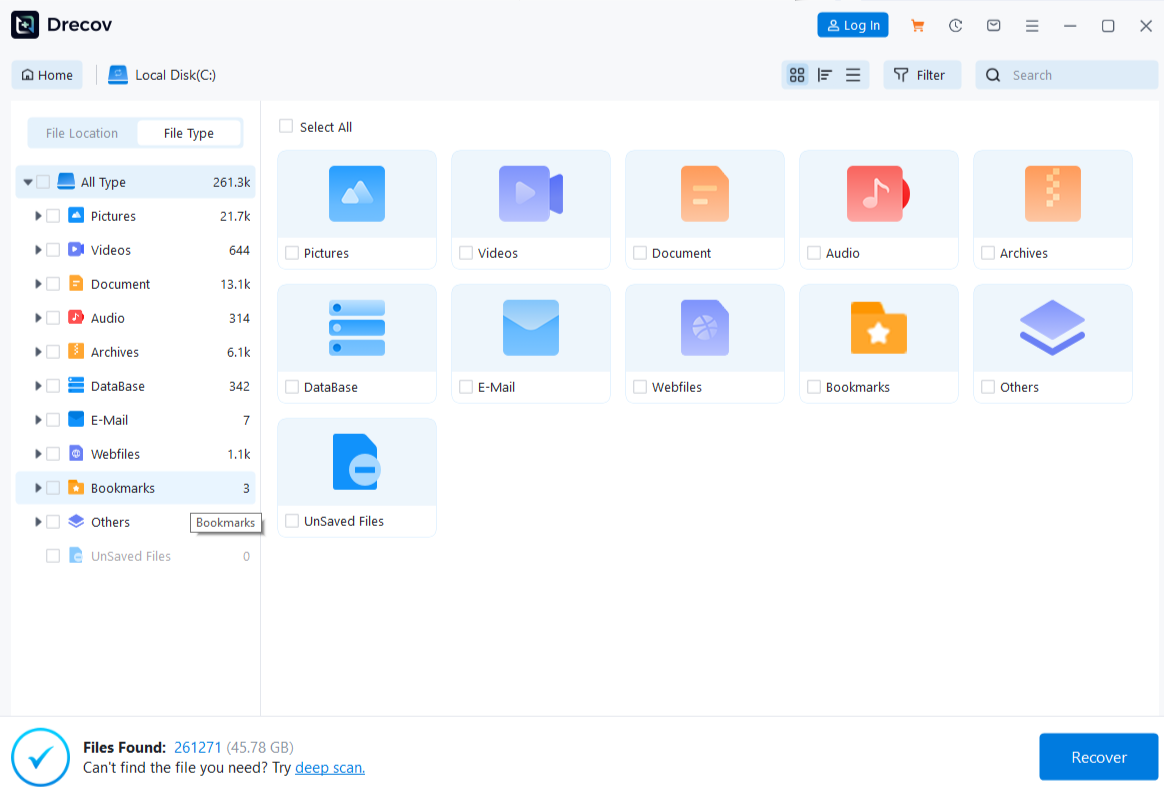
Select the Full Analysis mode rather than the rapid option. The standard scan looks for existing file systems, whereas a full analysis bypasses the deleted partition map to scrape raw data signatures directly from storage sectors. Click the scan button to begin the extraction.
Step 3: Filter and Preview Identified Files
As the scan processes the sectors, the utility will display a real-time list of reconstructed folders. Browse the directory tree or use the integrated filter tools to sort files by extension type or date. Review the contents using the built-in file viewer to confirm integrity.

Step 4: Export Extracted Items to a Secure Location
Check the boxes next to the folders you wish to salvage. Click the export button located at the bottom of the interface. Choose a destination path on a separate physical drive to prevent writing over the original sectors, then complete the export process.
Alternative or Complementary Methods
Aside from using professional utility suites, some technical users turn to open-source partitioning recovery software like TestDisk to rebuild missing sector headers.
| Feature | Open-Source Terminal Tools | PandaOffice Drecov Data Recovery Software |
| Interface Style | Text-only command line interface | Graphic user interface with point-and-click operations |
| Risk Factor | High risk of rewriting bad parameters | Zero-write scanning process that protects sectors |
| File Previewing | No preview options for images or documents | Complete native preview window prior to extraction |
| Success Rate | Low if partitions are heavily fragmented | High deep-sector analysis for fragmented blocks |
Manual command-line partitioning utilities are effective for simple partition table restoration, but they fail if the master file table is partially overwritten. Furthermore, typing incorrect commands inside advanced terminal tools can worsen storage corruption. Automated software tools offer a safer alternative because they scan media in a read-only state, ensuring that original storage data remains unaltered.
Tips & Best Practices
Maximizing file retrieval success after an incorrect diskpart command requires immediate adherence to strict data preservation guidelines:
- Halt All Write Actions: Stop using the drive immediately. Do not save new documents, install applications, or run checkdisk tools on the affected media.
- Avoid Immediate Formatting: Windows might show a pop-up stating that the drive must be formatted before use. Decline this prompt because formatting creates a new file system structure that overwrites old data footprints.
- Beware of Clean All: Understand that the clean parameter merely deletes the partition map, allowing files to be extracted easily. However, the clean all parameter writes zeros to every single sector, making recovery impossible for any consumer tool.
For further reading on operating system storage structures, you can check the Microsoft Diskpart Administrative Guide to learn more about partition parameters.
Diskpart commands Frequently Asked Questions
Can I undo a diskpart command once it has started?
If you realize a mistake has occurred while running a cmd diskpart session, closing the terminal window immediately might save a portion of your files. However, the system processes partition deletions instantly, meaning any processed sections will require file extraction software.
How does the list disk cmd help prevent data loss?
Running the list disk cmd provides an overview of every connected drive alongside its size and status. Checking this list ensures you focus on the correct disk index before running destructive clean actions.
Is it possible to salvage items after running a diskpart command-line tool wipe?
Yes, running a standard clean command only removes the partition index pointers. The raw files remain on the sectors until new data overwrites them, which is why PandaOffice Drecov data recovery software can successfully extract them.
What should I do if a drive displays an unallocated status?
When a drive shows an unallocated status in Windows Disk Management, do not initialize it. Launch your recovery software directly to extract your files before attempting to rebuild any partitions.
Why should I choose PandaOffice Drecov data recovery software over built-in options?
Built-in operating system tools do not contain file extraction mechanisms for unallocated space. This specialized utility uses advanced file carving technology to read raw drive data without relying on a working partition table.
Conclusion
Executing diskpart commands provides robust control over your storage environment, but a minor oversight can lead to severe data loss. If a partition disappears due to an incorrect diskpart command, acting quickly and avoiding new write operations will preserve your files. Utilizing a dependable solution like PandaOffice Drecov data recovery software ensures you can thoroughly scan damaged storage media and safely extract your essential documents. Implement routine external backups and double-check your drive selections to maintain total control over your digital storage.






